夏・増水期の旅:あの山の豪雨が教えてくれた安全の授業
“Did you hear that?” Alan stopped on the stone steps and pointed toward the depth of the gorge. We had been walking to the viewing platform. The mountain wind made the leaves shine, but from far away came a dull sound, as if someone were pushing a drum behind a thick quilt. I said it might be thunder. She shook her head. “Not thunder. It’s coming from below.”
It was a July afternoon, and four of us had gone to a mountain scenic area to escape the heat. The weather had been fine in the morning. At the ticket gate, an electronic screen kept scrolling a warning: pay attention to rain and avoid risky water crossings. We saw it, but we did not really absorb it. Summer travel often creates an illusion: as long as photos show green trees and clear streams, danger feels far away.
“Should we go back first?” Alan asked again. Zhou checked his phone. “The forecast says rain after five. It’s only two thirty.” I instinctively agreed to continue, because the viewing platform was only one kilometer away. Only Chen stayed silent. He crouched beside the drainage ditch along the steps; the water inside had already changed from a thin line into a small stream.
“In the mountains, rain doesn’t have to start above your head,” Chen said. That sentence made all of us quiet. In a city, rain usually arrives in a familiar order: the sky darkens, thunder comes, then umbrellas open. Mountains are different. Rain upstream, rising side streams, and slippery paths may already be happening before a drop touches you. Safety is not about whether rain is above your head; it is about what the whole valley is doing.
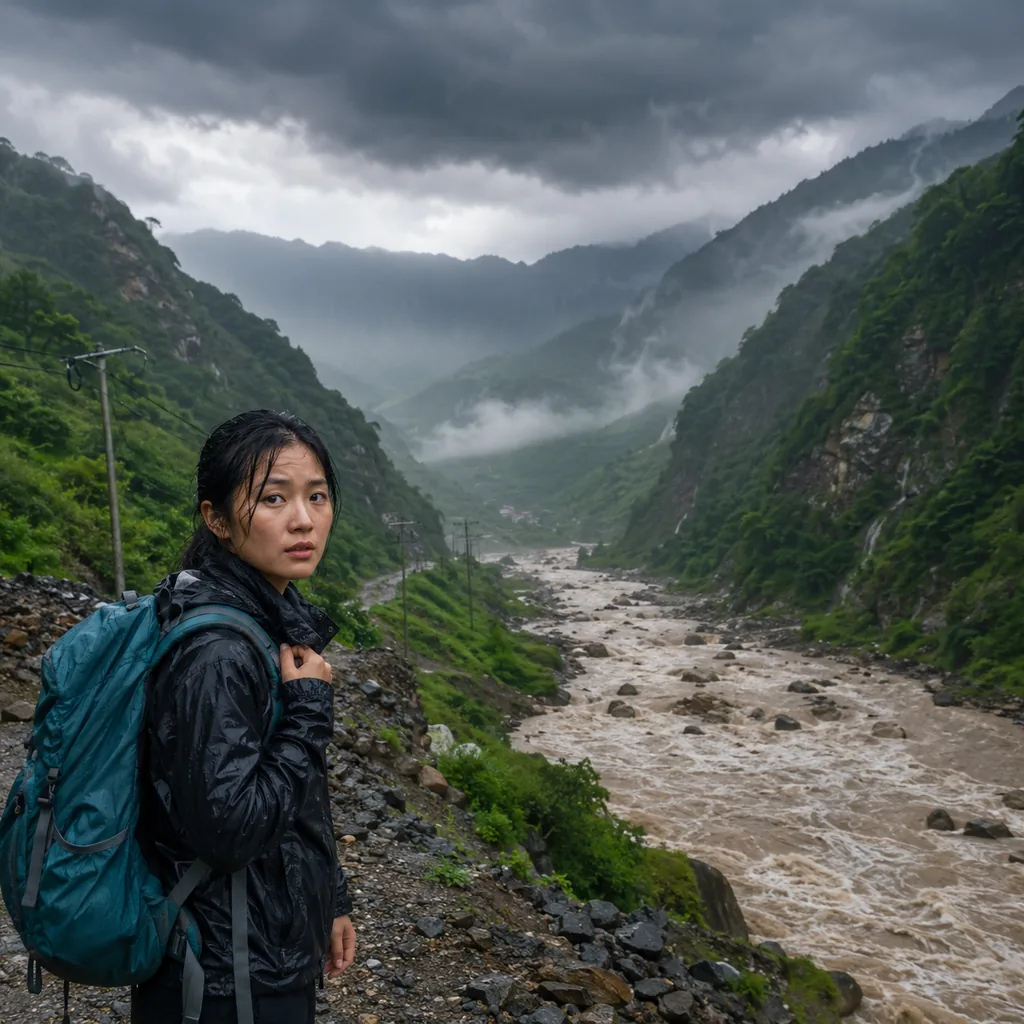
We decided to turn back. Just as we did, the scenic area broadcast started, its voice bouncing between the cliffs: “Due to localized heavy rainfall, some waterside trails are temporarily closed. Visitors should leave low-lying areas as soon as possible.” Zhou put away his phone and said quietly, “The forecast wasn’t wrong. I understood it wrong. It described the city weather, not the water in this ravine.”
As we descended, the rain truly arrived. At first, a few large, scattered drops hit the railing. Within five minutes, the entire path seemed covered by a curtain of water. A couple ahead still wanted to stop and film. Alan reminded them, “Don’t stand at the bend. People are coming down behind you.” They paused, then put their phone away.
At that moment I realized for the first time that the most dangerous things in a rainstorm are not always dramatic scenes. They are small actions piled together: stopping in a narrow place for photos, running down steps in slippers, looking down at messages, refusing to put on a raincoat because it is troublesome, thinking “just a little farther.” Each choice may not look serious alone, but together they narrow the way out.
“Walk closer to the mountain side, not the water side,” Chen said from the back, reminding us again and again. Rainwater rushed down the steps, fallen leaves rolled into clumps, and our soles began to slip. We changed our formation, keeping several meters between each pair, without rushing, running, or joking. People often cover fear with jokes when nervous, but that day we all understood that silence was more useful.
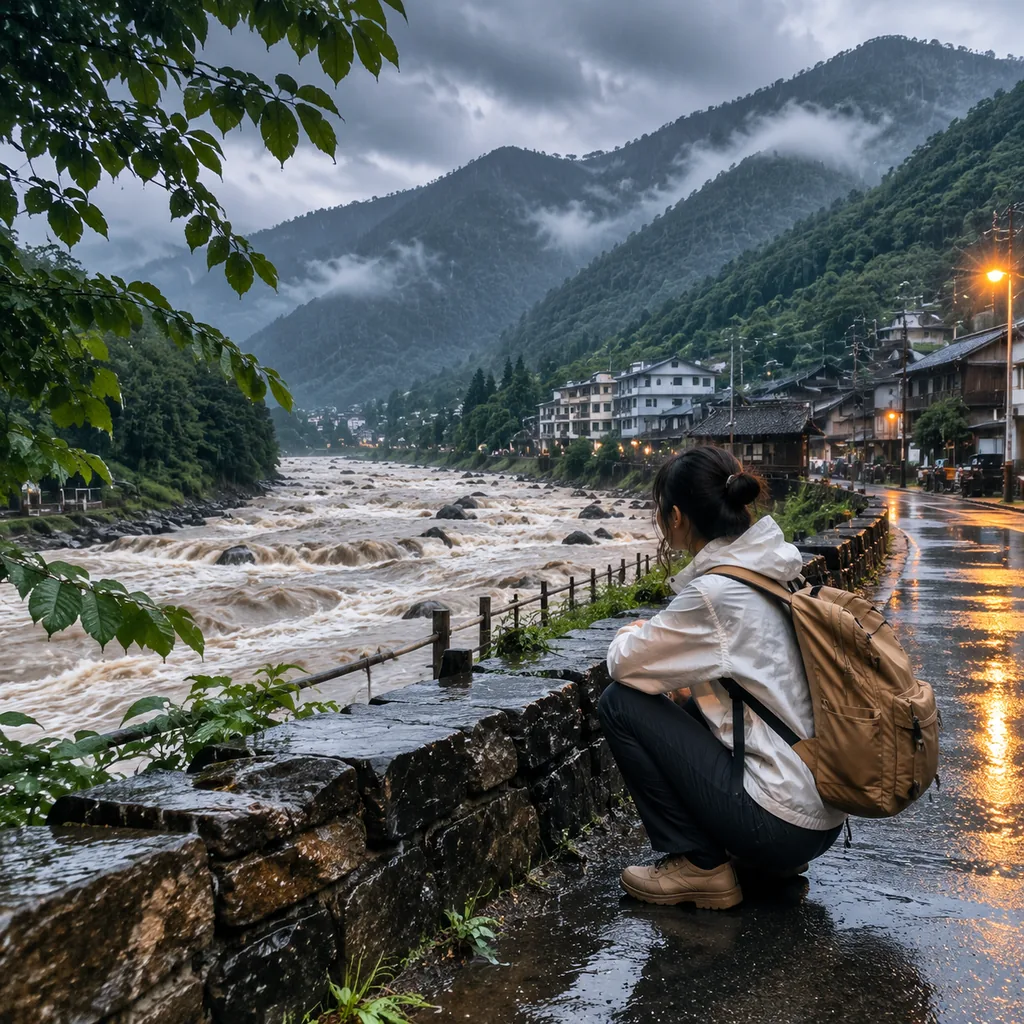
At a fork, the left path led to a waterside platform and the right path to the visitor center. Zhou saw a shelter on the left and asked, “Should we hide there?” A staff member ran through the rain, waving and shouting, “Do not go toward the water. Visitor center direction!” His tone was urgent, but not blaming. We immediately went right. Later we learned that the waterside platform was temporarily closed about ten minutes after that.
At the entrance of the visitor center, the rain was so loud it felt as if the whole mountain were pouring water down. Alan twisted water from her sleeve and said, “If we had kept going up, we would be stuck halfway now.” I did not answer, because the warning at the ticket gate was replaying in my mind. It was not that nobody had reminded us; we had treated the reminder as background. It was not that there was no information; we had selected only the part we wanted to believe.
The visitor center was crowded. Some people asked when shuttle buses would resume, some complained about wet shoes, and some called home to say they were safe. Staff explained again and again: evacuation would be arranged after the rain weakened and the roads and gullies were confirmed safe. Zhou said softly, “I used to think safety warnings were for people who didn’t know how to travel.” Chen replied, “Safety warnings are not about whether you know how to travel. They are about whether the weather agrees to cooperate.”
We waited there for more than an hour. Phone signal came and went, and the scenic area broadcast was more reliable than social media. Hot water and dry tissues were more welcome than filters. A pair of non-slip shoes mattered more than any outfit. That waiting period was not dramatic, but it rearranged the priorities of travel: be safe first, enjoy later.
After the rain weakened, staff organized us to leave the mountain in groups. Near the exit, a stream that had been shallow and clear in the morning had turned into a muddy rush, carrying branches and plastic bottles. Alan looked at it and said, “This morning I wanted to take photos there.” Her voice was very quiet. We all understood that this was not memory becoming dramatic after the fact; the same place had become completely different within two hours.
Back at the hotel, we did not immediately shower and sleep. Instead, we reviewed the day’s decisions one by one. First: when entering mountains in summer, do not only check the destination city’s weather. Check scenic area notices, mountain warnings, short-term heavy rainfall, and upstream conditions. Second: once a broadcast closes waterside areas, do not hesitate, and do not continue forward because “we came all this way.”
Third: gear is not decoration. A raincoat is better than an umbrella on mountain paths because it frees both hands. Non-slip shoes are safer than sandals. A power bank should be kept in a waterproof bag. ID, cash, and room cards should not be placed only in outer pockets. Fourth: travel companions should agree on a retreat signal in advance. If anyone says something feels wrong, the group stops and evaluates instead of letting the excitement of the majority drown out the concern of one person.
The fifth point was added by Chen: “Don’t treat staff as people who ruin the fun.” Many visitors are unhappy when advised to turn back, feeling their plans have been interrupted. But scenic area staff are watching water levels, falling rocks, road surfaces, lightning, and evacuation difficulty. They are not destroying the trip; they are pulling you away from risks you cannot see.
After that day, my understanding of “feeling safe” changed. It was no longer the idea that buying insurance, carrying medicine, and saving guides meant everything would be fine. It became the willingness to change plans according to conditions on the ground. A truly mature traveler is not someone who always reaches the planned endpoint, but someone who can admit in time, when weather, roads, and the body send signals: today, this is enough.
If you plan to travel in China’s mountains during the summer flood season, I would suggest keeping your itinerary loose. Enter the mountain in the morning and leave room to retreat in the afternoon. Spend less time on waterside paths and do not challenge gorges or gullies. If standing water turns muddy, streams suddenly speed up, rocks fall more often from slopes, or thunder moves closer, leave low-lying areas on your own initiative. The trip most worth remembering is not the one where you fought a rainstorm and won, but the one where everyone returned safely and could sit under a light to explain the day clearly.