14日間シルクロード深掘り行程プラン
The Silk Road is not just a route — it’s a fold in time, walked by merchants, monks, and envoys for two millennia. This itinerary begins in Xi’an, cuts through the Hexi Corridor of Gansu, and ends in Kashgar, Xinjiang — roughly 4,500 kilometers in 14 days. That’s just enough time to pause at each stop and feel the genuine weight of civilizations colliding.
Best travel window: late April to June, or September to early October. Midsummer surface temperatures in Dunhuang can exceed 50°C, and Turpan earns its nickname “the Oven of China” for good reason.
Xi’an: The Starting Point Is More Than Terracotta Warriors
Most travelers treat Xi’an as a checkbox — see the warriors, move on. But if you have two days here, spend your first afternoon at the Great Mosque on Huajue Lane near the Muslim Quarter. The architecture is the finest example of Chinese Islamic style you’ll find anywhere, and the ancient cypresses in the courtyard carry a stillness that the street outside cannot touch. That evening, find a proper bowl of yangrou paomo — the kind where you tear the bread yourself and hand it to the cook, not the tourist-menu shortcut.
On day two, rent a bike on the city wall at dawn before the crowds arrive, then head to the Shaanxi History Museum. The Tang-dynasty gold and silver artifacts and tomb murals are the real gateway to understanding Silk Road commerce — the Central Asian musician figurines, the Persian-influenced vessels. Book tickets on the official website in advance; walk-up tickets disappear fast in peak season.
Dunhuang and Mogao Caves: Prepare Ahead or Regret It
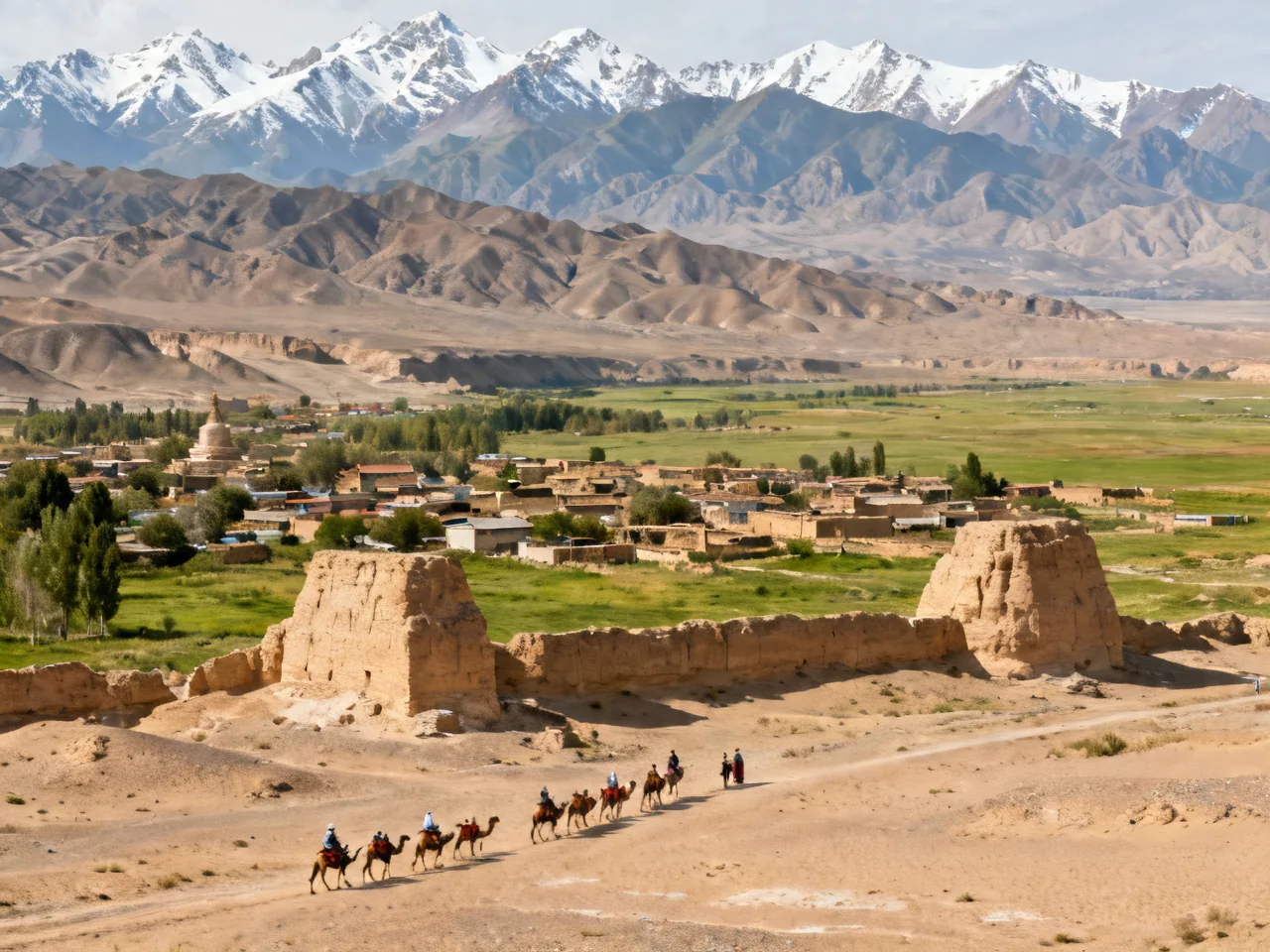
Fly from Xi’an to Dunhuang in about two hours, or take the high-speed rail to Liuyuan and transfer. Dunhuang itself is a small city, but Mogao is the spiritual center of this entire journey. Here’s a trap many travelers fall into: Mogao strictly limits daily visitors, and in peak season you must book at least a week ahead on the official site. Miss that window and you’ll be stuck in the digital exhibition center, never setting foot in an actual cave.
Photography is banned inside the caves — which turns out to be a gift. You’re forced to actually look. The Tang-dynasty painted sculptures in Cave 45 carry an expression of such quiet compassion it stops you mid-step. The procession mural in Cave 156 stretches like an epic poem in pigment. Opt for the ticket tier that includes “special caves” — the extra cost buys access to caves normally closed to the public, and it’s worth every yuan.
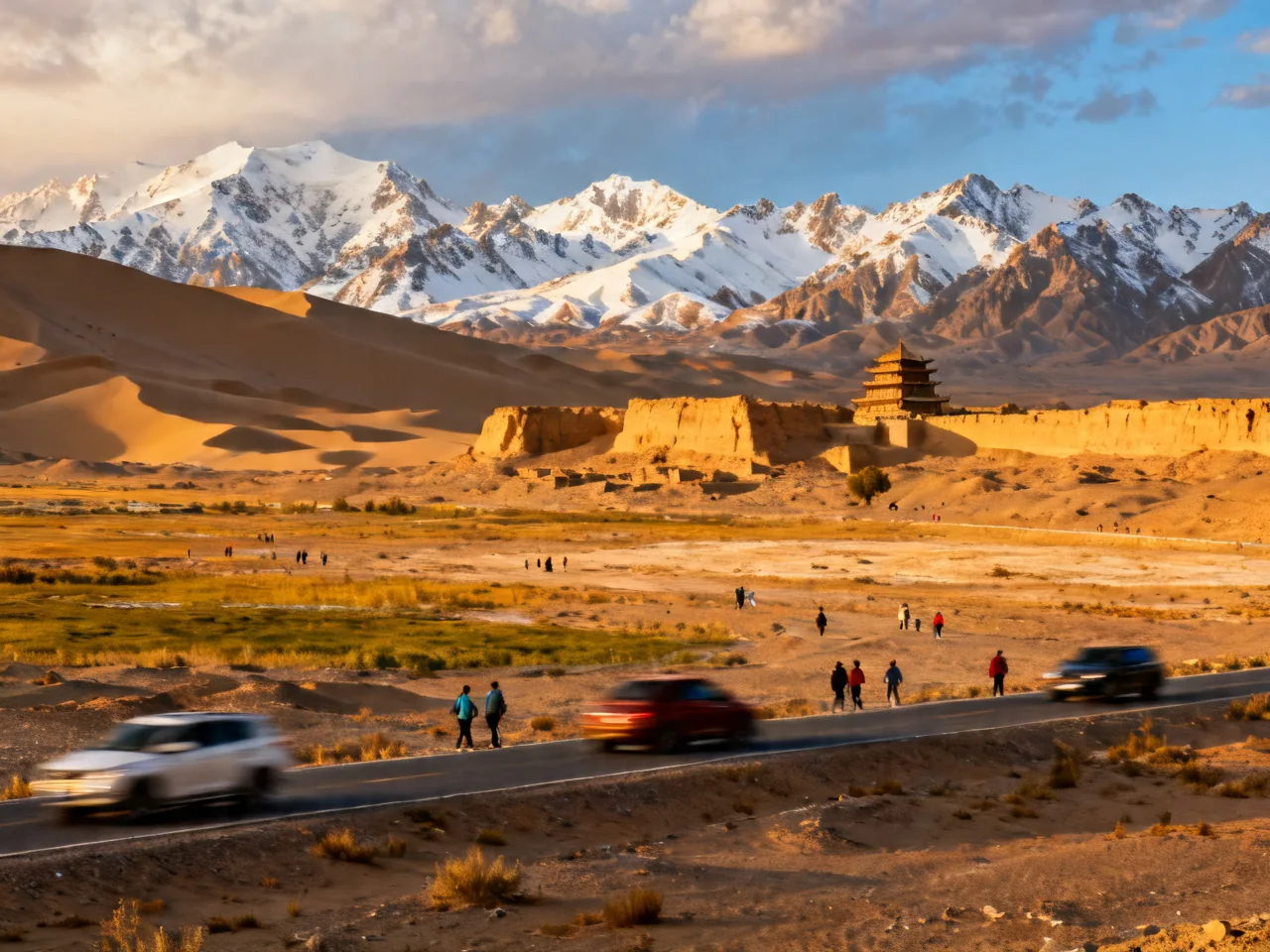
Mingsha Sand Dunes and Crescent Moon Spring are a short ride from town — go at dusk. The light on the dunes at sunset makes you feel like you’re standing at the edge of the known world. Skip the camel ride if you’re short on time, but don’t skip climbing to the dune crest for the sunset.
Jiayuguan and Zhangye: The Underrated Hexi Corridor
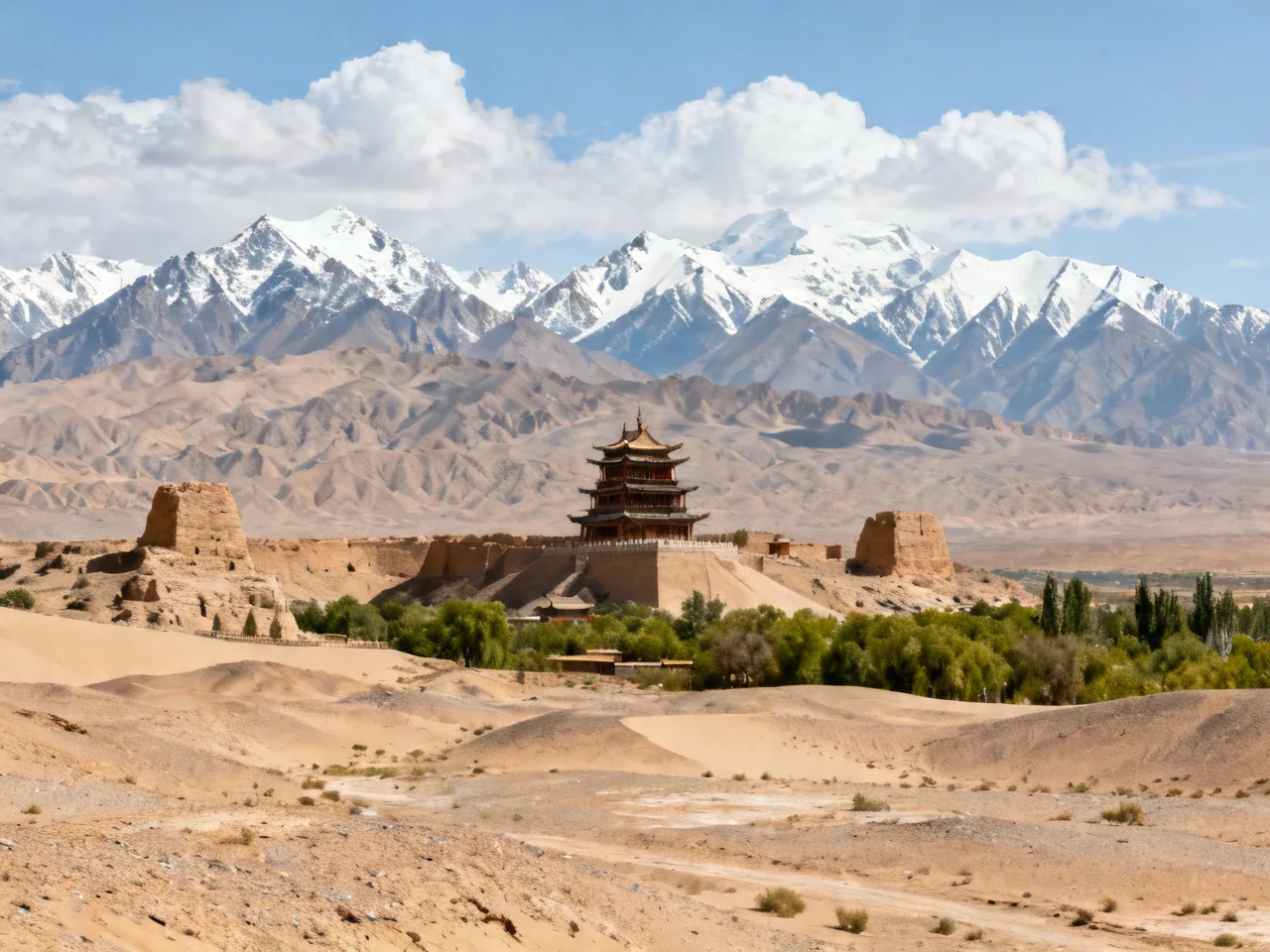
Most Silk Road itineraries skip the middle of Gansu and fly straight from Dunhuang to Xinjiang. I’d push back on that. Jiayuguan is the westernmost pass of the Ming Great Wall, and standing beneath its gate tower, you feel the psychological boundary between “inside the pass” and “beyond” with unusual clarity — this was once the empire’s edge, and stepping through meant entering another world. The tower itself is well-preserved, but the Overhanging Great Wall nearby is the truly arresting sight: rammed-earth ramparts jutting from a cliff face as if grown from the mountain itself.
Zhangye’s Rainbow Mountains have gained fame in recent years but remain mercifully underdeveloped. Arrive before 8 a.m. for the best light and fewest crowds. The layered hills of red, orange, purple, and green look like someone upended a paint palette at the foot of the Qilian Mountains. In town, the Giant Buddha Temple houses a 34.5-meter reclining Buddha with an expression of absolute calm — a strange and satisfying counterpoint to the geological spectacle outside.
Turpan and Kashgar: Arriving in Another World
Crossing from Gansu into Xinjiang, everything shifts — language, food, architecture, climate. Turpan is the transition zone. The mud-brick ruins of Jiaohe Ancient City carry a harsh beauty under the desert sun: the entire city was carved downward from the plateau surface, not a single fired brick, pure rammed earth, existing since before the Common Era. The karez underground irrigation channels are equally essential — a network of subterranean aqueducts that solved desert farming without a single modern tool, and whose engineering logic still commands respect.
Kashgar is the endpoint, and the most emotionally charged stop on the entire journey. The old city’s lanes are quietest in the early morning — the smell of baking naan drifting through a gap in a door, children heading to school, elders sitting in the sun. The square outside Id Kah Mosque fills with a roar of life after Friday prayers, a mix of collective devotion and everyday warmth that no theme park can replicate. The High Platform residential area is under renovation and partly commercialized, but walk deep enough into the side lanes and you’ll find life as it actually is. Give Kashgar at least two nights — one is not enough.
Getting Around and Pacing Yourself
The transport logic for this route: Xi’an → Dunhuang (fly or high-speed rail + transfer) → Jiayuguan (HSR) → Zhangye (HSR) → Turpan (HSR) → Kashgar (fly via Urumqi — it’s faster). High-speed rail within Xinjiang is well-developed, but the train from Kashgar to Urumqi takes around 24 hours; flying is the sensible call.
On pacing: 14 days sounds generous, but the distances on the Silk Road are physically draining. Budget at least 1.5 days per major stop and resist the urge to fill every hour. Desert dryness and UV intensity are more punishing than most travelers expect — hydrate constantly and don’t skimp on sunscreen. Xinjiang runs about two hours behind Beijing time in practice (sunset falls around 10 p.m.), so plan your days by local light, not Beijing schedules, or you’ll miss the best hours of the day.
Finish these 14 days and you won’t feel like you’ve “done” the Silk Road — you’ll feel like you’ve just grazed its surface, and already be thinking about when to come back.
Related Reads
- 10-Day East China Five-City Loop
- Lijiang Old Town: Naxi Culture & Snow Mountain Views
- Zhangjiajie Glass Bridge & Tianmen Mountain Guide
- Guilin Li River Scenic Tour Complete Guide
- Spring Bloom Map: China’s Most Beautiful Flower Fields