軒下に立って初めてわかった、中国の古建築がなぜまず人をゆっくりさせようとするのか
The wind that evening was not strong, yet the air under the eaves was noticeably calmer than the air in the middle of the courtyard. I had entered the old architectural compound behind a master carpenter who had spent years repairing timber structures. The moment the soles of my shoes left the stone path outside and landed on the darker brick surface inside the gate, my body drew inward on its own. It was not because anyone told me to be quiet, and not because some written rule demanded it. It was because the eaves, the gate frame, the columns, the raised base, and the light all worked together to gather my movements little by little. Outside, people were still talking, and somewhere in the lane a wheel still scratched over the ground. But once you stand under the eaves, you instinctively stop wanting to let your steps spread too wide.
The first time many people look at traditional Chinese architecture, they say it is grand, symmetrical, ancient, and then take a frontal photograph before leaving. I used to do the same. But over time I began to feel that its true power lies not in what it resembles from afar, but in what happens to the body once you enter it. Traditional Chinese architecture does not merely stand outside itself waiting to be admired. Very often, as you move through it, it quietly adjusts your pace, your line of sight, and the way you stand. You begin to sense where you should pause, where you should angle your body, and where you ought to lift your head first before taking another step.
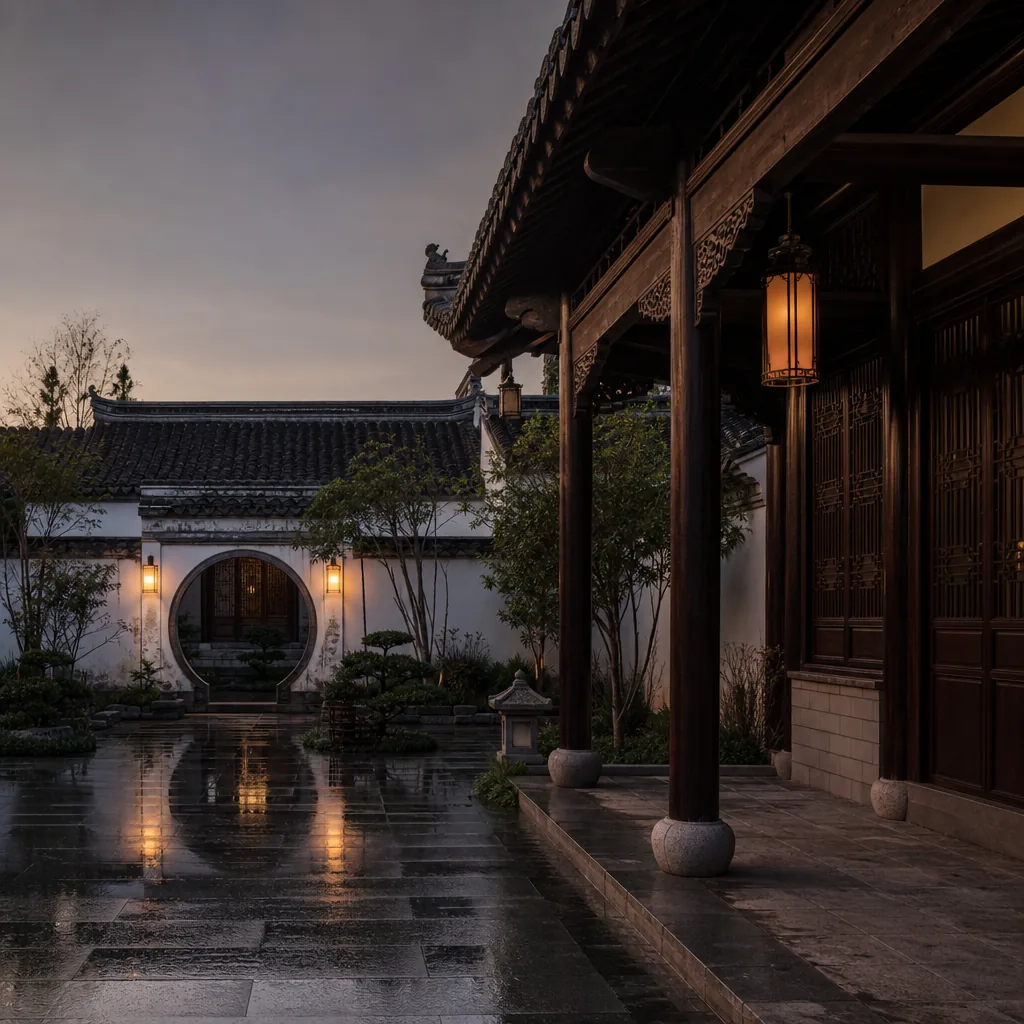
The craftsman guiding me was surnamed Yao. The backs of his hands were rough, and fine wood dust seemed permanently lodged in the edges of his nails. He did not begin with dynasties, and he did not begin with terminology. He only told me not to rush into taking photographs and to stand under the eaves for a while first. The eaves, he said, were not there only to keep out rain. Then he touched the edge of the stone base lightly with his toe and stepped back half a pace, showing me how the columns and the shadow line fixed the entrance zone into place. At that instant I suddenly understood why so many traditional Chinese buildings never feel visually noisy. It is not because they lack detail. It is because every detail is working in service of order.
Start with the Eaves, or You Miss Half the Story
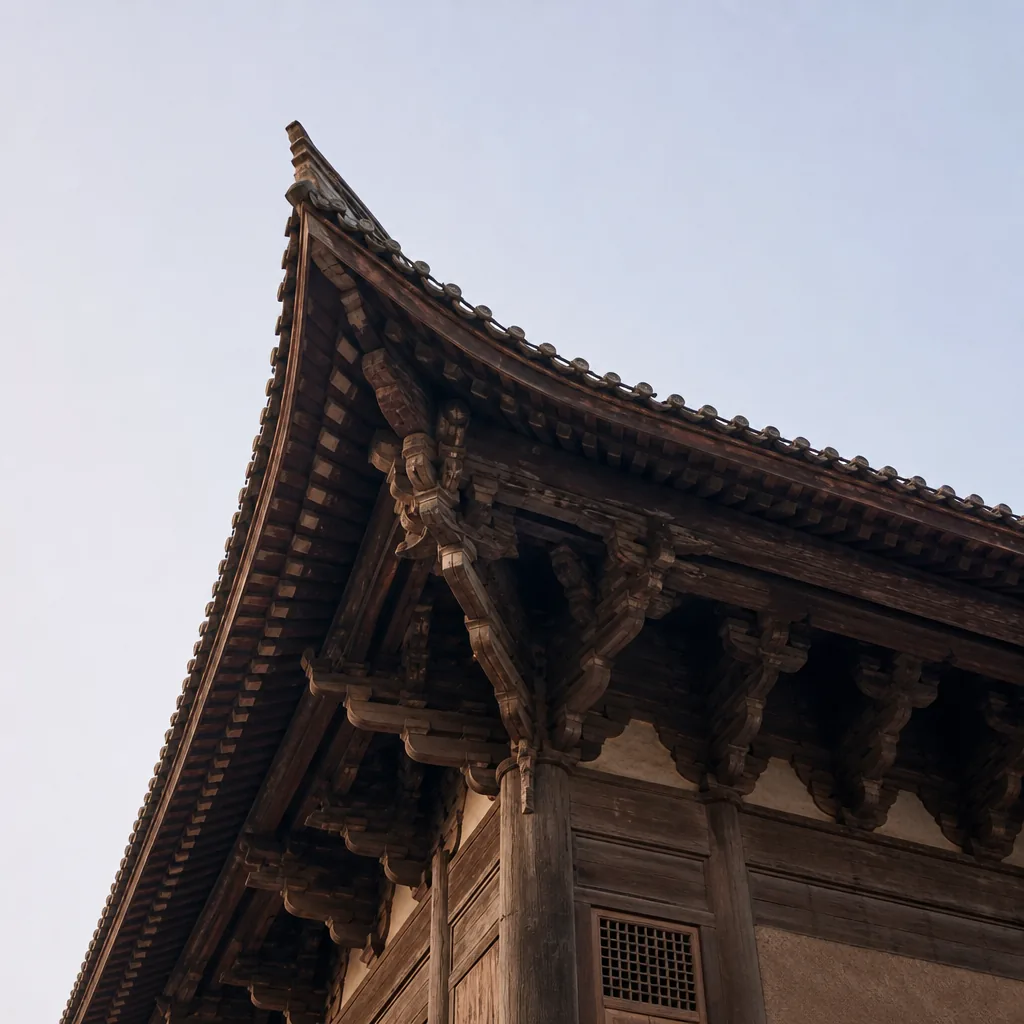
If I had to teach someone where to begin when looking at traditional Chinese architecture for the first time, I would not start with the whole roofline. I would ask that person to move a little closer and study the way the eaves project outward. This is not a flat, mechanical gesture of covering. It is a carefully measured form of invitation. The eaves receive sunlight, rain, and falling shadow, and then leave a transitional space just ahead of the human head. Before you formally enter the building, your body has already begun shifting from the brightness and openness of outside into the steadiness and containment of inside.
Master Yao told me that outsiders often stare at architecture and ask whether it resembles a palace, yet in ordinary timber structures the most worth seeing is often the small span under the eaves. If the projection is too long, it becomes oppressive. If it is too short, the building loses breath. If the angle is too stiff, neither the line of rain nor the line of shadow will look right. Listening to him, I realized that I had always photographed old buildings too fully, trying to capture the entire structure in one frame. I had never understood that what a person really remembers is often the bodily sensation of standing just under the eaves—almost caught by rain, yet not quite touched by it.
The Columns Are Not Just Standing There, They Are Managing Your Route
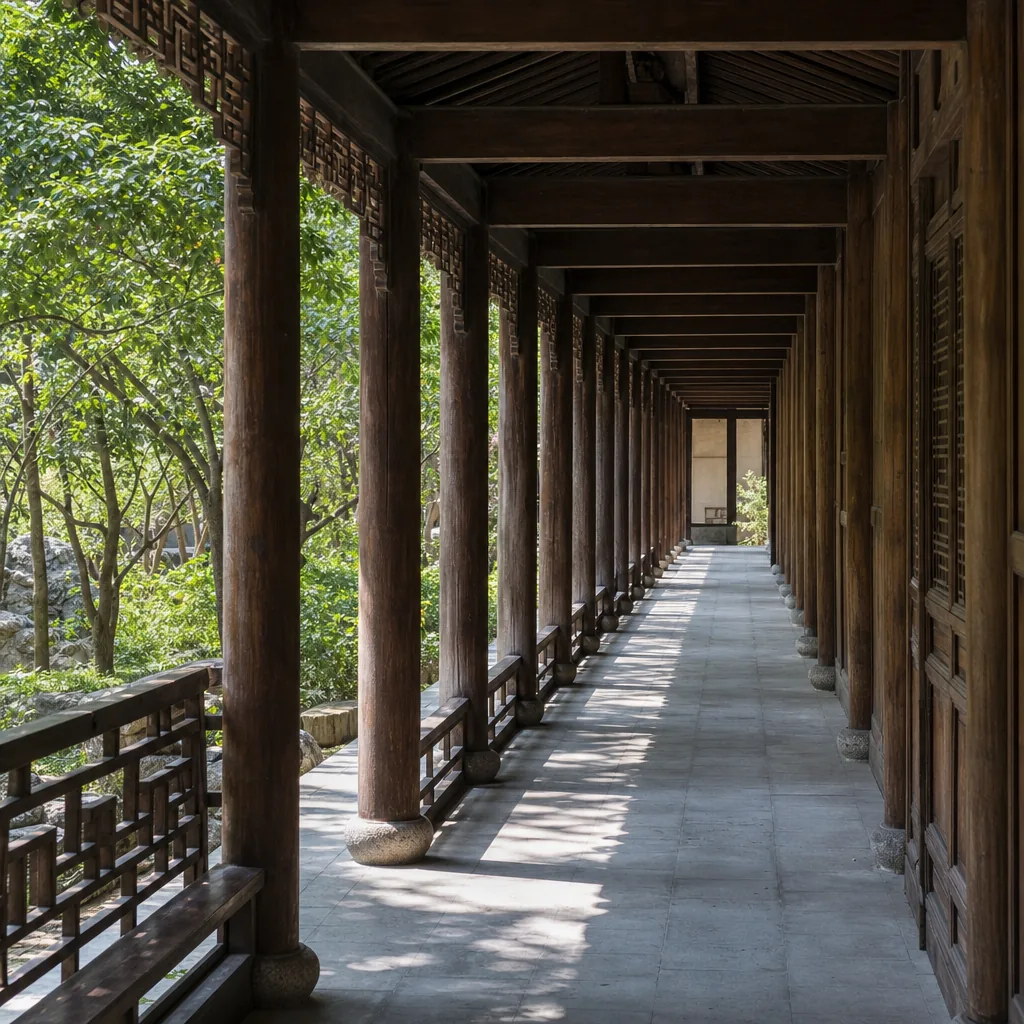
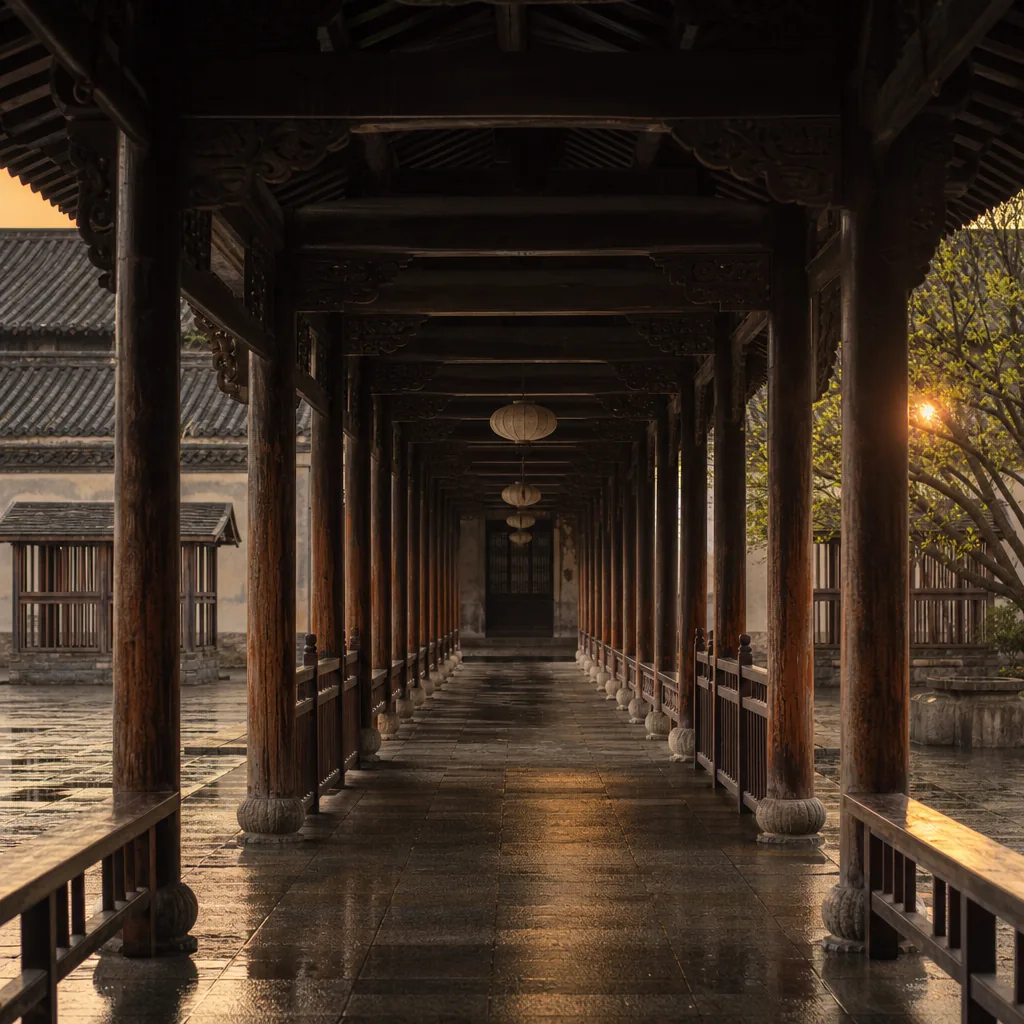
I used to treat columns as background. Only later did I understand that they nearly arrange human movement. If a courtyard is nothing but open ground, you walk carelessly. But once a row of columns appears, your path begins to receive gentle correction. You become more willing to move along the corridor, more willing to pause between columns, more willing to send your gaze outward bay by bay. One of the fascinating things about traditional Chinese architecture is that it rarely commands people harshly, yet it still organizes them with unmistakable softness.
Master Yao led me once along one side of the corridor. He walked ahead lightly, but each time he passed a column he paused almost imperceptibly, as though he were not deliberately stopping and the building itself had simply given the rhythm. Outside the corridor, shadows from the trees shifted one bay at a time in the wind, while the stone bases below the columns remained almost completely still. By the time we reached the third column, he turned and asked whether I had noticed that the quick and slow moments here were not evenly distributed. I understood immediately. Open zones make you move faster. Gathered zones make you slow down. Brightness invites you forward. Dimness asks you to collect yourself. This arrangement is more intelligent than any explanatory signboard.
If you have read the site’s piece on Song daily life, you may understand why I keep looking at architecture and daily living together. Furniture, doors, windows, eaves, and corridors are not separate aesthetic objects. Together they decide how a person lifts an object, turns the body, sits down, or avoids rain. What I admire most in traditional Chinese architecture is not whether it can be photographed majestically, but how consistently it finds a place for ordinary human actions.
Dougong, Column Bases, and Details That Refuse to Show Off
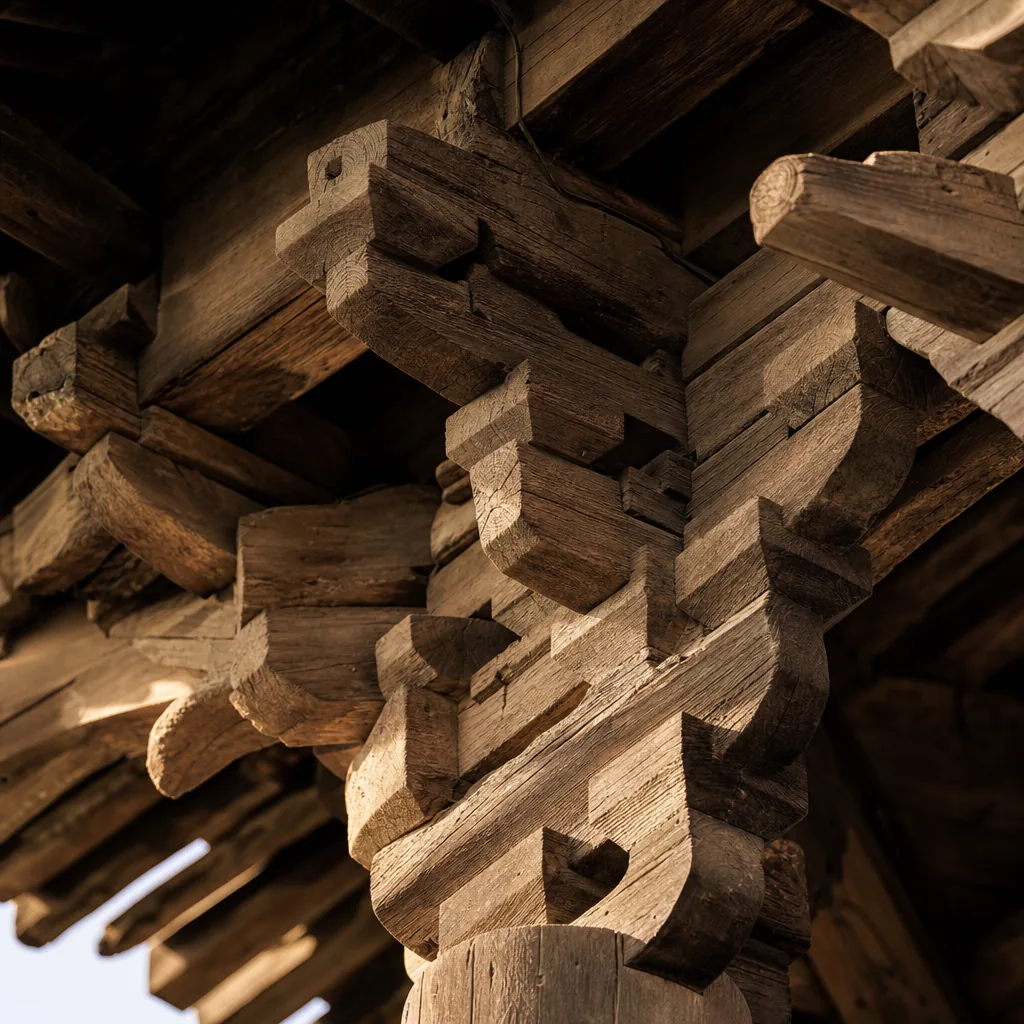
What finally made me grow quiet was detail, especially detail that does not hurry to shout look at me. Dougong brackets are like that. Many people know they are important, and many know they are beautiful. But if you treat them only as carving, you still see them too shallowly. Master Yao lifted his hand and asked me to study the layered wooden members interlocking beneath the eaves. They had not grown into that form to display skill for its own sake. They looked that way because force had to turn that way, and weight had to divide that way, if the roof were to extend outward without becoming clumsy. In that moment I suddenly felt that one of the deepest charms of Chinese architecture lies in how mechanics becomes temperament.
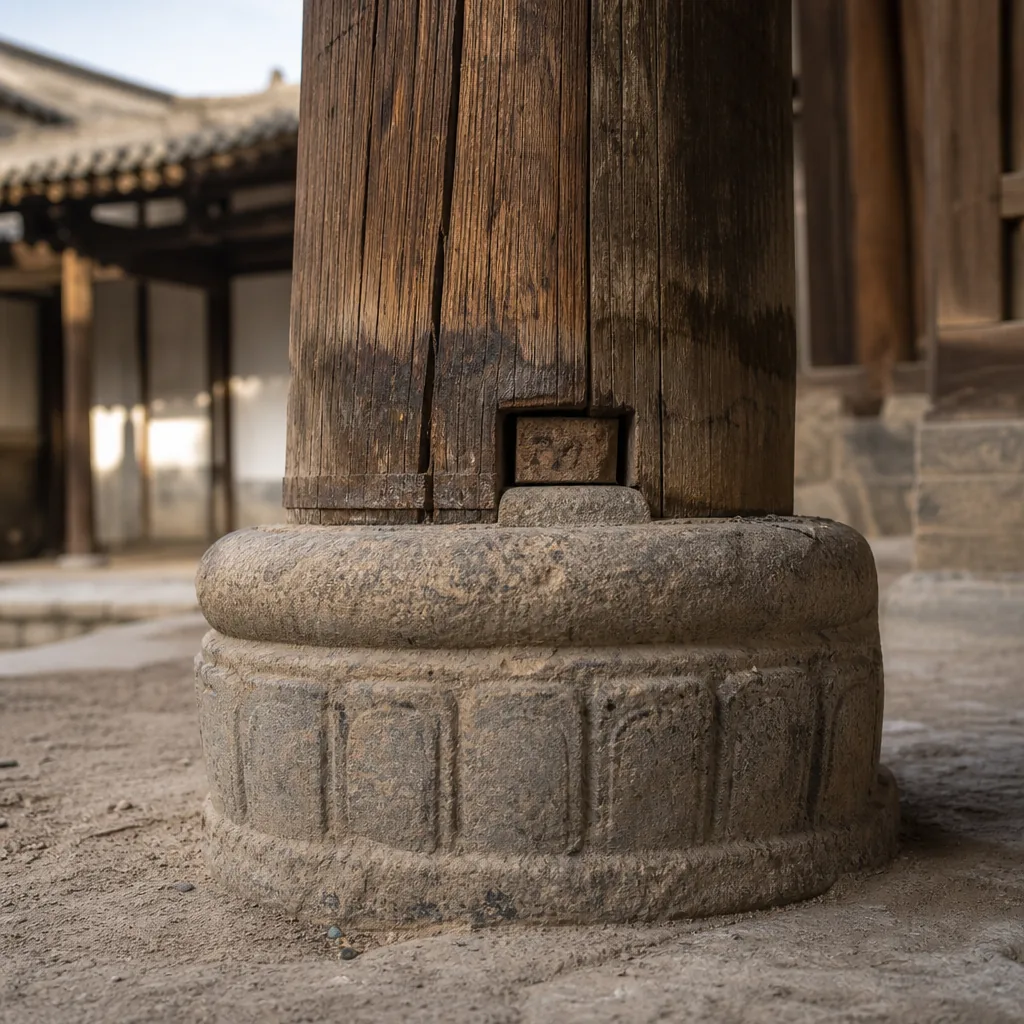
Column bases are the same. Many visitors walk right past them without stopping. But if you lower yourself slightly and truly look, you notice that the meeting between column and ground is never casual. There is lift, support, and transition, like a pause deliberately kept within a sentence. It is not dramatic, yet it gives the entire column a better reason to stand. The strongest order in architecture often comes not from filling everything up, but from placing an exact pause where it is needed.
In the End, What I Remember Is Not the Whole Building, but a Single Shadow Line
By the time we were leaving, evening had already darkened a little. Master Yao did not guide me toward the grandest angle. He only asked me to turn back once more and look at the far end of the corridor. By then the shadows under the eaves had deepened, while the ground outside still held a faint reflective brightness from the earlier rain. The timber columns retreated one by one into the depth, as though gathering time inward with them. I suddenly understood why traditional Chinese architecture slows people down. It is not because it is old, and not because it is mysterious. It is because it handles transition so well. Light and shadow, inside and outside, fast and slow, looking and walking—it never cuts these things apart violently. It always leaves a small span where both body and mind can come to rest.
As I left the courtyard, the final drop of water from the eaves fell beside the raised base without splashing onto me. I stood there for a second and did not walk away immediately. For an outsider like me, the most precious thing about architecture like this is not that it stands for some grand cultural slogan. It is that in one specific moment it can genuinely teach you how to slow slightly, how to stand a little more steadily, and how to shift attention from capturing an image to feeling a place. Ever since then, when I look at traditional Chinese architecture, I start with the eaves, then the columns, then the shadow line that quietly gathers the body inward. The grandeur reveals itself later, on its own.