中国の公園で見知らぬ人と一緒に後ろ向きに歩いたあの十分間、私は初めて自分のことを急いで説明しようとしなくなった
That morning, I had only planned to take a walk in the park. Dawn had just arrived. The pebble path still held a little moisture from the night, the leaves touched one another in a light breeze, birds called in irregular bursts, and every so often their sound was covered by music from an old radio somewhere deeper inside the trees. Chinese parks in the morning always have a kind of density that I find difficult to locate anywhere else: some people stretch, some power-walk, some practice tai chi, some lean against bars to open their hips, and some simply stroll with thermoses in hand. As a foreigner living in China, I had already seen many scenes of morning exercise and knew that workouts here were far more varied than just walking or running. But before that day, I had never actually joined the rhythm of any group of strangers. I remained more like an observer at the edge—interested, but instinctively keeping a little distance.
As I moved slowly along the path, the first thing that caught my attention was a small group of older men and women walking backward. They were not moving fast, but their steps were steady. Some let their arms swing naturally while others held them slightly raised, as if to keep rhythm and balance. At first I simply found it interesting and slowed down to watch from the side. Of course I had seen backward walking in videos before or heard people mention it, but seeing it inside the actual morning life of a Chinese park felt entirely different. Here, no one was packaging it as a novelty challenge, and no one was performing for attention. Instead, it had the ease of something done for many years. That ease was exactly what drew me in: it was as if they did not need to prove to anyone whether this exercise was reasonable or strange. Morning had arrived, they had reached this path, and their bodies already knew how to enter the rhythm.
I had only been watching and had no real plan to join. To be honest, I was still a little afraid of awkwardness. As a foreigner in Chinese public space, sometimes even a slightly unusual movement can attract extra attention, and if the movement is already unusual by itself—walking backward, for example—that awareness of how strange I might look becomes even stronger. But while I was standing there, one older man waved at me in an entirely natural way, as if calling over someone who had been expected all along. He did not explain much. He simply smiled and gestured for me to join them for two rounds. In that instant, the first thought in my mind was not should I try, but should I first explain that I was only passing by, that I had never done it, that I might do it badly. Yet in that same instant, I suddenly felt tired of that reflex. I did not want, as I so often did, to place myself first into a position that required explanation.
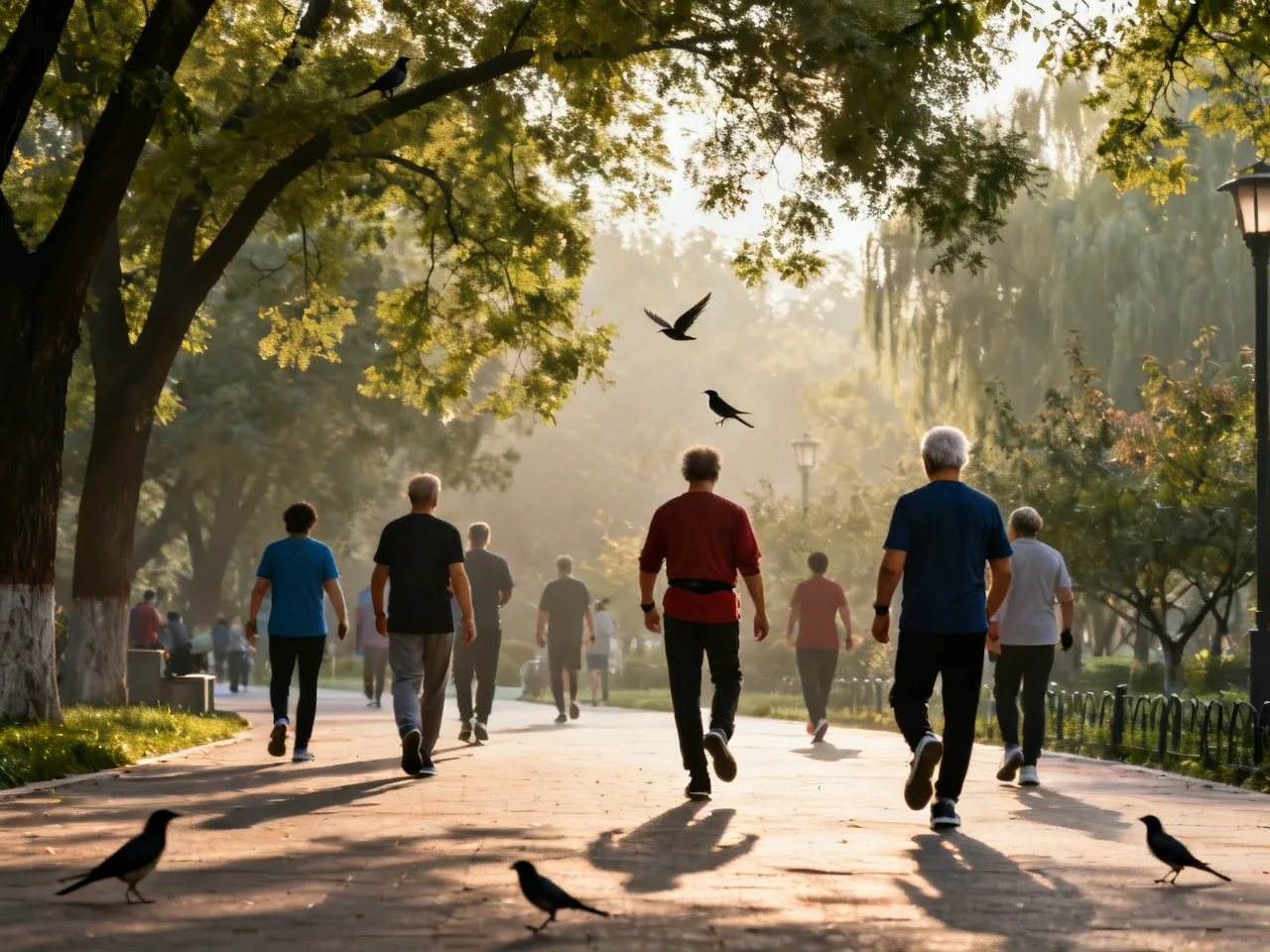
So I went over. The first few steps felt awkward. My body kept wanting to return to the normal forward pattern, and each footfall landed with only partial confidence, so I moved slowly and used the edge of my vision to judge the space around me. The older man beside me said, “Slower. Don’t rush. First find the feeling.” The sentence sounded exactly like the kind of guidance you hear in Chinese park exercise—unpressured, not superior, just reducing the movement to its simplest layer: first find the feeling. So I tried to do that. I shortened my steps, straightened my back, relaxed my shoulders, and stopped staring rigidly at the ground, letting my body gradually trust that there was also a path behind me. The strange part was that after a minute or two, the clumsy panic really did begin to fade. I did not suddenly become skilled at walking backward, but I started caring less about whether I looked obviously new, and I felt less urge to compensate for awkward movement by overexplaining myself.
During those ten minutes, the park remained exactly the park: people nearby continued power-walking, somewhere farther away others were clapping along to music, children passed the path holding a parent’s hand, and some people stopped only to sip hot water from thermoses. No one gathered around simply because I had joined the backward-walking group, and no one asked me to first explain where I was from or why I wanted to try. That feeling was very new to me. So often, as a foreigner, the moment I enter an unfamiliar scene I instinctively prepare a whole set of explanations: who I am, why I am here, whether I am disturbing anyone, how little I know, how interested I am anyway. But in the park that morning, all of those explanations suddenly felt unnecessary. The movement itself had already completed the most important communication: I was willing to try, and they were willing to let me join. Everything else did not need to be filled immediately with language.
As we kept moving, I began to understand why the scene would stay with me so strongly. It was not only that backward walking itself was interesting, but that Chinese parks contain a very distinctive form of acceptance. It does not pull you loudly into the center, nor does it perform exaggerated welcome. Instead, it gives you a place and lets you discover the right distance through action. The older man occasionally reminded me to watch the path, slow down, and avoid overstriding, but otherwise he did not manage me. The others simply continued their own rhythm, as if my presence or absence was not a big issue—but if I was there, that was also completely fine. That sense of proportion felt deeply comfortable. It did not make me overly special, and it did not leave me outside. For a foreigner who often becomes tense first because of visible difference, this kind of acceptance without demanding an introduction is genuinely precious.
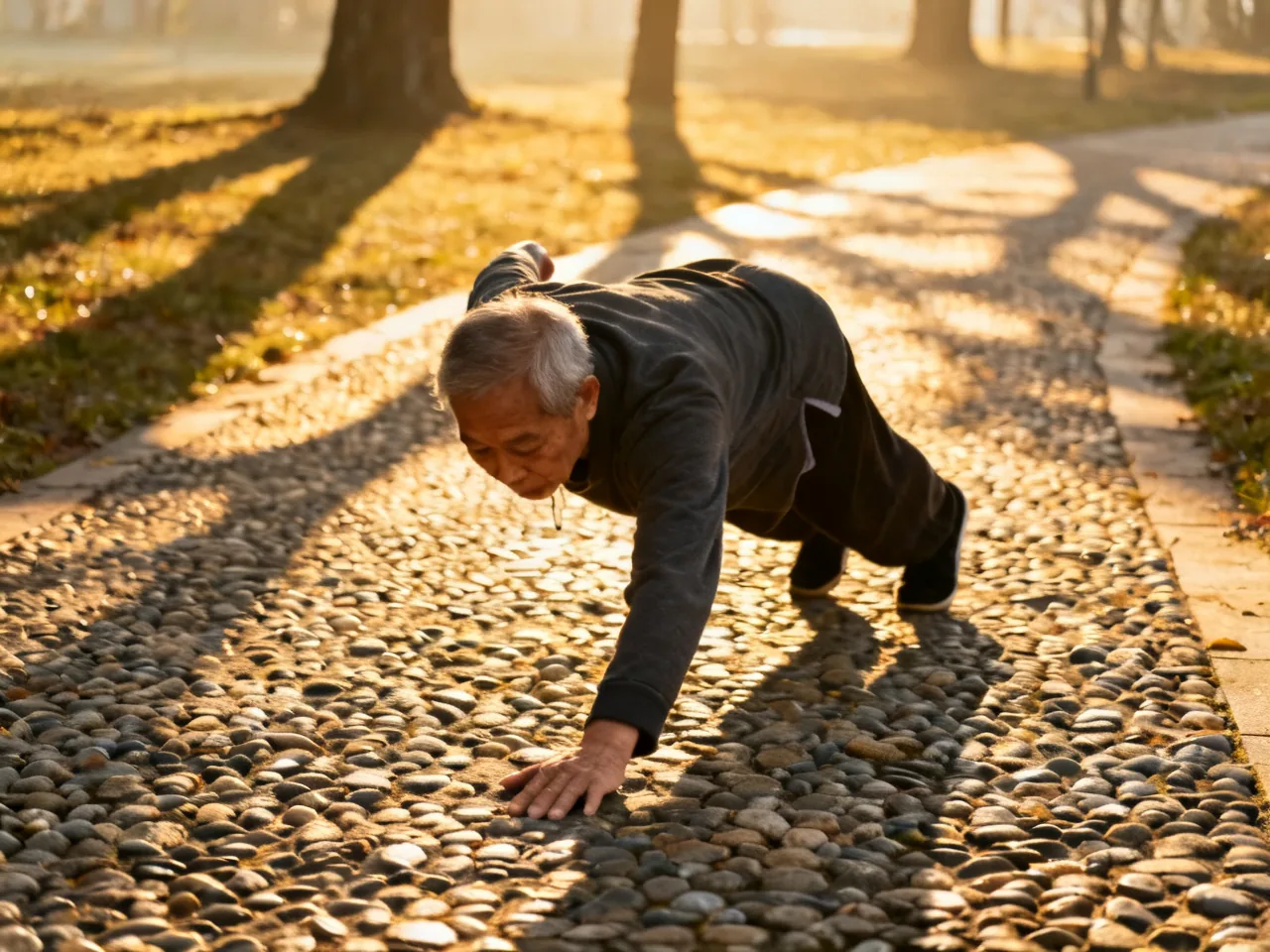
After two rounds, I stopped with a faint warmth across my back and a sensation in the backs of my legs that felt different from ordinary walking. The older man smiled and asked, “How was it?” I smiled too and said it was a little difficult, but interesting. He nodded as if that answer was entirely expected, then turned and continued his own exercise. There was no prolonged small talk, no attempt to inflate the moment into some dramatic cross-cultural encounter. Precisely because of that, it felt more like a genuine connection inside ordinary life. As I left the park later, I kept thinking that what I would remember was not the movement of walking backward itself. It was the fact that for those ten minutes, I finally stopped rushing to present all the prefatory explanations—“I’m a foreigner,” “It’s my first time,” “Please excuse me if I do this badly.” I simply walked two rounds with them, and that turned out to be enough.
Now, if someone asks me what moves me most about Chinese parks, I probably would not start with the scenery or the equipment. I would talk instead about that loose but steady feeling of connection between people. You can remain only a watcher, or you can suddenly be waved in; you do not need to become “a regular” before briefly sharing the same path and the same set of movements. For me, the real gain from that morning was not learning one especially precise exercise method. It was feeling for the first time, in a Chinese public space, that I could join before explaining myself. That feeling gave me a very light kind of courage: sometimes understanding a city does not have to begin with saying a lot. Sometimes it can begin by quietly walking two rounds with other people. What I remember is the kind of acceptance found in Chinese parks—it does not force you to speak, yet it lets you stay naturally.