古鎮の民俗体験:市場、地元の芝居、手工芸
Ancient Town Folk Experiences: Markets, Opera & Crafts
Chinese ancient towns aren’t just photo backdrops — the hawkers’ calls at markets, opera singing on stages, and craftsmen’s skills are the living culture.
Rural Market Days
Many towns and villages still observe “market day” traditions on fixed dates (like lunar 1st, 4th, 7th). Villagers from surrounding areas gather to trade. Famous markets include Guizhou’s Miao markets, Dali’s Third Month Fair, and Fenghuang’s border markets.
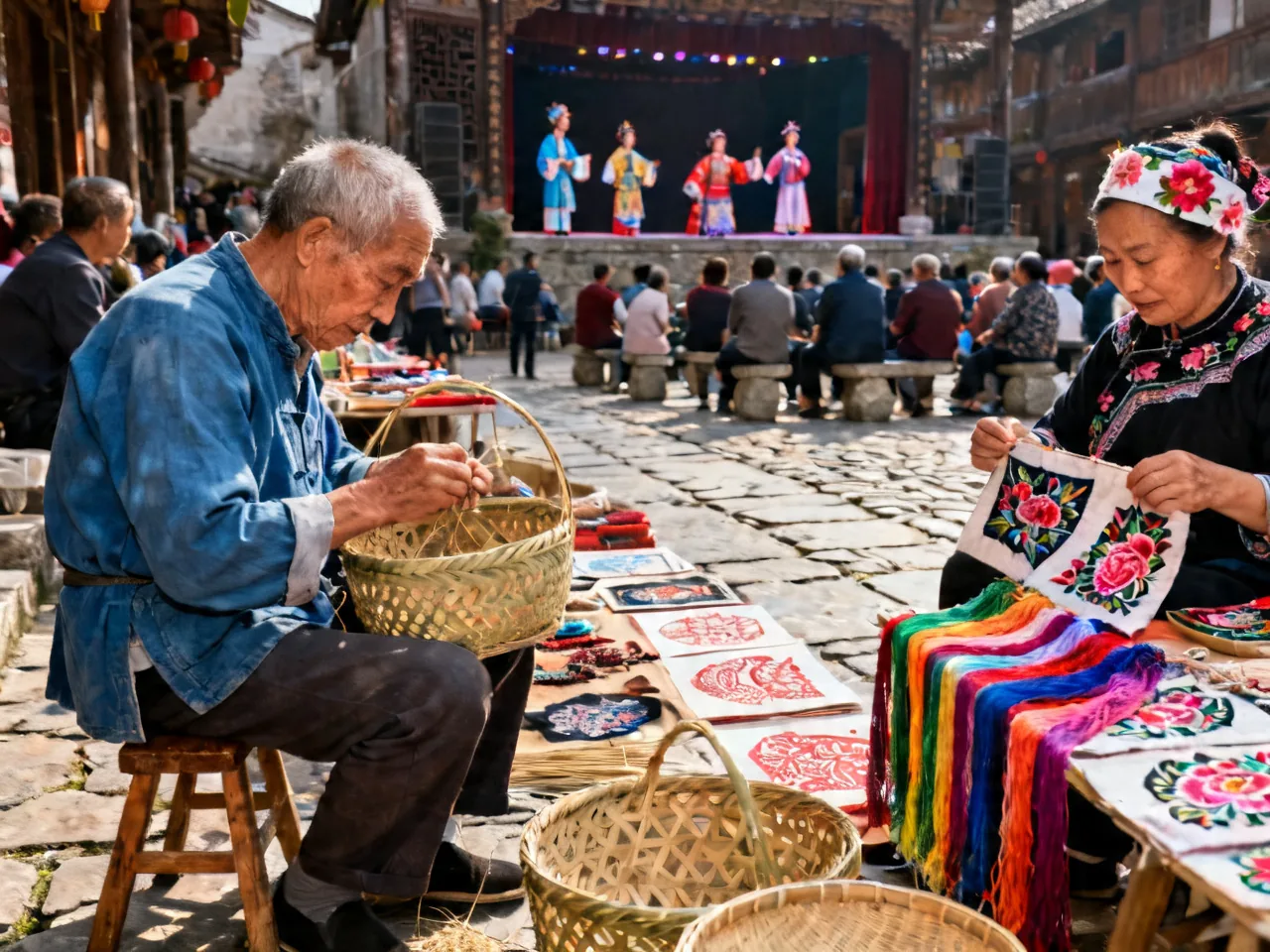
Markets offer the freshest local ingredients, hand-woven bamboo baskets, homemade rice wine, and grandma’s embroidered insoles. Prices are unbelievably low — a pair of hand-embroidered insoles might cost just ¥10.
Village Opera
Village opera — local performances on temporary stages at ancestral halls during temple fairs or festivals. Shaoxing, Zhejiang’s village opera is most famous (Lu Xun wrote about it). Performances are free; audiences crack sunflower seeds and chat below while drums thunder on stage — this raw experience can’t be found in theaters.
Craft Experiences
- Bamboo weaving — Qingshen (Sichuan) and Shengzhou (Zhejiang) have workshops; weaving a small basket takes about 1 hour.
- Paper cutting — Ansai, Shaanxi is the paper-cutting homeland; learning a window decoration from master artisans takes just 30 minutes.
- Woodblock New Year prints — Yangliuqing (Tianjin) and Weifang (Shandong) have workshops for hand-printing traditional New Year pictures.
Tips: Market days are liveliest in the morning and wind down by noon. For photos, arrive at 7-8am for the best light and fewer crowds.
Related Reads
- Spring Bloom Map: China’s Most Beautiful Flower Fields
- Summer Escapes: Plateaus & Islands
- Huangshan Sea of Clouds & Welcome Pine: Beautiful in All Seasons
- Best Autumn Foliage Spots in China
- 10-Day East China Five-City Loop