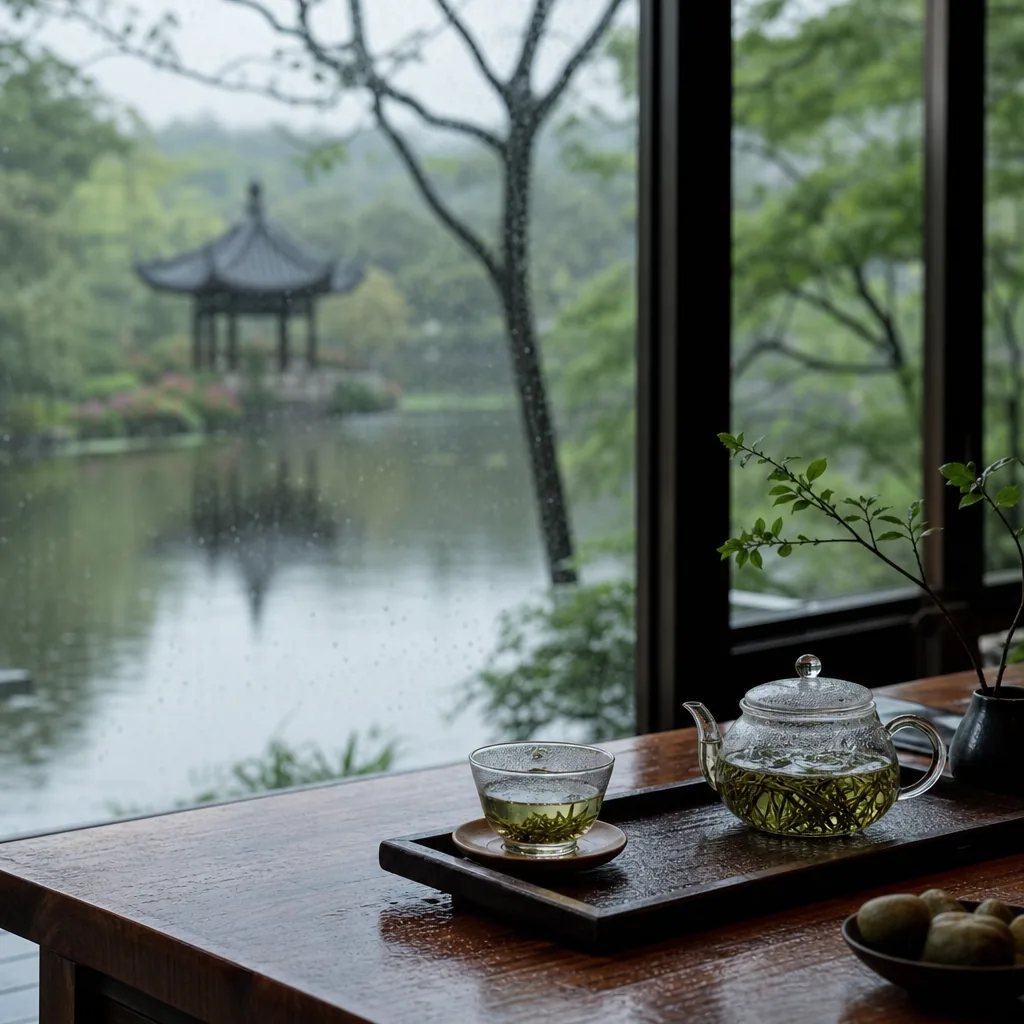
七月の杭州で静かに雨宿り、ようやく雨を旅程の損失と思わなくなった
When I arrived in Hangzhou, I was honestly expecting a textbook version of West Lake in clear weather. I had already arranged the picture in my head before I even got there: bright water, crisp tree shadows, bridges and distant pagodas outlined neatly by the sun, everything sitting in place like a postcard. Instead, when I pulled open the curtains the next morning, I found a pale sheet of humid gray. The rain was not heavy enough to make anyone miserable, but it was enough to blur the city’s edges. My first reaction was embarrassingly small-hearted: disappointment. I started deducting value from the day in my mind immediately, as if a change in weather automatically meant part of the trip had been lost.
This has been one of my habits for years. Whenever a trip stopped moving along the route I had imagined, I treated the change itself like a problem. Rain made that reaction even stronger because it was not something I could fix by leaving later. It was the whole sky changing its mind at once. But Hangzhou that day was so quiet that I could not keep arguing with the weather for very long. The wet leaves outside looked darker and fuller. People below moved slowly under umbrellas, water dripping from the edges in steady intervals. The reflected light on the ground made the whole morning seem re-laid in another material. If you keep looking at a scene like that, your impatience gets pressed flatter little by little.
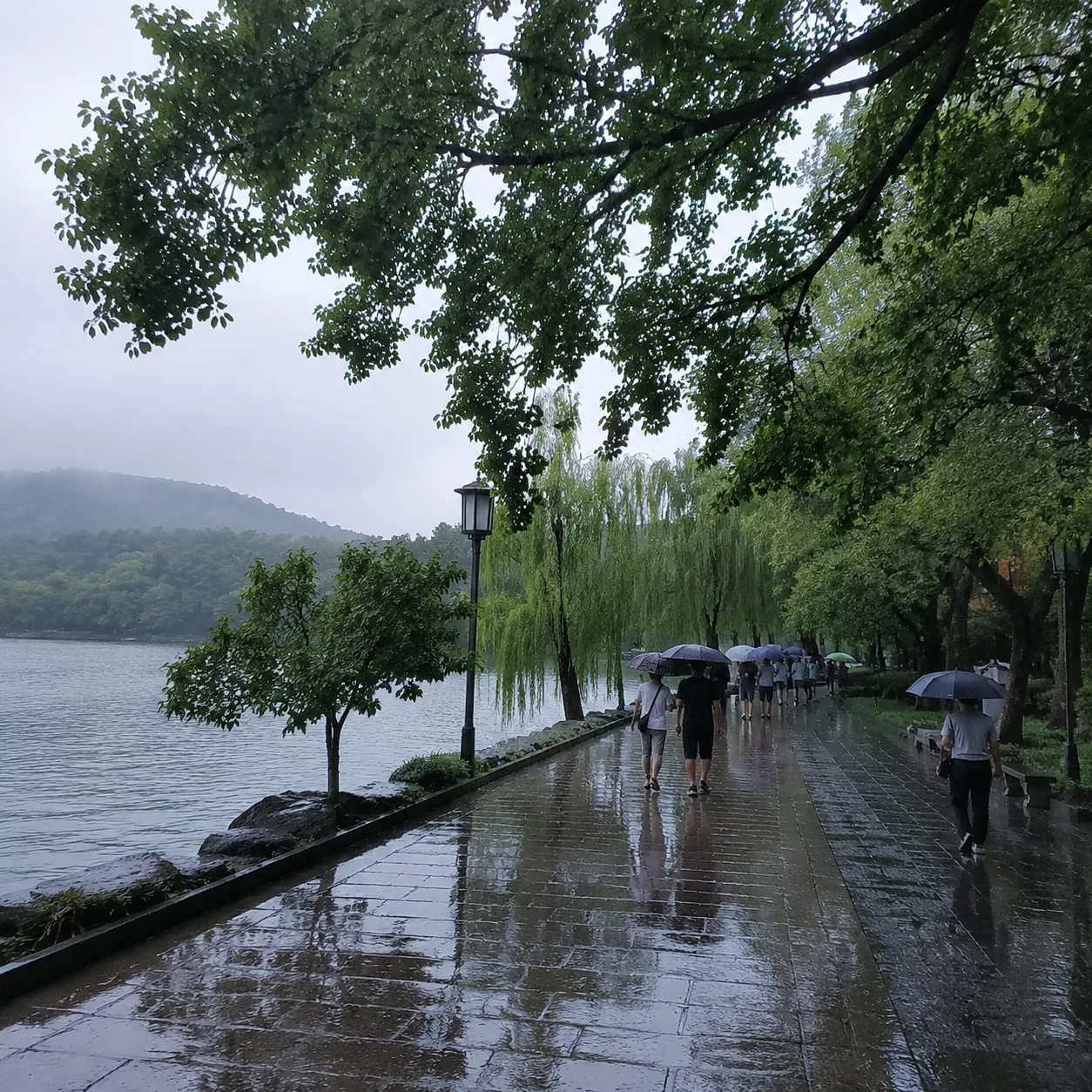
I still went out later, but I stopped forcing myself into a battle against the rain. I walked along West Lake with an umbrella, hearing small soft clicks from my shoes on the damp pavement. The wind was light. The rain stayed patient. Tiny circles kept appearing on the water. On sunny days, people try to stretch their view as far as possible, taking in bridges, banks, trees, and distant hills all at once. In rain, your attention naturally comes closer. You notice the damp marks on stone railings, the umbrellas moving slowly through the mist, the willow branches bending downward into the air. As I kept walking, I realized this was not Hangzhou as a lesser substitute. It was simply another version of Hangzhou, and not an inferior one at all.
By noon the rain had grown a little heavier, so I turned into a side lane to look for food. The hems of my pants were damp, and the umbrella in my hand had started to feel heavier, but the moment a bowl of hot noodles arrived, I settled instantly. Steam rose hard from the broth. Outside the window everything was gray, but inside the room the light was warm yellow, and there was the faint wet imprint of someone else’s umbrella on the table. A local woman sitting beside me noticed that I kept glancing outside and smiled, telling me that Hangzhou rain should never be rushed, and that I should finish eating first. She said it casually, but I felt something inside me loosen when I heard it. Travel turns not only on famous sights. Sometimes it turns on one practical sentence offered by a stranger at exactly the right moment.
After I finished eating, I did not rush back out to chase more stops. I went to a teahouse and sat for a while instead. The rain on the eaves was soft—not percussive, more like a thin continuous friction. Someone by the window was tasting tea slowly, and every time the cup touched the saucer there was a tiny clear click. In earlier years I would probably have judged an afternoon like that as inefficient. That day it felt more complete than many sunny itineraries I had forced through. For the first time, I was not demanding that a city cooperate with my plan. I was letting myself cooperate with its weather, its pace, and the form in which it was willing to appear.
By evening the rain had not fully stopped, but it had thinned. I walked back slowly along the road. Shop lights were starting to come on, and the wet pavement stretched them into broken lines of gold. Some people hurried over the bridge carrying takeaway dinners. Others stood under eaves waiting for the rain to grow even lighter. That was when I understood why the day had become memorable. Not because it was dramatic, but because it had gently peeled me out of that hard shell of needing to complete everything. Hangzhou did not remove the rain for me. It simply used the rain to show me that travel does not always have to be conquest. Sometimes it is reception.
When I returned that night, I folded my umbrella and leaned it by the door, its tip still dripping onto the floor. The room smelled faintly damp, and my shoes were not fully dry, but I no longer felt the day had been wasted. In fact, I felt almost grateful for the rain. It had not taken Hangzhou away from me. It had pulled me out of that tense habit of wanting to control everything, and made me admit, sincerely for the first time, that some cities do not become worse in rain. They simply become more themselves.