朝7時、広州人はすでに二巡目のお茶を飲んでいる
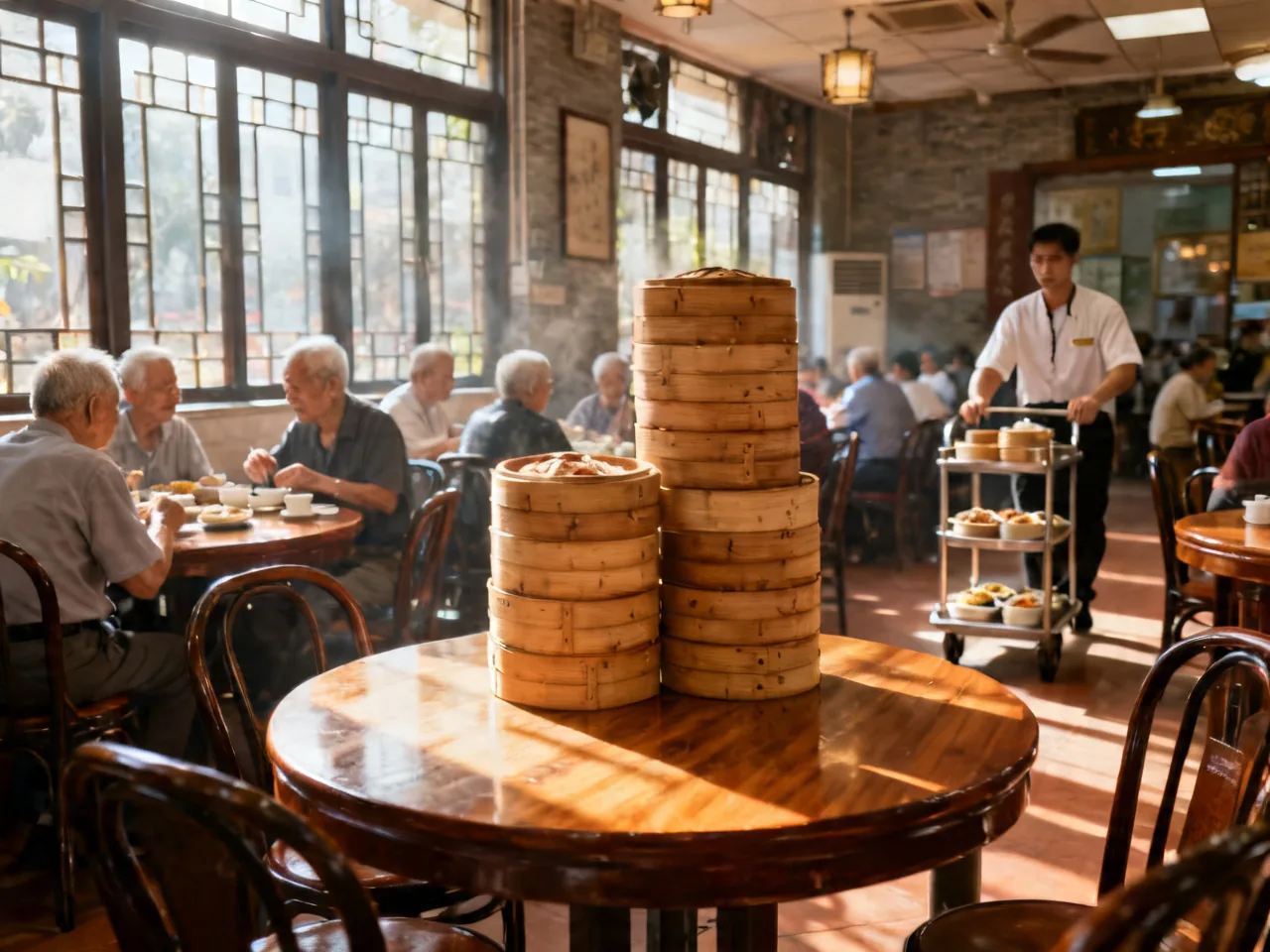
At 7 AM, Lianxiang Lou in Guangzhou’s Liwan District is already packed. Elderly regulars claim the window seats, newspapers spread across the table, Pu’er tea still steaming in the pot. Servers weave through the crowd pushing dim sum carts stacked high with har gow, cheung fun, and char siu bao. This isn’t a weekend treat — this is an ordinary weekday morning in Guangzhou.
“Yum cha” — drinking tea — means far more than the words suggest. It’s a social ritual, a way of structuring time, a marker of identity. Cantonese speakers say “tan” morning tea, a word that implies savoring, stretching out, taking your time. One pot of tea, two pieces of dim sum, and you might sit for two or three hours — talking business, catching up with family, or simply sitting in comfortable silence.
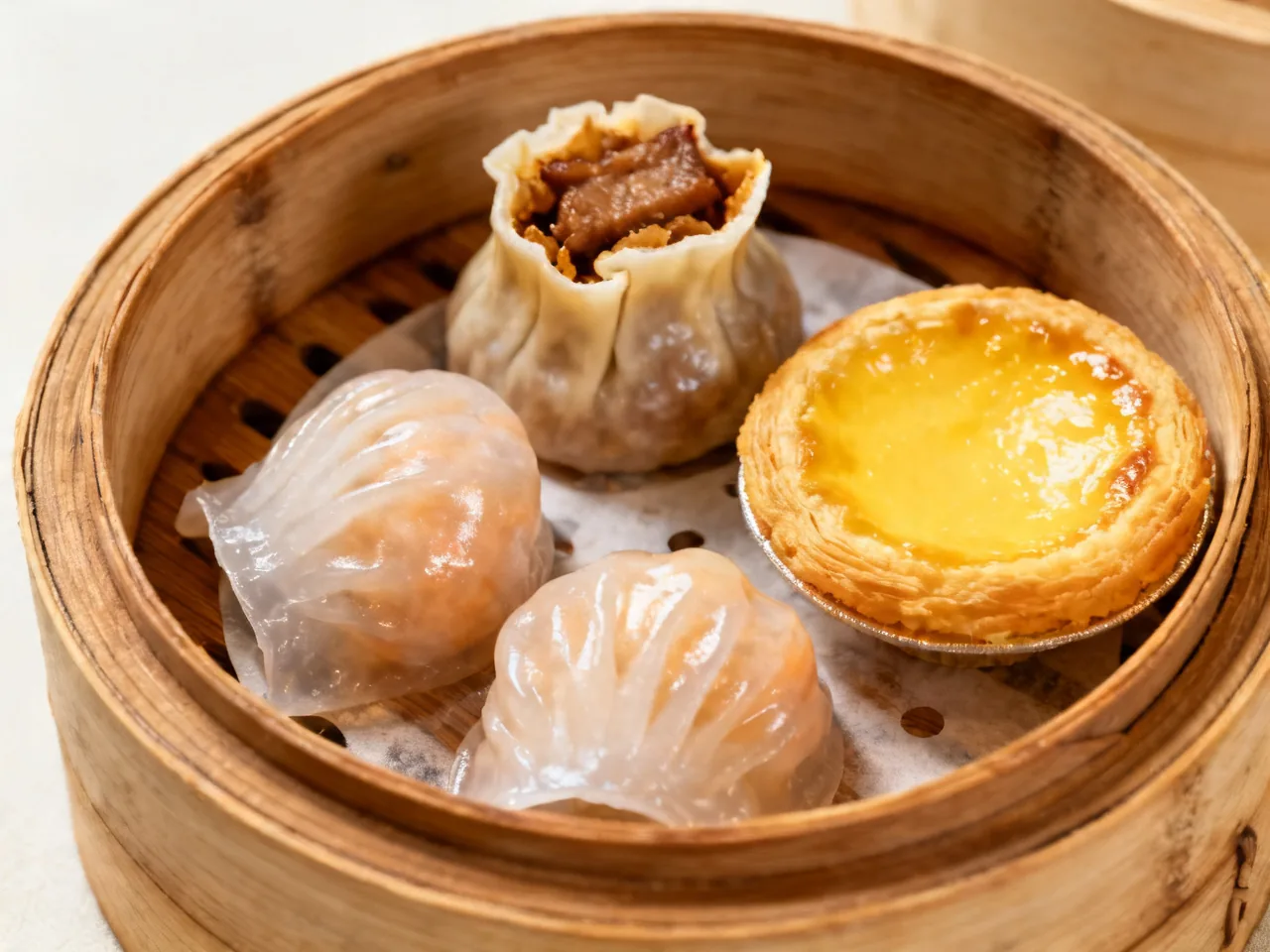
Cantonese dim sum spans over two hundred varieties, but the backbone of any proper morning tea session comes down to a few classics: har gow wrappers must be thin enough to see the shrimp through; cheung fun must be silky, the soy sauce drizzled just right; turnip cake must be pan-fried to golden on both sides, crisp outside and soft within. Guangzhou locals carry these standards internally — no need to articulate them. One bite tells you everything about whether a kitchen knows what it’s doing.
Shenzhen tells a different story. The city’s massive migrant population has filled it with Cantonese restaurants, but the proportion of diners who truly understand morning tea culture is lower. On a weekend morning around 10 AM in a Futian teahouse, a table of young people stares at the menu in confusion — unsure what “phoenix claws” are, uncertain whether “Malaysian sponge cake” counts as dessert or a main. The auntie at the next table leans over: “Phoenix claws are chicken feet, soft, delicious. The sponge cake is sweet — save it for last.” This scene plays out in Shenzhen teahouses every single day.
In Guangzhou, morning tea venues follow a clear geography. The old-school teahouses of Liwan and Yuexiu represent tradition and authenticity; the newer tea restaurants of Tianhe preserve the classics while introducing creative variations. Taotao Ju, Lianxiang Lou, Guangzhou Restaurant — these names aren’t just eateries to locals. They’re pieces of the city’s memory.
Beyond morning tea, Cantonese cuisine in Guangzhou spans several unmissable dimensions. White-cut chicken is the benchmark test for any Cantonese kitchen — the bird should be Qingyuan breed, skin silky, meat tender, with a faint blush of pink near the bone to signal perfect timing. Steamed fish demands absolute freshness; at a Guangzhou seafood restaurant, the first thing diners do is walk to the tank and choose their fish — alive, killed to order, steamed immediately. Clay pot rice is especially beloved in autumn and winter: lap cheong and cured pork laid over rice, a layer of crispy crust forming at the bottom of the pot. That bite is the taste of Guangzhou in winter.
Shenzhen, by geography, has even more direct access to seafood than Guangzhou. At the seafood markets in Nanshan District, fishing boats dock to unload as early as 4 AM — oysters, mantis shrimp, and flower crabs caught that morning go straight into nearby restaurant kitchens. If you’re in Shenzhen, don’t miss the chance to eat “today’s ocean.”
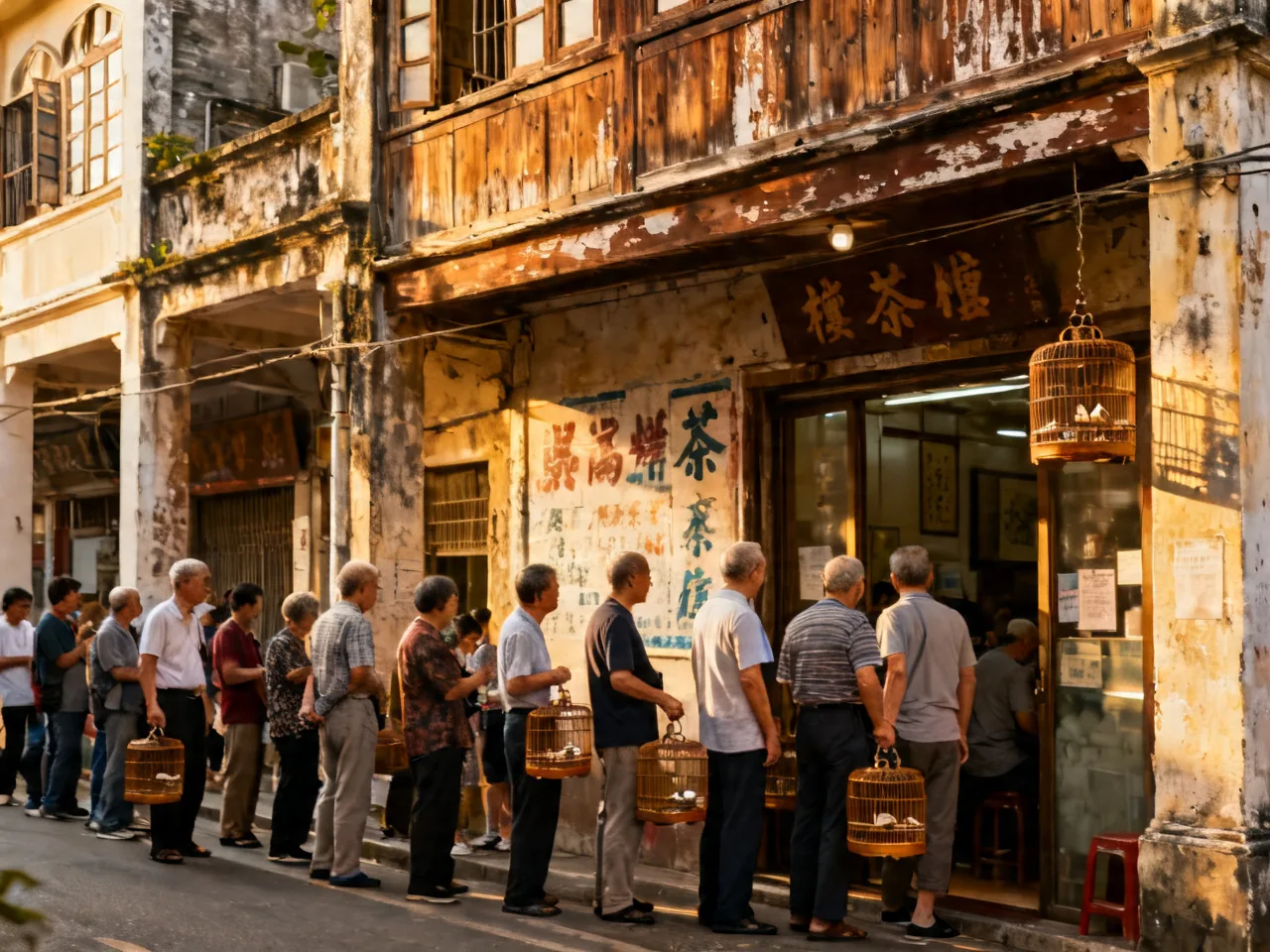
Guangzhou’s old teahouses hit peak capacity between 8 and 10 AM on weekends — without a reservation or queue number, you won’t get a seat. Many now accept WeChat bookings, but older regulars prefer to queue in person, because waiting is part of the ritual — you run into neighbors at the door, exchange a few words, and the wait disappears.
When ordering, if you’re unsure, mirroring the table next to you is the safest strategy. Guangzhou locals are generally patient with out-of-towners confused in teahouses — ask “is this one good?” and you’ll usually get an enthusiastic recommendation in return.
One last thing: when the teapot runs dry, tilt the lid to one side or lift it open. The server will see it and come to refill. This silent signal is the smallest, most elegant detail in the whole morning tea ritual.
Related Reads
- The 8 Great Cuisines of China
- Spellbound at First Bite: A Stranger’s Descent into Chengdu’s Heat
- Street Steam: The Real Pulse of Chinese Cities
- The Peppercorn Dossier: Sichuan’s Flavor Map Through a Botanist’s Eyes
- 10-Day East China Five-City Loop