一籠に一世界:茶楼で広東人を読み解く
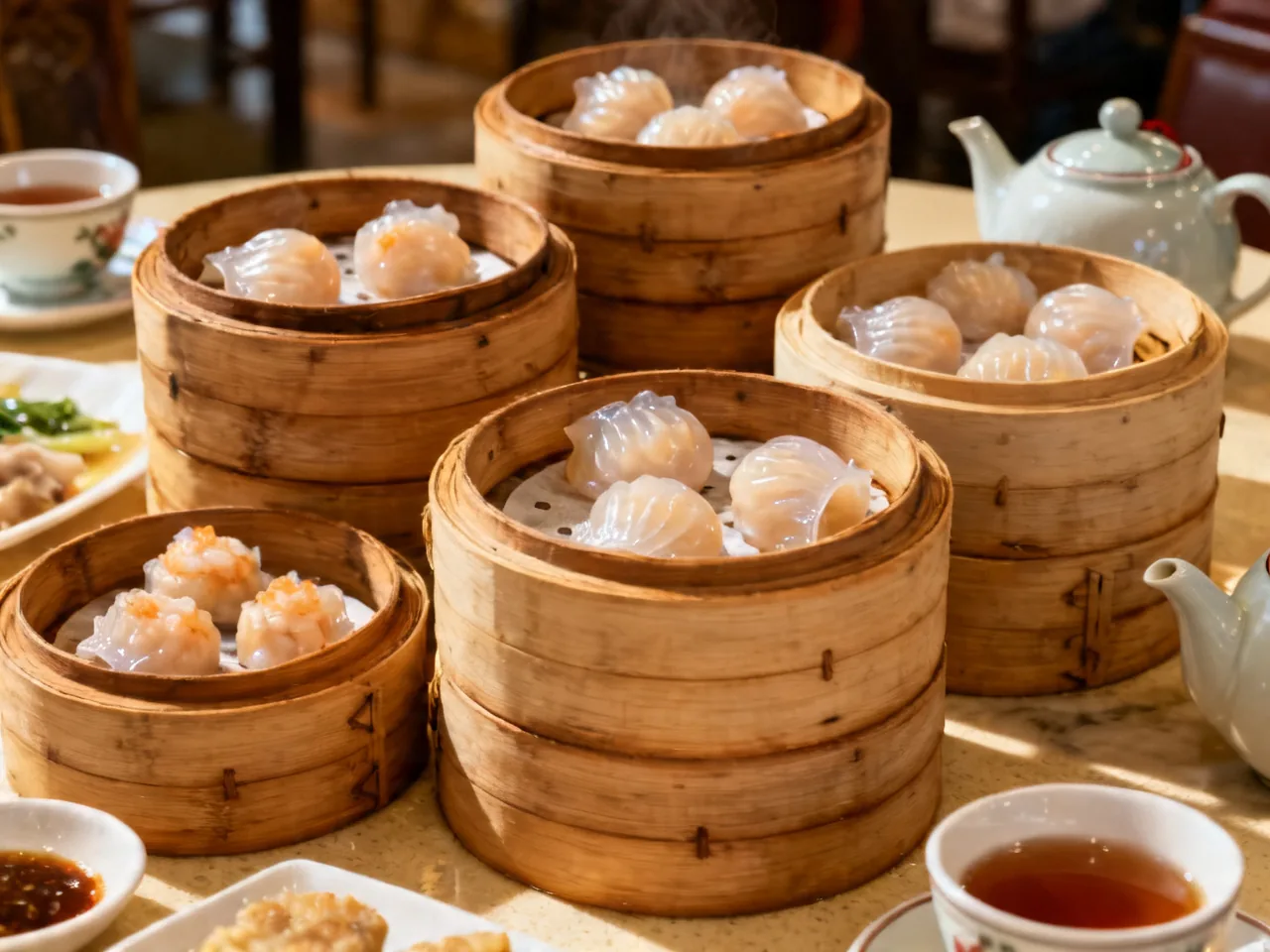
It’s seven in the morning at Lianxiang Lou in Guangzhou’s Liwan District, and there are already two dozen people queued outside. Old neighborhood regulars arrive carrying birdcages, hang them on iron hooks by the door, then head inside to claim their seats. Servers push metal carts between the tables, stacked with steaming bamboo baskets. An old man in a white undershirt reaches out to stop a cart, says nothing, and simply points at the top basket of har gow. This scene repeats itself every day in hundreds of teahouses across the Pearl River Delta.
The term dim sum (點心) literally means “touch the heart” — using food to reach something inside you. That interpretation may be overly poetic, but Cantonese dim sum does possess a delicacy found nowhere else. It isn’t a meal so much as a ritual. In Cantonese it’s called yum cha — drink tea — not “eat dim sum.” Tea is the lead, dim sum the supporting role, yet the supporting cast often steals the show.
Har gow is the emperor of the dim sum world. To judge a teahouse, seasoned eaters need only order one basket: the skin must be thin enough to be translucent, the pink shrimp visible through it; the pleats must be neat, with the traditional standard being no fewer than seven folds; and when you bite in, the wrapper should be springy without sticking to your teeth, the shrimp crisp and faintly sweet. Hit all three marks, and the teahouse has passed.
Siu mai is har gow’s constant companion — the two almost always appear together, like a comedy duo. Siu mai is filled with pork and shrimp, open at the top and garnished with a dot of orange crab roe or a green pea. It’s bolder than har gow: one bite floods your mouth with meat juices, the kind of thing that makes your chopsticks move faster without you noticing.
Char siu bao comes in two camps: steamed and baked. The steamed version splits naturally at the top like a white flower, its filling a sweet-savory tangle of barbecued pork. The baked version is golden and glossy, carrying a caramel fragrance. Both have devoted followings, and the debate never ends — much like Guangzhou locals arguing over which teahouse serves the most authentic morning tea. There is no answer.
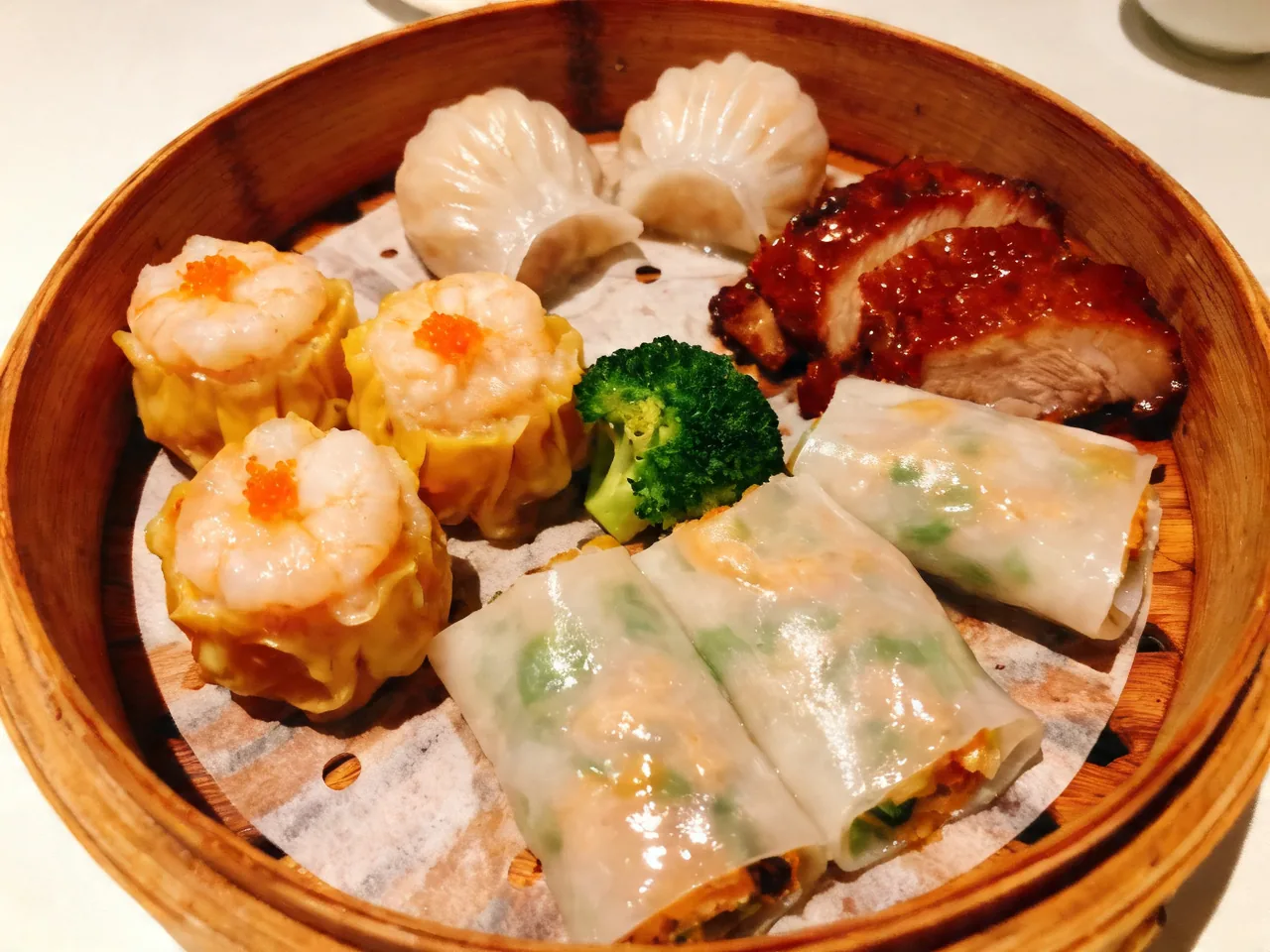
If har gow is dim sum’s star, cheung fun is its underappreciated genius. A sheet of rice noodle thin as cicada wings wraps around shrimp, beef, or char siu, then gets drizzled with soy sauce and peanut sauce — silky smooth as satin. Cheung fun stalls on Guangzhou streets open at six in the morning, one person standing before a steam cabinet, scraping the rice sheet off the tray with a spatula in a motion fluid as water, one portion every ten seconds.
Cantonese people divide the day into morning tea, afternoon tea, and late-afternoon tea, but morning tea reigns supreme. On weekends it can stretch from seven in the morning to noon — a whole family seated together, teapot after teapot refilled, dim sum plates stacking up. This isn’t eating. It’s catching up, doing business, letting children meet the aunts and uncles they only see twice a year.
There’s a detail outsiders often miss: in a teahouse, when someone pours tea for you, you tap two fingers lightly on the table as thanks. The gesture is said to originate in the Qing dynasty — when the emperor traveled incognito, ministers couldn’t kneel, so they used their fingers to mimic the kowtow. Whether true or not, the gesture has become one of the most elegant codes in Cantonese tea culture.
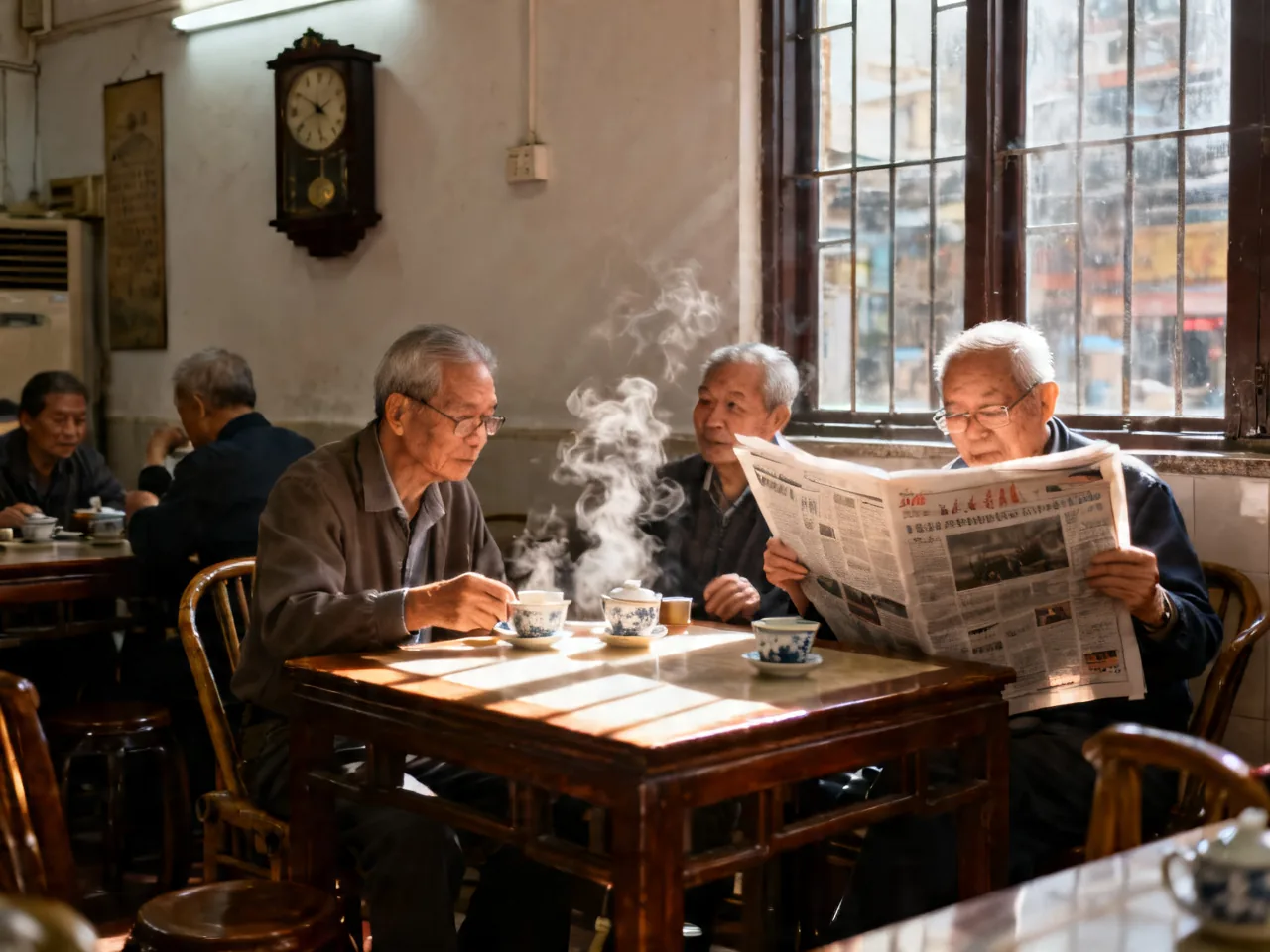
Hong Kong’s dim sum is known for refinement — in a Michelin-starred teahouse, one basket of har gow costs what ten portions of cheung fun would on a Guangzhou street. But refinement isn’t the same as authenticity. The neighborhood teahouses of Guangzhou’s old city are dim sum in its truest form: noisy, lively, affordable, full of the texture of everyday life.
Shunde is another place worth a dedicated trip. This small Pearl River Delta city is called “the hometown of Chinese chefs,” and its dim sum carries an unassuming authority: steamed pork from Jun’an, wild pheasant rolls from Daliang, Lunjiao cake… These names rarely appear on Guangzhou teahouse menus, yet they are the deepest roots of Cantonese food culture.
Next time you settle into a teahouse and watch a server push a cart past you, slow down a little. That basket of har gow passed through how many hands from dough to table, carrying how many years of craft. The “touch” in dim sum — maybe it really is touching something: a touch of time, a touch of human warmth, a touch of the small beauties that daily life makes easy to overlook.
Related Reads
- The 8 Great Cuisines of China
- Spellbound at First Bite: A Stranger’s Descent into Chengdu’s Heat
- Street Steam: The Real Pulse of Chinese Cities
- The Peppercorn Dossier: Sichuan’s Flavor Map Through a Botanist’s Eyes
- 10-Day East China Five-City Loop