Путешествие куска тофу длиной в две тысячи лет
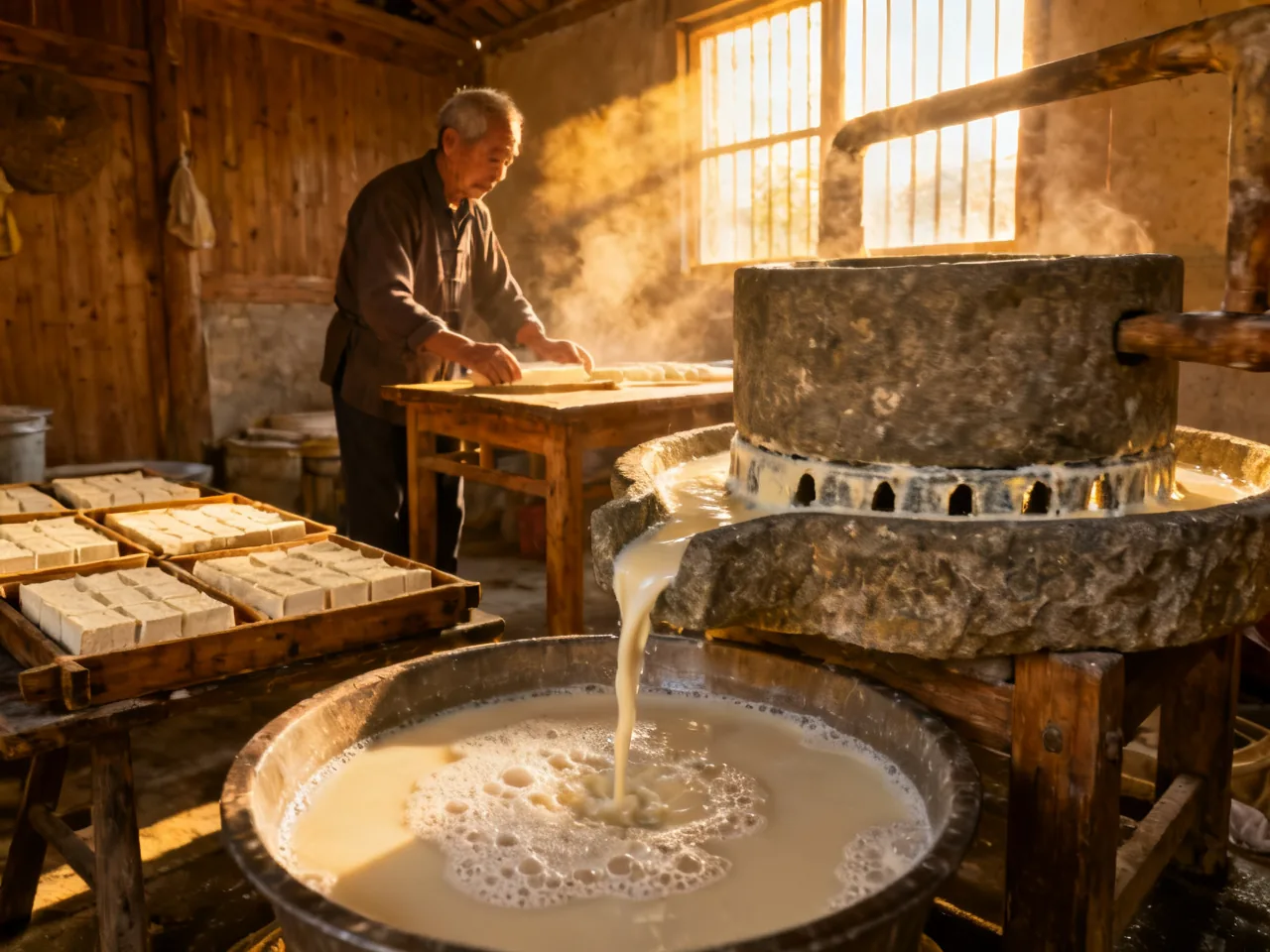
My grandmother never used gypsum to make tofu — she used sour whey. She said her mother taught her, who learned it from her mother before that. The stone mill they used still sits in the courtyard of our old home in Anhui, covered in moss. Every time I visit and touch it, I feel like I’m grasping the tail of something impossibly ancient. Tofu has been spinning through China for over two thousand years.
Origin: Prince of Huainan’s Accidental Invention
Around 164 BCE, Liu An, the Prince of Huainan, allegedly mixed soy milk with gypsum during an alchemy experiment — and legend says that’s how it all started. Huainan in Anhui still brands itself the “Hometown of Tofu,” hosting an annual Tofu Culture Festival on September 15th, the entire city fragrant with soy. Workshops at the foot of Bagong Mountain preserve the oldest handcraft methods: soaking beans, grinding, boiling, coagulating, pressing — five steps, not one skippable. Huainan’s spring-water tofu is so tender it trembles between chopsticks. Locals call it “living tofu.”
From Huainan, tofu spread nationwide along the Yangtze and the Grand Canal. By the Song Dynasty, Dreams of Splendor of the Eastern Capital already documented street vendors selling pan-fried tofu in Kaifeng. During the Ming and Qing dynasties, tofu became fully woven into daily Chinese life — the poor relied on it for protein, while the wealthy turned it into elaborate banquet dishes.
Notoriously Famous: The North-South Stinky Tofu Debate
The most controversial member of the tofu family is undoubtedly stinky tofu. Changsha’s Fire Palace Temple serves jet-black stinky tofu that Hunanese wear as a badge of honor — fried until the crust is pitch-dark and crackling, the inside snow-white and silky, drenched in garlic and chili. You smell the funk first, then taste the fragrance. According to Fire Palace’s own figures, peak-season daily sales exceed 15,000 servings. In Shaoxing and Nanjing, stinky tofu is a different species entirely: steamed, simmered, paired with edamame, the flavor more subtle, the stink more restrained.
Northern stinky tofu takes the fermentation route. Beijing’s Wangzhihe brand has been making fermented tofu since the Kangxi reign of the Qing Dynasty — over three hundred years without interruption. Gray-blue blocks sit in reddish brine, salty and savory with a deep fermented richness. Spread on steamed bread, it’s old Beijing’s most humble breakfast. Some call Wangzhihe fermented tofu “China’s cheese” — an apt metaphor, since both are microbes performing magic on protein.
Mapo Tofu: A Widow’s Legend
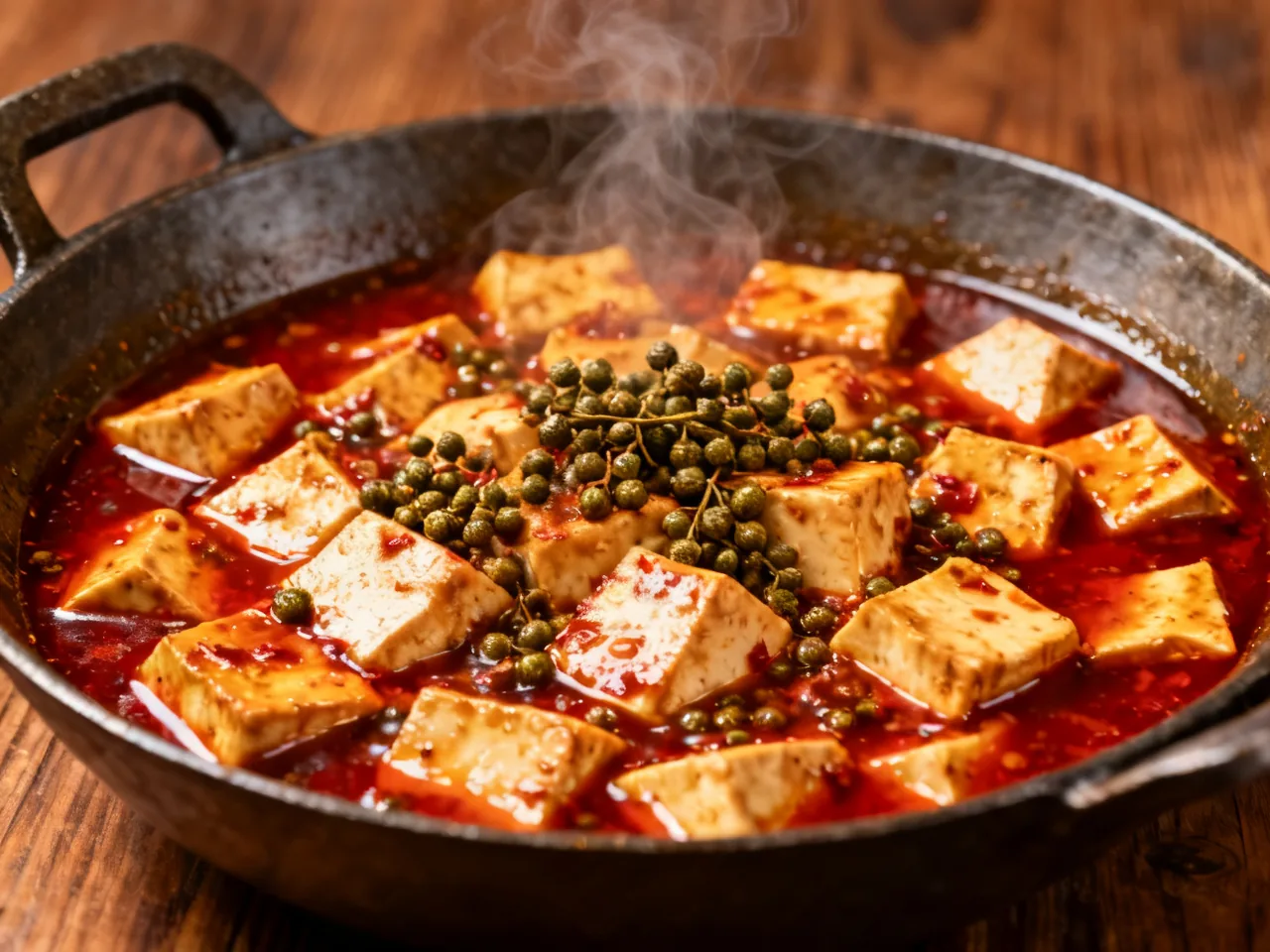
Any discussion of tofu’s peak must include Chengdu’s mapo tofu. During the Tongzhi reign, a small eatery stood beside Wanfu Bridge at Chengdu’s north gate. The proprietress, surnamed Chen, had a pockmarked face — hence “Chen Mapo.” Her tofu was cooked with minced beef, doubanjiang, Sichuan peppercorn, and red oil, achieving eight defining qualities: numbing, spicy, hot, fresh, tender, crispy, fragrant, and flaky. Today, the original Chen Mapo Tofu restaurant in Chengdu goes through over 250 kilograms of tofu daily, with lines from morning to night. The dish has ridden Sichuan cuisine’s global expansion to become the most internationally recognized Chinese tofu dish. If the fiery world of Sichuan food intrigues you, check out the story of Chongqing hotpot as well.
Tofu’s Contemporary Life
China today consumes approximately eight million tons of soybeans annually for bean-product manufacturing. Tofu has far transcended its identity as mere food. On Xi’an’s Muslim Quarter streets, you can eat stir-fried tofu pudding with Hui-style seasoning; at Cantonese morning tea, tofu flower drizzled with sugar syrup becomes dessert; in northeastern China’s pig-slaughter feasts, frozen tofu soaks up every drop of bone-broth essence. The same block of tofu, in different hands, lives a different life.
Sometimes I think tofu is a kind of projection of the Chinese character. On its own it has no strong flavor, yet it absorbs every seasoning thrown at it. It looks soft and fragile, yet withstands frying, stir-frying, braising, deep-frying, sun-drying, freezing, and fermenting. Two thousand years on, it’s still that same block of tofu — and it’s long since become something else entirely.