Только после того, как сычуаньский перец обожжёт кончик языка, ты по-настоящему увидишь сычуаньскую кухню
Let’s start with the controversy: Sichuan cuisine is profoundly misunderstood.
Outside China, “Sichuan food” is nearly synonymous with “spicy.” Inside China, many people also reduce it to mala hot pot and boiled fish in chili oil. Both readings are correct, but both are touching the elephant’s leg without seeing the elephant. Researchers at the Sichuan Culinary Institute have catalogued twenty-four official flavor profiles in Sichuan cuisine, of which no more than eight are primarily spicy. The remaining sixteen — fish-fragrant, strange-flavor, lychee, scorched-chili — each constitute an independent universe of taste.
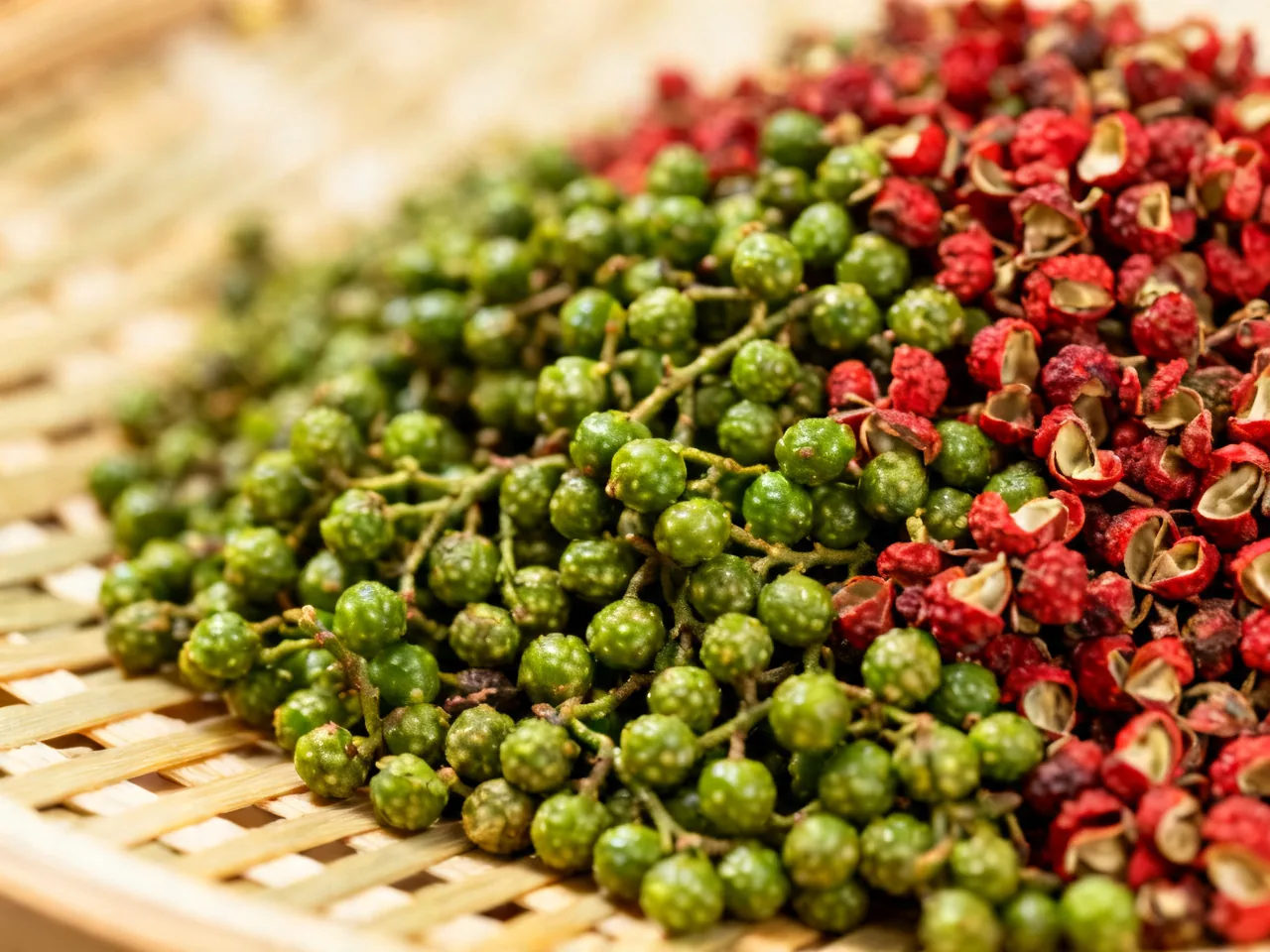
To understand Sichuan cuisine, you must first understand Sichuan peppercorn. The English translation “Sichuan pepper” has caused enormous confusion — it is not pepper, it is not spicy, and its defining effect is ma: numbness.
Ma is a neurological sensation, not a taste. The hydroxy-alpha-sanshool in Sichuan peppercorns acts on tactile receptors in the oral mucosa, producing a mild electric tingling while simultaneously lowering the perception threshold for other flavors — making spice spicier, umami more savory, fragrance more fragrant. Chengdu chefs call this yi ma ti wei: using numbness to amplify flavor. This is the core technical logic of Sichuan cuisine, and what fundamentally distinguishes it from other spice-forward culinary traditions.
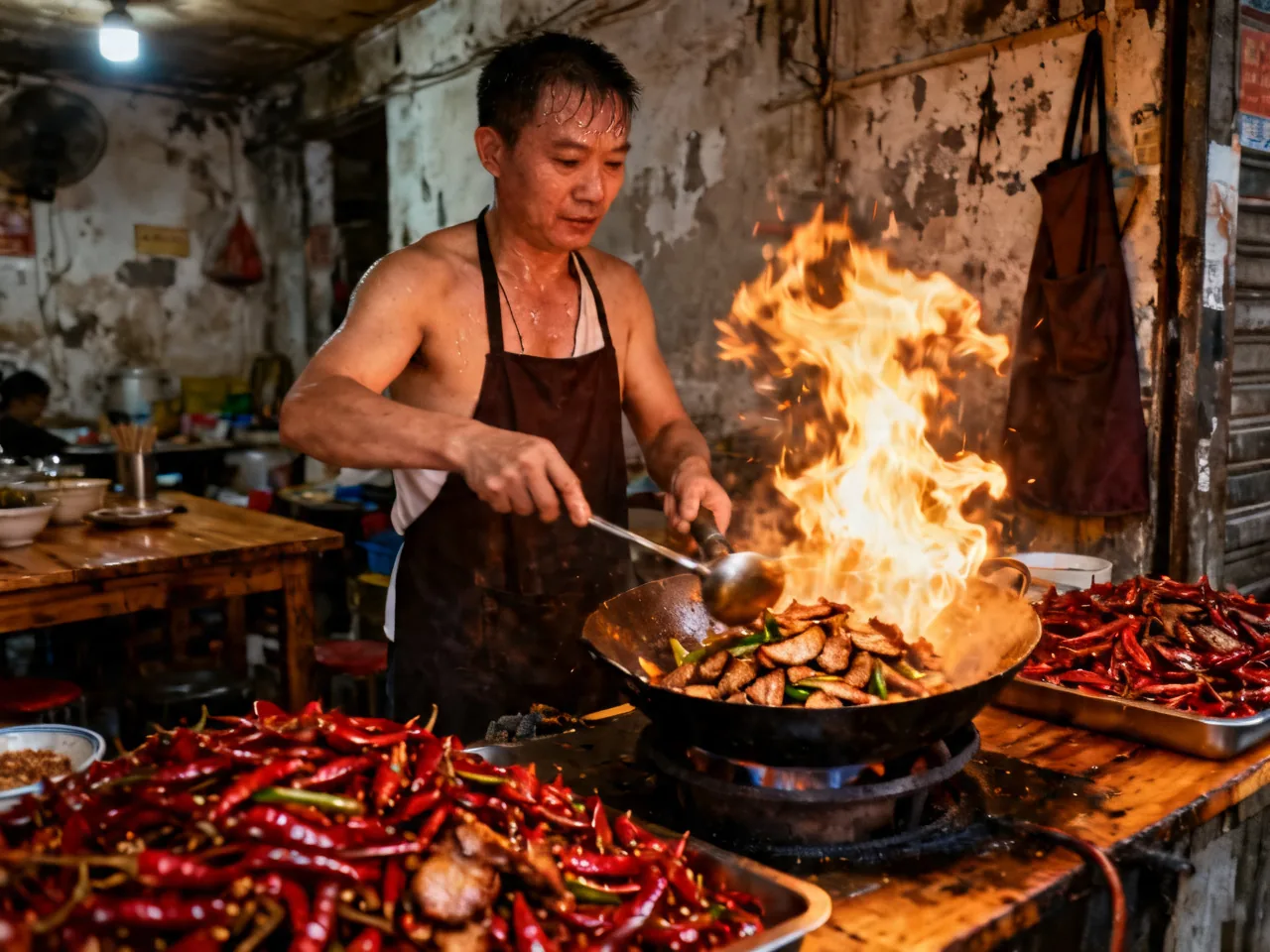
Anyone who studies Sichuan cuisine will eventually encounter a baffling question: why is there no fish in fish-fragrant shredded pork?
The fish-fragrant flavor profile originated in Sichuan folk methods for cooking fish: pickled chilies, ginger, garlic, scallion, sugar, vinegar, salt — a combination originally designed to eliminate fishiness and enhance the fish’s savory quality. Cooks later discovered that the same seasoning applied to pork, eggplant, or tofu produced a similar sweet-savory sensation reminiscent of fish. So “fish-fragrant” evolved from a fish-cooking technique into an independent flavor profile. The “fish fragrance” in fish-fragrant shredded pork is a taste association, not an ingredient description.
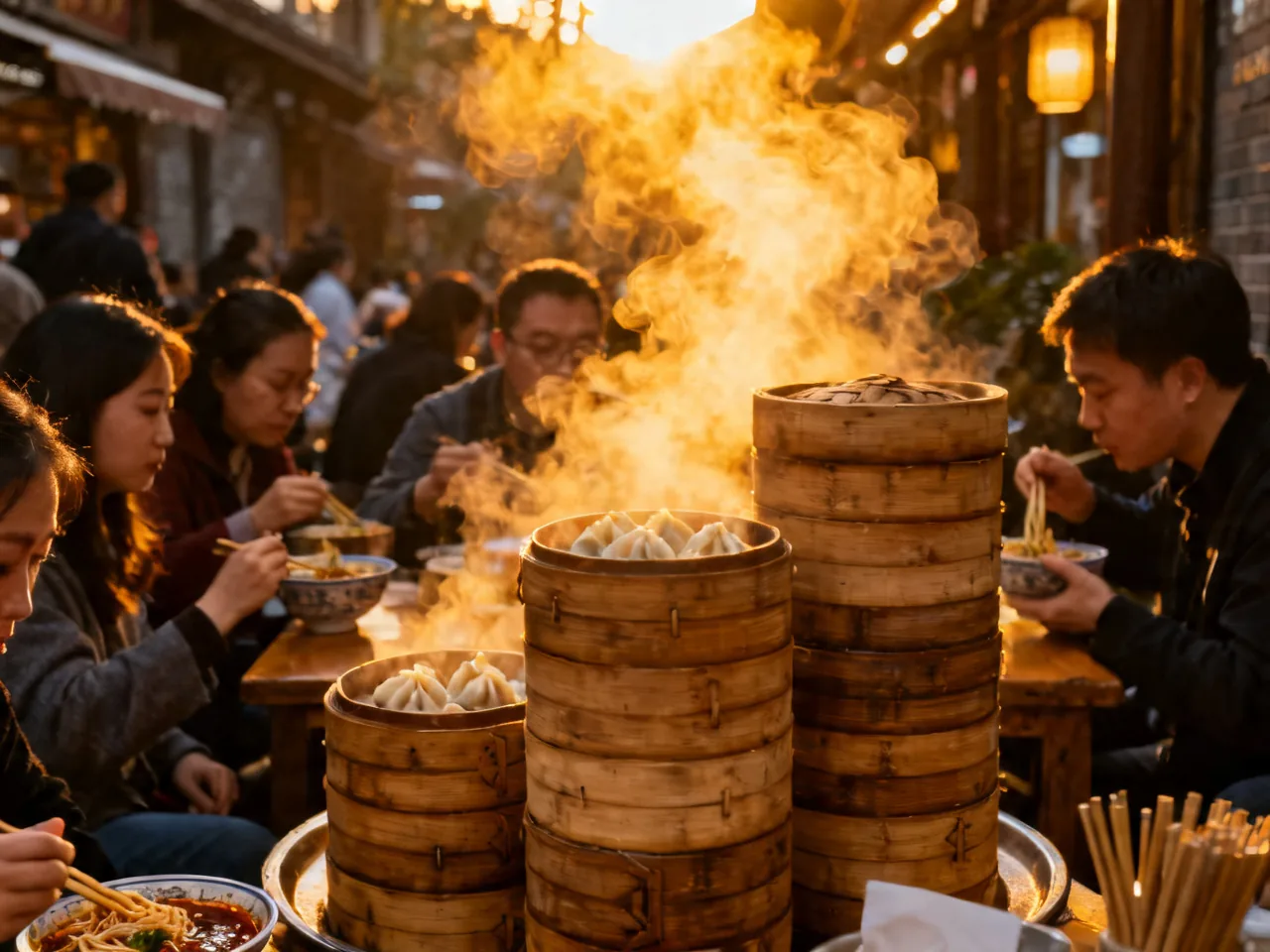
Near Qingshiqiao Market in Chengdu, a dan dan noodle shop has been open for thirty years, run by a Chengdu woman in her sixties. Her dan dan noodles come in one size, one price, with no customization accepted. The noodles are thin alkaline wheat noodles, cooked to just the right chew. The bowl’s base is sesame paste, Sichuan peppercorn oil, chili oil, soy sauce, vinegar, and sugar — proportions she learned from her teacher thirty years ago and has never changed. On top goes a spoonful of stir-fried minced pork, a scatter of scallion. Done.
A food critic from Taiwan once sat in her shop for an entire afternoon, trying to persuade her to reveal the recipe. The old woman finally said: “I can tell you the recipe, but you can’t replicate the fragrance of that minced pork. That fragrance is thirty years of seasoning in this wok.” That sentence comes closer to the essence of Sichuan cuisine than any cookbook.
Kung pao chicken is one of Sichuan cuisine’s most recognized dishes, but its origins remain disputed. The mainstream account credits Qing dynasty official Ding Baozhen, who served as Governor of Sichuan — “Gong Bao” was his honorary title. But other researchers note that similar preparations appear in records from both Guizhou and Shandong; Ding may have brought the dish into the official banquet repertoire without inventing it.
The dispute itself matters less than what kung pao chicken demonstrates: the lychee flavor profile. Lychee flavor isn’t the taste of lychee fruit — it’s a sweet-sour balance that approximates lychee, using less sugar and vinegar than the fish-fragrant profile, producing a lighter acidity better suited to tender chicken. Peanuts add fat and texture; dried chilies and peppercorns provide an underlying mala foundation. The dish’s layered complexity is built from this architecture.
For a first serious encounter with Sichuan cuisine, this sequence is recommended: start with fu qi fei pian — husband and wife beef slices — to feel the foundational combination of chili oil and peppercorn. Then eat fish-fragrant eggplant to understand the fish-fragrant profile. Follow with kung pao chicken to experience the lightness of lychee flavor. Finally, eat a bowl of su jiao za jiang noodles and watch how Sichuan cuisine assembles all its flavor profiles into a single bowl.
Save hot pot for last. Not because it’s unimportant, but because it’s so intense it can obscure the nuances of everything else. Like listening to a symphony, you can’t start with the final crescendo.
The complexity of Sichuan cuisine isn’t there to impress — it’s there to be enjoyed. The first time you eat a Sichuan dish and find yourself unable to say exactly what flavor it is, congratulations: you’ve begun.
Related Reads
- The 8 Great Cuisines of China
- Spellbound at First Bite: A Stranger’s Descent into Chengdu’s Heat
- Street Steam: The Real Pulse of Chinese Cities
- The Peppercorn Dossier: Sichuan’s Flavor Map Through a Botanist’s Eyes
- 10-Day East China Five-City Loop