Досье на сычуаньский перец: вкусовая карта Сычуаня глазами ботаника
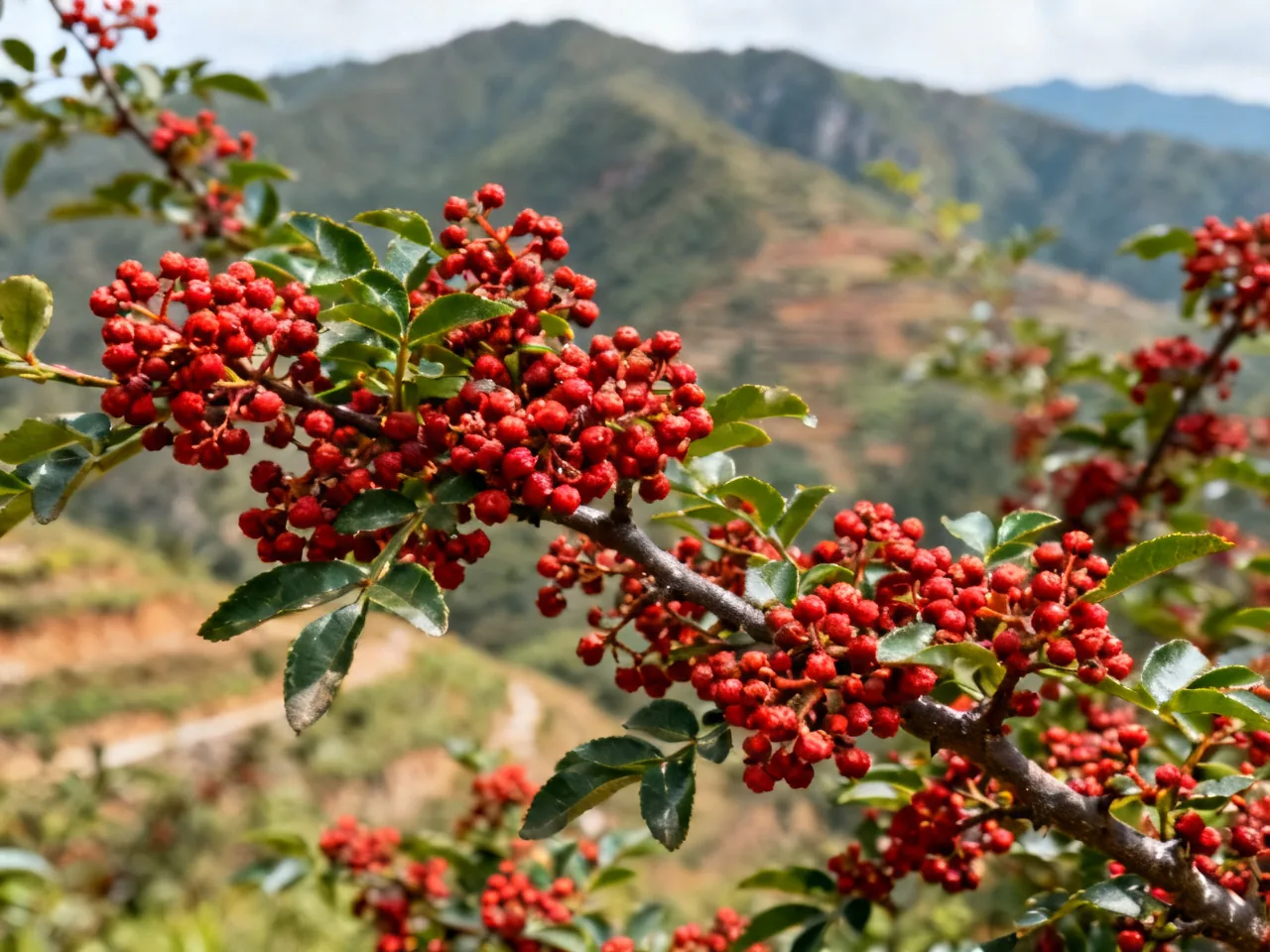
More than 250 species of the genus Zanthoxylum have been documented worldwide, but the distinctive “numbing” sensation on the tongue comes primarily from two: Zanthoxylum bungeanum from Hanyuan County in Sichuan, and Zanthoxylum schinifolium, more common in southern Sichuan and Chongqing. The chemical differences between these two species directly determine the subtle flavor divisions within Sichuan cuisine — divisions most diners never realize they’re experiencing as a precise exercise in plant chemistry.
The numbing sensation from Sichuan peppercorns comes from a class of amide compounds called sanshools. They act on tactile receptors in skin and mucous membranes, producing not pain but a sensation of low-frequency vibration — some researchers describe it as “a 50-hertz tactile illusion.” This explains why the numbing of peppercorns and the burn of chilies can coexist without canceling each other: they operate on entirely different neural pathways.
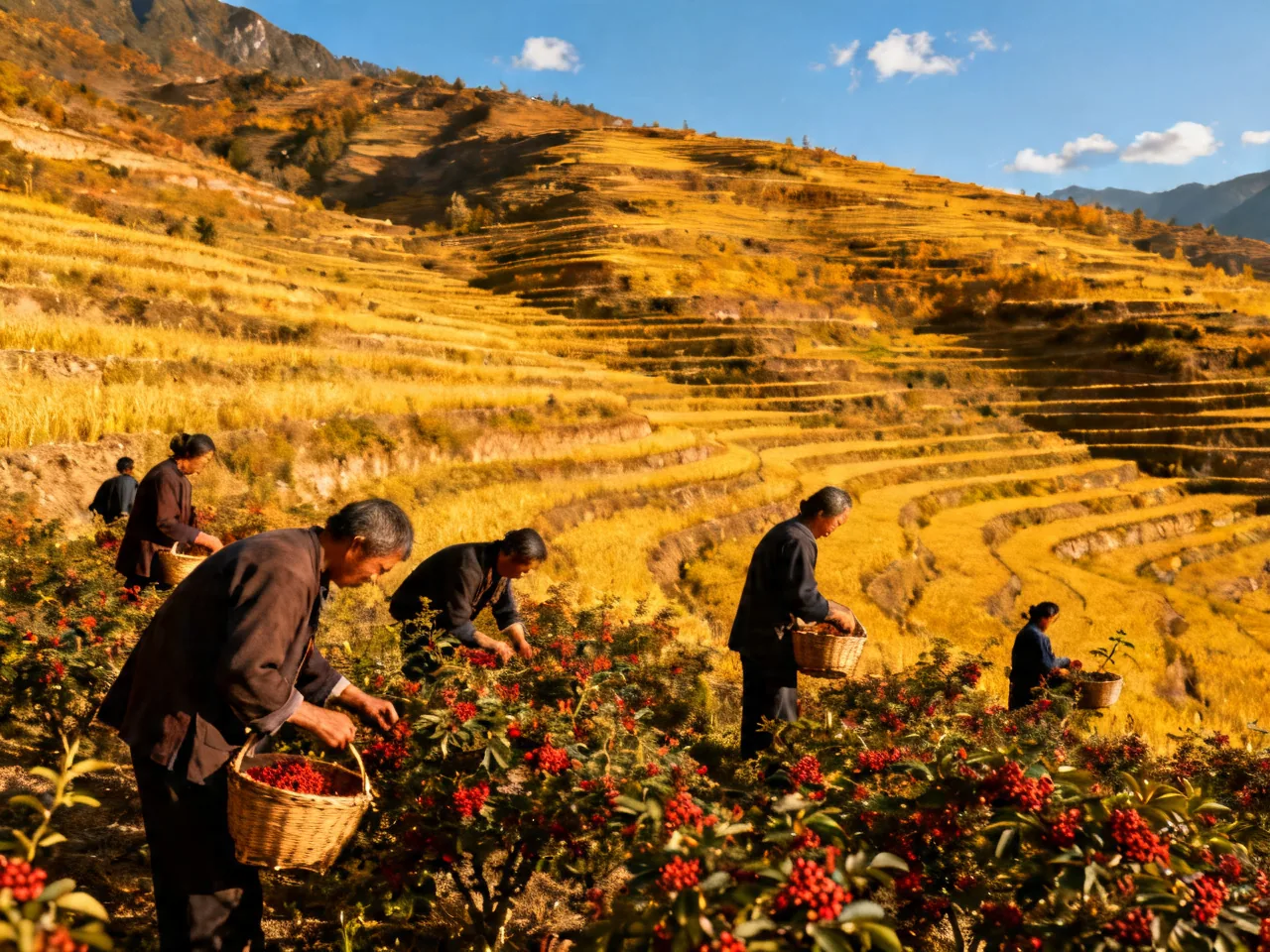
Hanyuan County sits at the southwestern edge of the Sichuan Basin, where the Dadu River carves through and dramatic elevation changes create a unique microclimate. Local peppercorn cultivation traces back to the Tang Dynasty, when it was a tribute to the imperial court. Each August, harvest season arrives: the hillsides dense with peppercorn trees heavy with red fruit, pickers heading up the mountain before dawn, gloved hands using scissors to clip cluster by cluster with deliberate gentleness — break the skin and the fragrance escapes.
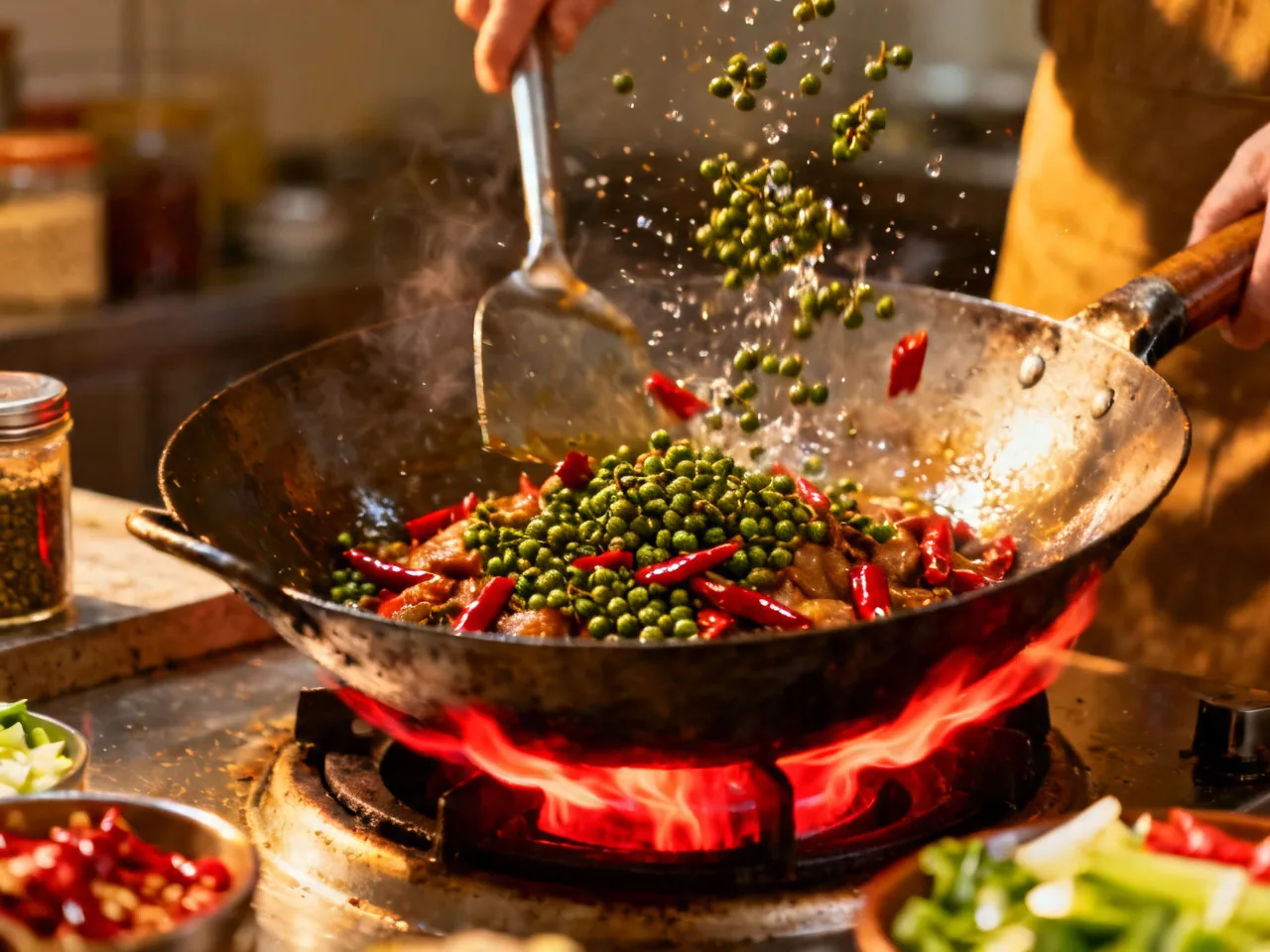
The aromatic compounds in Hanyuan peppercorns are dominated by limonene and linalool, giving them a bright citrus undertone that contrasts with the heaviness of chili. Green Sichuan peppercorns lean more herbal and raw, commonly used in southern Sichuan’s téng jiāo jī and jiāo má jī — their clean, fresh numbing sensation is entirely different from the rounded depth of Hanyuan peppercorns.
Within Sichuan cuisine, there exists a regional stratification that outsiders rarely perceive. Chengdu cooking emphasizes red oil and doubanjiang, rich and rounded; Zigong cuisine, known as “salt gang food,” uses salt heavily and runs bolder; Leshan excels with tofu and river fish; Yibin is famous for its dry-tossed noodles and fermented sprouts. These differences stem partly from geography and local produce, partly from the dietary habits brought by different historical migration waves.
Pixian doubanjiang is another key to understanding Chengdu cooking. The fermented broad bean paste produced in Pixian (now Pidu District, Chengdu), made from er jing tiao chilies and broad beans, undergoes at least six months of natural fermentation, emerging deep red with a complex, savory fragrance. Authentic Pixian doubanjiang must be stir-fried over low heat until the red oil is coaxed out — a process called “chǎo xiāng” that cannot be rushed. Many Chengdu chefs believe that whether a dish succeeds or fails, half the credit or blame belongs to how well the doubanjiang was fried.
From a researcher’s perspective, the most fascinating aspect of Sichuan food may not be how spicy it is, but its system of “compound flavor profiles.” Sichuan cuisine recognizes twenty-four standard flavor types, including yú xiāng (fish-fragrant), guài wèi (strange flavor), lì zhī (lychee), and chén pí (dried tangerine peel) — each a precise combination of multiple seasonings. There is no fish in “fish-fragrant,” nothing strange in “strange flavor.” These names describe a sensory impression, not an ingredient list.
This flavor system is the crystallized experience of centuries of cooks. It tells us that Sichuan people’s understanding of taste long ago surpassed the basic framework of sour-sweet-bitter-spicy-salty, entering a more refined and almost poetic dimension of perception. Next time you eat yú xiāng ròu sī in Chengdu, pause and consider: how many generations of taste memory are folded into this dish?
Related Reads
- The 8 Great Cuisines of China
- Spellbound at First Bite: A Stranger’s Descent into Chengdu’s Heat
- Street Steam: The Real Pulse of Chinese Cities
- More Than a Dish: Peking Duck as Beijing’s Letter to the World
- 10-Day East China Five-City Loop