Между Бадагуань и морским берегом я понял, что в Циндао удобнее всего идти вовсе не по прямой
It was a little after four in the afternoon, and the tree shadows around Badaguan had already begun to slide toward the middle of the pavement. The sea wind was not yet at its hardest, but it was strong enough to lift the back of a shirt slightly away from the body. A visitor from out of town stood at the junction with a small bag and a map, looking first at the slope ahead and then back toward the water, as though unsure whether to move upward first or downward toward the sea. A local mother pushing a stroller did not stop, but as she passed she said one thing softly: in Qingdao, you do not need to choose the perfect route first; choose the one your body is willing to keep walking.
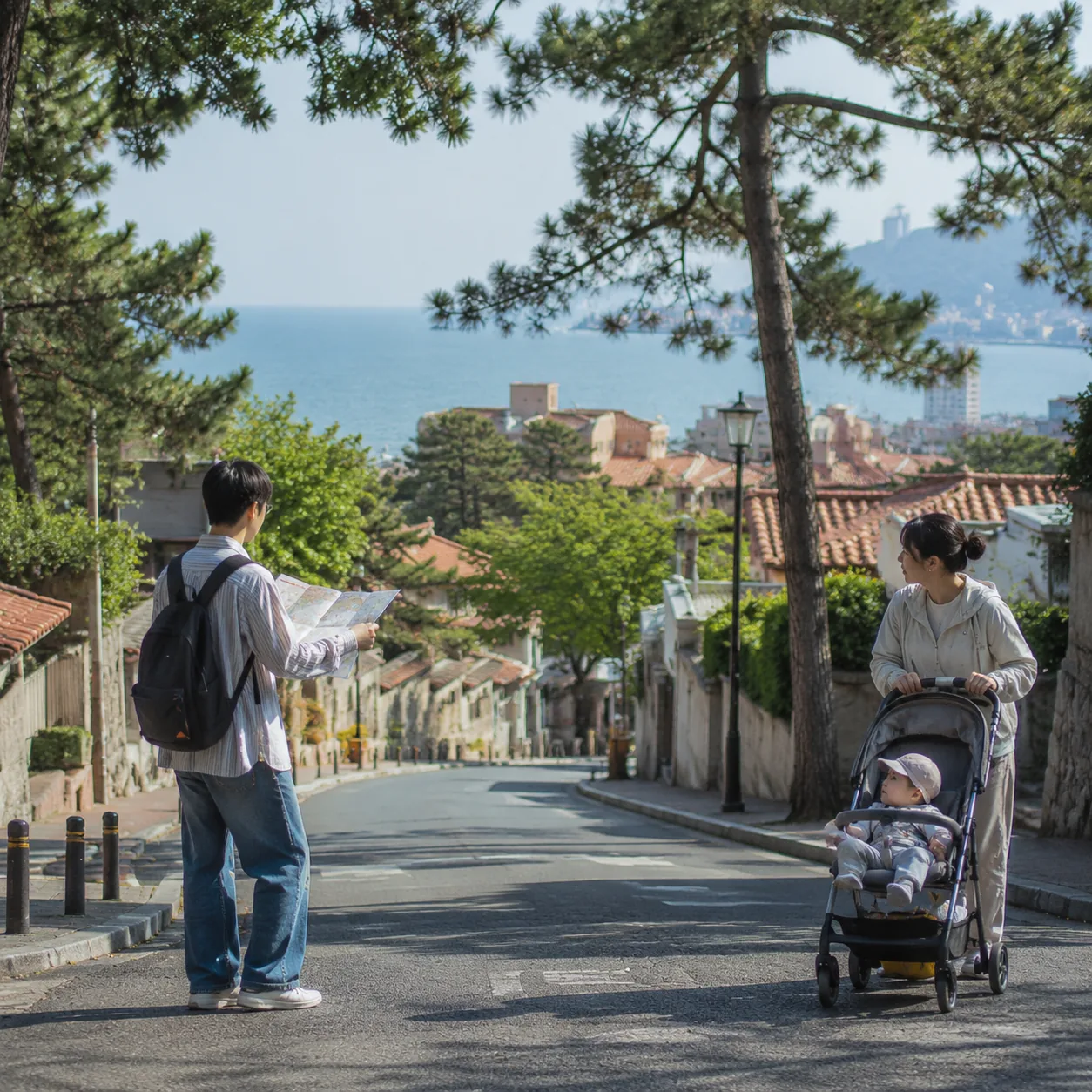
That sentence sounds like comfort, but in practice it is closer to the heart of a guide. The most common mistake first-time visitors make in Qingdao is assuming that a coastal city should be handled by pursuing the broadest views with the biggest strides. So they hurl themselves toward the most famous waterfront route at the very beginning, hoping to connect sea, red roofs, older houses, slopes, and night scenery all in one breath. Yet what makes Qingdao truly suited to a slower method is exactly that it is not a city to be finished by force. It is a city that keeps asking you to reduce speed.
The phrase “mountain-water slow sections” becomes empty if it is treated as mere lyricism. What it means in actual walking terms is that the day should be broken into distinct segments rather than driven toward one uninterrupted climax. Qingdao’s hills are not there to be conquered, and the sea is not there to be rushed toward. The better rhythm is usually to begin with a slope that teaches the eye the scale of the city, then give yourself a flatter section close enough to feel the sea wind without needing to reach the water immediately, and only after that reserve the most desired coastal stretch for late afternoon or the early night. In that rhythm, the sea is not spent too early, and the hills do not empty the body before the route has matured.
A slower reported style fits Qingdao because its beauty does not always sit in the brightest place. Very often it lives in the transitional sections: a sloped road pushing you from district scale into wider sightlines, a row of old trees holding the wind for a few seconds, a turn behind a wall suddenly releasing a narrow view of the water, or an unremarkable lane making you realize that sea and everyday life are not separated here at all. If you rush through these places, they merely feel smooth. If you move slowly, they begin to feel layered.
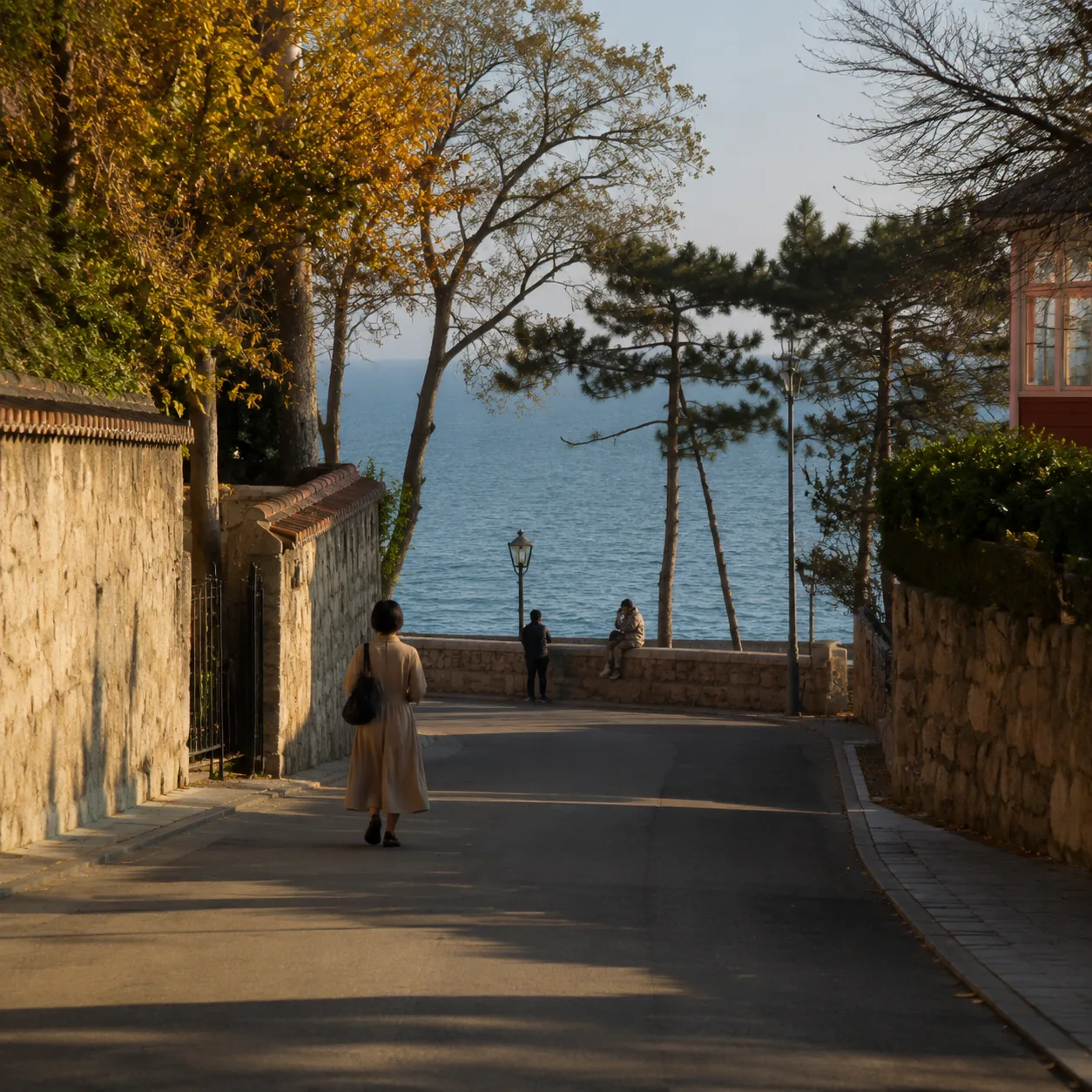
Many guides describe Qingdao simply as “good for walking,” and that is not wrong. But the phrase is too vague to be useful. A better description is that Qingdao rewards the kind of walking in which bodily adjustment and judgment adjustment happen together. You need to keep recalibrating according to wind, slope, light, and what the soles of your feet are telling you. If one section by the sea turns too exposed, too empty, or too hard, there is no reason to force yourself through all of it. If another section along the hill carries good shade, manageable foot traffic, and enough breeze, then that may be the section worth giving ten more minutes. A guide like this does not teach task completion. It teaches rhythmic correction.
This matters even more before National Day or at any time when the city is busier. Qingdao is not a seaside city in which more people automatically create more atmosphere, at least not all day long. Some waterfront viewpoints lose their looseness very quickly once the crowd thickens. The slower segmented method is more stable: first use short pieces near the hills, near museums, or along older streets to offset the crowds, then hold the most desired sea stretch until both light and body are in a better condition. It may look like concession, but in practice it protects the texture of the entire day.
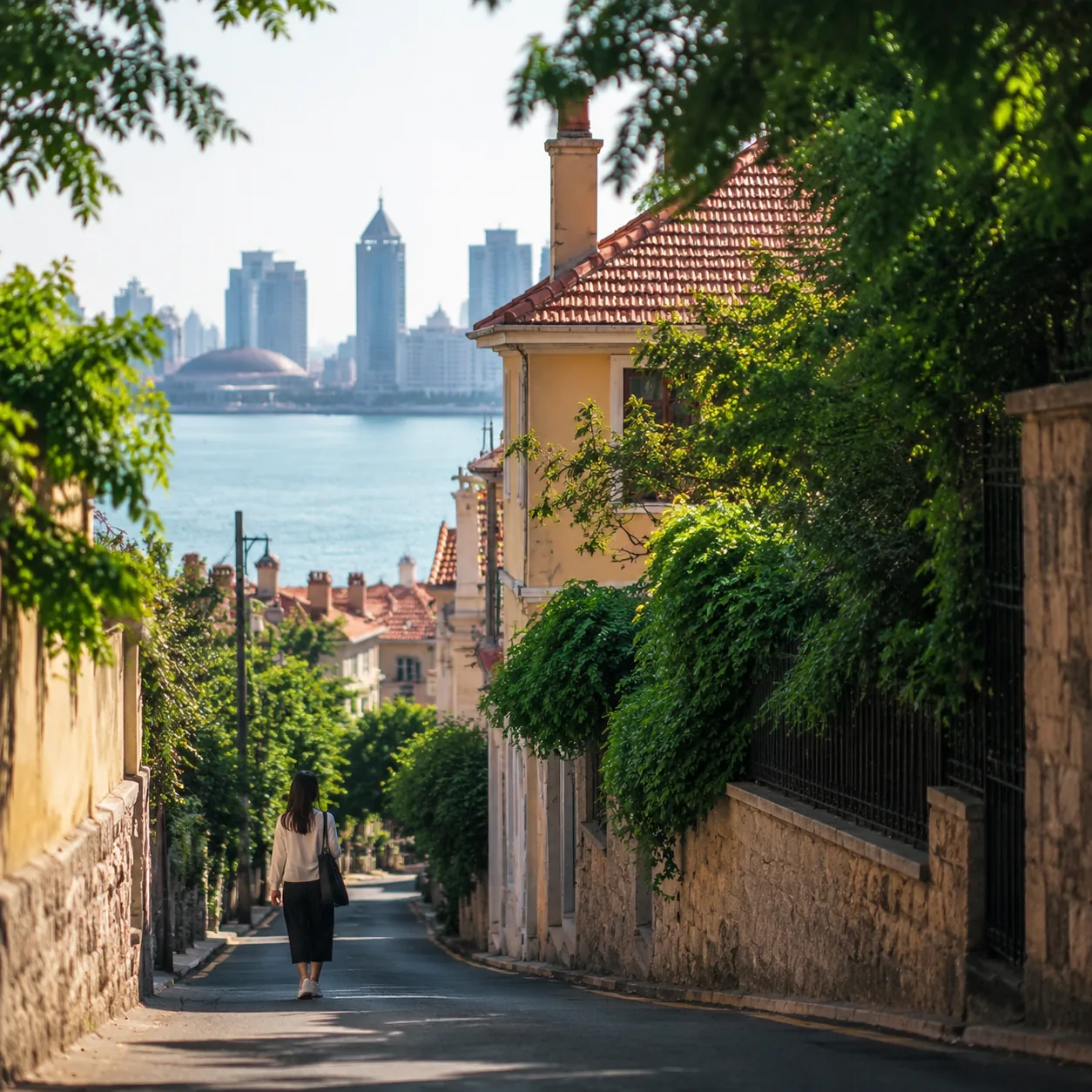
For first-time foreign visitors to China, Qingdao has another particularly generous quality: it allows one to learn, gently, that a city is not a flat map. Many people arriving in large Chinese cities feel pressed by routes, exits, street names, and pace. Qingdao has its own slopes, turns, and older urban complexity, but before frustration hardens, it often offers a little wind, a little shade, and a strip of visible sea in the distance to calm the body back down. That is why the focus of a guide should not be only “how to get from A to B,” but “which middle section deserves to be deliberately slowed.”
What I love most about Qingdao near evening is not the fact that one finally reaches the water, but the realization that there is no longer any urgency to stand at the very front. The sea is still there, and the wind is still there, but what makes the rhythm cohere are all the smaller slow sections already passed through beforehand. Without them, the waterfront becomes merely a destination. With them, it becomes an answer.
As the light began to sink, a young man by the stone railing lowered the phone he had just raised and reached first for the brim of his cap in the wind. Farther out, the waves were not large, yet they kept breaking the reflected lights into fragments. By the time I came slowly down the slope toward the sea, it felt clear that what Qingdao most deserves in writing is not a sentence about how pleasant the coast is. It is the way the city uses those unglamorous slow sections between hill and sea to tune an outsider’s stride, little by little, into a rhythm that belongs to Qingdao itself.