Сойти со стены на полпути — это было первое правильное решение, которое я принял в Нанкине
At half past eight in the morning, I was standing near Jiefang Gate with a cup of soy milk still hot in my hand, the thin plastic warming my palm until it felt slightly sticky. Ahead of me, a small group of tourists had already started up the slope, and the soles of their shoes scraped the steps with a short, dry sound. A woman selling breakfast packed sesame flatbread for another customer, glanced up at me, and offered a sentence that sounded half like advice and half like accumulated experience: don’t rush to finish everything in one go; in a place like Nanjing, moving smoothly matters more than covering everything.
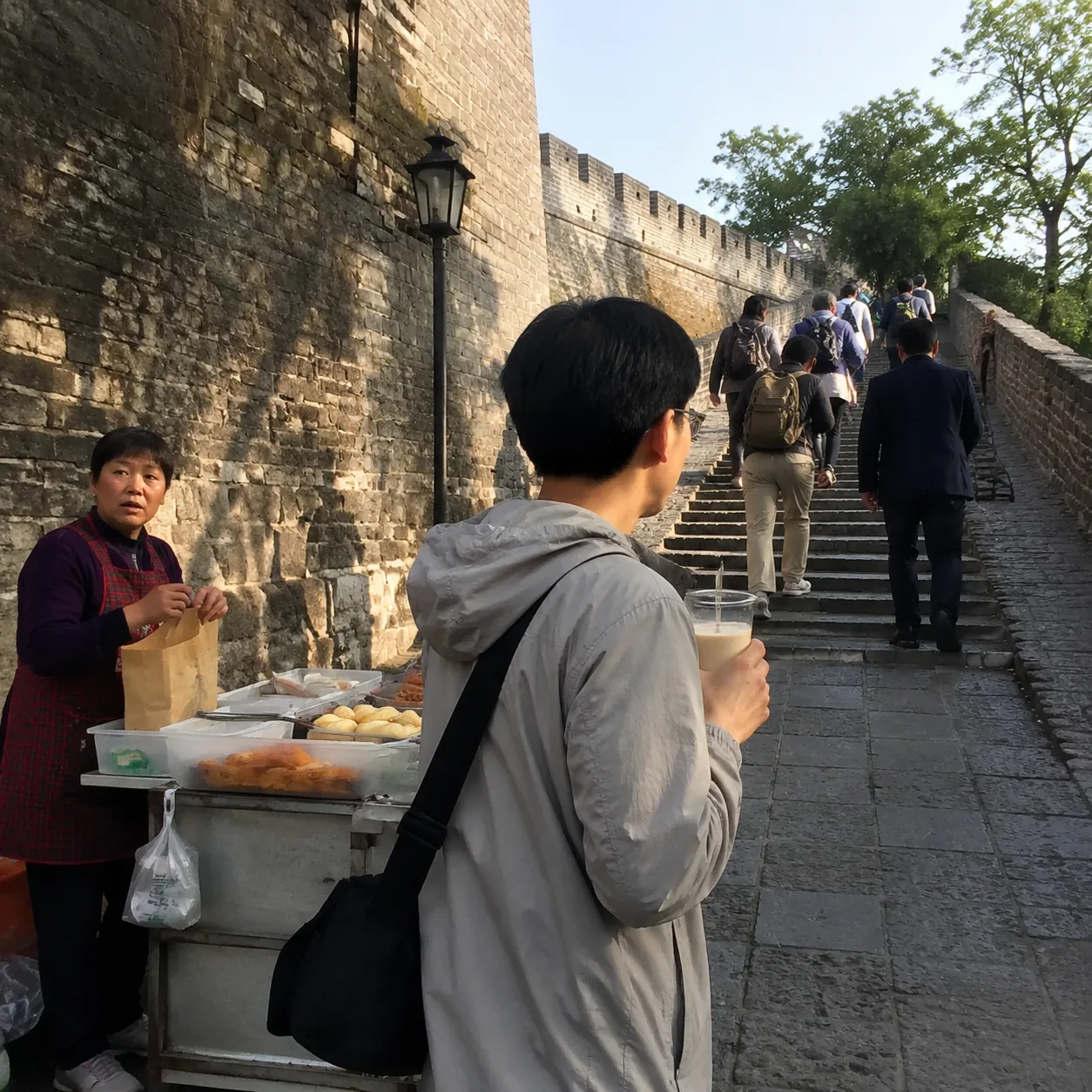
When I used to plan city routes in China, I made one mistake again and again: I mistook completeness for efficiency. If the map allowed me to connect things, I assumed I should see a little more, walk a little farther, and stitch one site directly onto the next. Nanjing cured me of that habit. The easiest error here is not a lack of information. It is the assumption that every section deserves to be followed immediately by another, until the entire city is walked down to nothing but a frame.
The most practical lesson for a Nanjing guide is not a list of must-sees. It is an awareness of sequence. A place like the wall belongs to the morning. Not because it is guaranteed to be least crowded, but because morning light explains more clearly how brick, slope, gate opening, and surrounding roads still relate to one another. From the top, you stop seeing only the phrase “ancient city wall” and start seeing how present-day Nanjing keeps functioning beside it. That matters, because it determines whether you still have the patience and energy to read the city’s next layer later in the day.
When I reached the Taicheng stretch that day, my first instinct was honestly to become greedy. The view toward Xuanwu Lake was open, the breeze worked in my favor, and the photographs were almost impossible to ruin. That smoothness is exactly the danger. Once things feel easy, you begin to assume you are in great shape, and without noticing it you add tasks to the second half of the day: another gate, another section of wall, one more modern district, perhaps even a famous old restaurant folded in on the way. But this is precisely how Nanjing resists being handled. The fuller you pack it, the emptier it returns in your memory.
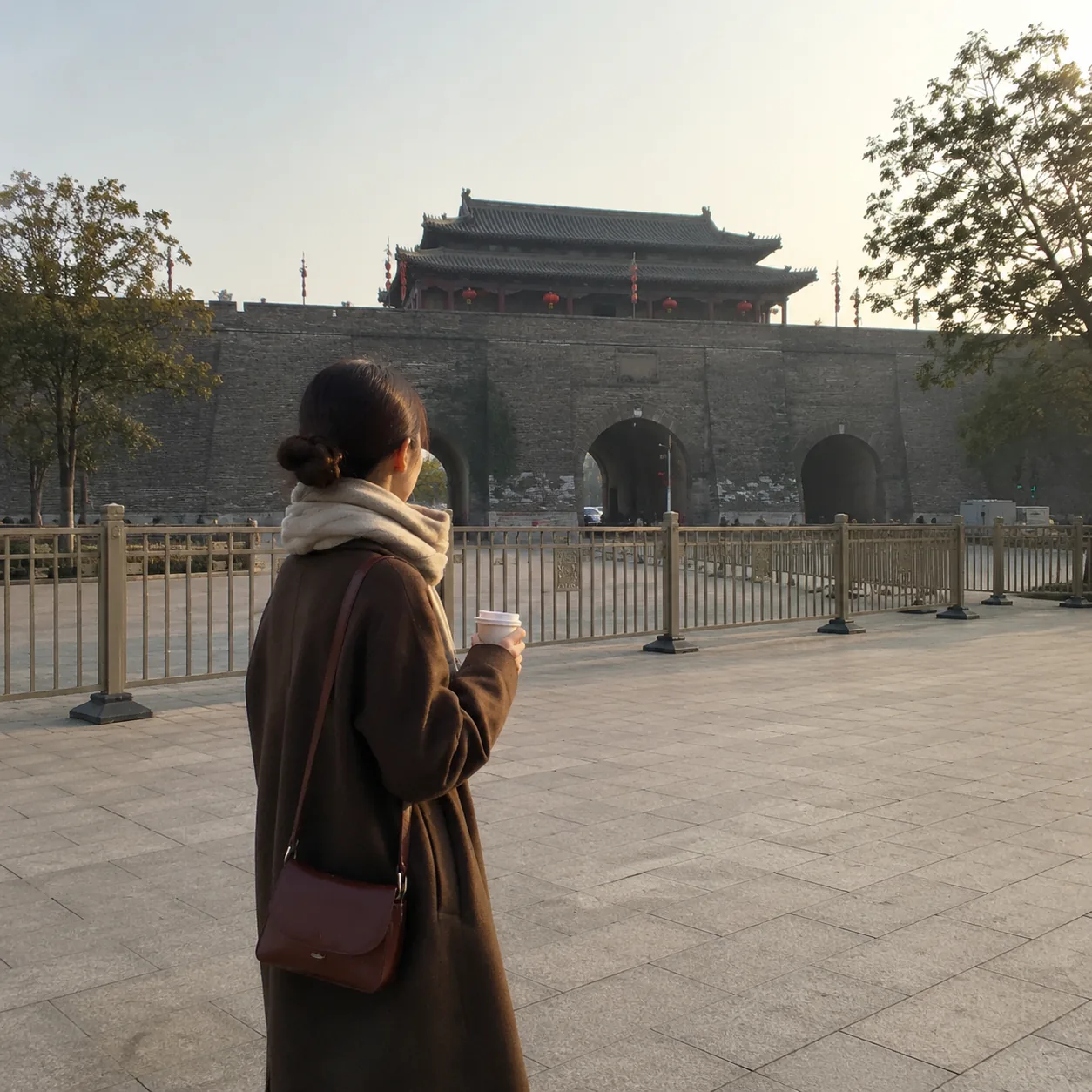
A truly effective guide does not give more. It knows when to end earlier. That day, after I had stayed on the wall long enough, I did not force the next section onto the route. I came down, walked slowly along the road below, and found a small place where I could sit. The meal itself was not dramatic—a hot bowl of soup, two modest snacks, a pale laminated tabletop worn by years of use with one corner slightly peeling. Yet once I sat down, I could feel my attention reset. Nanjing has this very particular quality: you need to leave room for pauses, or the city refuses to reveal the next layer.
This matters even more around public holidays. The moment people hear National Day, May Day, or even an ordinary weekend, they instinctively try to outrun the crowd entirely—by starting too early, or stretching the route too far. My experience is that Nanjing rewards peak avoidance, not anti-peak obsession. Peak avoidance does not mean fighting the crowd at all costs. It means recognizing which places should be done early, which belong to the middle, and which are simply not worth squeezing into the busiest hour. The wall wants the morning, the modern districts can wait a little, food should not be postponed until hunger turns sharp, and roads under trees or by the lake belong to the hours when the mind has softened a little.
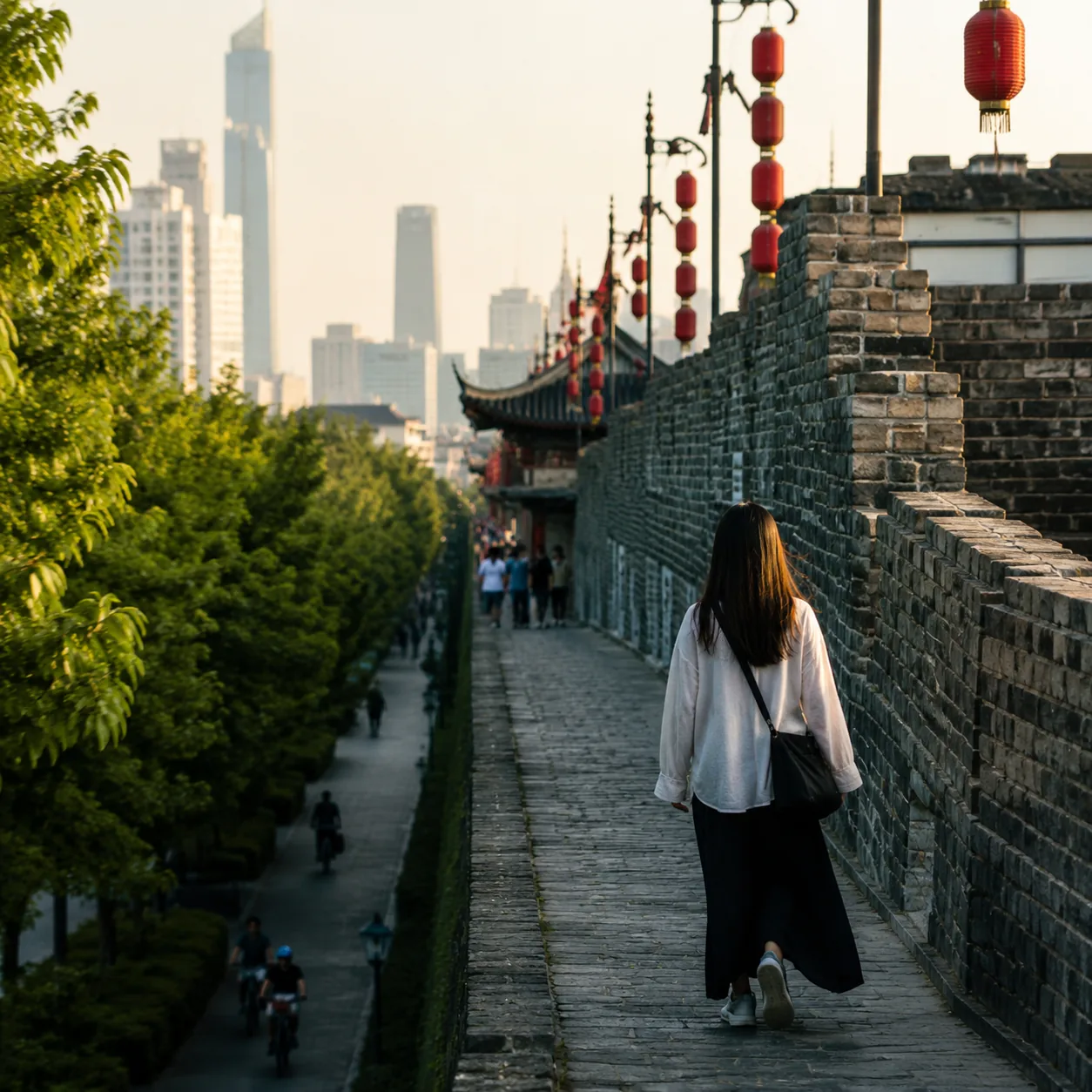
Many first-time foreign visitors to China imagine Nanjing primarily as a city of dense history. That judgment is not wrong, but if a guide stops there, it turns into a manual. The useful version is more concrete: here you are not simply reading history, you are learning how a city distributes weight across one day. Morning brings you close to brick and gates, afternoon to districts and tree shadows, and evening hands you pedestrian rhythm, roadside light, and the outline of older buildings together. Once the route begins to flow, Nanjing stops feeling like stacked pages of material and starts to feel like a surface slowly brightened over the course of the day.
I learned another small lesson too: do not continue every place that looks as if it still has more to give. Nanjing offers that illusion often, especially near the wall and around quiet district edges. You think another twenty minutes will not hurt, another turn might still be worth it. But travel judgment rarely collapses through one big decision; it usually erodes through this kind of endlessly extended optimism. The first time I stopped at a point that merely felt “just right,” the rest of the day—the Republican-era streets and the evening walk—became clearer instead of thinner.
By evening, the wind came slanting under the tree canopy. The lights along the road were not dramatic, but they were enough to lift the façades gently into view. Holding the last unfinished mouthfuls of water, I stood at a crossing and realized I had finally stopped turning Nanjing into a checklist. There were still roads ahead, of course, and still more to see. But that day I finally understood that a good guide does not teach you how to use a city up. It teaches you how, at the moment you still want to continue, to crush the empty cup in your pocket and walk instead toward a slower direction.