Когда Китай снимают как большую магистраль высокоскоростных железных дорог, самое ценное содержится в пересадках и переходах
On foreign travel channels, content from creators like Island Hopper TV differs sharply from immersion-style city vlogs. Their China video does not enter through one neighborhood corner. It frames the country directly as a broad line: which cities deserve attention, which regions suit a first-time visit, and which sections belong within the same high-speed rail journey. On the surface, this is easy to treat as a simple destination compilation. But if the public title and summary are read carefully, the real attraction lies elsewhere. The video tries to prove that China does not have to be understood as isolated attractions. It can be understood as a travel network held together by high-speed rail.
This kind of content is extremely valuable for Travel Notes because what often discourages overseas readers is not the quality of the destinations. It is the inability to imagine how those destinations connect inside one real trip. The moment connection becomes thinkable, many places that seemed overwhelmingly complex cool down immediately. They shift from “I could never manage that” into “I might be able to attempt a shorter version.”
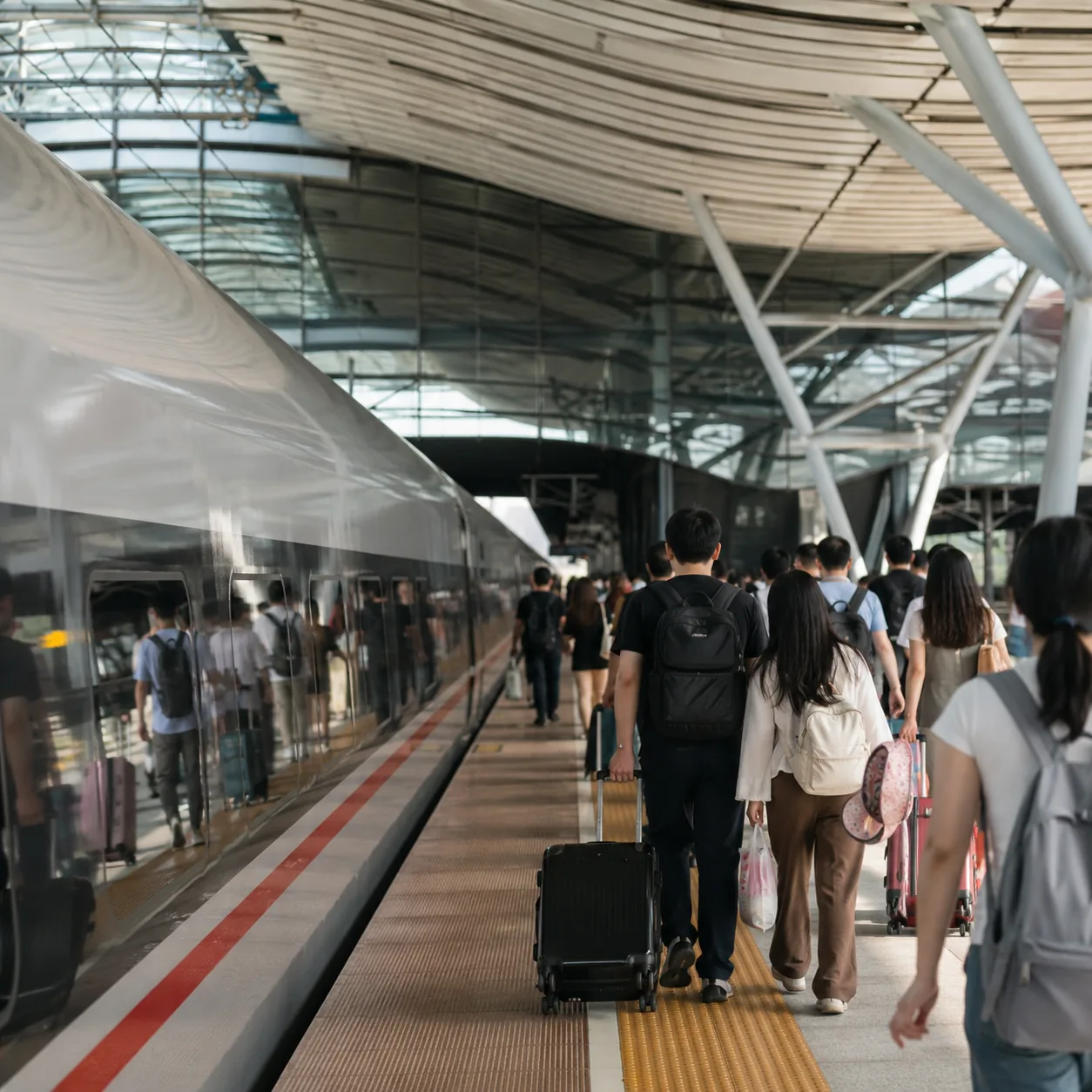
In an Island Hopper Style China Guide, the Real Focus Is Not Maximum Coverage but Maximum Linkability
These overview-style videos are often misread as nothing more than a roll call of famous destinations. But what truly holds them together is not quantity. It is linkability. The public summary points not only to cities, but also to rail motion, regional spread, food differences, and cultural switching. In other words, the video does not present China as a flat travel poster. It suggests instead that what viewers really need to learn is not how to memorize a dozen points, but which points belong together.
This matters especially for first-time visitors to China. Such travelers are not usually frightened by the existence of many options. They are frightened by the unknown space between those options. A high-speed-rail-arc video spreads well precisely because it performs a major subtraction on the viewer’s behalf. It does not demand understanding of the entire country at once. It first persuades the viewer that China can be broken apart and reassembled according to the logic of a rail line.
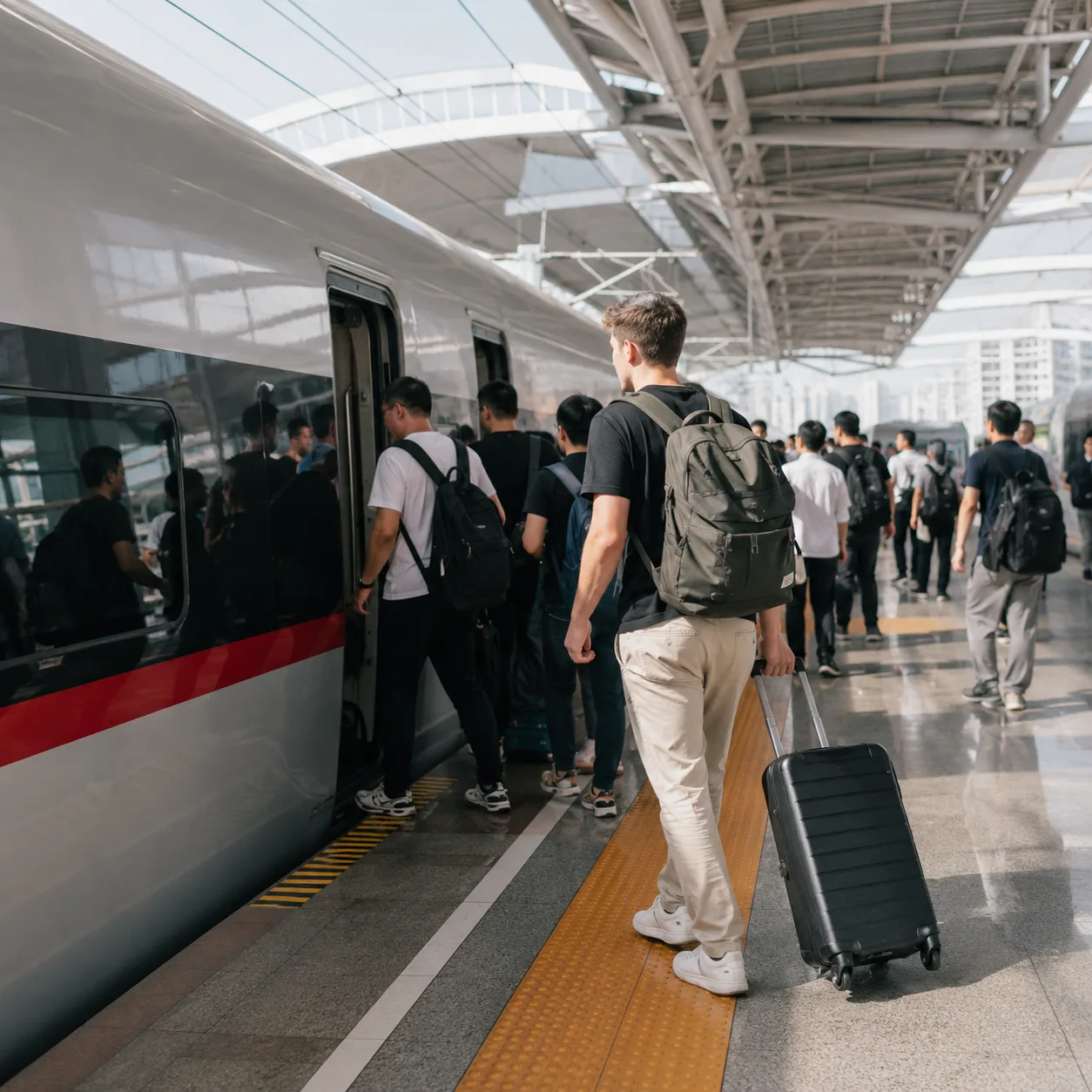
Why High-Speed Rail Content Makes China Suddenly Feel Plannable
In many countries, travel-overview videos still ultimately fall back on rental cars, highways, or stitched flights. Once China enters a high-speed-rail narrative, the psychology changes visibly. Rail converts the question of “can these places really connect?” from geographical fantasy into time management. For outside viewers, that is a major mental shift. The problem stops being “can I cross a country this large?” and becomes “which cities belong in the first half and which belong in the second?”
The writer believes this is one of the most valuable changes inside foreign-facing China travel content. It moves China away from being only a vast destination to admire and toward being a vast route that can be planned seriously. The first image creates distance. The second creates action. If Travel Notes wants to catch this logic properly, it should not stop at rewriting “which places are the most beautiful.” It should keep moving downward into operation: how a first-time China rail arc should be shortened, and which combinations remain stable if the traveler has ten days, two weeks, or three weeks.
What This Kind of Video Most Easily Overlooks Is That Rhythm Matters More Than the Map

High-speed rail makes everything look close. That is its gift and also its deception. Once the line appears feasible, viewers easily underestimate post-transfer fatigue, the adaptation cost of city changes, and the bodily effect of climate variation between regions. North and south are not separated only by cuisine, and east and west are not separated only by scenery. What truly shapes the comfort of the trip is whether enough buffer remains inside the chain of city changes.
That is exactly the layer third-person reported writing can supply—the parts such large-route videos have no time to explain in detail. Which stops can sit tightly together, and which need rest in between? Which segments deserve longer stays, and which are better touched briefly? What kind of traveler suits a multi-city rail arc, and what kind is better served by a region-focused version? This does not reject the creator’s route. It completes the imagination the creator opened and turns it into executable China travel logic.
What Travel Notes Should Transform This Kind of Foreign Video Into
The writer believes overview videos of this kind should be transformed into three layers of site content. The first layer explains why the video spreads, just as this article does: because it reframes China from “too large” into “connectable.” The second becomes a compressed practical version of the route: how to cut it to ten days, how to arrange it for two weeks, and how first-time travelers can avoid the most exhausting combinations. Only the third layer moves into deep single-city or single-region pieces that unfold one stop properly. This way, the site stops merely following outside heat and starts converting it into internal structure.
If foreign creator content about China continues to mature, the most interesting development will not be the addition of yet another city to the ranking. It will be the growing willingness to admit that in China, route design itself is part of the attraction. Whoever learns to film that clearly is no longer just introducing China. They are helping outside viewers rebuild the very method by which China travel is understood.
Public Source Notes
- Island Hopper TV, “15 Best Places to Travel in China 2026 | Ultimate China Travel Guide”
Public source used:
- Island Hopper TV, “15 Best Places to Travel in China 2026 | Ultimate China Travel Guide”
- Only a very limited amount of public cover imagery is used for explanatory reporting, not for wholesale reproduction.