Дешёвые туры не то чтобы нельзя бронировать, но договор важнее рекламной страницы
527 Cheap Tours Are Not Always Bad, but the Contract Matters More Than the Brochure
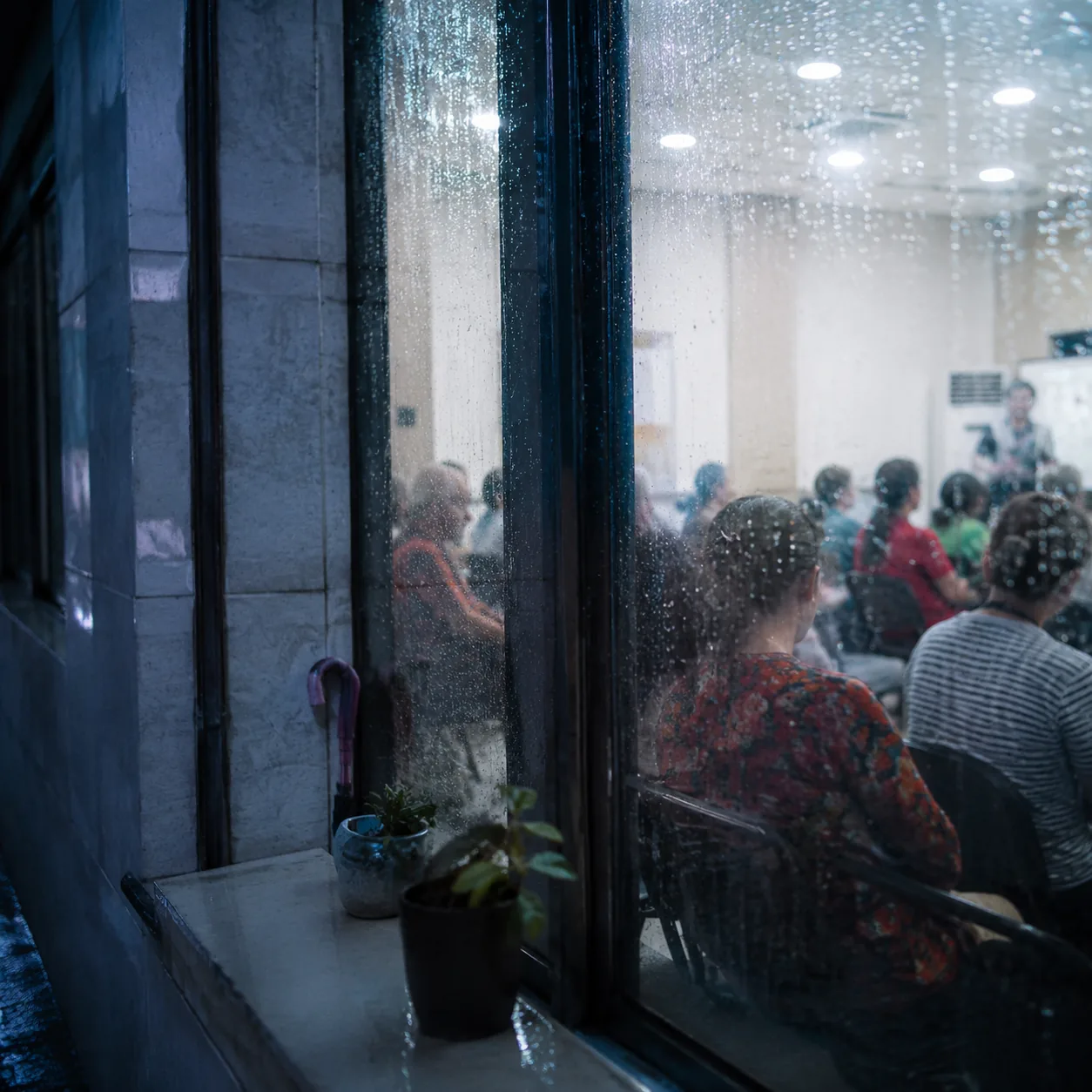
On a rainy Friday evening in the south, I went with my neighbor Auntie Liang to a travel agency presentation in the community activity room. Drops of water still clung to the glass door, but the room was lively: a dozen folding chairs were full, and the table held oranges, paper cups, and a stack of colorful brochures. The most eye-catching part of the brochure was the price. Four days and three nights, transport, lodging, and tickets were squeezed into one line, and the number looked as low as the last basket of vegetables at an evening market. Auntie Liang pressed a finger on that line and asked quietly, “Does a tour this cheap always have traps?” I did not answer at once, because a low price is not automatically unsafe. What deserves caution is everything behind the price that has been shrunk, folded away, or passed over in speech.
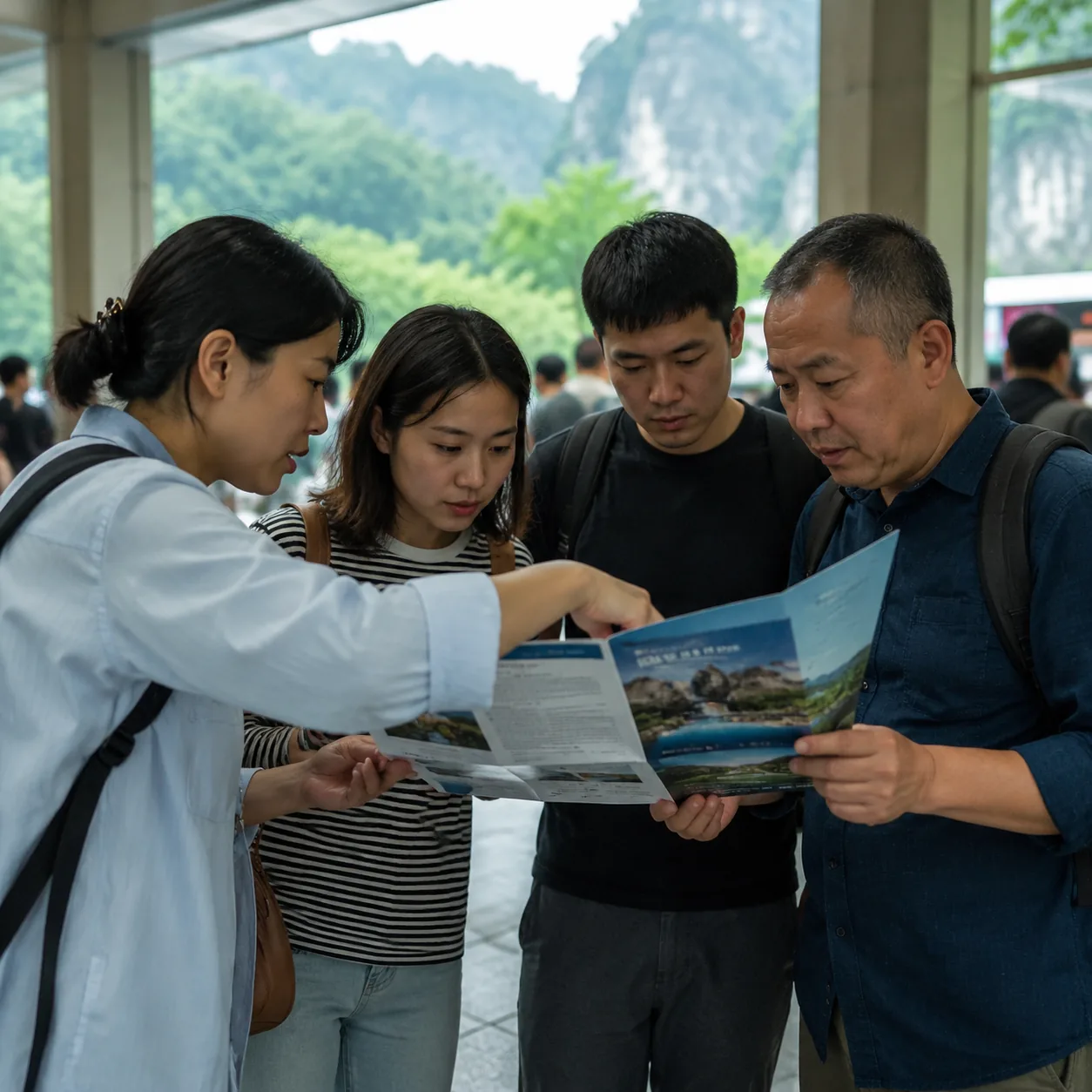
The presenter on stage was surnamed Tang. He wore a neatly ironed white shirt and spoke like a train announcement: fast, steady, and confident. He described the itinerary smoothly: departure on the first day, an old town and canyon on the second, a folk village on the third, and return after lunch on the fourth. Accommodation was “local comfort-class hotels,” meals were “special group meals,” vehicles were “regular tourist coaches,” and the guide was “experienced.” None of those phrases sounded bad, but I noticed that the paper did not name the hotels, state the meal budget, list the length of shopping stops, or explain what would happen if weather, traffic, or temporary scenic-area controls forced changes. A brochure is like a bright shop window; a contract is more like a warehouse inventory. It tells you what is on the shelves, what is missing, and who is responsible if something is damaged.
After the presentation, Auntie Liang, retired teacher Ms. Zhou, shopkeeper Uncle Chen, and I stayed to ask for details. Mr. Tang smiled politely and first said, “Don’t worry, we have served repeat customers for years.” Ms. Zhou pushed her reading glasses higher on her nose and said she was not against joining; she only wanted to see the itinerary attachment in the contract. Mr. Tang pulled a blank contract from a folder. The attachment filled only half a page. Scenic spots were listed in broad strokes, and the accommodation section said, “subject to actual arrangement.” Ms. Zhou did not get angry. She simply took out a pen, circled “actual arrangement,” and asked whether the minimum hotel standard, room type, cancellation rules, and list of optional paid items could be added. At that moment, the lively room grew a little quieter. Everyone realized that travel safety does not only happen on mountain roads, cableways, and docks. It also happens on the table before a signature is written.
Auntie Liang cared most about money. She worried that after the advertised price, a string of extra charges might appear: fuel, insurance, shuttle buses inside scenic areas, evening shows, or guide service fees. Mr. Tang said some costs “depend on personal choice,” and I asked him to separate choices from necessities. Mandatory payments should be included in the total price. Optional items should state the name, price, duration, and whether they affect the original itinerary. If a traveler does not join an optional activity, the contract should say where that traveler waits, whether someone accompanies them, and whether the waiting place is safe. Uncle Chen nodded beside us. On a previous tour, he had skipped a show and was told to wait in a parking lot for two hours. It was winter, the wind was sharp, and the coach doors stayed closed. That discomfort was not dramatic, but it was enough to damage the whole trip.

The contract also needs clear boundaries of responsibility. For example, how late may the coach travel at night, whether drivers rotate, what happens if luggage left on the bus is lost, whom the guide contacts first if an elderly traveler suddenly feels unwell, and whether emergency contacts are recorded for the group. Many people ask only “Where do we stay, where do we go, what do we eat?” Few ask, “What happens when something changes?” Yet travel problems often arise not in the scenery of a smooth plan, but in the arrangements after the plan is interrupted. That evening Ms. Zhou asked very specific questions: if heavy rain cancels the canyon, is the ticket difference refunded; if a similar-level attraction replaces it, who confirms that; if travelers disagree with the change, is there a written record? Mr. Tang first said, “The team will coordinate on site.” Ms. Zhou shook her head and said coordination is necessary, but the contract must first give coordination a bottom line.
The risk of cheap tours is often summarized as “shopping,” but shopping arrangements vary widely. A tour may take travelers to a tea shop, jade showroom, or latex bedding store without necessarily breaking the law. The key is whether the contract discloses it, how long the stop lasts, whether purchases are forced, and whether people who buy nothing are treated differently. The next morning, we went to the agency office to continue the discussion. The office sat on a small street of curtain and lighting shops, with a business license and tourism permit hanging on the wall. The manager, Ms. Luo, spoke more slowly than Mr. Tang. She admitted that this tour had two shopping stops, each about forty minutes, with no obligation to buy. Ms. Zhou asked for that to be written into the attachment. Ms. Luo thought for a moment and agreed to list the type, number, and maximum duration of shopping stops. Auntie Liang looked at me with a more relaxed expression. Transparency does not make a cheap tour much more expensive, but it removes a great deal of suspicion.
Insurance is another item that is often passed over too lightly. The brochure said “complimentary insurance,” which sounded good, but what kind of insurance, what coverage amount, what exclusions, and whether it covered older travelers or pre-existing conditions could not be answered by one sentence. Auntie Liang was sixty-eight and had weak knees. She worried most about stairs and slippery ground. Ms. Luo took out the insurance description, and we found that the accidental medical coverage was not high and that some higher-risk activities were limited. Auntie Liang decided to buy an additional travel policy suitable for her age, saved the policy number and emergency phone number in her mobile phone, and sent a copy to her daughter. A contract cannot replace insurance, and insurance cannot replace caution, but they are like two different umbrellas: one shields against disputes, the other against financial pressure after an accident.
On the morning of departure, the meeting point was beside the old bus station. Dawn had not fully arrived, but the soy milk stall was already steaming. The driver checked the tires beside the coach, and the guide, Xiao Xu, called names from a list. Because the contract attachment was clear, everyone’s questions were more specific: how long the drive would be, when lunch would happen, whether the shopping stop was in the afternoon, and whether there was a group activity after dinner. Xiao Xu answered item by item, sent a temporary contact number to the group chat, and reminded older travelers to keep regular medicine in carry-on bags rather than in the luggage hold. Auntie Liang kept a photocopy of the contract inside a transparent folder and touched the corner of the folder after sitting down. She was not trying to turn travel into negotiation. She simply understood that a clear written agreement reduces misunderstandings among the guide, the agency, and the travelers.
On the second afternoon, a change really came. The original plan was to visit the canyon, but heavy rain in the mountains the previous night caused the scenic area to close its plank walkway. Guide Xiao Xu did not merely say, “Nothing can be done.” He photographed the scenic-area notice and sent it to the group chat, explained that under the contract the group would switch to a nearby ancient-bridge wetland, and said the price difference for the canyon walkway ticket would be refunded. Some people on the coach were disappointed, and Uncle Chen joked that he had worn slip-resistant shoes especially for the canyon. Xiao Xu gave everyone ten minutes to discuss, then asked each household on the coach to confirm whether they accepted the adjustment. Because the contract had already stated replacement items, refund methods, and confirmation procedures, the argument did not grow. When the coach reached the wetland, the reeds after rain looked bright, water rushed under the old bridge, and Auntie Liang actually walked more comfortably because the path was flat and her knees did not suffer.
The shopping stops on the third day also tested the contract. In the first tea shop, the clerk spoke warmly, brewed tea skillfully, and fragrance rose from small cups. Several travelers bought tea cakes. Auntie Liang bought nothing, and the clerk did not turn cold; she simply collected the tasting cup. When forty minutes were up, Xiao Xu reminded everyone to gather, and there was no delay. At the entrance of the second jade showroom, a salesperson wanted to continue explaining a “final discount batch.” Xiao Xu looked at his watch and said the team’s agreed stopping time had ended, asking everyone to board the coach. The simple line in the contract attachment had become the guide’s basis for refusing extra time. After the coach left, Uncle Chen said, “Once it is on paper, even the guide has an easier time.” The sentence was plain, but it showed that a contract is not only a wall of suspicion between travelers and an agency. It can also be evidence that helps on-site staff handle pressure.
At dusk on the return day, the coach stopped again at the old bus station, where the soy milk stall had been replaced by a cart selling roasted sweet potatoes. Auntie Liang put the transparent folder back into her cloth bag and said the tour was cheap, but not as frightening as she had imagined. She liked the bridge in the wetland and the bowl of hot noodle soup on the second night. She disliked the salty fish in one group meal and thought the morning gatherings were too early. But those complaints were ordinary travel flaws, not anger caused by concealment. She asked whether she should join a cheap tour again next time. I said yes, possibly, but read the contract before the brochure; ask about boundaries before listening to promises; separate mandatory payments, optional choices, and possible changes before deciding whether the price truly suits you.
A reliable travel contract does not have to be thick, and it does not have to use many legal terms. It should clearly write the points travelers most easily misunderstand: what the total price includes and excludes; the approximate driving time and activity intensity each day; the minimum standards for lodging, meals, and transport; whether shopping and optional paid items exist, how long they last, and how much they cost; how cancellations, substitutions, refunds, and dispute records are handled; and whether older travelers, children, or people with chronic conditions need special reminders. Before signing, the danger is not asking slowly, but receiving answers too quickly. An agency willing to write details down may not be perfect, but at least it accepts written limits. If someone only shows you a brochure, only urges you to pay a deposit, and only pushes questions toward the site, even a beautiful price deserves a pause.
That evening back in the neighborhood, Auntie Liang met Ms. Zhou downstairs, and the two stood beside the osmanthus tree reviewing the trip. Ms. Zhou said what satisfied her most was not the money saved, but the fact that when changes occurred, everyone knew what standard to use when speaking. The scent of osmanthus was faint, the corridor lights came on floor by floor, and a horn sounded faintly from the direction of the bus station. Auntie Liang lifted the document folder and smiled, saying that from now on, this folder would travel with her identity card. At that moment, I felt that a cheap tour is not a simple judgment of good or bad. It is more like a ticket that must be checked carefully. The brochure paints the distance brightly; the contract writes the responsibilities along the road clearly. Only when the two match does a journey become not merely inexpensive, but steady to sit through and safe to walk through.