Гид по стеклянному мосту Чжанцзяцзе и горе Тяньмэнь
Zhangjiajie is one of China’s most visually staggering natural landscapes — stone pillars rising like a petrified forest, a glass bridge suspended over a 300-meter canyon, and Tianmen Cave punched through a cliff face like a gateway to another world. This guide covers ticketing, logistics, routing, and the small details that tour groups skip.
Getting to Zhangjiajie
Zhangjiajie Hehua International Airport is about 5 km from the city center — 15–20 yuan by taxi, roughly 10 minutes. Direct flights operate from Beijing, Shanghai, Guangzhou, and Chengdu (2–3 hours). Zhangjiajie West Station (high-speed rail) is about 15 km from the city (taxi ~40 yuan); the journey from Changsha takes about 3 hours (around 165 yuan for second class), from Wuhan about 4.5 hours.
The city itself is compact. I’d suggest staying near the bus station or the Tianmen Mountain cable car terminal for easy morning starts. Budget hotels run 150–250 yuan per night; quality business hotels 300–500 yuan.
Zhangjiajie Grand Canyon Glass Bridge
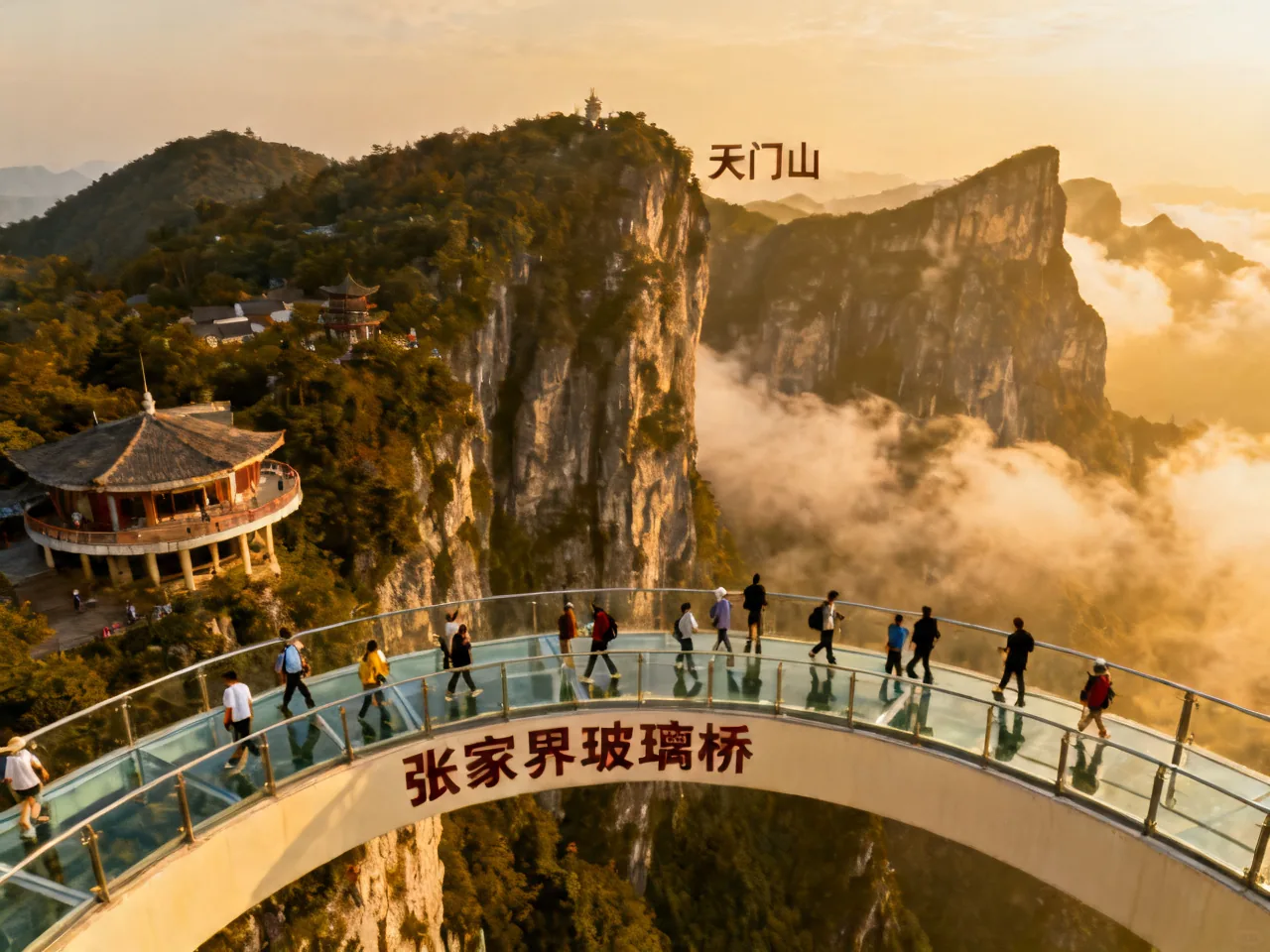
The Zhangjiajie Grand Canyon Glass Bridge (Yuntian Du) holds the record for the world’s longest and highest fully transparent glass bridge — 430 meters long, 300 meters above the canyon floor, with a 6-meter-wide deck made entirely of clear glass. Tickets come in two options: Line A (glass bridge + grand canyon) at 259 yuan, or Line B (glass bridge only) at 141 yuan. Online booking with a time slot is mandatory — peak season same-day tickets are essentially unavailable.
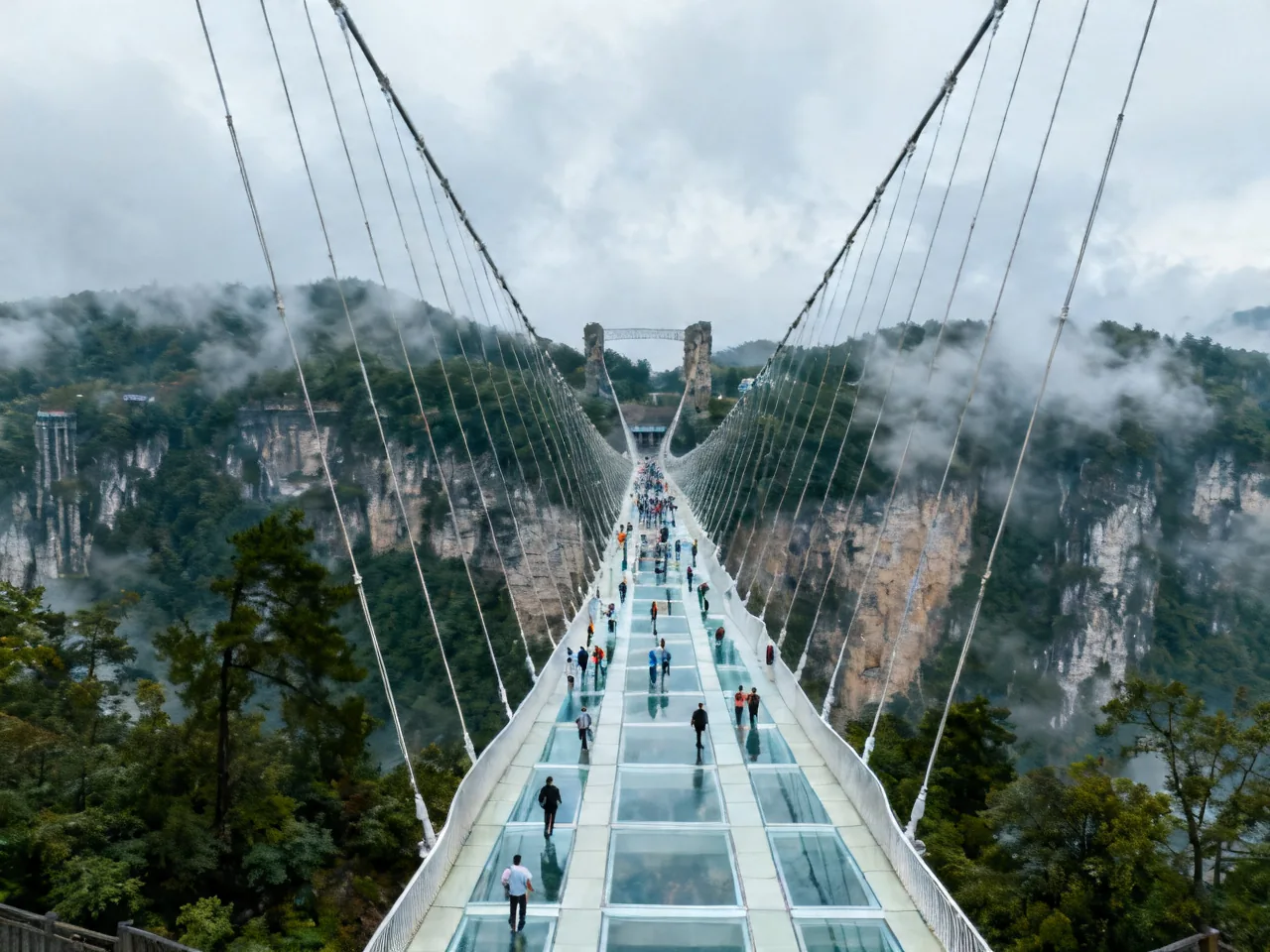
Stepping onto the bridge, it’s a lie to say you feel nothing. Your brain knows the triple-layered tempered glass can hold 14 tons without breaking a sweat, but your legs have their own opinions. The first step is cautious, the second more relaxed, and by the third you start looking down — 300 meters below, a green stream ribbons between rocks, and the canyon walls reveal layered red-brown strata like the earth’s growth rings sliced open for your inspection. By the time you reach the bridge’s midpoint, awe has completely overwritten fear.
Practical Tips
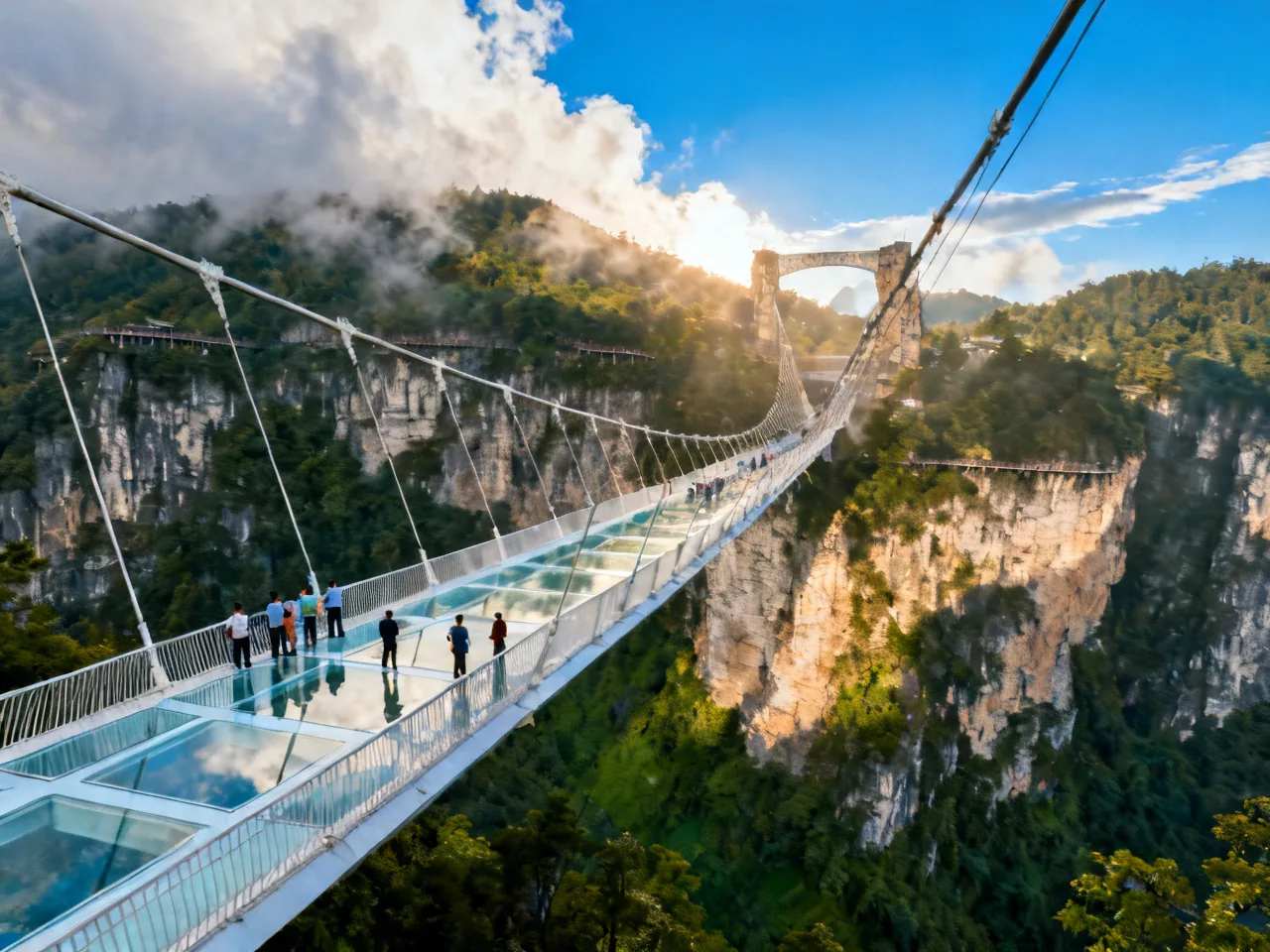
Line buses from Zhangjiajie city to the Grand Canyon scenic area depart from the Central Bus Station, taking about 65 minutes (15 yuan/person); first bus at 6:30 AM. I recommend the 8:00–9:00 AM entry slot for best light and relatively fewer people. Selfie sticks and tripods are prohibited on the bridge; backpacks must be stored at the free lockers near the entrance. Sneakers are fine — shoe covers are provided at the gate. If you choose Line A, the canyon hike takes 2–3 hours and requires decent fitness, especially the uphill return sections.
Tianmen Mountain: Miracle Above the Clouds
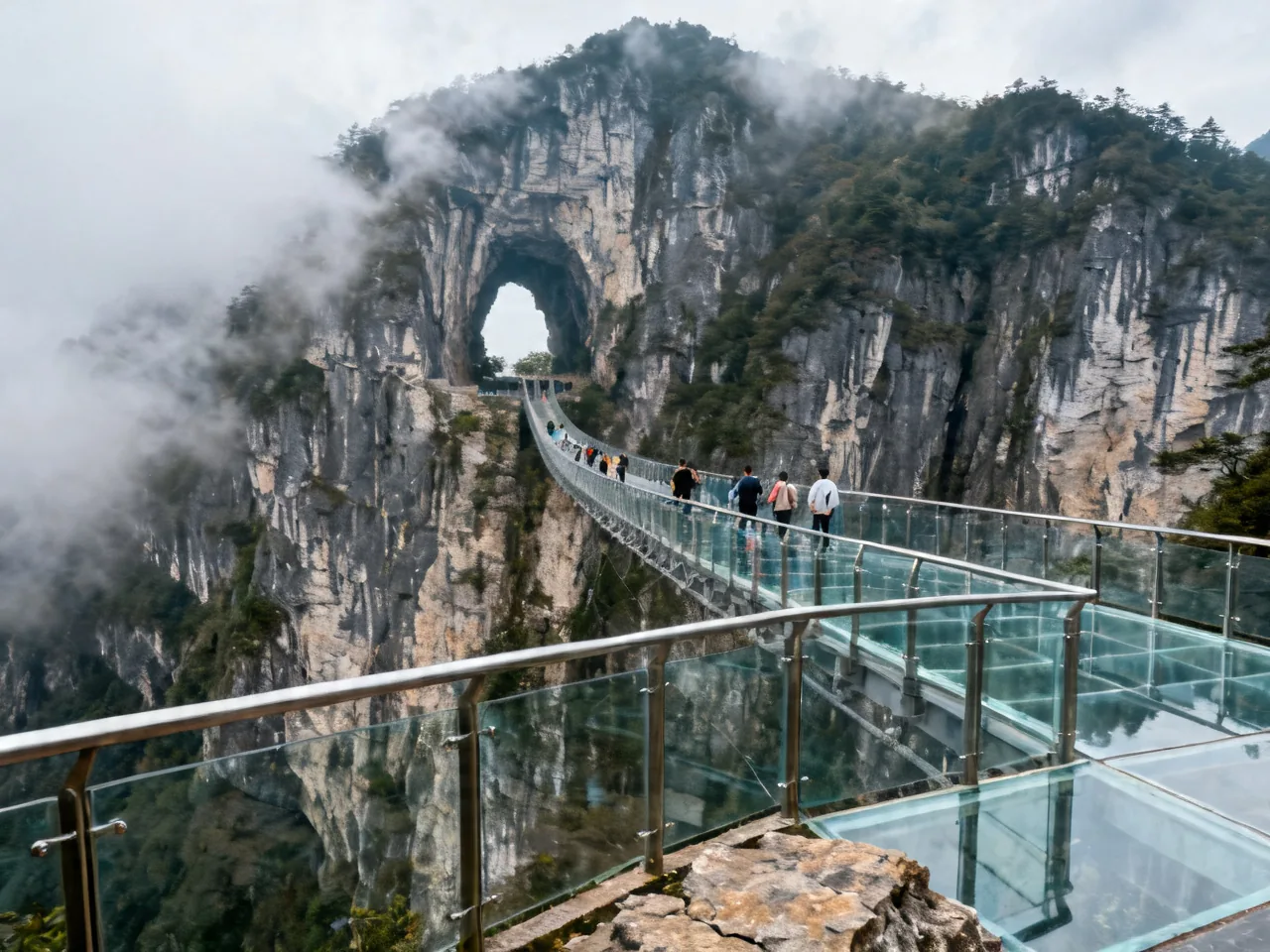
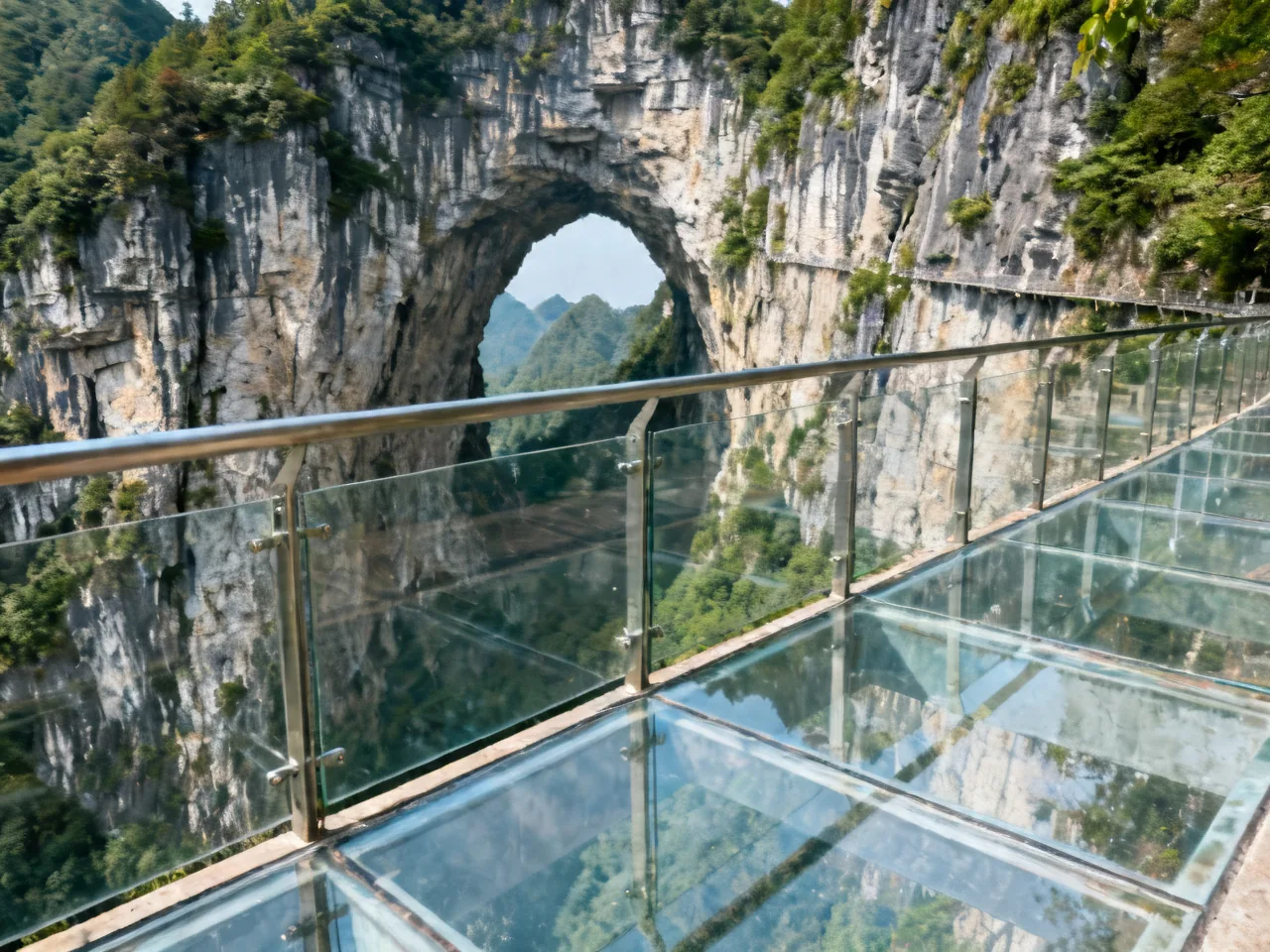
Tianmen Mountain is Zhangjiajie’s most iconic attraction, and in my personal ranking, it sits comfortably in the top five natural wonders in all of China. The mountain rises to 1,518.6 meters, but the showstopper is Tianmen Cave — a massive natural karst arch right through the mountain face, 131.5 meters tall, 57 meters wide, and 60 meters deep. From a distance, it looks like someone punched a hole through the entire mountain.
Tickets & Cable Car
Tianmen Mountain admission (including cable car or mountain escalator + eco-bus) is 278 yuan in peak season, 225 yuan in off-season. Book via the official Tianmen Mountain WeChat account or through Ctrip/Meituan, choosing your route: Line A (cable car up, bus down) or Line B (bus up, cable car down). I recommend Line A — the cable car spans 7,455 meters over 28 minutes, making it the world’s longest mountain passenger ropeway. It launches from the city center and soars directly to the summit, and watching the city shrink to a model beneath you while mountains rise on all sides is worth half the ticket price on its own.
Summit Touring Route
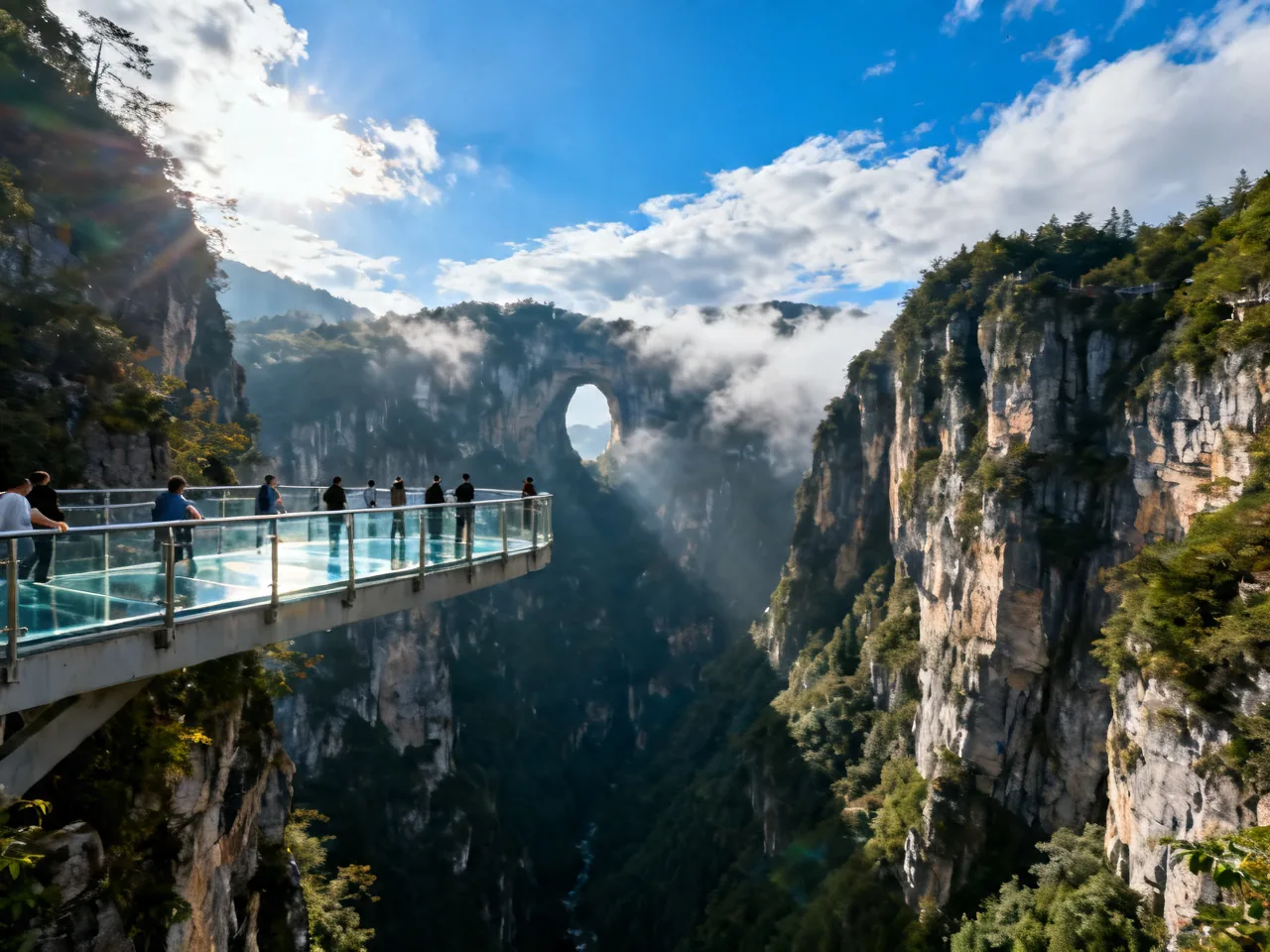
At the summit, three walking trails await: the East Line, West Line, and Guigu Plank Road. The West Line is the highlight, featuring the famous glass skywalk — a transparent walkway bolted to a sheer cliff face with a 1,400-meter vertical drop beneath your feet. Shoe covers cost an extra 5 yuan; the glass section runs about 60 meters, taking 3–5 minutes to cross depending on how much your legs cooperate.
The Guigu Plank Road is another unmissable stretch. Cantilevered off the cliff face, it passes through sections where mist boils up from the valley below — sometimes so thick you can barely see the railing across the path, sometimes parting suddenly to reveal the green abyss below and rank after rank of mountain ridges fading into haze. Walking here feels genuinely surreal, like floating in a sea of clouds. Wind rises from the valley floor carrying the scent of pine and cypress, cool enough to make you forget the void beneath your feet and just keep walking forward.
Tianmen Cave & the 999 Steps
p>
From the summit, free escalators (7 sections, about 12 minutes, included in the ticket) take you down to the Tianmen Cave platform. In front of the cave, 999 steps — the “Stairway to Heaven” — descend steeply. If your knees can handle it, I strongly recommend walking down rather than taking the escalator. The steps grow steeper with every flight, flanked by vertical rock walls, the cave mouth growing larger overhead. When you finally stand inside Tianmen Cave and look up, that 131-meter natural arch frames a rectangle of blue sky, light pouring down from above, and you feel no bigger than an ant. No photo or video comes close to conveying the scale.
Suggested 2-Day Itinerary
Arrive at the cable car lower station by 7:30 AM, board Line A at 8:00. Morning: West Line (glass skywalk) + Guigu Plank Road. Lunch at the summit (limited options; a bowl of rice noodles runs 25–35 yuan). Afternoon: East Line + Tianmen Cave, then eco-bus down via Tongtian Avenue (the famous 99-bend mountain road). Expect to be back in the city by 4–5 PM.
Take the 6:30 AM bus from Central Bus Station to the Grand Canyon; enter at 8:00–9:00 AM (Line A). Morning: glass bridge + canyon hike. Return to the city by early afternoon. If you still have energy, the Dayong Ancient Town area in the city center is worth a stroll in the evening for Tujia minority culture and a free nighttime light show.
Clothing & Gear
Summit temperatures run 5–8°C lower than the city, so bring a light jacket even in summer. On rainy or heavily foggy days, the glass skywalk and Guigu Plank Road close — check the official scenic area announcements before heading out. Sneakers are mandatory; sandals and heels are prohibited. Bring a power bank — you’ll be taking a lot of photos.
Related Reads
- 10-Day East China Five-City Loop
- Lijiang Old Town: Naxi Culture & Snow Mountain Views
- Guilin Li River Scenic Tour Complete Guide
- 15-Day Yunnan-Guizhou-Sichuan Road Trip
- Spring Bloom Map: China’s Most Beautiful Flower Fields