The First Thing I Learned at a Chinese Community Hospital Was Not the Consultation, but Finding Triage First
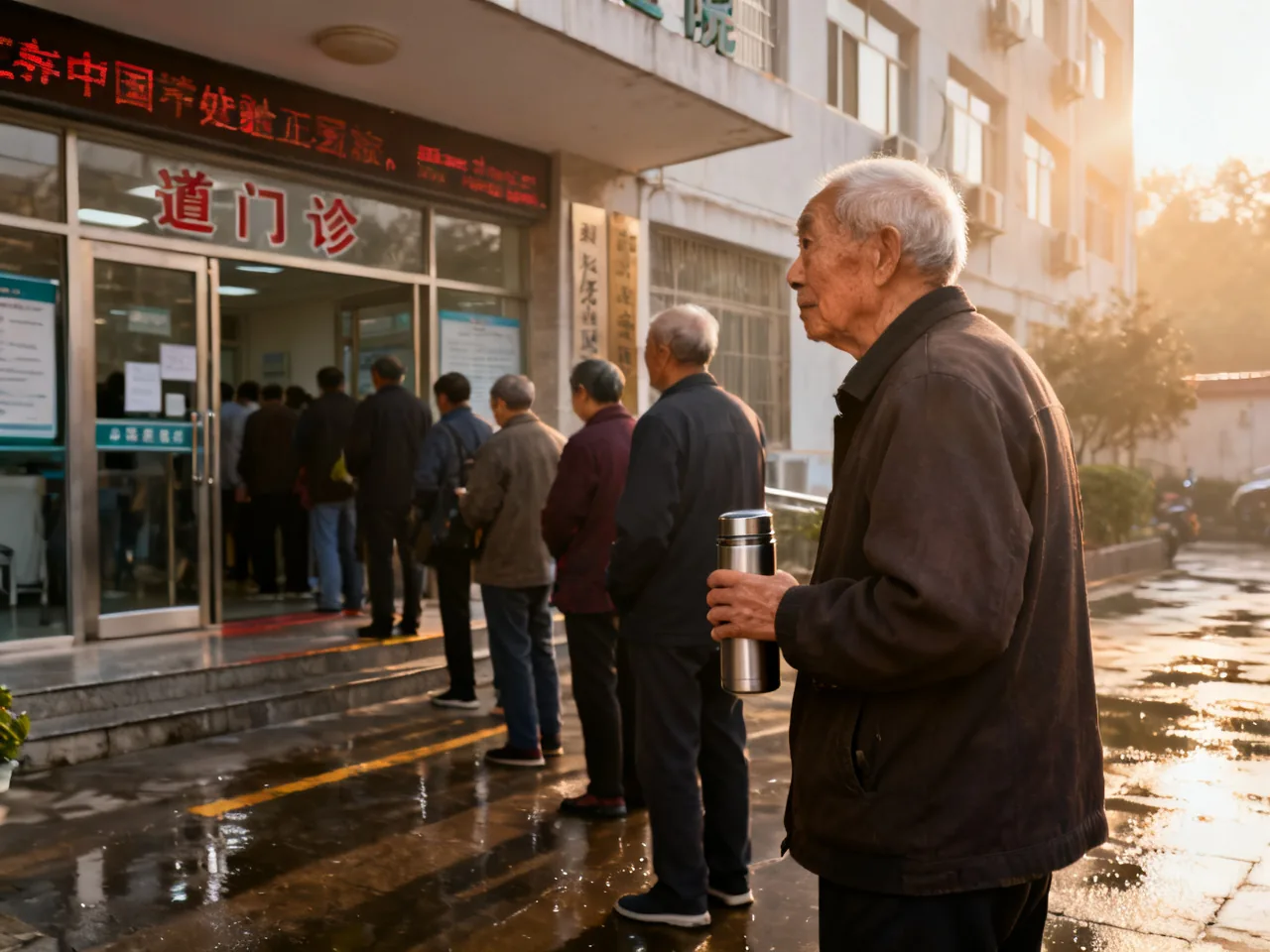
The first time I went to a Chinese community hospital for a general outpatient visit, it was just after sunrise. The shadows of the trees outside still held a little dampness, and the marks from water sprayed on the ground the night before had not fully dried. A few older people were already lining up slowly at the entrance. Some held medical insurance cards, some carried thermos cups, and some looked down at appointment information on their phones while shuffling forward by half a step. The air carried a faint disinfectant smell mixed with the sweetness drifting over from a soybean milk shop nearby. As a foreigner, I had always thought of a community hospital as something a little vague. I knew it was smaller than a major hospital and closer to neighborhood life, but I assumed the process inside would be more confusing, and that someone like me, with only decent Chinese, would mostly have to rely on luck.
Once I actually went inside, I made a very typical beginner’s mistake. I saw a line in front of a window and instinctively joined it, thinking only that I needed to get a number first. The electronic screen above the counter flickered. Posters on the wall listed outpatient hours, chronic disease management notices, and vaccination reminders. The room was not loud, but it never became quiet either. Someone was asking when lab results would be ready. Someone else was coughing softly. Plastic stools made that light scraping sound against the tile floor. I had been standing there for about two minutes when the line did not move at all. Then a security guard in uniform glanced at me and came over to say, “Go to the triage desk first. You don’t line up here directly.” I felt a little embarrassed in that moment, but even more relieved, because at least someone had finally told me the most important first step.
Later I realized that what I had imagined would be hardest was not actually speaking Chinese, but understanding the sequence of the space itself. The community hospital was not chaotic in the way I had imagined. It simply had its own entry logic. First go to the triage desk. The nurse asks roughly what is wrong—whether it is a cold, a fever, a stomach issue, or simply a need for common medication. If you already have an appointment, she checks the information. If not, she tells you which department to visit and where to register, whether at a machine or a counter. No one gave me special treatment, but no one made things difficult on purpose either. The nurse behind the triage desk spoke quickly but clearly, and when she pointed to the side, I immediately knew where to go next. It felt like being handed a simplified map: the route had always existed, but I had not known how to read it when I first entered.
What stayed with me most was not the equipment or even the building itself, but the ordinary, neighborhood rhythm of the place. The waiting area did not have the dense, pressurized atmosphere of a major hospital. Instead, it felt as if daily community life had simply extended itself gently into a medical space. The auntie sitting beside me had a bag of fresh vegetables by her feet while she waited for her number. An older man had arranged his medical booklet, ID card, and phone neatly on his lap, as if preparing for something he had done countless times before. On the other side, a young mother held her child and quietly told him not to touch the wall. The triage nurse spoke differently to different people too. She repeated things more carefully to elderly patients and gave more specific directions to first-time visitors. What I felt there was not cold efficiency, but a kind of practical gentleness shaped by repetition.
I had always assumed that language would be the biggest obstacle for a foreigner seeking care in China. Language does matter, of course, but after that morning I realized that what often matters even more is whether you catch a few key words and identify a few key locations first. Once terms like “triage desk,” “registration,” “waiting area,” and “general outpatient clinic” become familiar, the whole experience changes from a blur of anxiety into a sequence you can actually follow. After the guard sent me to the triage desk, every step that followed was easier than I had expected. The nurse’s questions were direct. The registration counter did not make things unnecessarily difficult. The doctor did not seem especially impatient just because I was foreign. On the contrary, as long as I explained my symptoms as clearly as I could, the process kept moving forward naturally.
Another thing that changed my impression was how help in a community hospital often comes not as a dramatic act of assistance, but as short, effective correction. The guard told me, “Go to triage first,” just a few words, yet that spared me the embarrassment of continuing in the wrong line. The nurse looked up and said, “General internal medicine is over there,” with a quick gesture, and that was enough to set me on the right path. I have increasingly noticed this style in many public spaces in China. People do not always explain the rules at length, but if you are genuinely stuck, someone often nudges you back into place with one brief sentence. It is a light kind of help, but a useful one, because it assumes that you too are capable of learning how the space works.
By the second and third time I visited similar community hospitals, I already knew not to fixate on whichever counter had a line first, but to look instead for the triage desk, the electronic screen, and the guidance signs. It was a small change, but it made me much less nervous than the first time. In fact, on one later visit I instinctively made room for another foreigner who looked uncertain and casually told him, “Ask that nurse first.” I laughed after saying it, because I realized I had changed from the person standing in the wrong line at daybreak, quietly panicking, into someone who could explain the process simply to another newcomer. What Chinese community hospitals taught me was not only how to attend a general outpatient visit, but how to enter an everyday system: do not rush to interpret unfamiliarity as difficulty. Find the first correct desk, and many other things will start falling into place.
Following the same way of reading a scene, [中国看病流程] and [外国人在中国就医] also reinforce this habit from other angles.
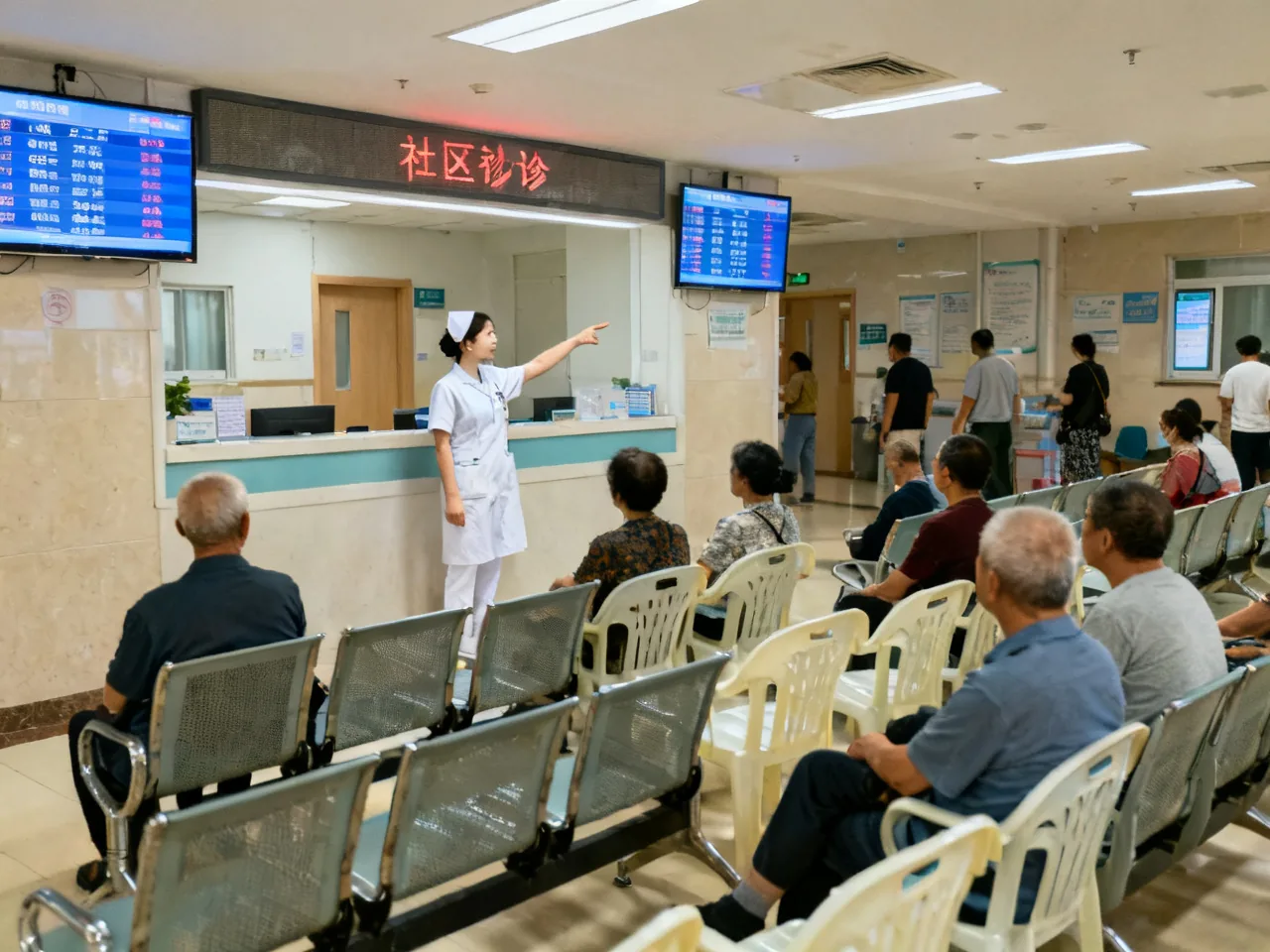
Now, if someone asks me for the most practical advice about visiting a Chinese community hospital for general outpatient care the first time, I would not begin with memorizing complicated Chinese sentences. I would say this instead: look for the triage desk before joining any line; reduce your symptoms to the simplest words you can; and if you do not understand something, do not pretend—just ask, “Where is the general clinic?” Part of the value of a community hospital is precisely that it sits so close to everyday life, and because of that it often has a kind of order that can be learned more easily. For me, that small morning mistake transformed a place that had once made me uneasy into a public space I could gradually become familiar with. The first thing I learned was not how to see a doctor, but how not to stand in the wrong place at the start. And sometimes that first step determines whether everything that follows will go smoothly.