A Pinyin Notebook Spilled with Juice Taught Me That Tones Are Not Singing but Direction
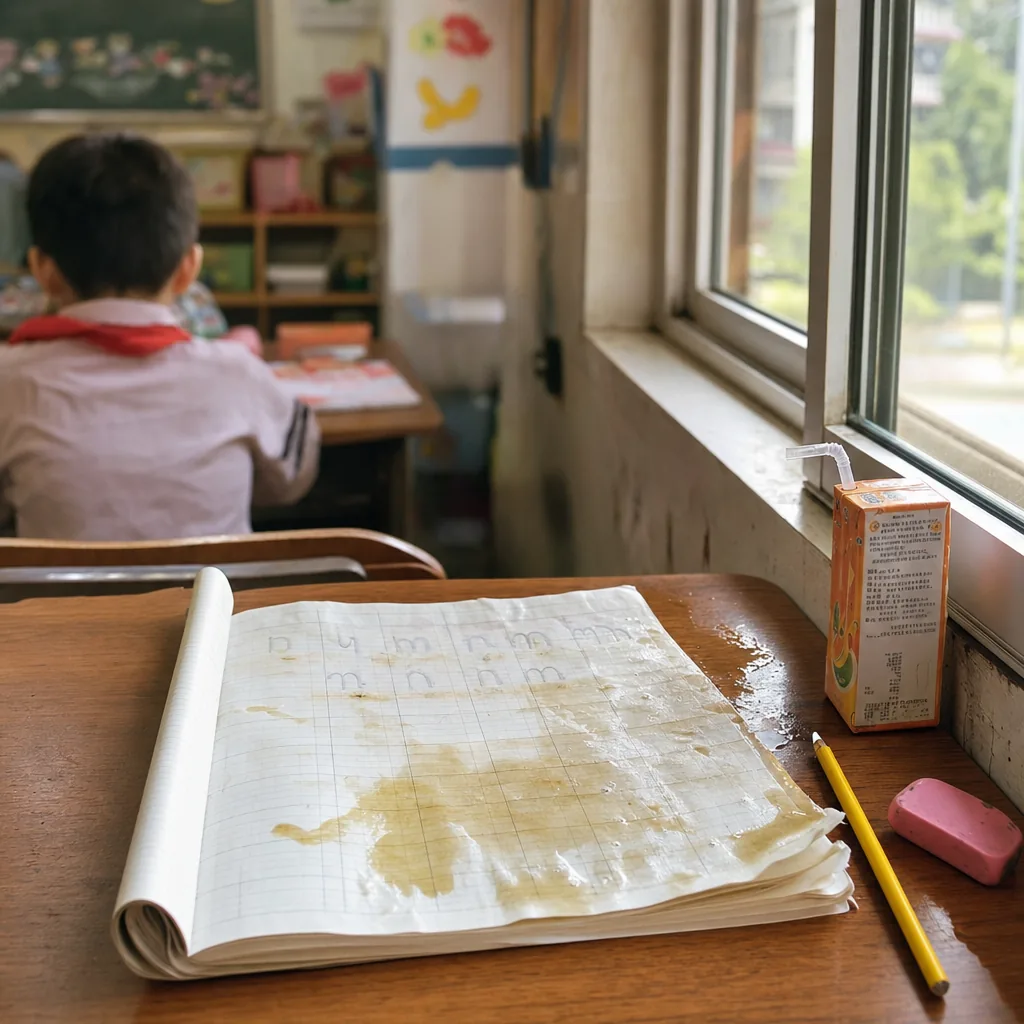
The first time tones finally began to make sense to me did not happen in class and did not happen in a phone app. It happened next to a pinyin workbook that had been soaked with orange juice. It was a humid afternoon. The classroom windows were half open, and outside, leaves flashed bright and dark in the wind. A sweet snack smell still floated above the desks. Someone knocked over a paper cup, and orange juice slowly crawled across the corner of a workbook page, blurring the line that said “mā, má, mǎ, mà” into a small soft cloud.
I used to learn the four tones like a tiring performance, as if my mouth had to leap upward and then fall back down again, like I was singing a very short song I did not even understand. And the harder I tried to sing them correctly, the tighter I became. When you get tight, the sound turns stiff. And once the sound turns stiff, Chinese stops sounding spoken and starts sounding like a test problem. That afternoon I was staring at the wet workbook page in frustration when a primary school student who had just lent me an eraser suddenly lifted his hand and drew four movements in the air.
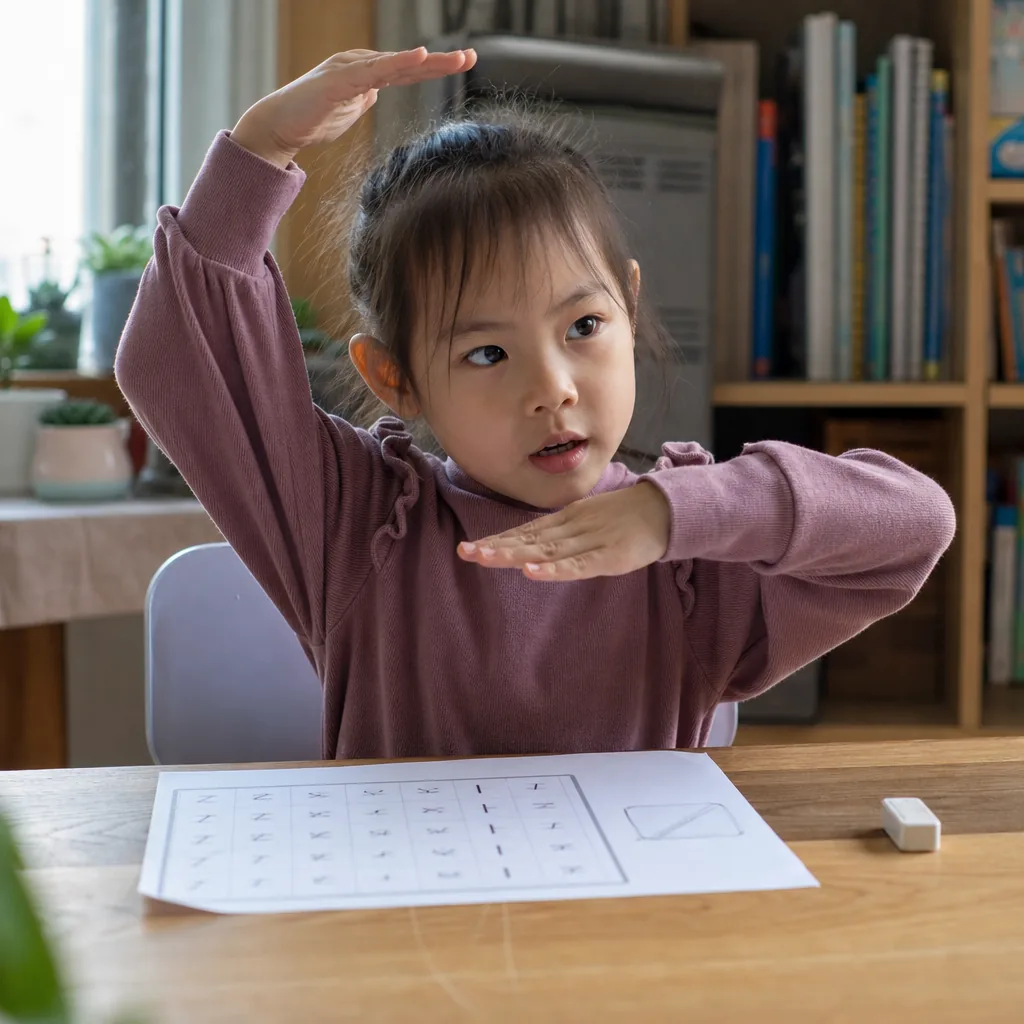
He pushed his hand flat and said, “First tone. Flat.” Then he flicked it upward: “Second tone. Up.” Then he dipped it low and curved it back: “Third tone. Down first, then up.” Finally he cut sharply downward: “Fourth tone. Down.” He explained it without any complicated grammar terms. Yet I understood at once. Tones did not have to be learned as music. They could be learned as direction. Like walking up stairs. Like tossing a ball. Like turning a scooter. Not singing. Moving.
At that moment, many things that had never stayed in my mind suddenly loosened. Why did “má” sound like someone lifting their head to ask again? Why did “mà” land like a quick firm statement? Why did “mǎ” always trip me up? Because it was not only about pitch. It had a turn inside it. For foreign children, this way of remembering sound through movement is especially useful. Sometimes the ears are too slow, but the body understands first.
How I Practiced the Four Tones After That
First, I stopped memorizing a whole page of pinyin at once. I picked one syllable, like “ma,” used my hand to show the direction first, and only then said it out loud. Once the hand moved smoothly, the mouth panicked less.
Second, I put tones into short words instead of drilling lonely syllables. For example, “mother,” “trouble,” “little horse,” and “scold someone.” Once a tone lived inside a word, it sounded more alive.
Third, I practiced with real objects, not only with pinyin charts. Hold a cup and say “cup.” Point to your mother and say “mom.” Look at a horse picture and say “little horse.” When the object is in front of you, the sound becomes steadier.
Fourth, I allowed myself to go slower. Many foreign children flatten all four tones into one shape when they get nervous. Slowing down is actually faster, because it lets you hear the difference.
Fifth, whenever I got stuck, I let my hand lead the way again. If the mouth forgot, the gesture could still remind me: flat, up, bend, down. That order stayed in the body like a tiny map.
Later I realized that what many children fear most in Chinese is not characters, but the feeling that “I never sound right.” Tones, however, are perfect for learning through movement, direction, expression, and repeated little scenes. The second tone can feel like calling a friend across the playground. The fourth tone can feel like a teacher saying, “Sit down.” The third tone can feel like a ball that dips first and rises again. Once these pictures enter your mind, the four tones stop being abstract marks in a textbook.
Before school ended that day, the juice had been dabbed dry with tissues, leaving only a pale orange ring at the edge of the page. The student who lent me the eraser pushed the workbook back toward me and added very seriously, “Don’t sing it. Just follow the direction.” I still remember that sentence now. It did not sound like a formal definition. It sounded more like a tip picked up off the classroom floor. But sometimes the things that save you most are exactly those little tips.
If you are also a child just starting Chinese, try this method: whenever you learn a new tone, do not force your ears to understand everything first. Let your hand show it. Let your body walk through it. Chinese is often not learned all at once by hearing. It is learned little by little by doing. Just like that pinyin workbook stained by juice: it looked messy, but it was exactly what made me feel for the first time that the four tones were not there to make life hard. They were simply showing me that sounds also have roads to travel.
If you want one more story about real Chinese around a school gate, you can also read school-gate Chinese story.