7-Day East China Itinerary: Shanghai-Hangzhou-Suzhou
Shanghai’s modernity, Hangzhou’s poetic spirit, Suzhou’s refinement — this classic three-city East China loop distills the urban aesthetics of China’s wealthiest region. It’s not a race through attractions but a slow meditation on what “Jiangnan” really means. Seven days, three cities, from the Bund to West Lake, from Lujiazui to the Humble Administrator’s Garden.
Days 1–3: Shanghai
Day 1: The Bund & Pudong
After landing in Shanghai, check in near Nanjing Road Pedestrian Street or the Bund (¥300–600/night; the Hotel Indigo on the Bund for a splurge, or Hanting Premium for better value). Drop your bags and head straight for the Bund — this 1.5km riverside promenade is flanked by 52 colonial-era buildings in every style imaginable: the Gothic Peace Hotel, the Baroque HSBC Building, the Neoclassical Customs House.
Lean on the stone balustrade and look east: the Lujiazui skyline ignites at dusk — Oriental Pearl Tower in pink-purple, Shanghai Tower in silver-white, the World Financial Center in cold blue, a cyberpunk canvas with the saturation cranked up. This view is worth standing on the Bund for a full hour.
In the evening, cross to Pudong via the Bund Sightseeing Tunnel (¥50 one-way, dated but atmospheric) or take Metro Line 2 (¥3) to Lujiazui. The 118th-floor observation deck at Shanghai Tower (¥180) gives you the entire city’s nightscape at your feet.
Day 2: Old Shanghai & the French Concession
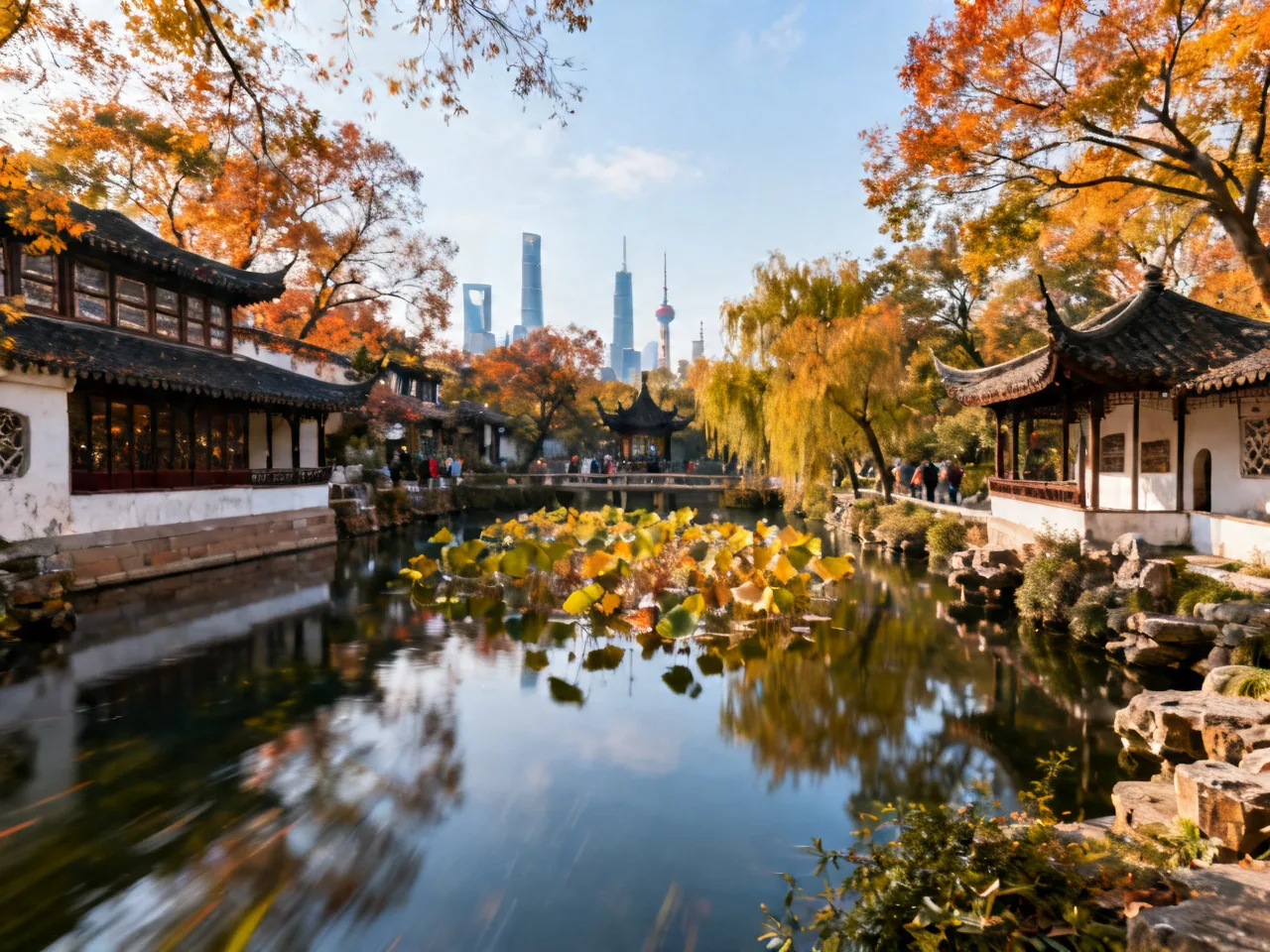
Morning: head to City God Temple and Yu Garden (¥40 entry). The temple’s snack street is always packed. Nanxiang xiaolongbao (12 per steamer, ¥28) are a must — rich broth, paper-thin skin, a burst of sweet umami with every bite. Yu Garden itself is a Ming Dynasty classical garden — small (just 20,000 sq m) but exquisitely laid out with rockeries, covered corridors, and pavilions.
Afternoon: dive into the French Concession — Wukang Road, Anfu Road, and Hunan Road form Shanghai’s most stylish neighborhood. Under the shade of plane trees hide independent cafés, vintage boutiques, and gallery spaces. Snap a photo at Wukang Mansion (one of Shanghai’s most iconic Art Deco buildings), then sit at a sidewalk café and watch a qipao-clad auntie walk her poodle past — this is Shanghai’s most charming everyday.
Day 3: Free Exploration
My personal recommendation for Day 3: morning at M50 Art District (free, 50 Moganshan Road), Shanghai’s contemporary art frontier; afternoon at Zhujiajiao Water Town (Metro Line 17 direct, free entry, ¥60 combo ticket for 4 small attractions). Just an hour from downtown, this water town has quieter lanes and more authentic snacks than the famous Zhouzhuang.
Days 4–5: Hangzhou
High-speed rail from Shanghai Hongqiao to Hangzhou East takes just 45 minutes (¥73). Hangzhou is one of China’s most livable cities and the headquarters of Alibaba — but its most enchanting part remains the thousand-year-old West Lake.
West Lake
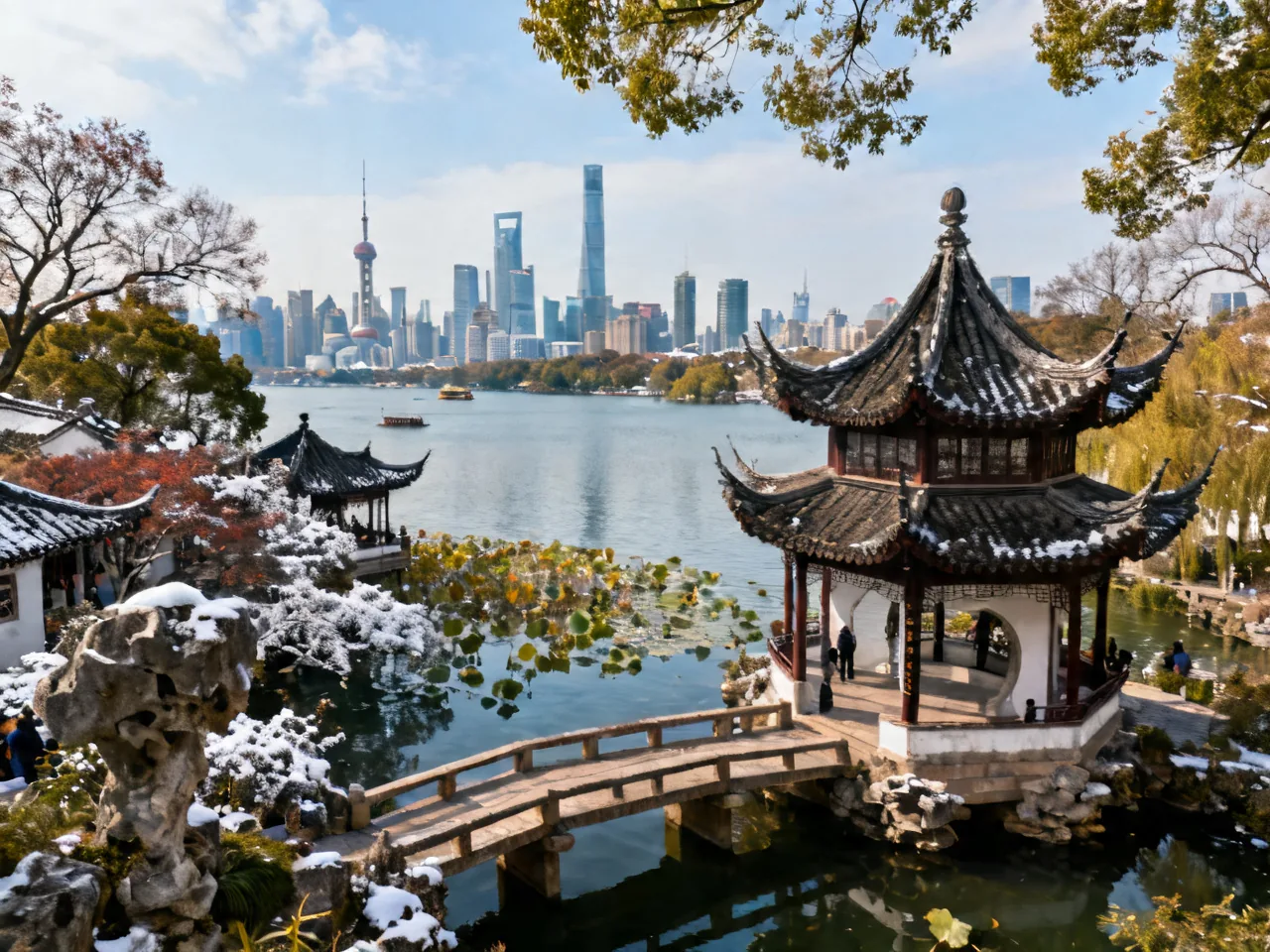
West Lake charges no admission. Walk the full loop (about 10km, 2–3 hours), rent a bike (public bikes free for the first hour), or take a hand-rowed boat (¥150/boat, seats 4). Su Causeway at Dawn, Broken Bridge in Snow, Three Pools Mirroring the Moon — the names themselves read like poetry.
West Lake at 6am is the day’s most beautiful hour. Mist wraps the water, Leifeng Pagoda appears and disappears in the haze, willows trail long branches along the shore, an occasional egret skims the surface. In that quiet, you instantly understand why Bai Juyi and Su Shi were so obsessed with this place.
Longjing Tea & Lingyin Temple
On Day 5 morning, head to Meijiawu or Longjing Village for tea (a cup of authentic Longjing runs ¥30–50). Tea farmers will warmly invite you to sit and chat. Afternoon: Lingyin Temple (¥75 including Feilai Peak), one of Jiangnan’s largest Buddhist temples, founded in 326 AD. The Main Hall is solemn and grand; outside, the Feilai Peak grottoes hold over 300 Buddhist statues, some dating to the Five Dynasties period.
For dinner in Hangzhou, try Grandma’s Home (¥50–80/person) for signature West Lake vinegar fish and Dongpo pork. For something more refined, Longjing Caotang (¥200–300/person) serves creative Hangzhou cuisine incorporating Longjing tea.
Days 6–7: Suzhou
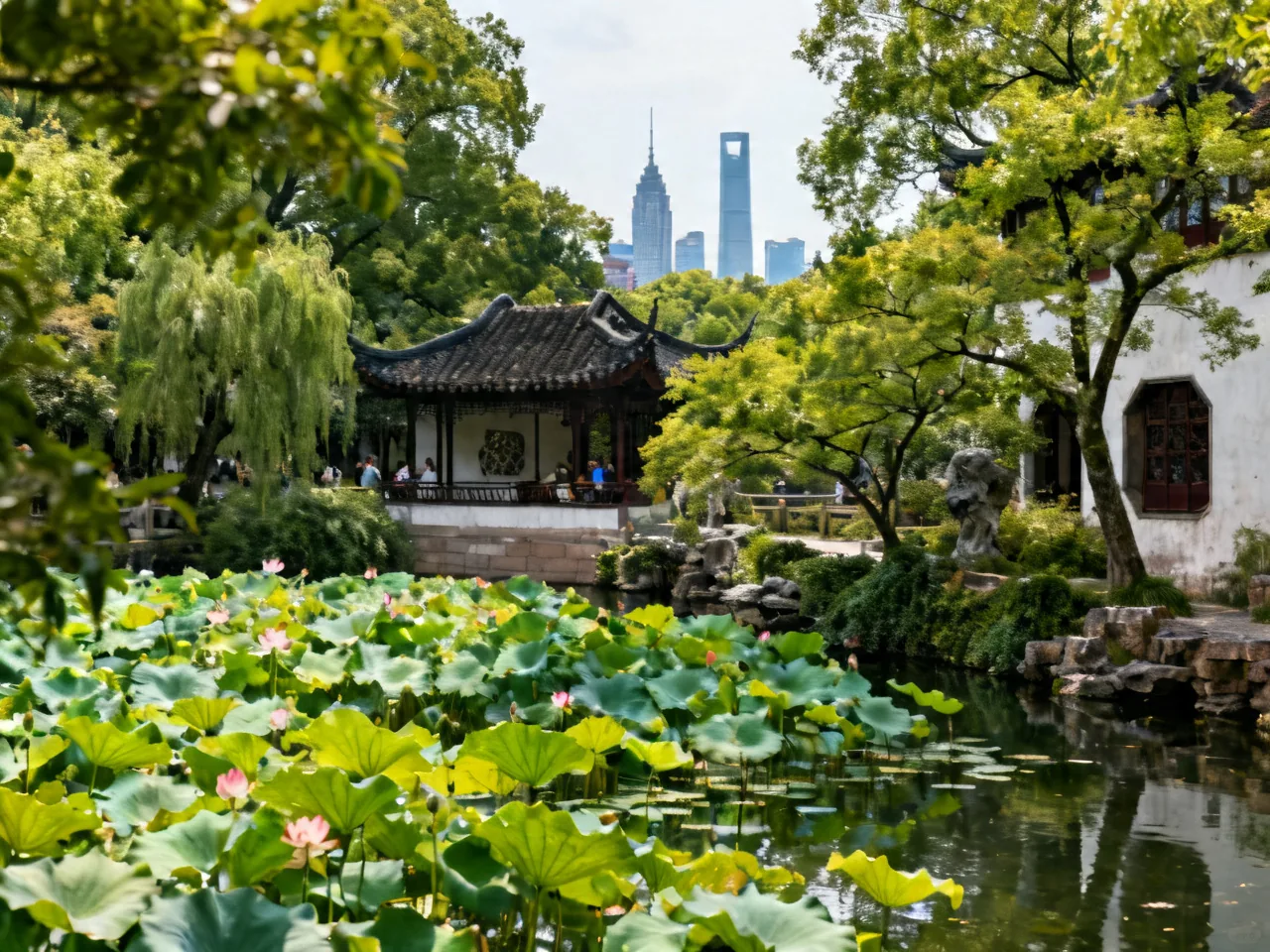
HSR from Hangzhou East to Suzhou takes about 1.5 hours (¥100). Suzhou’s soul lies in its gardens — 9 classical gardens on the UNESCO World Heritage list, each a three-dimensional textbook in Chinese literati aesthetics.
Humble Administrator’s Garden & Suzhou Museum
Day 6 morning: start with the Humble Administrator’s Garden (¥90 peak season, ¥70 off-season). Suzhou’s largest classical garden covers 52,000 sq m, built during the Ming Zhengde era. Water pools cover a third of the grounds; the reflections of rockeries, pavilions, and corridors on the water create a three-dimensional ink painting.
Right next door, Suzhou Museum (free, reservation required) was designed by I.M. Pei as his final masterwork. Between whitewashed walls and grey tiles, boldly geometric glass skylights strike a perfect balance between tradition and modernity. The “Scholar’s Study” gallery deserves close attention.
Pingjiang Road & Shantang Street
p>
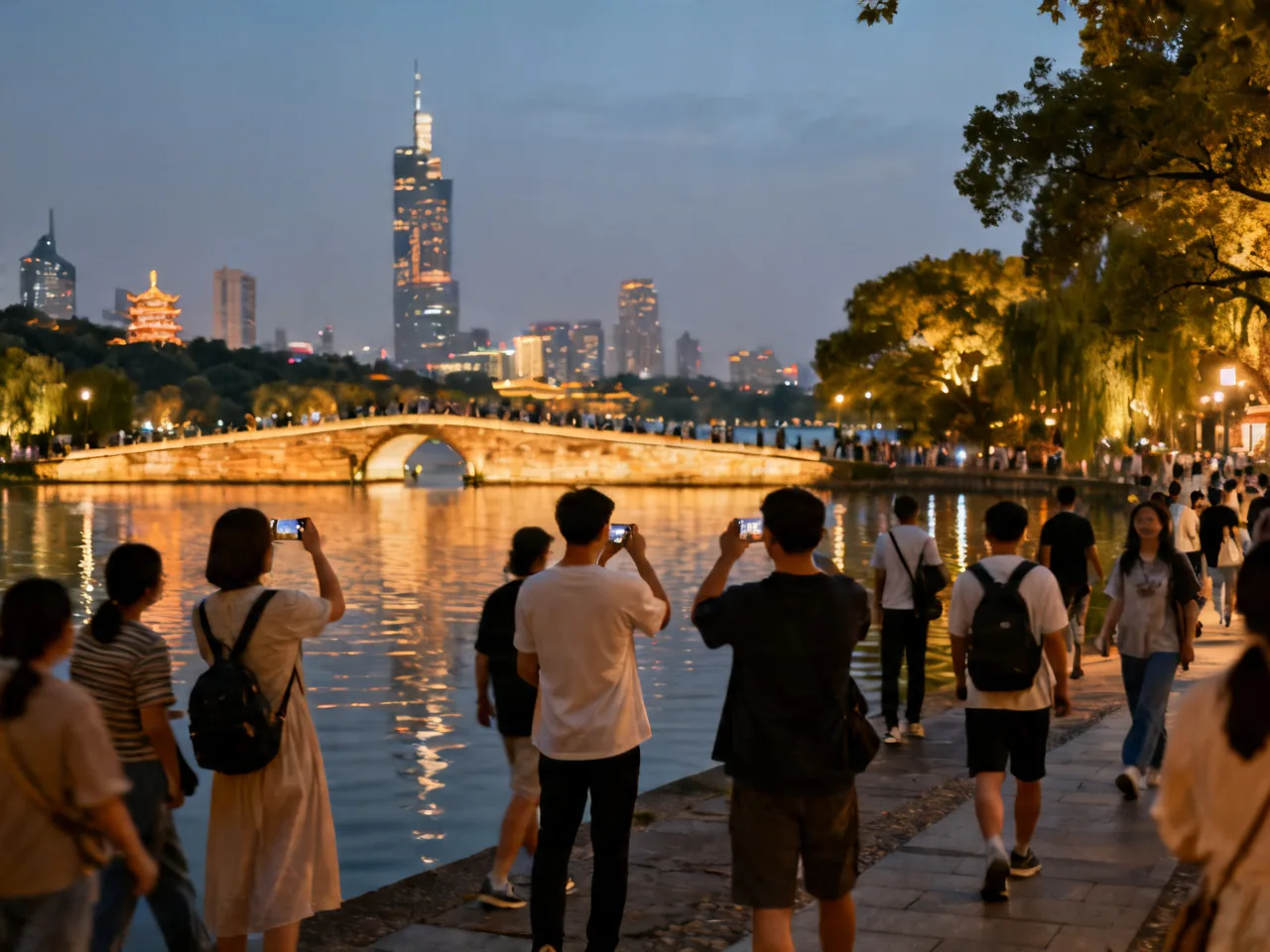
Afternoon: amble along Pingjiang Road — this Song Dynasty street runs beside a canal, lined with classic Jiangnan whitewashed houses. Buy a haitang cake (¥5), listen to a bit of pingtan ballad singing (many teahouses offer free or cheap performances), then find a canal-side chair and simply zone out.
Come evening, shift to Shantang Street (“Seven-Li Shantang”). It’s livelier and more commercial than Pingjiang Road, but the night scenery is first-rate — red lanterns reflected on canal water, the Jiangnan motif of small bridge, flowing water, and homes amplified to its fullest under lamplight.
Day 7: Tiger Hill & Silk
Morning at Tiger Hill (¥80). Su Dongpo said “To visit Suzhou without seeing Tiger Hill would be a regret.” Tiger Hill Pagoda (Yunyan Temple Pagoda), built in 959 AD, is China’s Leaning Tower of Pisa, tilting about 3 degrees.
Afternoon: visit the Suzhou Silk Museum (free) to learn the full story of silk, or shop for silk products on Guanqian Street. Real silk scarves range from ¥100 to over ¥1,000 — buy from reputable shops.
Quick Food Guide
| City | Must-Try | Per Person | |
|---|---|---|---|
| Shanghai | ¥30-80 | ||
| Hangzhou | ¥40-100 | ||
| Suzhou | ¥40-120 |
Suzhou cuisine leans sweet. If you can’t handle savory-sweet flavors, tell the server “less sugar” (shao fang tang) upfront. This is a lesson I learned the hard way — my first squirrel-shaped mandarin fish at Songhelou was so sweet I briefly thought I’d ordered dessert.
Practical Info
Transit: Shanghai Metro accepts Alipay and WeChat ride codes; same for Hangzhou and Suzhou. High-speed rail between the three cities is so frequent you only need to book 1–2 days ahead.
Best time: March–May (spring blossoms) and September–November (crisp autumn) are the most comfortable seasons. June–July is plum rain season — humid and sticky, but fewer crowds.
7-day budget: Around ¥3,000–5,000/person excluding flights, with accommodation the biggest expense. Shanghai lodging is pricey — consider Jing’an or Xuhui instead of Bund-area hotels to save significantly.