My Child Spent Twenty Minutes Talking with Elder Chess Players in a Chengdu Park
Mornings in Chengdu do not rush. When we arrived at People’s Park, the sunlight was still mild, the leaves held a soft shine, and people were drifting in with fresh breakfast in hand. My daughter wore a pale yellow dress and a loosely tied ponytail. The moment we entered the park, she was drawn to a group of elderly men playing Chinese chess by the path. At first she watched from far away. Then she moved closer and closer until she was squatting right next to them, unwilling to leave.
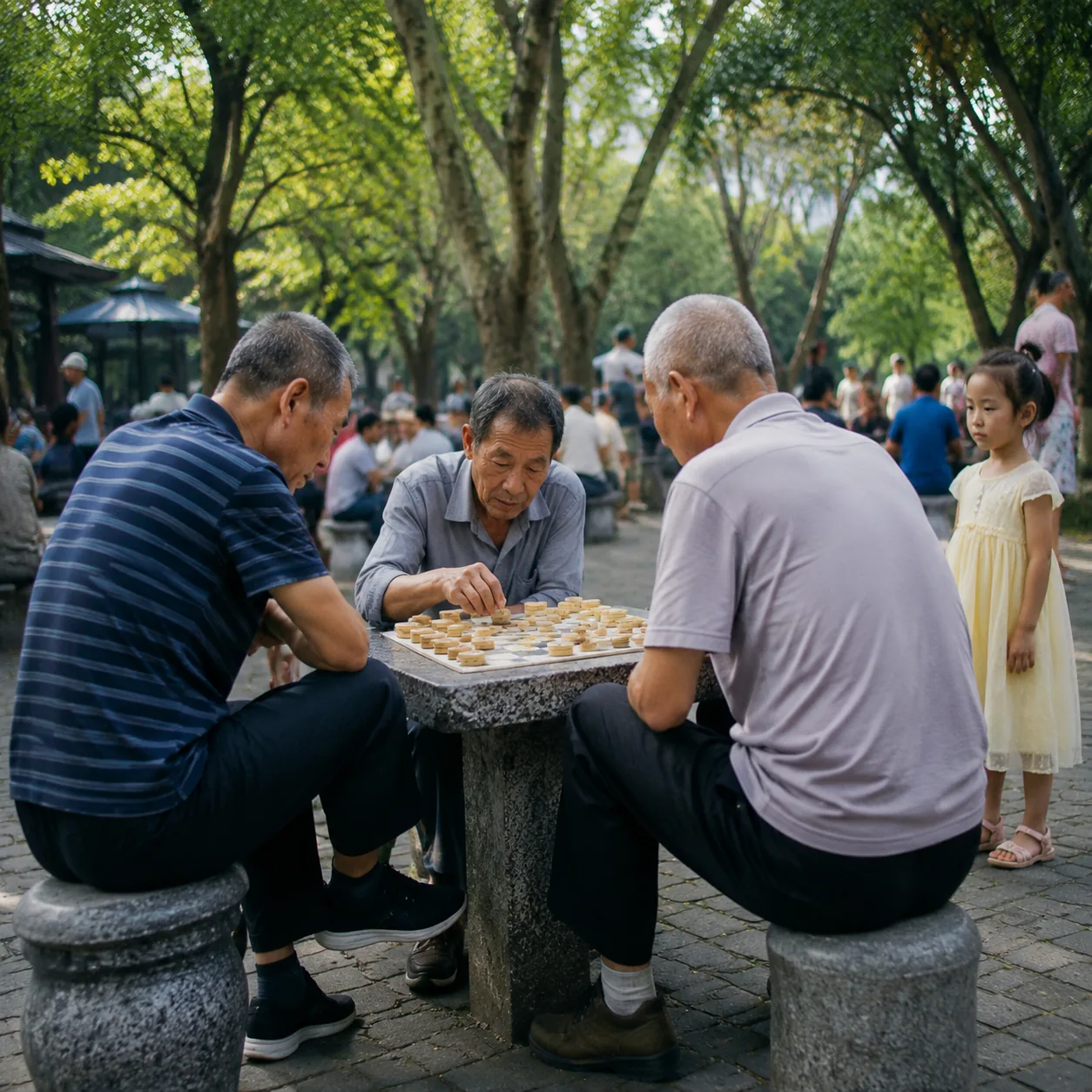
The wooden stools beside the board were old and polished smooth at the edges. One grandfather in a straw hat dropped a piece with a sharp clap, and the people around him burst into laughter. My daughter could not understand the Chengdu dialect they had just spoken, but from their faces she knew the move must have been a good one. She turned to me and whispered, “Mom, how does this move?” Before I could answer, the man in the straw hat smiled and asked, “Little one, do you know how to play?”
She shook her head and answered honestly, “I can’t, but I want to learn.” The moment she said that, the whole mood softened. One grandfather placed a rook in her hand and explained that it moved in straight lines. Another added that the horse moved in an L shape. A third man explained how the cannon attacked across a piece. What had been simple park-side spectating turned into an open-air lesson. More importantly, no one treated her questions as a nuisance, and no one brushed her off in that fake adult way of talking to children. They treated her like a real participant.
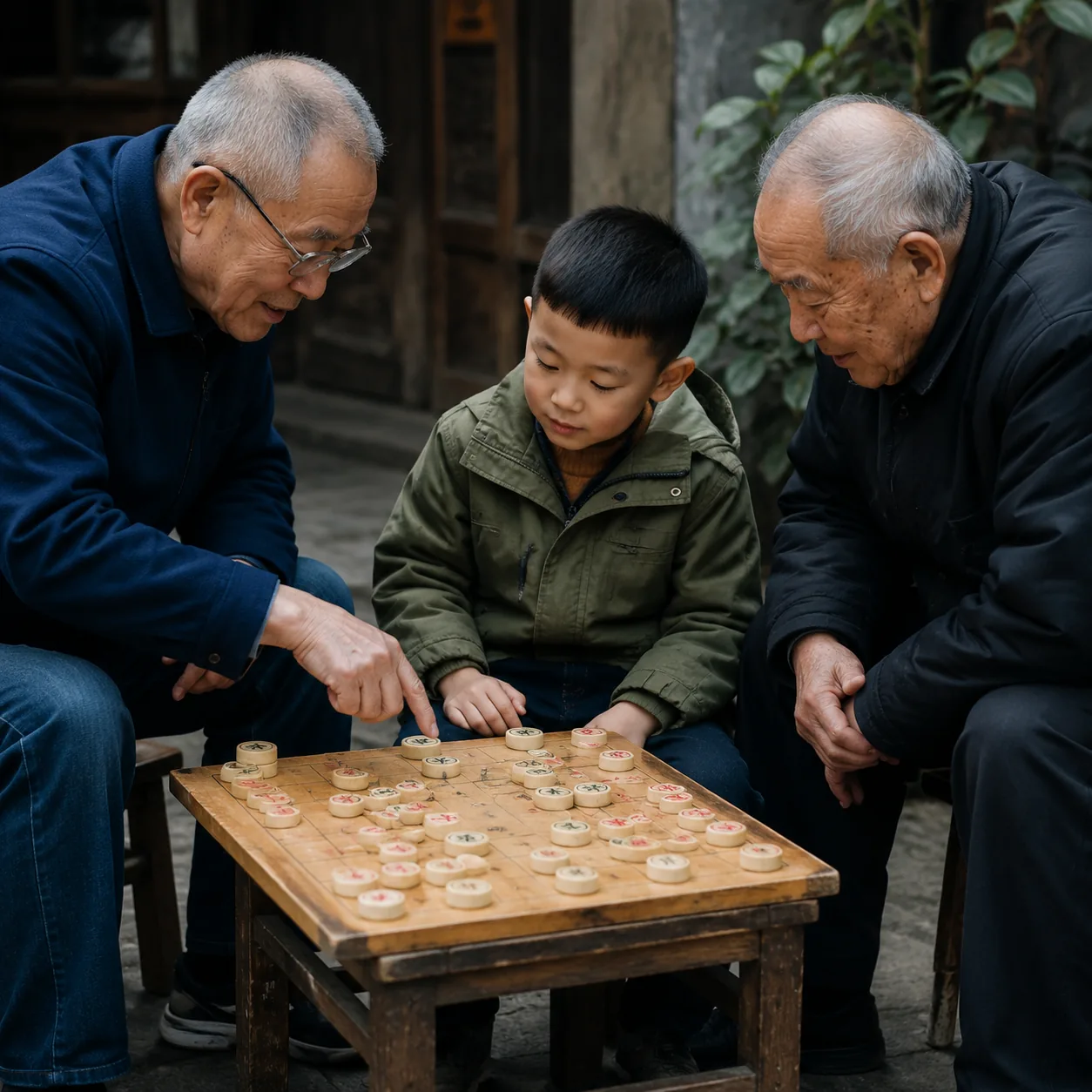
For the next twenty minutes, my daughter kept practicing conversation with them. “Why can’t this one move?” she asked, and they explained patiently. “Then can I capture this one?” she asked next, and everyone laughed, saying she was bold. I sat nearby and felt unexpectedly moved. Parents often worry that children will get bored while traveling, run around too much, or think only about snacks. But one of the most valuable things about Chinese parks is exactly this kind of spontaneous exchange: a child pauses out of curiosity, a group of older strangers opens a conversation because they are willing to explain, and knowledge passes quietly through casual talk.
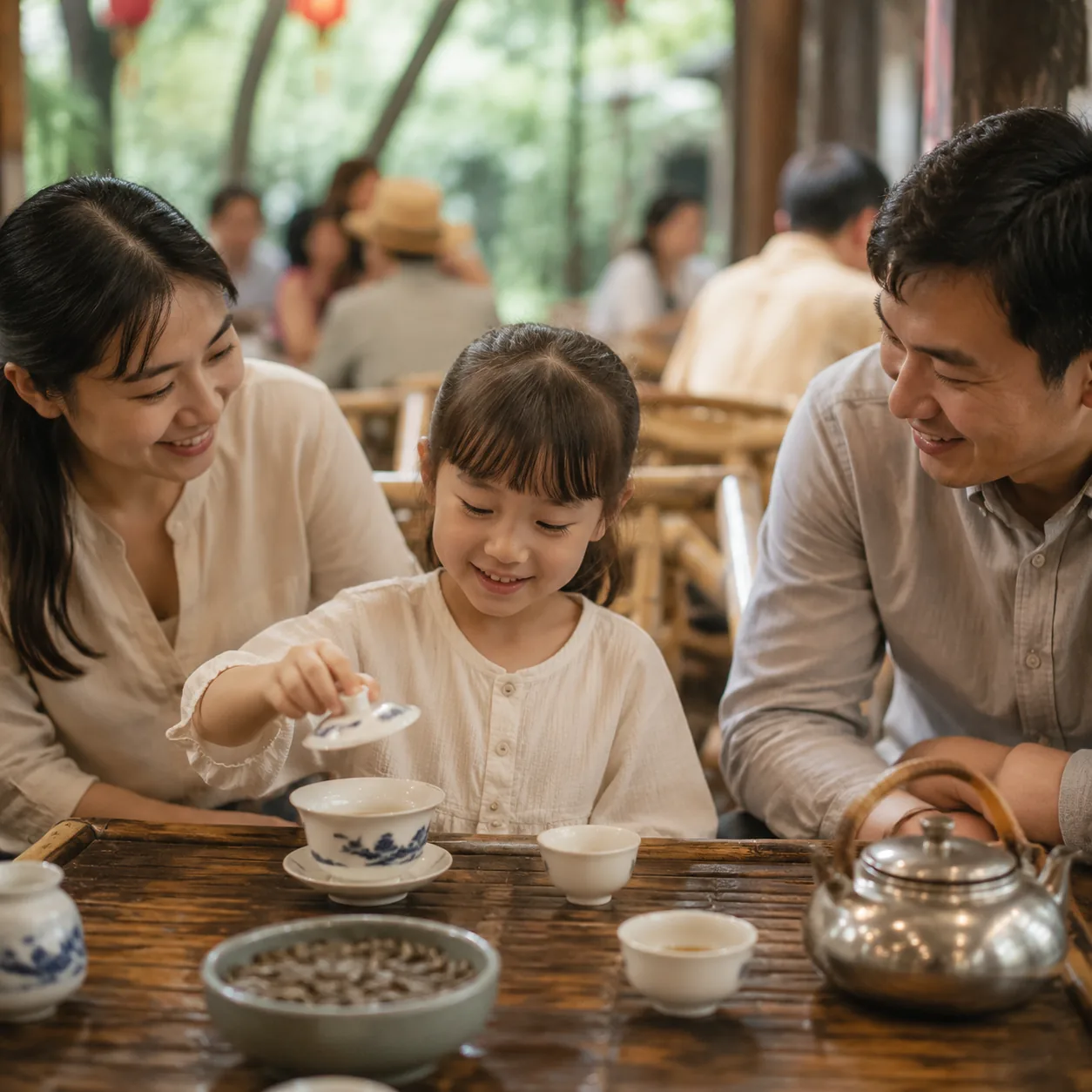
Later we sat down for tea. As she learned how to lift the lid of a covered bowl, she was still murmuring, “The rook goes straight, the horse goes in an L.” She had not become an expert after learning a few rules, of course. But she had clearly begun to understand that travel is not only for looking. It is also for asking, for sitting down, and for talking. At lunch she even told the server, “I’d like a bowl of noodles without spice, please.” In ordinary life that sentence might seem small. In a strange city, it meant that she was carrying the confidence built in the park into another situation.
Chengdu is wonderful for traveling with children not only because the food is abundant and the pace is easy, but because the city holds such a relaxed atmosphere for learning. When adults are not rushing, children have more room to observe. When strangers are not eager to end a conversation, children are more willing to keep speaking. Places like this help children feel that communication is not a test. It is something natural and enjoyable. Many Chinese cities carry this warmth in public life, but Chengdu shows it especially clearly because it allows people to slow down, and it allows children to grow patience inside that slowness.
Before we left, my daughter waved seriously to the grandfather in the straw hat and said, “Thank you for teaching me chess.” He pushed his hat back slightly and smiled. “Come back to Chengdu another time. We’ll keep learning.” I remembered that sentence for a long time. Perhaps the best form of family travel is not how many facts a child memorizes in one day. It is the moment a child discovers that strangers can also become teachers, and that learning can happen under tree shade, beside a chessboard, inside shared laughter.
If you bring a child to Chengdu, I strongly suggest not packing the schedule too tightly. Parks, neighborhood bookstores, teahouses, and museum activity corners may not look like the most famous check-in spots, but they are often the best places for children to practice communication. You can even give your child one small task: listen to how people speak, notice how patiently they explain things, and then try asking, “May I take a look?” On a trip, the more questions a child dares to ask, the deeper the memories they usually carry home.