В китайском высокоскоростном поезде я научился тихо делить пространство не по правилам, а потому что сначала читаю ритм других
The first time I truly realized I was “taking up space” on a Chinese high-speed rail trip, it was not because my luggage was too big or because I had the wrong seat. It was because my voice and movements were looser and more scattered than everyone else’s. I was leaving from Shanghai. The carriage was clean, the air conditioning had that steady coolness Chinese trains often have, and outside the window the buildings quickly flattened into grey-white bands. Soon after departure, I was replying to messages while spreading my cup, power bank, paper ticket, and earphones across the tray table, and I adjusted my seat twice. Only when the auntie next to me quietly pulled her sleeve inward did I suddenly understand that “sharing space” means more than not physically touching someone. It means not letting your personal rhythm spill onto other people.
Later I began watching the passengers who looked especially practiced. I noticed that they were not rigidly obeying a set of rules. Instead, they naturally kept themselves within a stable, predictable range. If a phone made noise, they lowered it immediately. If they answered a call, the first sentence was often, “I’m on the train, I’ll talk later.” When they needed something, the movement was short and contained, not something that made the whole row alert itself. If someone ate breakfast, they gathered the wrappers to one side so the smell and crumbs would not linger too long. If someone returned from getting hot water, they sat down and first checked whether they had brushed against another person’s leg space. That quietness was not coldness. It was a mature form of public understanding. I also started to understand more clearly why, when traveling in China, getting your train routine and personal movements into order first makes the whole journey easier, because a sense of order reduces how much you disturb others.
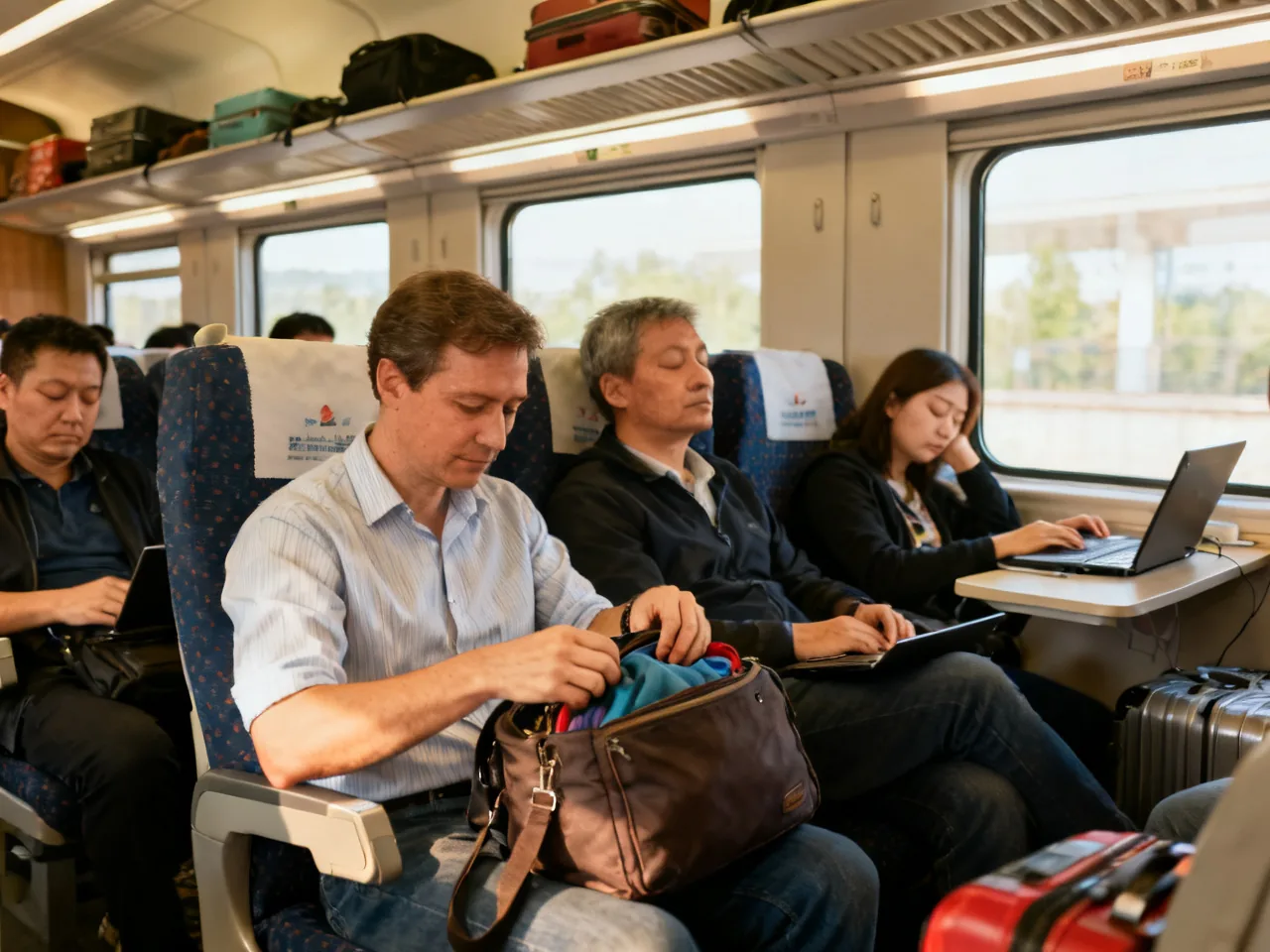
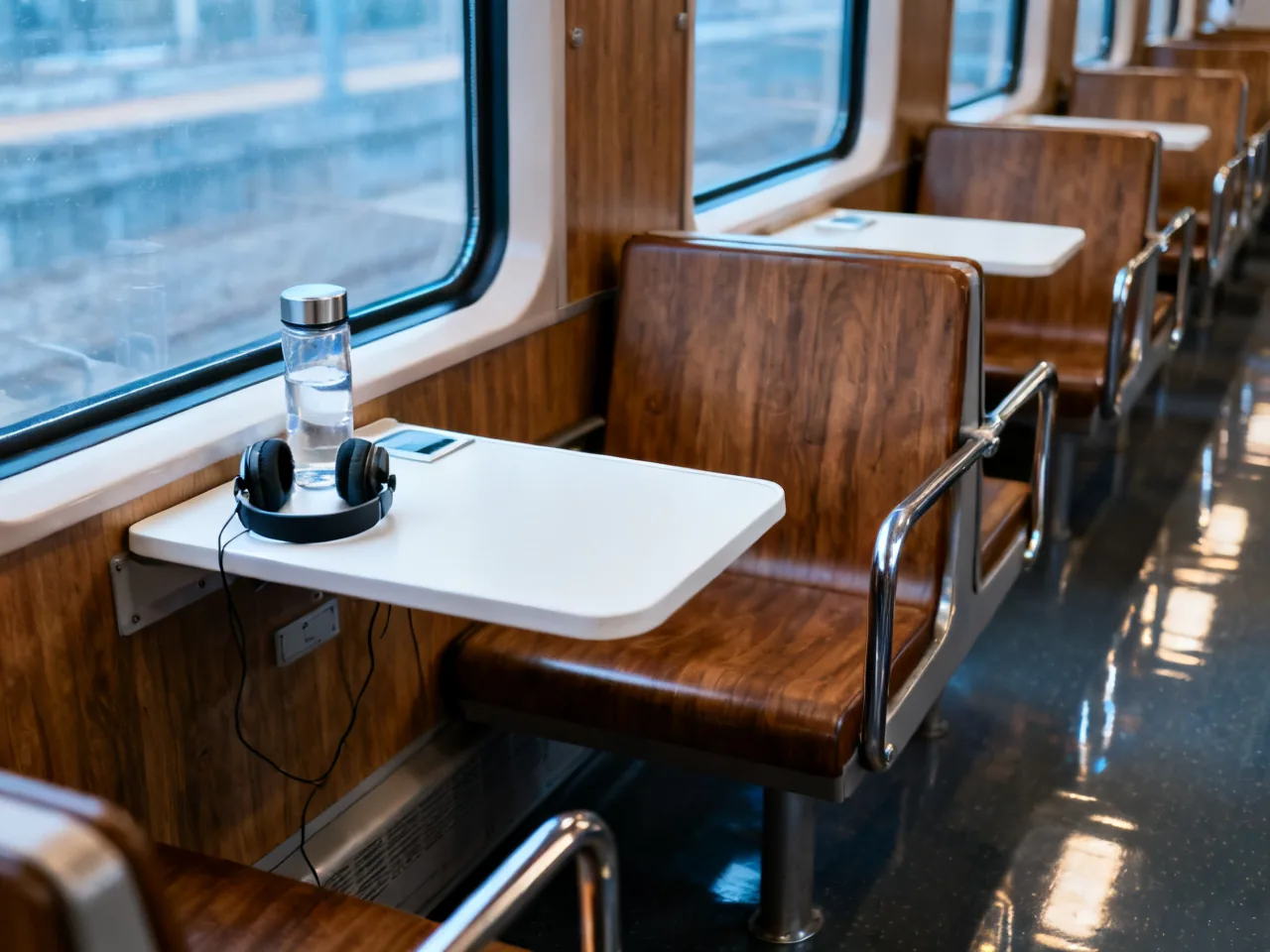
The clearest change in me was learning to store first and use second. I used to sit down and immediately pull everything out, as if that were how a journey properly began. Now I keep out only what I will need in the next ten minutes and leave the rest in my bag. My passport or ID-related information stays in the easiest-access place, my water sits toward the window, and my phone and earphones try not to cross the middle boundary. As a result, the tray table feels cleaner, but more importantly, I feel calmer. On high-speed rail, the real problem is usually not smallness. It is disorder. Once you become disordered, you start searching for things again and again, standing up again and again, and brushing into people again and again. Eventually I felt this was very similar to what I had learned in other Chinese daily settings: make several checks before acting, and you preserve much more dignity than if you keep improvising repairs.
Another detail I barely noticed before and care about a lot now is what I think of as “the length of sound.” On Chinese high-speed rail, most people are not completely silent, and children obviously cannot remain motionless forever, but people rarely let a sound drag on too long. A ringtone goes off once and ends. If someone accidentally plays audio out loud, it is usually lowered quickly. Conversation can exist, but it usually does not spread out the way it might in a restaurant. Once I started sending voice messages to a friend, and by the second one I noticed someone across from me lifting their eyes from a tablet. I did not feel offended in that moment. Instead, I felt I had finally understood the environment. The carriage allows presence, but it does not welcome presence that keeps expanding. For foreigners, that distinction matters a lot, because it teaches you how to blend in naturally instead of anxiously wondering whether you have violated some written rule.
I also slowly learned a more practical definition of the word “shared.” It includes how you use the armrest, where you place your feet, when you take luggage down, and even whether, before eating, you first check if someone nearby is sleeping. On early trains many people are catching up on rest. On midday trains some are quietly working. On evening trains others look tired after business travel. If you simply look once, you can usually sense whether that row currently calls for lighter movement, slower movement, or as little disturbance as possible. I came to agree more and more with the idea that comfort and security are often built on small usable judgments. A high-speed rail carriage works the same way. The most effective public politeness is usually not something you perform. It is something that quietly saves another person a little burden in advance.
Looking back now, I learned to share space quietly on Chinese high-speed rail not because anyone formally corrected me, but because I gradually learned to read a very Chinese kind of public rhythm inside the carriage: do not exaggerate, do not dominate the scene, leave room for others, and leave order for yourself. That habit later affected how I move in coffee shops, metros, and waiting halls too. For me, part of travel maturity is finally understanding that “being present” is not the same as “filling the space.” Inside a fast-moving train carriage, the best way to blend in is often to place yourself quietly and correctly within it.