Как только над Западной улицей Цюаньчжоу опускается ночь, один круглый фонарь согревает и мяньсяньху, и человеческое тепло
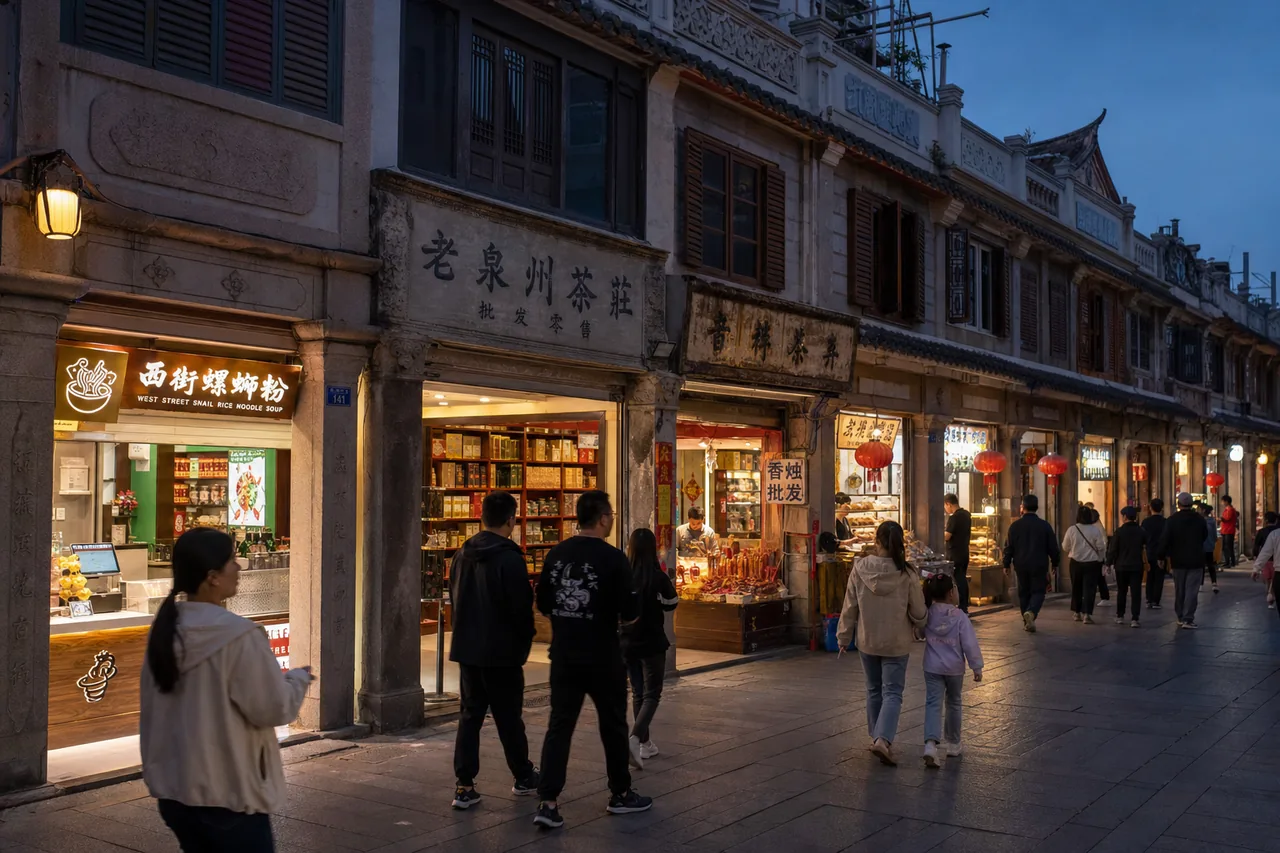
The old street lamps of Quanzhou are often noticed before the sky becomes completely dark. When evening has just settled and the sky still carries a little blue-gray, shops under the arcades begin to light up one after another. Light spreads from doorways onto stone slabs and onto the shoes of people passing by. I walked slowly along West Street, with small shops selling mianxianhu, tea stores with old signs, and counters displaying incense, candles, and pastries beside me. Quanzhou in daytime is lively and bright, with many details pushed forward by the sun. But when night arrives, the old street seems to lower its voice and lets the lamps continue speaking for it. Those lights are not intense. Some are warm yellow, some lean white, and some hide under eaves, illuminating only a small piece of brick wall. They do not rush to attract people like mall signs. They quietly guard each entrance, like eyes the old street has kept for itself.
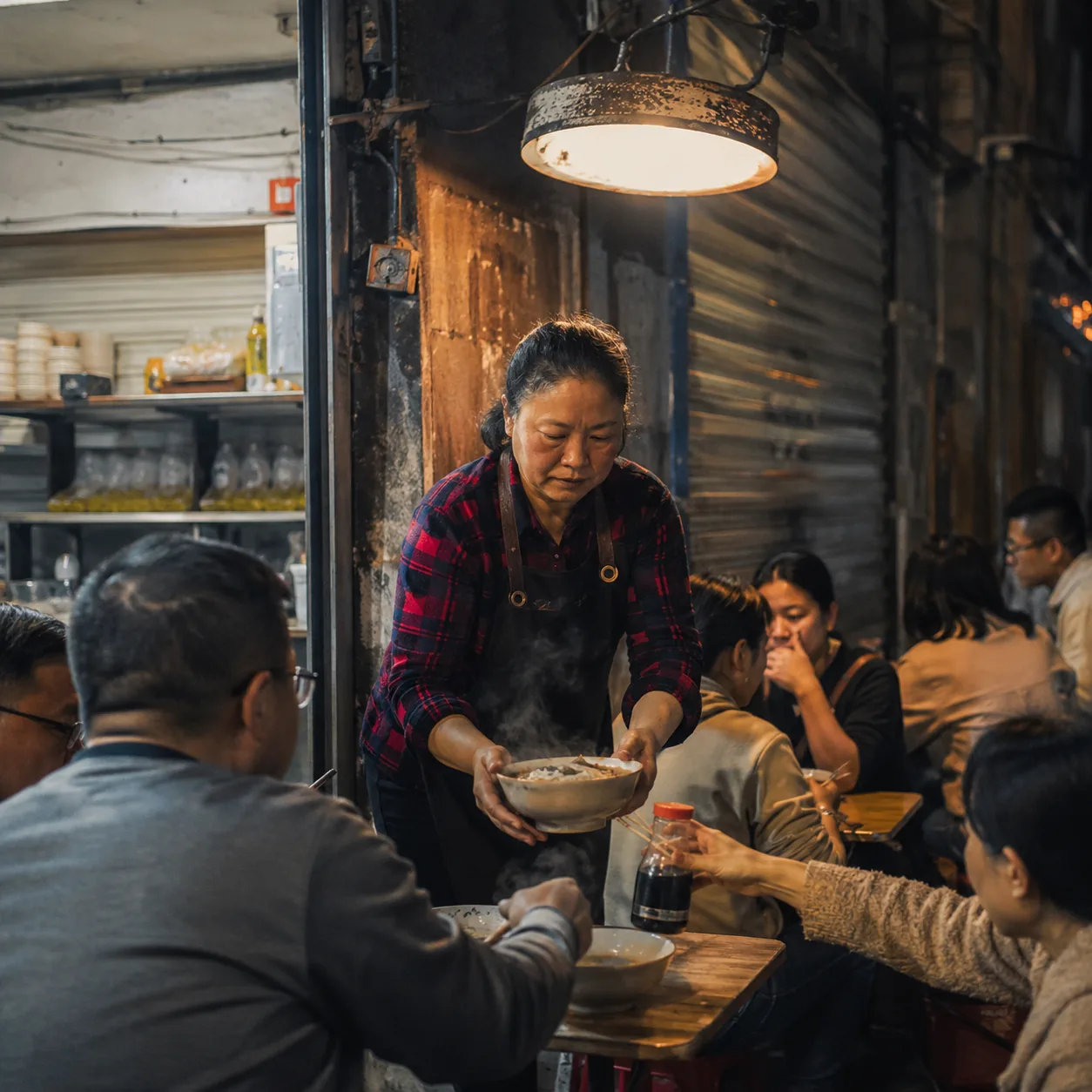
The first place where I stopped was beneath a round lamp hanging at the entrance of a snack shop. The lampshade was a little old, with grease smoke on its edge, and the light passing through it carried a soft mist. The shop was full of people eating late-night food, and the sound of bowls and chopsticks, orders, and steam from the pot all surged outward together. The owner brought a bowl of mianxianhu to a small table by the door. Pepper and scallions floated on the soup, and someone beside the table passed over the vinegar bottle with a movement so familiar it seemed to have been repeated for many years. That lamp shone on their hands and on the tiny stains of soup on the tabletop. Quanzhou’s old street lamps are not merely for illumination. They allow these ordinary gestures to hold a visible warmth. If a city’s night had only brightness, it would feel empty. With light that carries the smell of daily life, night truly settles into living.
As I continued, the old houses along the street revealed layers different from those in daylight. Red brick walls look solid and rough by day, but at night the shadows inside the mortar lines deepen, and the walls seem to hold a longer memory. A wooden door stood half open, and a small lamp inside shone on a household shrine, where red points of incense brightened and dimmed. Quanzhou’s religious atmosphere does not exist only in large temples and grand ceremonies. It also hides beneath old street lamps, in a small offering table at a family doorway, an incense burner in a corner, and characters above a lintel. Passersby may not stop, but they naturally slow down, as if knowing that something here lasts longer than an itinerary. The light gently lifts these corners into view. It does not explain or urge; it simply lets them continue existing in the night.
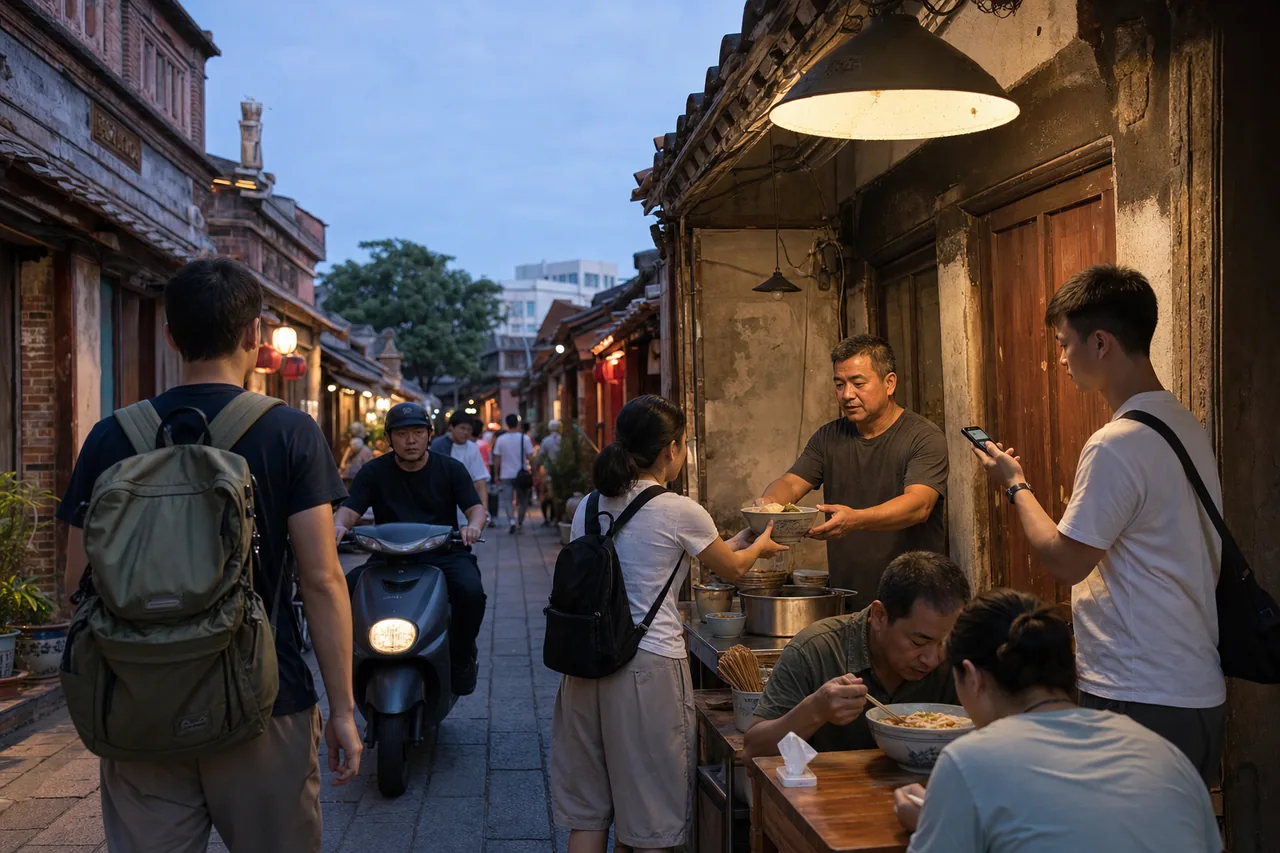
When I reached an alley entrance, the light suddenly narrowed. The liveliness of the main street remained behind me, while inside the alley there were only a few low lamps shining on damp wall bases and electric scooters parked by doorways. From farther in came the sound of a child practicing an instrument, intermittent and not very skilled, but it made the alley feel inhabited. Quanzhou’s old streets are often like this: a few steps away are tourists, signs, and lines for snacks; turn a little farther in, and it becomes the residents’ own evening. The light here has no decorative purpose. It is only responsible for helping people see the road underfoot, the steps before doors, and clothes hanging near windows. Yet precisely because of this plainness, it feels more dependable. There are many kinds of lights in travel: some are for photos, some for business, some for ceremony. These lamps in the old alley are simply for people going home.
When I returned to the main street, there were more visitors than before. Some held phones to photograph the clock tower, some stood at shop entrances studying menus, and some walked while eating fried vinegar pork, paper bags bulging with heat. The old street lamps lit each person’s face in flashes, as if lending strangers’ expressions temporarily to the street. Quanzhou’s night is not a single note of nostalgia. It is also realistic, crowded, and skilled at business. But these realities do not damage the old street; instead, they keep it alive. If an old street had only quietness and age, it could easily become an exhibit. If people still line up, argue, wait for friends, and look for change under the lamps, then it remains a street, not merely a preserved backdrop. The light lets old and new stand side by side without forcing them to explain each other completely.
I sat for a while at the entrance of a tea shop. The lights inside were not very bright; only a few small lamps shone on tea tins and wooden tables, making the color of the tea in cups look deep and steady. The owner spoke slowly and was not hurried when refilling water for guests. Outside the door, people kept passing, while inside there seemed to be a thin layer of quietness. Quanzhou’s old street lamps reminded me of how Minnan people arrange life: liveliness may exist, business may be busy, incense may burn strongly, but there must always be a small space left for sitting down, drinking tea, and listening to the wind. If light is too bright, people only want to see clearly and move on quickly. When light is a little dimmer, people become willing to stay longer. That night, I did not hear any special story in the tea shop, yet I remembered the rhythm of light on the cup wall alternating with footsteps outside.
As the night deepened, the lights near the clock tower appeared steady and clear. It is not the tallest building, but it feels like a pause mark for the old street, and everyone passing nearby seems to look up at least once. Light falls on the white walls, giving the clock tower a slight sense of stage, yet the sounds around it remain everyday sounds: someone asks when the last bus leaves, someone urges a companion to hurry, and someone calls home to say they will be back soon. This combination feels very Quanzhou. It has Maritime Silk Road history, temples, and ancient remains, but it also has a dinner, a bus, and a casual family phone call. The old street lamps place these different scales into the same evening, illuminating both the outline of history and the triviality of the present. For a traveler, this is more interesting than looking at a building alone, because a city is never a still photograph.
Later I walked slowly back along the street and realized that light can change a person’s pace. In daytime, walking is easily pulled by destination. At night, with lamps lit one after another, footsteps seem to be divided into many small sections. Under one lamp, you glance at a stall; under the next, you listen to a burst of Minnan speech; farther on, you smell the sweetness of peanut soup or see traces of an old advertisement on a wall. The lamps do not illuminate the entire road all at once. They offer one small reason after another to pause. Perhaps the charm of Quanzhou’s old streets hides in this intermittent rhythm. It does not require you to understand everything immediately. It only lets you stop within one patch of light, then walk into the next.
Near the time I left, I stood by the road and watched shops closing one by one. Stall owners turned off sign lights while leaving a plain bulb at the doorway; young people stacked tables and chairs, and elders moved incense burners inside. When lights went out, the old street did not suddenly lose life. It simply gathered the liveliness of day and night back indoors little by little. The lights that remained were often the simplest ones: a stairwell light, a lamp beneath a lintel, a streetlamp at the alley’s end. They did not exist for tourists, yet they became the part I most wanted to remember. Because these lights show that Quanzhou’s old streets do not shine in order to be seen. They shine because people live here, pass here, and return here.
After returning to my lodging, I could still see a few faint points of light in the distance from the window. They were not as clear as scenic photographs, but they made me feel that the evening had not ended too completely. The impression Quanzhou’s old street lamps gave me was not magnificence, nor the completeness of an antique, but a sense of continuing companionship. They accompany snack stalls lighting their fires, residents going home, incense slowly burning indoors, and travelers moving from lively places toward quiet ones. In travel, we often seek the brightest places. Yet sometimes what truly remains is a lamp that is not very bright but happens to shine on the edge of life. Such lamps make an old city feel not distant at night, but like someone who knows the road well, carrying a light and slowly seeing you to the street corner.