В первый раз отправил посылку в Китае: коробки, скотч и удостоверение личности — всё освоил
At 10:40 in the morning, I stood on a not-very-wide residential street in Chengdu hugging a cardboard box that was close to falling apart. One corner had softened in last night’s rain, the tape refused to hold, my phone battery was down to twelve percent, and I found myself staring helplessly at the clerk inside a parcel station. That was the moment I learned that shipping a parcel in China is not just a matter of setting a box on the counter. Packaging, real-name verification, recipient details, and prohibited-item checks all have to line up.
The reason was ordinary enough. After traveling through the southwest for more than ten days, I had accumulated books, tea, a few small bowls, and a heavy jacket I no longer needed. My suitcase was so full that the zipper made a dangerous sound every time I pulled it shut. I had planned to wrestle everything onto the next train anyway, but the young man at the hotel front desk laughed when he saw me repacking. “Traveling by high-speed rail like that will be exhausting,” he said. “Shipping one box is much easier.” He said it so casually, as if everyone already knew how to do it and I was the last student to show up.
So I asked the front desk where the nearest parcel station was. He marked a spot on the map and added, “Bring your ID, and don’t seal the box completely yet. The shop may need to see what’s inside.” I heard the words but did not fully understand them. When I finally carried the box into the shop, the auntie behind the counter said the exact thing at once: “Don’t seal it yet. I need to see what’s inside.” She said it calmly. I felt as if I had been pulled into an exam I had not studied for.
The station was small. Pickup-code notices were taped to the glass door, parcels of different sizes were stacked along the wall, and the air smelled of cardboard, packing tape, and the clean water from a recently mopped floor. Beside the scale sat a utility knife, markers, clear tape, and black waterproof bags. Everything looked prepared except me. Ahead of me in line was a mother with her child. The child leaned over the counter to read the printed waybill aloud while crunching a lollipop. I stood behind them with my collapsing box, hoping nothing else would go wrong by the time it was my turn.
When my turn came, the problems indeed arrived one after another. The auntie took one look at the box and frowned, saying the soft corner would be crushed in transit. She opened it and then asked whether I had wrapped the bowls separately, whether the tea was sealed, and whether the books might grind against the porcelain edges. I could only admit the truth: no, I had simply stuffed clothes into the gaps and hoped that would provide enough cushioning. She sighed, but not impatiently. She pushed the box back toward me and said, “All right. Repack it. I’ll teach you once.”
She became the key supporting character of my day. She looked like someone who handled hundreds of parcels every day, yet she had a practiced patience for beginners’ clumsiness. First she pulled a sturdier carton from under the shelf and told me to abandon the old one. Then she took out sheets of bubble wrap and showed me how to protect both the rim and the foot of each bowl, fixing the layers diagonally with tape so the pieces would not roll around. Her hands moved fast while she explained: “Heavy things on the bottom, light things on top. Separate hard items from fragile ones. Fill gaps with soft clothes, but don’t leave anything free to shake.”
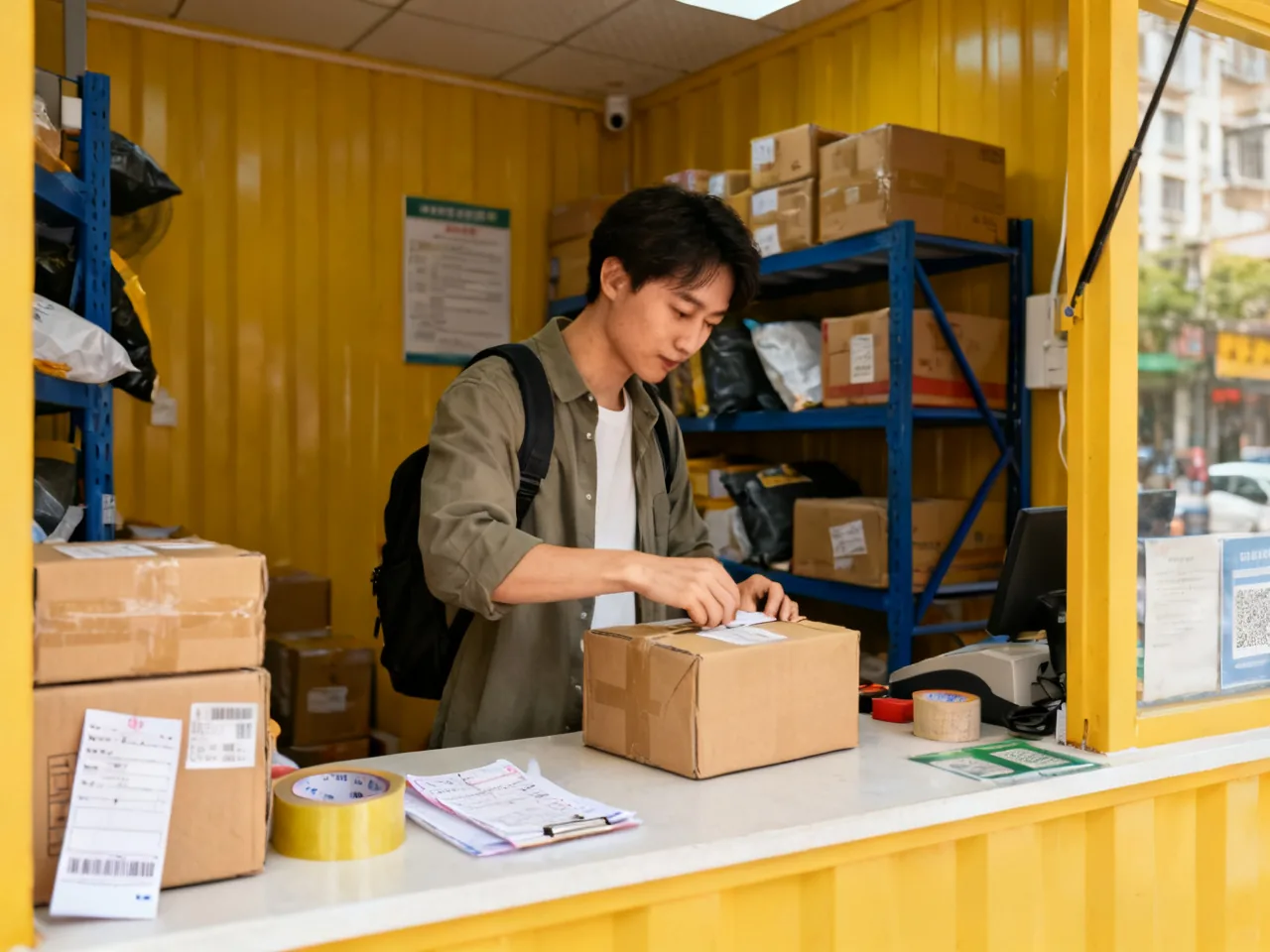
As I followed her steps, I realized shipping a parcel was like taking an unexpected lesson in practical life. A box cannot be just any box; too large a carton actually increases the chance of impact. Tape is not one lazy strip across the middle; it needs horizontal sealing, vertical sealing, and cross reinforcement. And what matters to the shipping staff is not how quickly you want it gone, but whether it can arrive safely and within the rules. The auntie even made me check the recipient’s phone number and address twice. “One wrong character,” she said, “and the trouble begins afterward.”
Just as the packing began to look acceptable, the second problem arrived: real-name verification. She asked for my ID. I pulled out my phone to show an electronic document and the order information, but the screen lit once and went black. With the last sliver of battery gone, the power-saving mode swallowed the recipient details I had failed to save properly. For a second I nearly collapsed inside. Outside the sun was glaring, scooters kept stopping and starting by the entrance, the printer inside the shop squeaked on, and I felt like the least competent traveler in the city.
The auntie looked up at me and remained much calmer than I was. She pointed to an old power strip in the corner of the counter and said, “Charge it for five minutes first.” Then she asked whether I had my passport or another original ID document with me. I hurriedly pulled one from my small bag. After verifying the name, she handed me pen and paper from the shop and told me to write down the recipient’s name, phone number, and detailed address first, then complete the system entry once my phone recovered a little charge. A man waiting behind me added, “Everyone’s like this the first time. Don’t rush. Domestic courier procedures are actually pretty clear.” His “don’t rush” helped more than any tutorial.
During those few minutes I also learned what actually needs to be confirmed when shipping: which city, which district, whether the address includes building and unit details; whether the parcel contains liquids, batteries, lighters, or other restricted items; whether insurance is needed; and whether the recipient can allow station pickup. The auntie asked the questions one by one, and as I answered them one by one I realized how simplistic my previous understanding had been. I had thought of parcel shipping as mere transport. In reality it is a combination of information verification, risk control, and the physics of packaging.
Once my phone had enough charge to stay awake, I filled the details into the mini-program as she instructed. After submission, she printed the waybill, slapped it neatly onto the front of the box, and wrote “fragile” in thick black marker on the side. The moment those characters appeared, the carton seemed to gain a proper identity. It was no longer a pile of leftover travel items I had shoved together in panic, but a parcel that would be handled seriously and move through a system. She lifted it onto the scale, announced the weight and price, and I felt the relief of finally getting a task onto solid tracks.
If this is your first time dealing with such practical matters during travel, it helps a lot to understand the basic movement logic of Chinese cities first—when to use the metro, when to walk, and when to call a car. For that, Chinese city commuting choices is useful. And if your next stop is connected by high-speed rail, a lighter suitcase truly changes your mood; China high-speed rail end-to-end guide helps you think through transport and luggage together. As for payment, many parcel shops, convenience stores, and courier points rely heavily on phone payment, so it is also wise to read Mobile payments in China for foreigners before you go.
Just as the shipment was being finalized, the auntie suddenly handed me the extra roll of tape and said, “Keep this with you. It can be genuinely useful on the road.” I accepted it with a laugh, as if receiving a small but practical piece of equipment. She also reminded me to keep the receipt and not to check the tracking only for “collected”; I should watch the transfer and delivery stages too. By then the mother with the child had already left with her package, new customers were coming in and reading out the last digits of their phone numbers, and the little shop kept operating in its own steady rhythm.
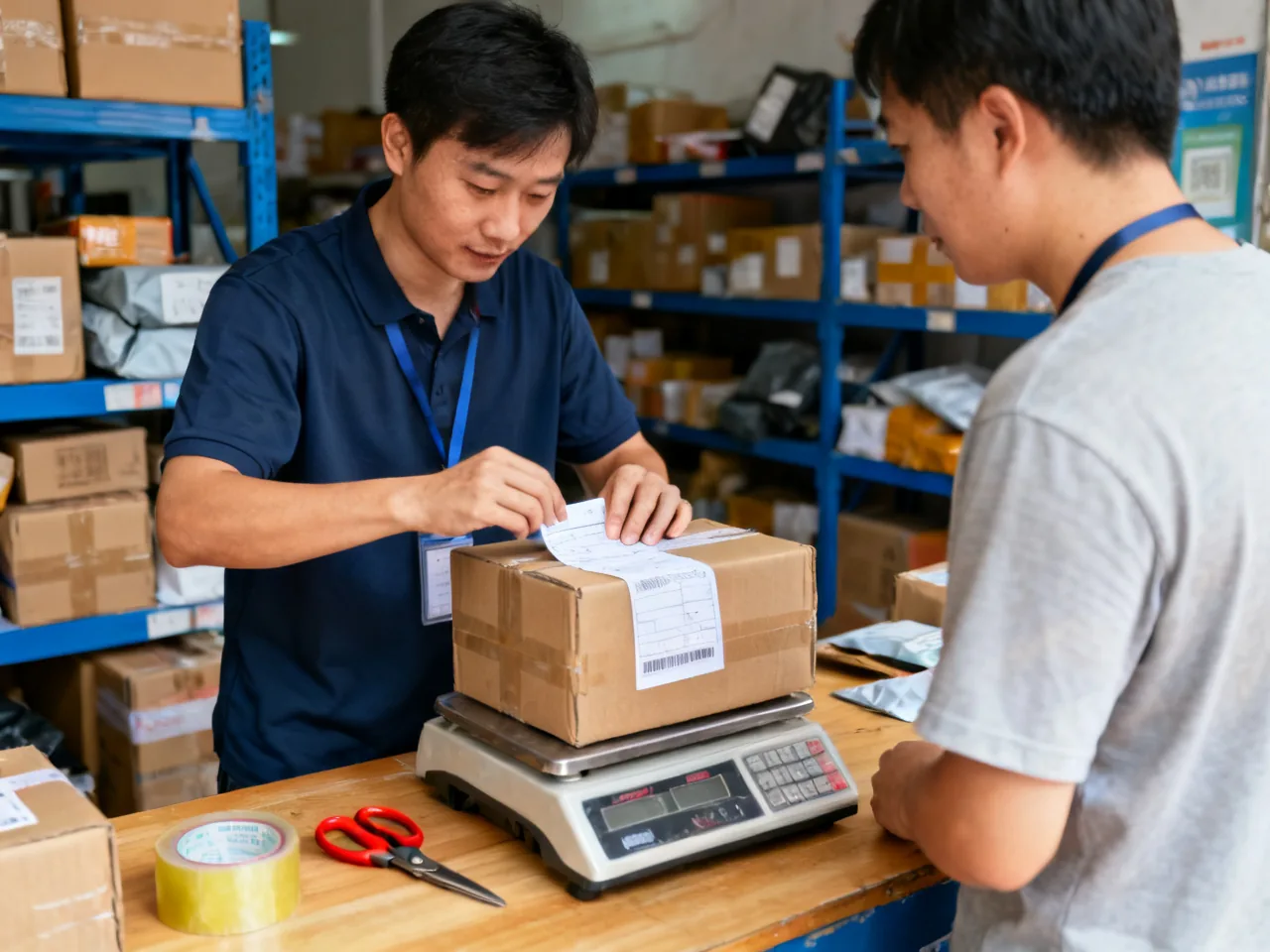
It was nearly noon when I stepped out of the parcel station. Steam from a noodle shop rushed through the doorway next door, sun-heated concrete reflected a white glare, and my hands suddenly felt much lighter; even my shoulders loosened. Looking back through the glass door, I saw the auntie already bending over the next box, wrapping tape around it with the same practiced skill. In that moment I understood that what I had learned from my first time shipping a parcel in China was not just a procedure. It was a way to make travel light again. My old coat, books, and tea were moving forward inside the logistics system, and I turned toward lunch carrying only the essentials. The extra roll of tape pressed against my palm from inside my pocket, like a physical footnote left behind by the lesson.