Дапаньцзи: когда эту тарелку ставят на стол, все замолкают
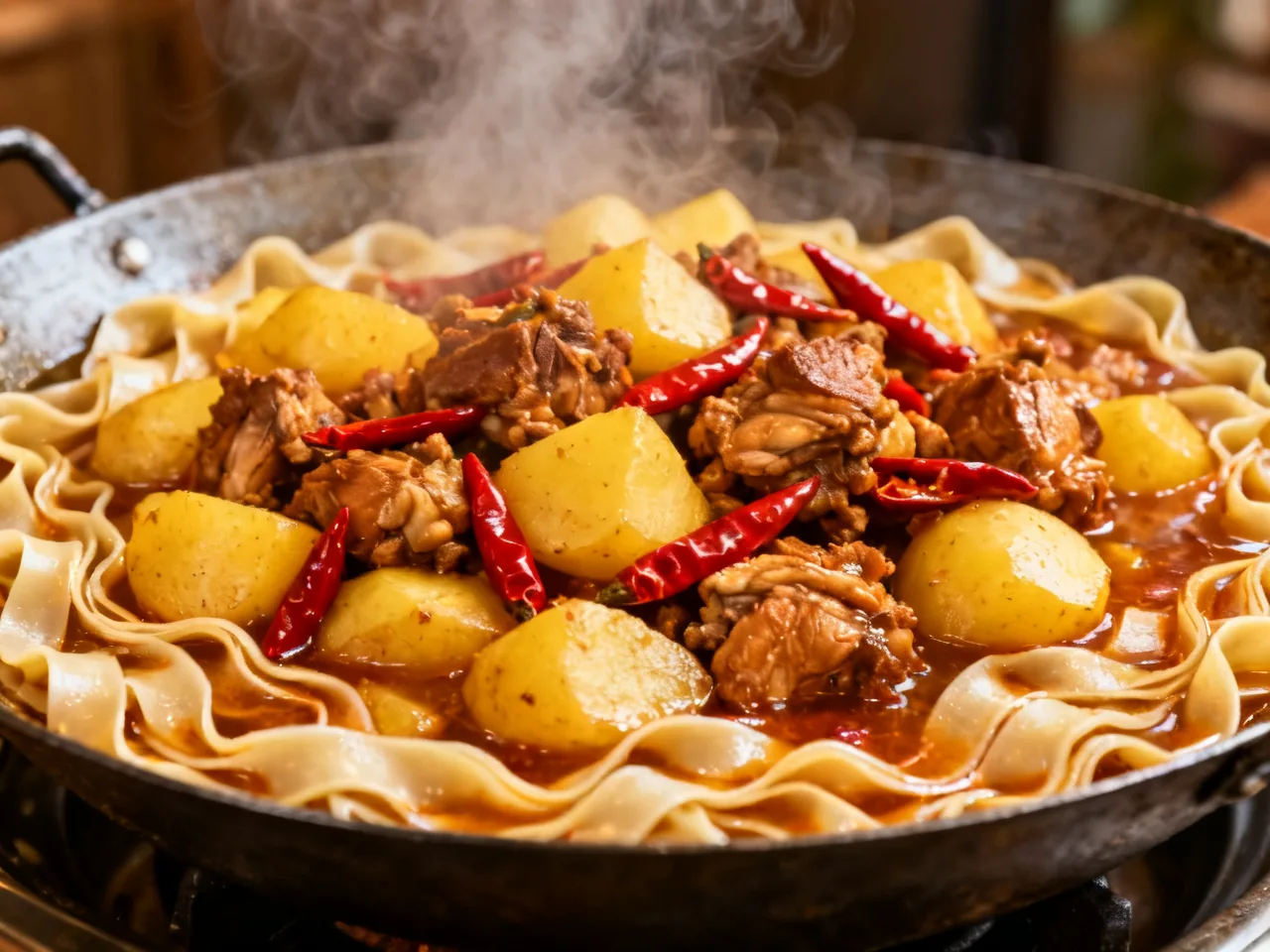
We have a saying in Xinjiang: if you haven’t eaten dapanji, you haven’t really been to Xinjiang. A bit of an exaggeration, sure, but dapanji is genuinely one of the most frequently served dishes on Xinjiang tables — maybe not one of, maybe THE most. A big enamel plate, heaped to overflowing: chicken chunks, potatoes, green and red peppers, belt-wide noodles, all drenched in a layer of glistening red chili oil. The moment it hits the table, everyone goes quiet. Chopsticks move faster than mouths.
The origins of dapanji are debated, but the most widely told version points to Shawan County, Xinjiang. In the 1980s, a small restaurant along National Highway 312 had an owner who, to feed passing truck drivers, chopped up a whole chicken, stewed it with potatoes and peppers, and served it on a big plate. The drivers loved it, word spread mouth to mouth, and the dish traveled along the highway. Shawan still calls itself “Hometown of Dapanji” and hosts an annual dapanji cultural festival — in 2024, it drew over 150,000 visitors.
The origin story itself is very “Xinjiang” — bold, generous, caring about portion size not plating. A standard dapanji uses a whole free-range chicken, at least 750 grams of potatoes, plus onions, green peppers, dried chilies, and Sichuan peppercorns, flash-fried then braised. The crucial seasoning is Xinjiang’s local lapi zi (a type of sun-dried chili) that gives the sauce a unique toasty fragrance no mainland chili can replicate.
Dapanji’s expansion route could practically be drawn on a map. In the 1990s it first spread to neighboring northwestern provinces like Gansu and Qinghai, then followed railway lines into Xi’an, Zhengzhou, and Wuhan, finally reaching Beijing, Shanghai, Guangzhou, and Shenzhen in the early 2000s. Today you can find dapanji in any Chinese city. It’s no longer just Xinjiang food — it’s Chinese food.
Along the way, dapanji kept mutating. The Sichuan version adds doubanjiang and extra Sichuan pepper for a more numbing-spicy kick. The northeastern version loads up on potatoes for thicker sauce. Coastal cities even spawned seafood dapanji, swapping in shrimp and clams for some of the chicken. But no matter the variation, two core elements are non-negotiable: the chicken must be bone-in (boneless doesn’t count as dapanji), and belt noodles must go in at the end.
We need to talk about belt noodles separately, because many first-timers overlook them. Belt noodles are wide, flat hand-pulled noodles, up to three or four centimeters across, resembling little belts. Once the chicken is mostly gone, you tear fresh noodles into the remaining sauce and let them soak up every drop of flavor — this is the real climax of dapanji. Experienced diners even order an extra portion of noodles when ordering, because the sauce is too good for just one round.
If you’ve traveled the Dunhuang Silk Road route, nearly every town along the way has a dapanji restaurant. From Dunhuang to Urumqi, this dish is the culinary constant of the Silk Road.
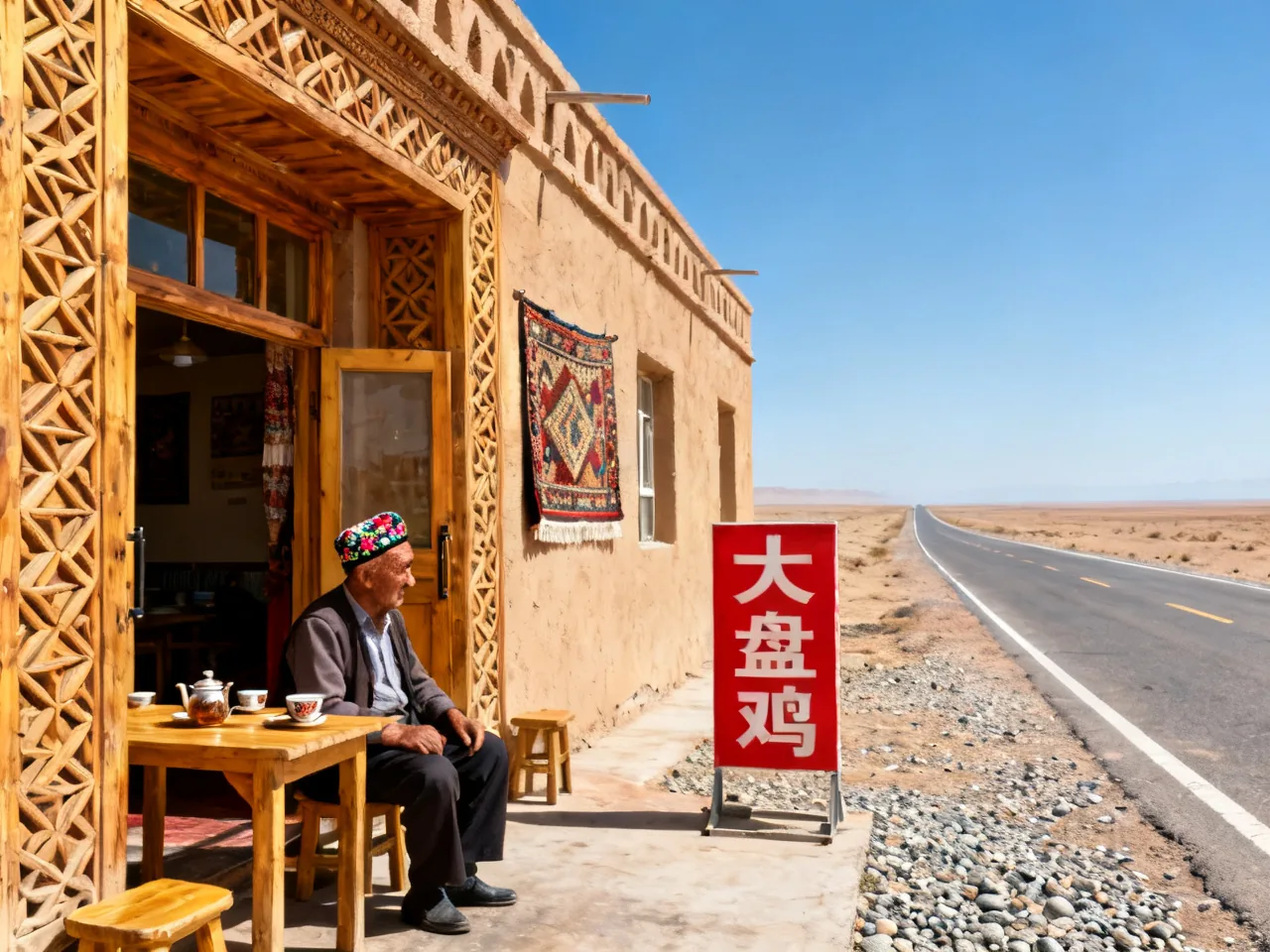
In Xinjiang proper, a serving of dapanji costs 88-138 RMB, enough for three to four people. In mainland cities, prices rise to 128-188 RMB, but portions usually don’t shrink much. The value is exceptional — think about it: a whole chicken plus a starch course, under 50 RMB per person. According to Dianping data, dapanji consistently ranks first in search popularity under “Xinjiang cuisine.”
There’s an unwritten rule about eating dapanji: don’t go alone. This dish was born for sharing — facing that enormous plate solo, you’ve already lost on sheer presence. The ideal scenario is three to five friends gathered around: fight over the drumsticks first, fish out the potatoes next, then contentedly toss in the noodles. If you’re working on a budget travel plan, dapanji is absolutely one of the best “big meal, small bill” options out there.
Why did dapanji conquer all of China? We think the answer is simple: it fulfills every Chinese expectation of a great meal — meat, vegetables, and starch, bold flavors without monotony, portions large enough to feel secure. It’s not refined, not plated, requires zero ceremony, but it makes everyone at the table happy. That’s perhaps the most unpretentious philosophy of Chinese food: tastes great, fills you up, eat it together.