С одним чемоданом у вокзала Тяньцзиня я научился сначала находить ритм, а потом — достопримечательности
When I arrived in Tianjin for the first time, my mind was full of the usual names many foreign travelers imagine first: the Five Great Avenues, the Italian-style area, jiānbing guǒzi, and the Haihe night view. But what truly began teaching me the city was not any attraction. It was the first forty minutes outside Tianjin Railway Station with a suitcase in my hand. It was just after noon. The light over the station square was pale, taxis kept stopping and pulling away, and near the metro entrance stood several people who had just arrived and had not fully decided where they were going. I was pulling a suitcase with one hand and holding my phone with the other. Even though I knew my hotel was not far, I did not rush to start sightseeing. In those few minutes, I understood something clearly for the first time: for a foreigner entering a Chinese city for the first time, getting the arrival rhythm smooth matters more than rushing toward attractions.
I used to have a bad habit: the moment I reached a new city, I wanted to prove to myself that I had already entered “travel mode.” So I rushed to drop my suitcase, rushed toward the nearest famous place, and rushed to take the first “I made it here” photo. But after moving through more Chinese cities, I stopped trusting that impulse. What ruins a day is often not that the road is too long, but that the first hour after arrival is too chaotic. For example, I might start planning the afternoon before buying water or understanding where the nearest convenience store and metro exit are. Or I might already be slightly hungry and still push myself toward a scenic stop first, only to feel my judgment weaken halfway there. I came to strongly agree with the logic in how to use the first hour after arriving and leaving buffers for solo travel. Outside Tianjin Station, I finally walked that logic through in real life.
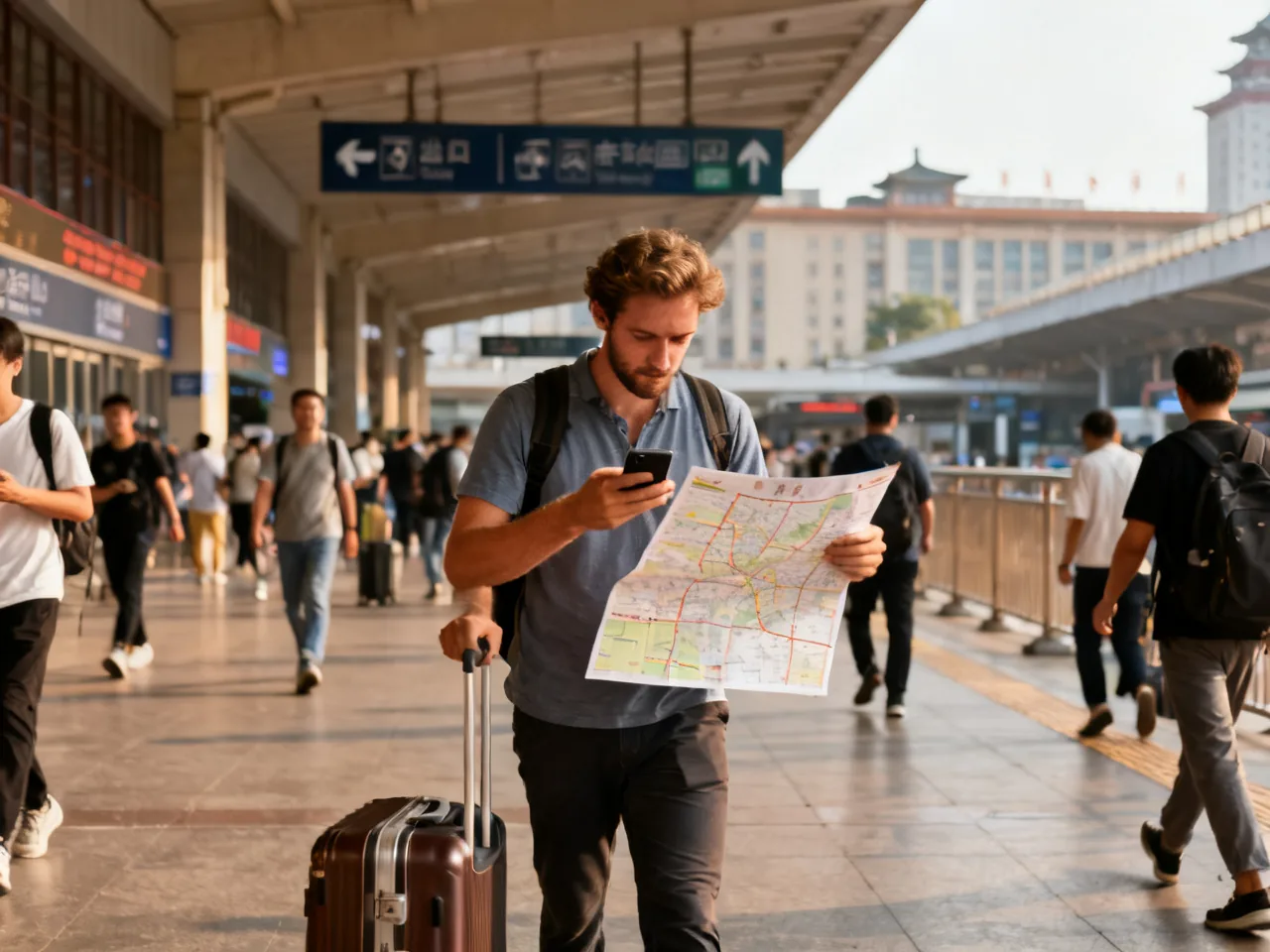
The first thing I did that day was not call a car and not map out my afternoon. I stood in a patch of shade where I was not blocking anyone and broke the problem into smaller parts. First, confirm the hotel address in Chinese. Second, check which metro exit would be closest to it. Third, see whether there was a convenience store nearby and a place where I could pause for a moment. Only after that did I decide whether to go straight to the hotel or eat something first. I increasingly believe that for foreigners arriving in China, steadiness usually comes not from reacting fast, but from refusing to make the problem larger than it is. A transport hub like Tianjin Station is especially good for practicing this. The information is actually abundant. The problem begins only when you try to solve everything at once while dragging luggage.
In the end, I did not go straight to the hotel. I first bought water from a small convenience store outside the station and took a quiet look at how many people were sitting near the entrance to eat. That sounds like a tiny action, but it brought both my body and my mind back to a more normal state immediately. In those few minutes, I also realized that day was not suitable for an exhausting “far first, near later” itinerary. It was better to connect hotel check-in, a nearby lunch, and the first easy walk of the afternoon into one smoother chain. So instead of rushing immediately toward the most famous attraction, I walked slowly along the Haihe first, read the city’s rhythm a little, and only then decided what to add later. This feels very close to the lesson in not overloading both your meal and your route at the same time. In real travel, the best decision is often not the most ambitious one, but the one that matches your condition.
I later summarized a few practical arrival actions outside Tianjin Station for friends coming to China. First, do not try to judge the entire day the moment you leave the station. Handle water, restroom, address, and the first transport segment first. Second, if you are carrying luggage, do not let the phrase “it is walkable in theory” fool you. Check the road surface, crowd flow, and temperature first. Third, find a node where you can reorganize information, such as a convenience store, a mall entrance, or the outside of a café, instead of hesitating in the middle of the main passage with your suitcase. Fourth, keep the first meal simple. Do not push yourself into the most complicated queueing and ordering environment right after arrival. Fifth, leave some elasticity and allow yourself to complete only half the original afternoon plan. In Chinese cities, a truly comfortable day often comes not from doing the most, but from not forcing yourself into confusion from the very beginning.
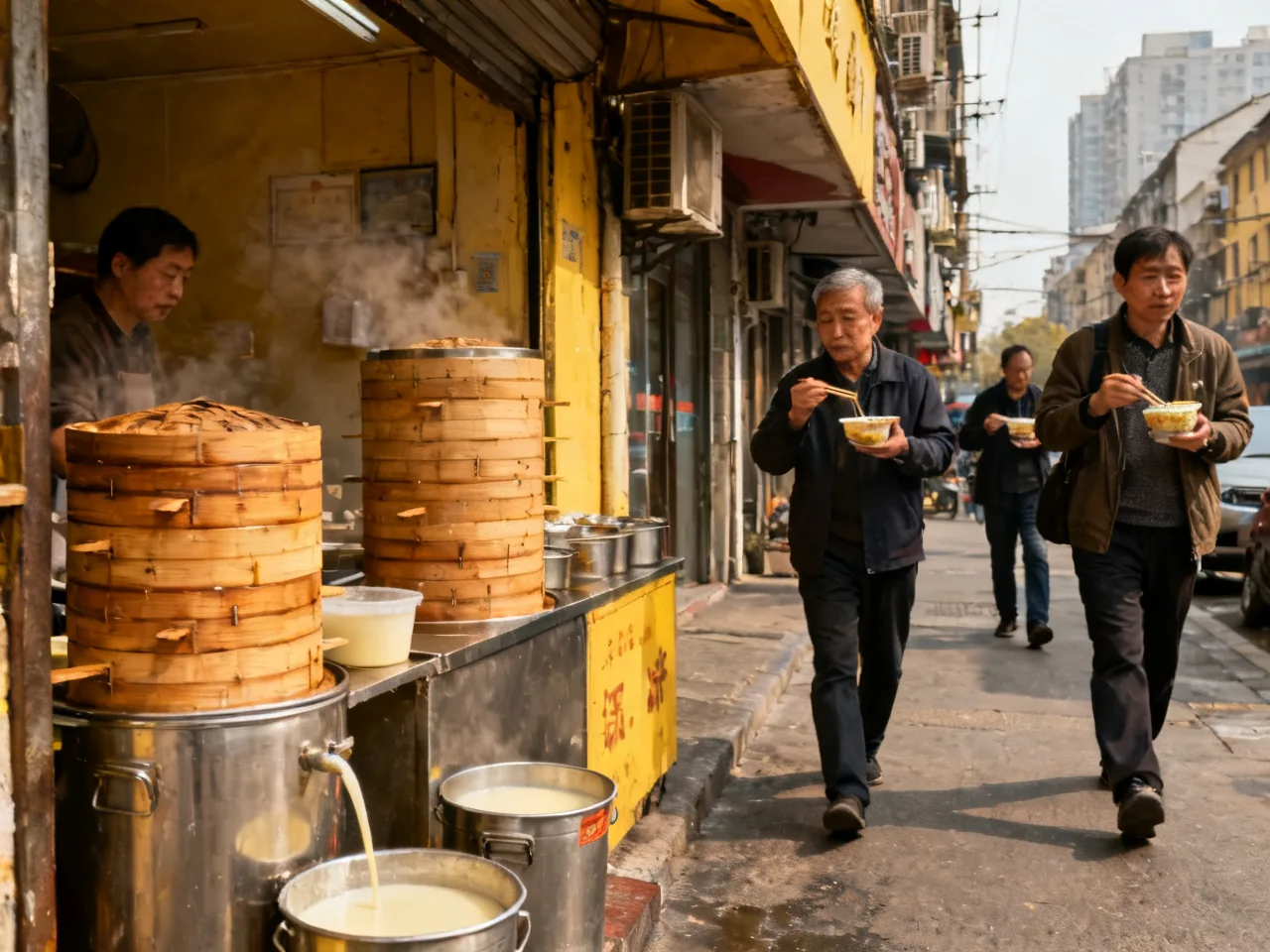
By evening, I was sitting by the Haihe in a place where I could see the bridge and the lights slowly coming on. My suitcase was already in the hotel, and all I had left in my hand was a bottle of water and my phone. Looking back, what I liked most about Tianjin was not one specific attraction. It was that during my first hour there, the city pulled my travel mind away from proving how well I could organize things and back toward entering the city comfortably first. For foreigners traveling in China, that is actually a very important lesson. Once you learn to find rhythm before sights, many cities become easier to approach than you first imagined.