Та минута, когда мой QR-код не считался в пекинском магазинчике в хутуне, стала моим лучшим запасным планом для оплаты
At 9:17 p.m., wind slipped through the cracks of the gray brick walls in Dongsi Hutong, Beijing. I stood at the counter of a corner convenience store holding a cold bottle of water and a packet of salted peanuts. My phone screen glowed pale, the shop owner had already lifted the scanner, and at that exact moment my payment code refused to go through.
The white bulb above the register cast a faint greenish sheen over the tea eggs in the glass warmer. Sweet steam rose from the rice cooker where corn was being kept hot. At the door, the chime of a delivery scooter kept stabbing into the air. A young man behind me, holding two cans of beer, did not rush me; he simply shifted half a step aside. The owner glanced at me and said, “It’s okay, try a second time.” I nodded, but my palms were already damp, because this was no longer about one bottle of water and one packet of peanuts. In that minute, I realized that when your easiest payment method fails, you immediately find out whether you prepared well enough.
I opened the code a second time; the network icon just spun. On the third try, I turned the screen brightness up. On the fourth, the owner extended the scanner a little farther, as if physically helping the process move forward. Still nothing. The most awkward part was not that I could not pay. It was the sharp little thought that flashed across my mind: if every small shop is like this from now on, how do I get back to the hotel tonight, take the train tomorrow, or buy breakfast the day after? What truly unsettles a trip is rarely a storm. It is a tiny system freezing at the wrong time.
That day had gone smoothly until then. I had wandered from Guozijian Street toward Yonghegong, then slipped into a short hutong for a hand-brewed coffee in the afternoon. Mobile payment worked all day so seamlessly that I forgot how many invisible conditions stood behind it: battery, signal, account status, limits, app switching, and the occasional moody scanner. When things work too well, people start confusing “it works now” with “it will always work.” If you are preparing for a China trip, it is better to learn that lesson earlier than I did, not under a convenience-store bulb with your purchases on the counter.
I later turned my experience into a four-layer payment backup plan. It is not complicated, but it has to be built in advance. Layer one is the tool you use most often and fastest: your primary payment setup. It handles small, frequent actions—convenience stores, a coffee near the subway exit, fruit from a street stand, or that one-second checkout after a ride. Your main tool should be tested beforehand in a calm place with stable signal and someone available to help if needed. Do not make your first real payment while running through a station or standing in line at a tiny shop. For basic setup, doing your homework early helps a lot, and the legacy article titled Payment setup for China is a useful place to start.
Layer two is a backup path inside the same ecosystem. Many travelers think, “I have one working app, that’s enough.” In practice, what matters is whether you can finish the same task by tapping through a different path. Your main card may fail verification, the default payment order may be wrong, one card may trigger risk controls, or a certain small store’s scanner may simply prefer a different code format. None of these are disasters, but any one of them can stop you in front of a bottle of water. Layer two is not about building a whole new system. It is about checking payment order, backup cards, balance options, and whether you can still open the needed screen fast enough, so you can switch within thirty seconds.
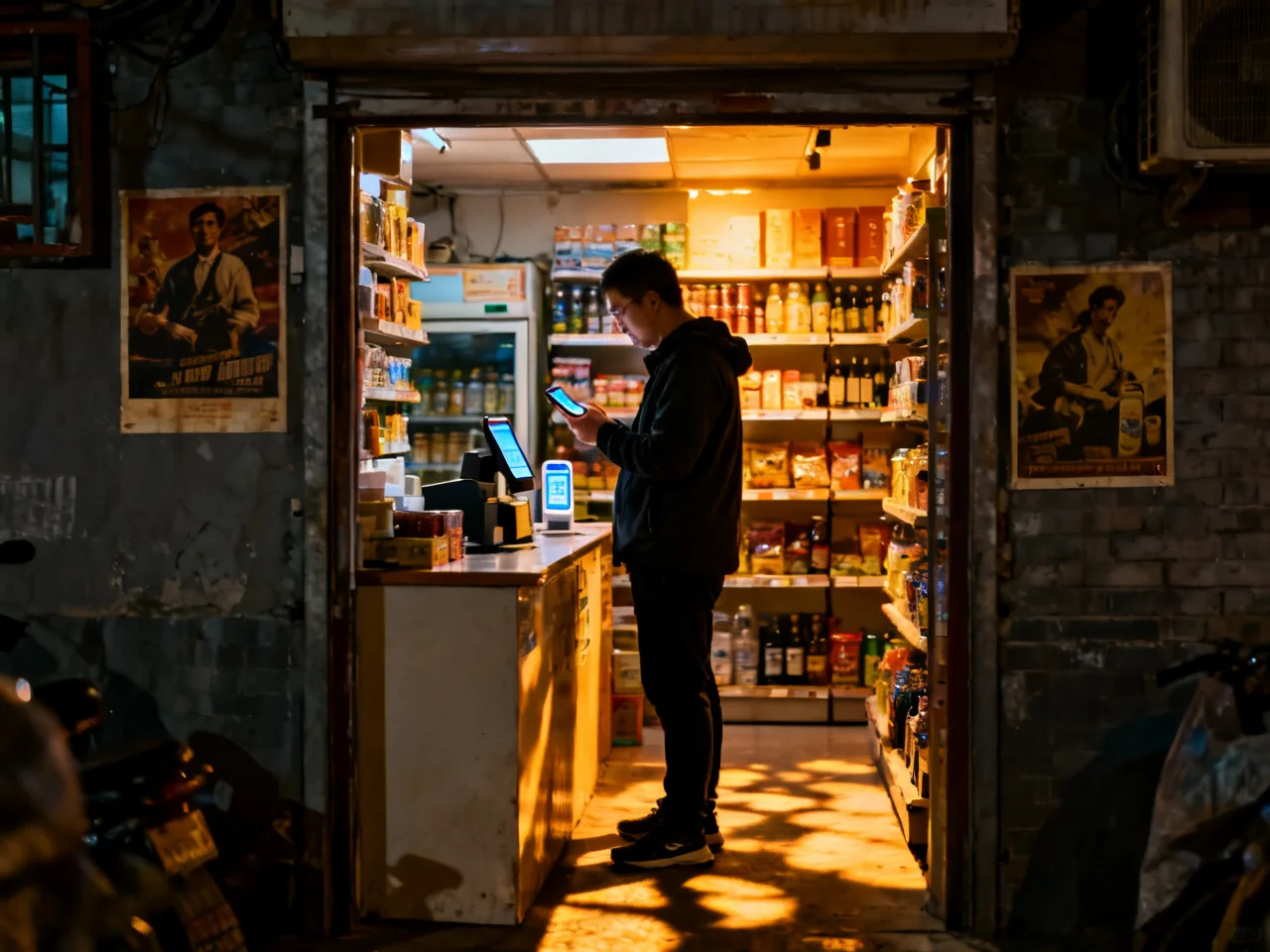
Layer three is a second river outside the first platform. What actually saved the moment that night was not my fourth refresh. It was the young man with the beer behind me, speaking quietly: “Did you also enable the other payment option?” He said it casually, the way someone reminds you your backpack zipper is open. So I backed out, switched to another payment channel I had already linked, and scanned again. Beep—success. The sound was tiny, but it taught me more than any generic guide ever could. A supporting character in travel does not have to be a dramatic savior. Sometimes it is simply someone willing to say one useful sentence when you get stuck.
The owner slid the bottle toward me and handed me a small plastic bag. “Sometimes the signal is good at the subway exit and weaker in the hutongs,” she said. “If you’re staying a few days, don’t rely on just one code.” Standing outside with the bag in my hand, I noticed the night air carried both the earthy smell of warm asphalt and the oil-rich scent from the fried chicken shop next door. Her comment made something click: a payment backup plan is not just a technical checklist. It is also geographic awareness. A high-rise mall, a subway corridor, a scenic gate, a tiny old-town shop, and a late-night street stall all stress your setup in different ways.
Layer four is the plainest and most overlooked one: a small-value buffer. This does not mean carrying a huge wad of cash. It means leaving yourself operational and psychological breathing room. At the start of a trip, estimate your frequent low-cost spending for a day and split it into a few buckets instead of forcing every transaction through one narrow channel. Then if one step fails temporarily, you still have room to maneuver. You will not be forced into your first complicated setup during rush hour, in heavy rain, or halfway through an unfamiliar road. The thinking is close to what the legacy article titled Budget buckets for China trips explains.
I added one more lesson afterward: the real danger is not “one occasional failure.” It is that after dozens of easy successes, you train yourself into having only one muscle memory for every situation. Your phone is down to 12 percent and you forgot a power bank. All your cards are linked through the same source. You do not check anything before critical moments like returning to the hotel, arriving late at night, or transferring between cities. Payment risk rarely looks cinematic. More often it is ordinary, slow, and quiet, pushing you into a weak position before you notice. For a useful look at common traps, the legacy article titled Payment scams is worth reading in advance.
If you break that minute apart, it looks like a tiny decision tree. Step one: identify whether the issue is signal, screen brightness, account status, or the store’s machine. Step two: do not mechanically repeat the same action five times; repetition creates the illusion of effort without producing a new result. Step three: switch immediately to a backup path within the same platform or to a second platform outside it. Step four: if it still fails, solve the critical actions first—getting back to your lodging, entering the station, restoring battery—before worrying about less urgent spending. The point of a decision tree is not to make you look expert. It is to put the order in place before panic arrives.
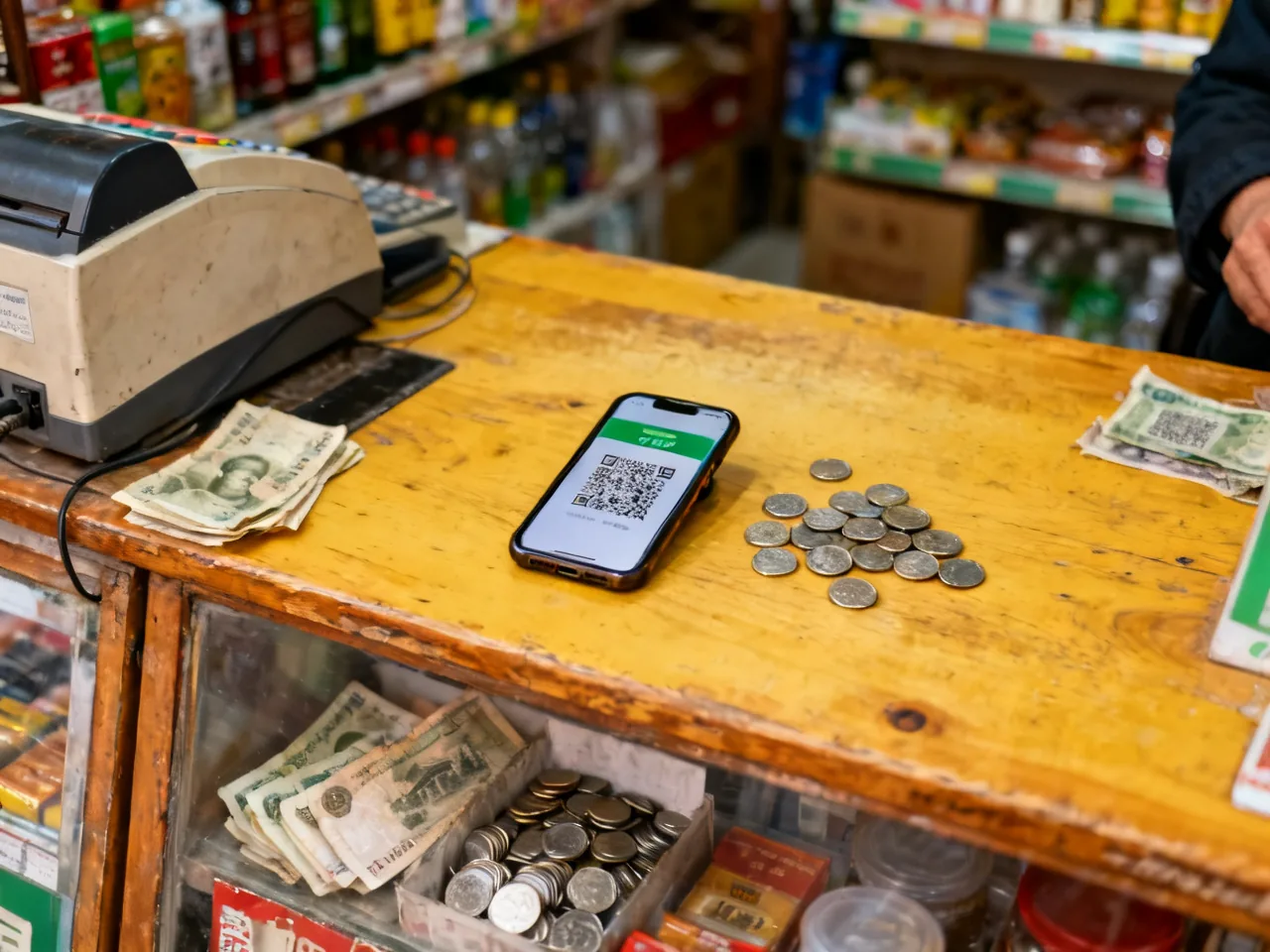
The next morning, I deliberately walked back to the same store and bought a cup of soy milk and a rice ball, partly to replay the scene properly. The morning light was gentler than the night before. The owner had changed into a light blue apron. Cases of newly delivered drinks stood by the door, and the cut plastic wrap gave off that dry scent of fresh cardboard. This time I stood still, checked the signal, brightness, and payment order, then presented the code. It worked on the first try. She smiled and said, “Smooth today, right?” I smiled back and said, “That minute yesterday was expensive, but useful.”
A lot of travel maturity does not come from grand landscapes far away. It comes from tiny frictions in ordinary places. Not everyone will freeze in a Beijing hutong convenience store the way I did, but almost everyone will one day discover, at an awkward moment, that they treated too much good luck as a default setting. A good payment backup plan does not guarantee perfection. It keeps one failed transaction from ruining an entire evening. Real steadiness is not just having a code that lights up on your phone. It is knowing exactly where to move next when that code fails.
When I left, a breakfast stall farther down the hutong had just lifted its bamboo steamer, and white vapor rushed into the cool air. A bicycle bell rang again and again in the distance. I tucked the soy milk against my coat pocket to warm my hand as I walked. My phone lay quietly in place, no longer needing to prove anything. Behind me, the glass door of the little store closed with a soft click, as if sealing last night’s brief emergency back where it belonged, leaving only stronger preparation to travel on with me.