Первая поездка в Пекин в мае: как мне удалось превратить изматывающий маршрут в спокойный неспешный план
On the second morning of my Beijing trip, the sky was still pale when the low rumble of delivery trucks started rising from the street. A breakfast shop downstairs had just stacked its steamers, and the fogged heat kept climbing across the glass. I stood by the window for two full minutes and suddenly felt embarrassed by the “perfect itinerary” I had made the night before. I had packed the Forbidden City, Jingshan, Houhai, several hutongs, and even a carefully chosen old Beijing lunch into a single day, as if I could swallow the whole city in one breath. But just watching people open their shops, push carts out, and greet the first customers of the morning, I was already being stopped by a rhythm that felt much more real.
I used to think the biggest risk on a first trip to Beijing was missing a famous site. Later I realized what really wears you down is the urge to stay ahead of everything. Every guide tries to teach you the same reflex: go earlier, move faster, beat the crowds, stand in the right place at the right time, or the trip somehow loses half its value. I stepped outside carrying exactly that kind of tension. The wind came through the subway entrance, the strap of my bag dug into my shoulder, and before I had even walked far, my body was already tired on my behalf.
Instead of racing the clock right away, I bought a hot cup of soy milk from the street and stood under a tree, drinking the first sip slowly. It was almost too hot, but that warmth settled into my palms. A man on his way to work was biting into a jianbing while checking his phone. The vendor flicked open a plastic bag with a small crisp snap. Beijing suddenly stopped being a giant travel map in my head and became a city entering an ordinary morning. That was the exact moment I decided to loosen my schedule and stop treating every stop like an assignment.
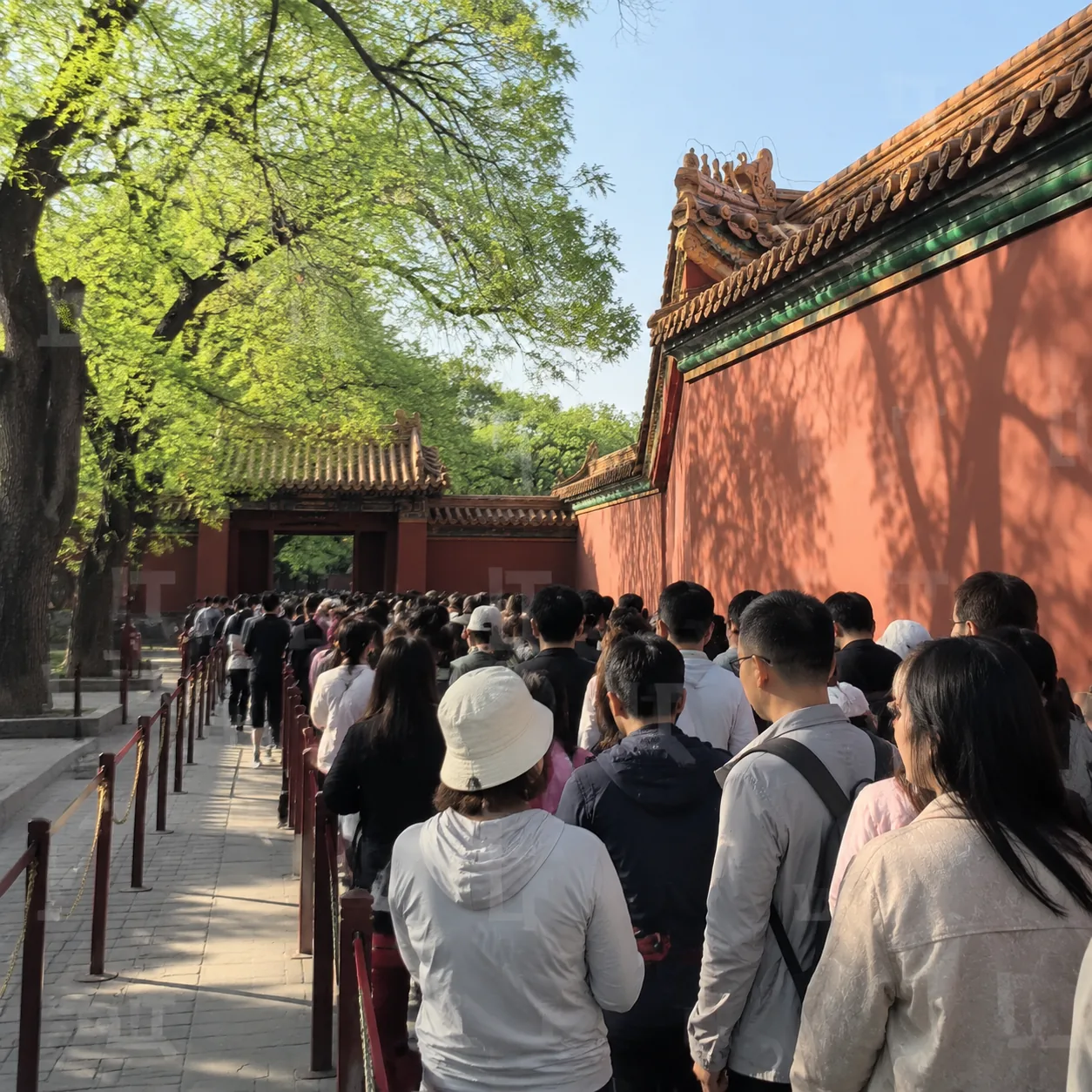
I still went toward the Forbidden City later, but my mindset had changed. I stopped obsessing over the exact minute I “had to” enter and spent time watching the queue outside instead. Someone pulled a cap lower over their face. Someone else adjusted the straps on a child’s backpack. One woman held a brochure across her forehead to block the glare. Those small scenes relaxed me far more than any checklist. Travel can be like that: the harder you try to force a perfect version, the narrower your vision gets. The moment you slow down, you start seeing where people and place actually touch. I did not tour every hall that day, but I still remember the tiny scraping sounds of shoes against the ground in line, and the dry open rush of wind moving past the old walls.
Before noon I went to Jingshan, but instead of rushing to the highest point, I sat under a tree halfway up for a while. The bench had been warming in the sun, and the edge of the wood felt hot to the touch. Next to me, an older couple shared a small bag of cut fruit, moving slowly and barely speaking. That quiet moved me more than I expected. I used to value travel efficiency almost obsessively, as if more walking and more photos automatically meant a richer story afterward. But what stayed with me that day was not how much I managed to see. It was the fact that I finally allowed myself to stop. Once I did, Beijing’s particular character—broad, layered, slightly distant—began to come closer.
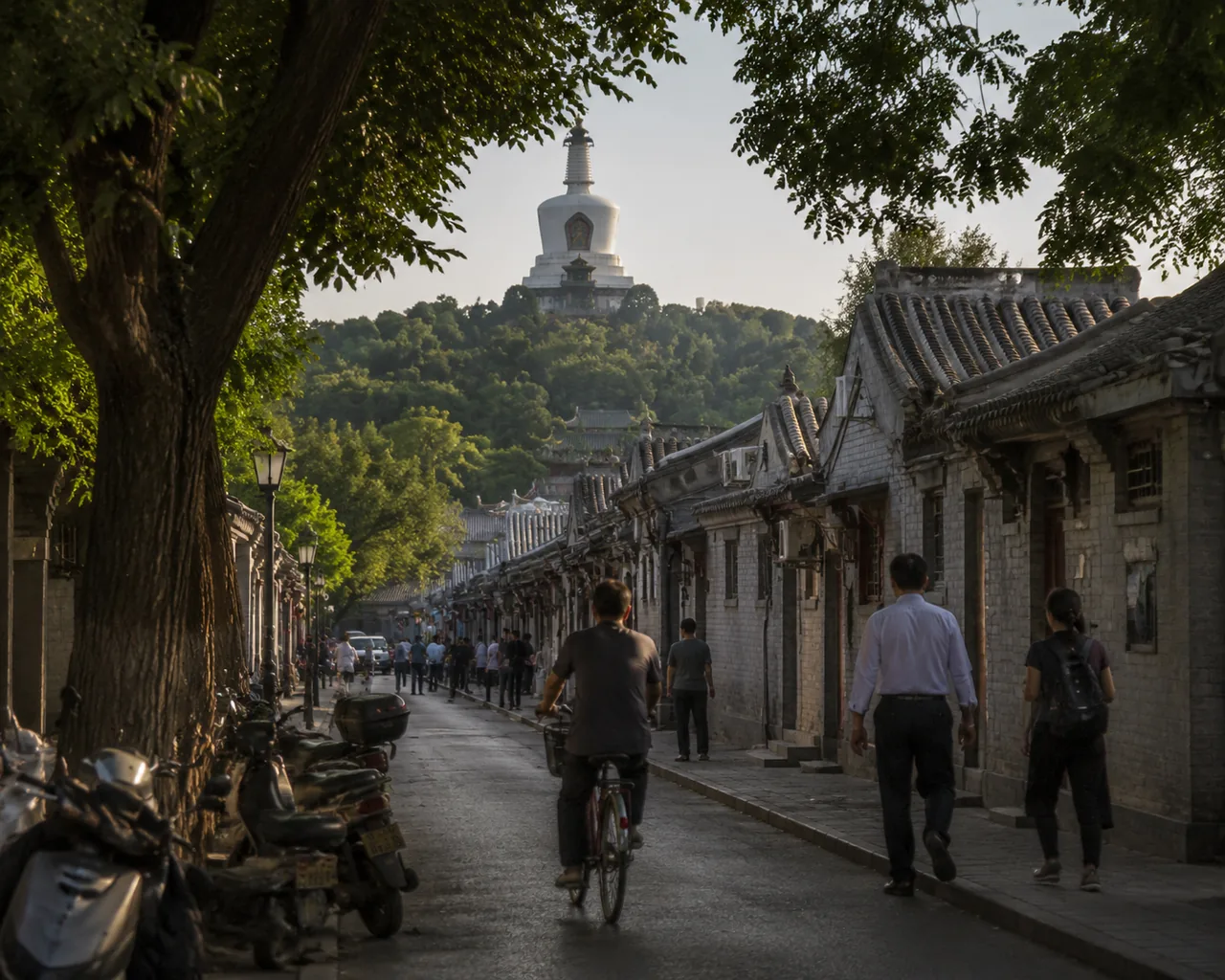
In the afternoon I stopped forcing myself through another chain of famous stops and wandered into the hutongs instead. The sound there was completely different from the big roads. Bicycle bells were softer. Conversations moved close to the walls. Every now and then a courtyard door opened and let out a brief wave of cooking smells or damp wood. At one corner I nearly took the wrong turn. I was staring down at my map when an older man walking his dog lifted a hand and pointed the way, telling me not to rush because the lane went through. I laughed after he passed, because that line sounded almost like what Beijing itself had been telling me all day: don’t rush, this way still goes where you need.
By the time I reached Shichahai in the evening, the sky had softened from bright white into a gentler blue-gray. Some people sat by the water doing nothing at all. Some drifted past on bicycles. Lights came on one by one above the shopfronts, and the lake broke their colors into small shaking fragments. For the first time all day, I stopped thinking about what I had failed to finish. If a day could end like this, I felt, then it was already complete. Beijing was still enormous, and there were still many places I had not seen, but I no longer treated that as failure. On my first trip here, the most important thing I learned was not how to compress a route. It was how to leave breathing room for a city, and to release myself from the nervous pressure of trying to look like someone who always travels well.
On my way back that night, I passed the same breakfast shop from the morning. Steam was still rising there, only now it mixed with evening light, and the glass reflected the shadows of the street trees. I was carrying a bag of fruit I had bought on impulse and walking without hurry. What I loved most about the day, suddenly, was that I had not conquered it. I had simply lived it. That is the version of Beijing I know I will want to return to.