Сиань: терракотовая армия и древняя городская стена — полный гид
The Terracotta Army is one of the world’s most awe-inspiring archaeological sites, yet many visitors leave thinking “that’s it?” — the problem isn’t the site, it’s going in unprepared. The Ancient City Wall, meanwhile, is Xi’an’s most underrated experience: cycling the full circuit is the best way to feel the weight of this city.
Terracotta Army: How to Make It Hit
The site is about 40 km from Xi’an city center — roughly 50 minutes by taxi, or about 1 hour on Tourist Bus Line 5. Tickets cost ¥120, covering all three pits and the Bronze Chariot exhibition.
Pit 1 is the centerpiece — the largest, with over 1,000 excavated warriors arranged in battle formation. The visual impact on first entry is real, but to fully absorb it, stay at least 20 minutes rather than snapping photos and moving on. Find an angle, crouch down to eye level with the figures, and you’ll notice every face is different.
Pit 2 is actively being excavated — you can see the actual state of archaeological work, with some warriors still half-buried in earth. This “in progress” feeling is more viscerally historical than Pit 1. Pit 3 is the smallest, the command headquarters, with fewer but well-preserved figures.
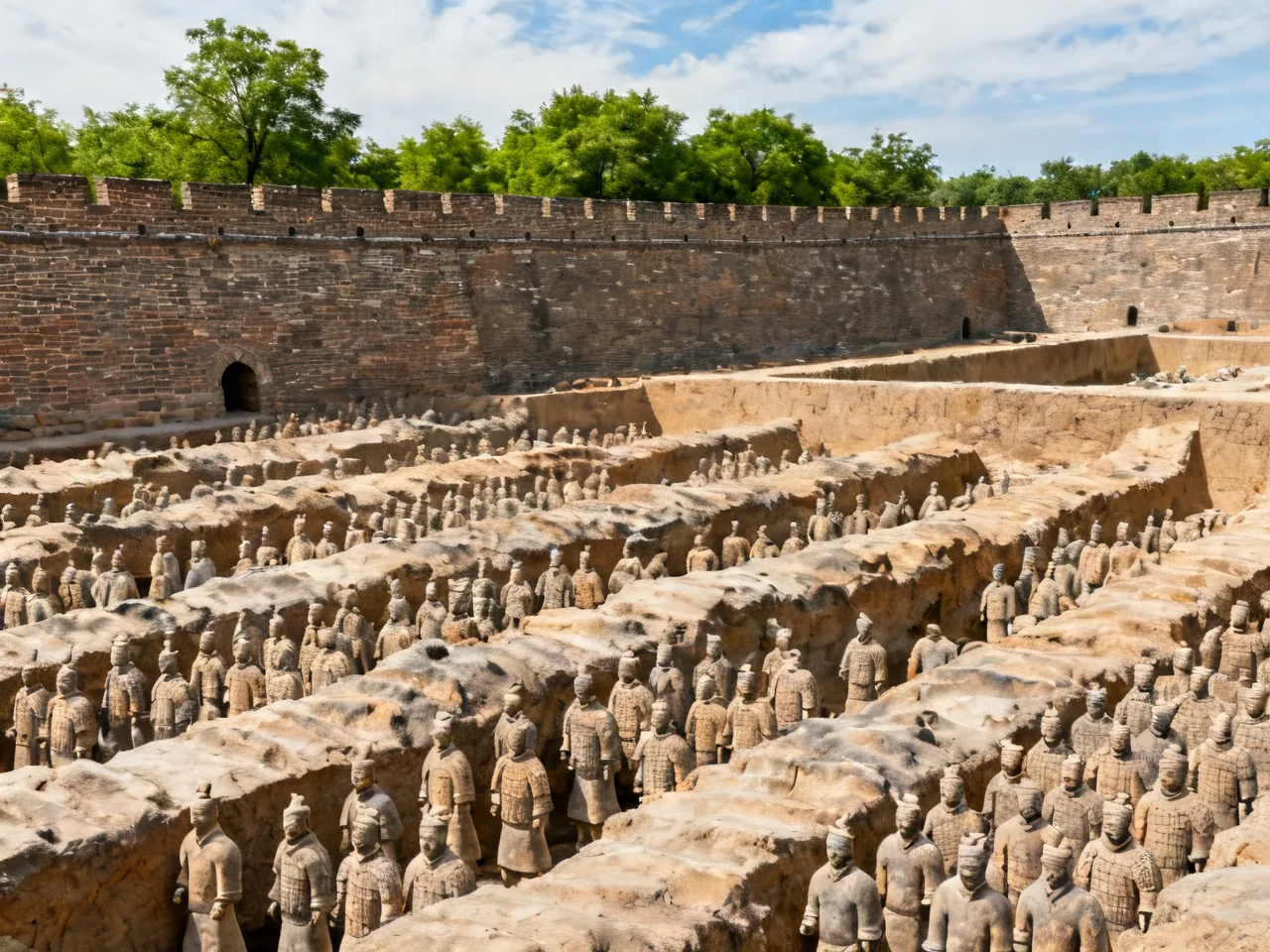
Strongly recommend renting an audio guide (¥30, available in English) or reading background material beforehand. Without knowing the context of Qin Shi Huang’s unification of China, the warriors are just clay figures. With it, they’re a 2,200-year-old emperor’s obsession with immortality.
City Wall: Bike or Walk
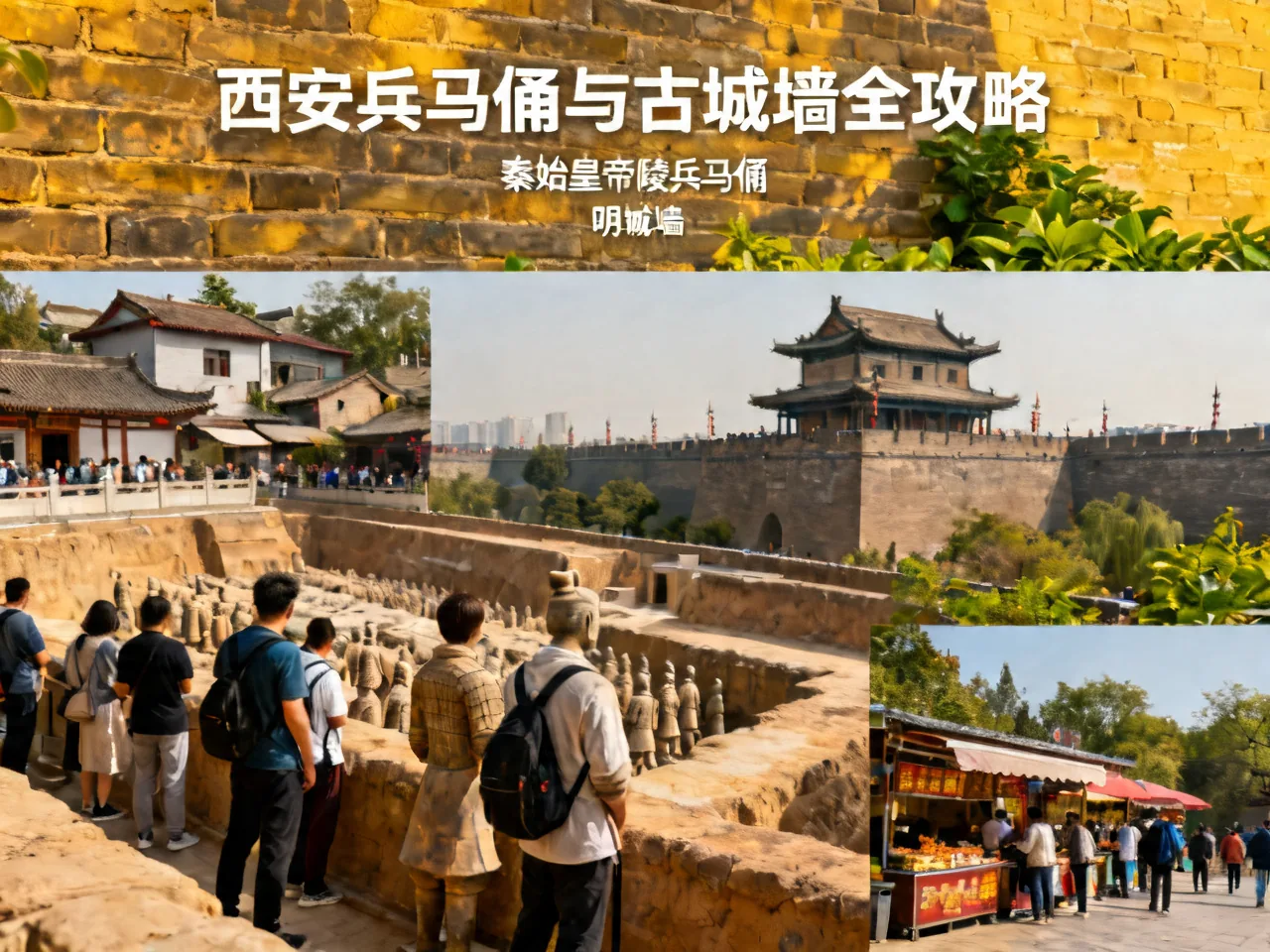
Xi’an’s city wall was built during the Ming Dynasty, stretching 13.74 km in circumference — the best-preserved ancient city wall in China. Entry ¥54; bike rental ¥45 extra (tandem bikes ¥54).
Cycling the full circuit takes about 1.5 hours — the recommended approach. Walking takes 3+ hours and most people give up halfway. The wall offers wide views: the old city’s rooftops and tree canopy on the inside, the moat and modern city on the outside. This juxtaposition of old and new is rare among Chinese cities.
Evening cycling is the best time — sunset turns the bricks orange-red, crowds thin out, and the moat lights begin to glow. Avoid midday; in summer the wall has zero shade and the heat is brutal.
Muslim Quarter: What to Eat
p>
A 10-minute walk from the South Gate brings you to the Muslim Quarter. It’s commercialized, but a few things are still worth eating: yangrou paomo (lamb soup with bread — tearing the bread yourself is part of the ritual), liangpi (cold noodles with chili oil), and roujiamo (meat sandwich — look for the baked bun, not a burger bun).
Skip the “internet-famous snack” stalls and find shops with local queues. Price reference: yangrou paomo ¥25-40, liangpi ¥8-12, roujiamo ¥10-15.
Itinerary
Day 1: Head to the Terracotta Army in the morning (arrive before 9 AM to beat tour groups). Return to the city in the afternoon, cycle the wall at dusk, dinner in the Muslim Quarter.
Day 2: Big Wild Goose Pagoda (Tang Dynasty landmark, ¥50 entry, ¥30 extra to climb), Shaanxi History Museum (free, requires advance online booking — the best complement to understanding the Terracotta Army).
Related Reads
- 10-Day East China Five-City Loop
- Lijiang Old Town: Naxi Culture & Snow Mountain Views
- Zhangjiajie Glass Bridge & Tianmen Mountain Guide
- Guilin Li River Scenic Tour Complete Guide
- Spring Bloom Map: China’s Most Beautiful Flower Fields