По-настоящему очаровательны Гуйлинь и Яншо не только тем, что похожи на картину, а тем, что этот пейзаж словно замедляет твой шаг
When foreign creators reach Guilin and Yangshuo, the camera almost always catches the same first impression: the landscape looks painted. The mountains do not simply stand in the distance. They float in rows at the edge of vision. The river does not merely reflect light. It makes the entire scene feel lighter, farther away, and more like a scroll being opened slowly. Places like this are extremely easy to reduce to one sentence: Chinese landscape painting made real. But if Travel Notes catches only that admiration, the article quickly drifts into airy scenery language and fails to explain why people who actually walked Guilin and Yangshuo keep returning to the same point: the route matters not only because of what it shows, but because of how slowly it asks to be taken.
For many overseas readers coming to China for the first time, the largest misunderstanding about Guilin and Yangshuo is not whether to go there, but whether they will move through it too quickly. A landscape route differs from a pure wonder route. It does not sustain itself by throwing the traveler toward the next exclamation point over and over again. Its power often comes from repetition: one stretch of water, one stretch of rice fields, one section of road, one layer of morning mist, and then one evening in which the light slowly retreats toward the base of the hills. When foreign creators truly film this line well, what they capture is not only scenery. They capture the value of rhythm.

Why Guilin and Yangshuo Are So Often Written as One of the Landscapes That Feel Most Like “China”
Some foreign creators writing about China’s natural scenery are first captured by the hard impact of a place like Zhangjiajie. But when they reach Guilin and Yangshuo, the camera’s response often becomes noticeably softer. The landscape here is not a high-pressure visual force that stops the viewer in one blow. It keeps repeating another instruction: look closer, then look farther. What the audience receives is not one immediate conclusion, but a slowly accumulating certainty that many of the mental images people carry about Chinese landscapes really do find physical support here.
That is also why this kind of material should not be written only through spectacle. The attraction of Guilin and Yangshuo is not merely force. It is steadiness. Unlike some destinations that win memory through one or two dramatic viewpoints, this line offers a continuous stream of lower-intensity but surprisingly durable beauty. For ordinary readers, that steadiness matters because it suggests that the route does not have to be conquered aggressively in order to feel worthwhile.
What Travel Notes Most Needs to Add Is That a Landscape Route Is Not Meant to Be Rushed
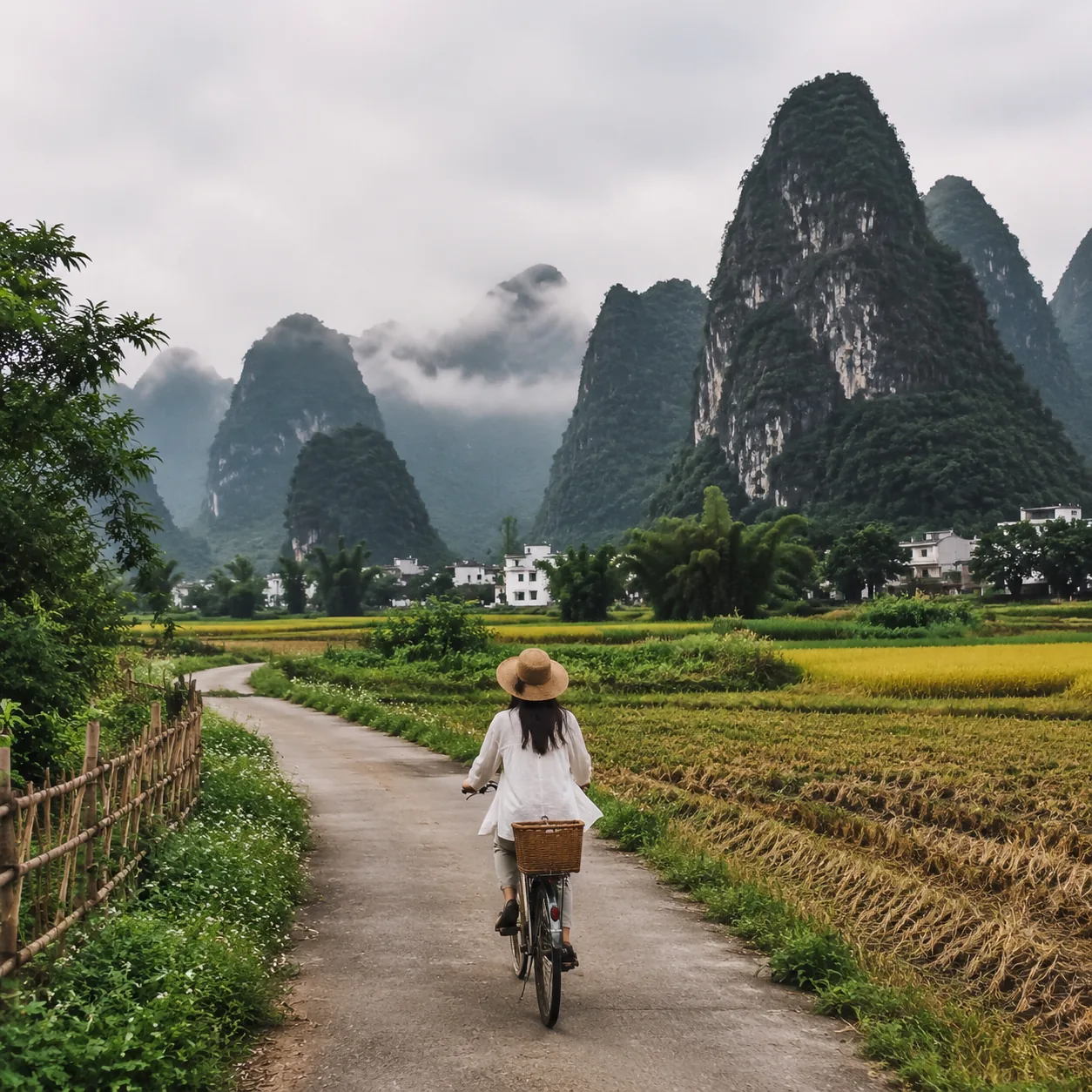
Foreign public video easily cuts Guilin and Yangshuo into a seamless visual ribbon of boats, hills, roads, rice fields, bicycles, and sunset, as if the entire journey produces the same easy feeling without interruption. But on the ground, the real value lies in whether the traveler is willing to reduce pace. Will they leave early enough to see the riverside before the mist has fully gone? Will they dare to leave part of midday intentionally blank rather than forcing another stop into it? Will they spend the evening on one road slowly instead of trying to conquer every beautiful angle in a single night?
That is why a third-person reported article should not stop at saying these foreign creators found the area poetic. It needs to continue downward and explain how that poetry is actually walked into being. It does not come from a filter or a single angle. It comes from slower segments deliberately protected inside the route. Once those segments disappear, Guilin and Yangshuo can be flattened into ordinary checklist scenery. Once they are preserved, the line begins to show its true character.
The Strength of This Route Is Not a Single Peak, but the Fact That It Keeps Working
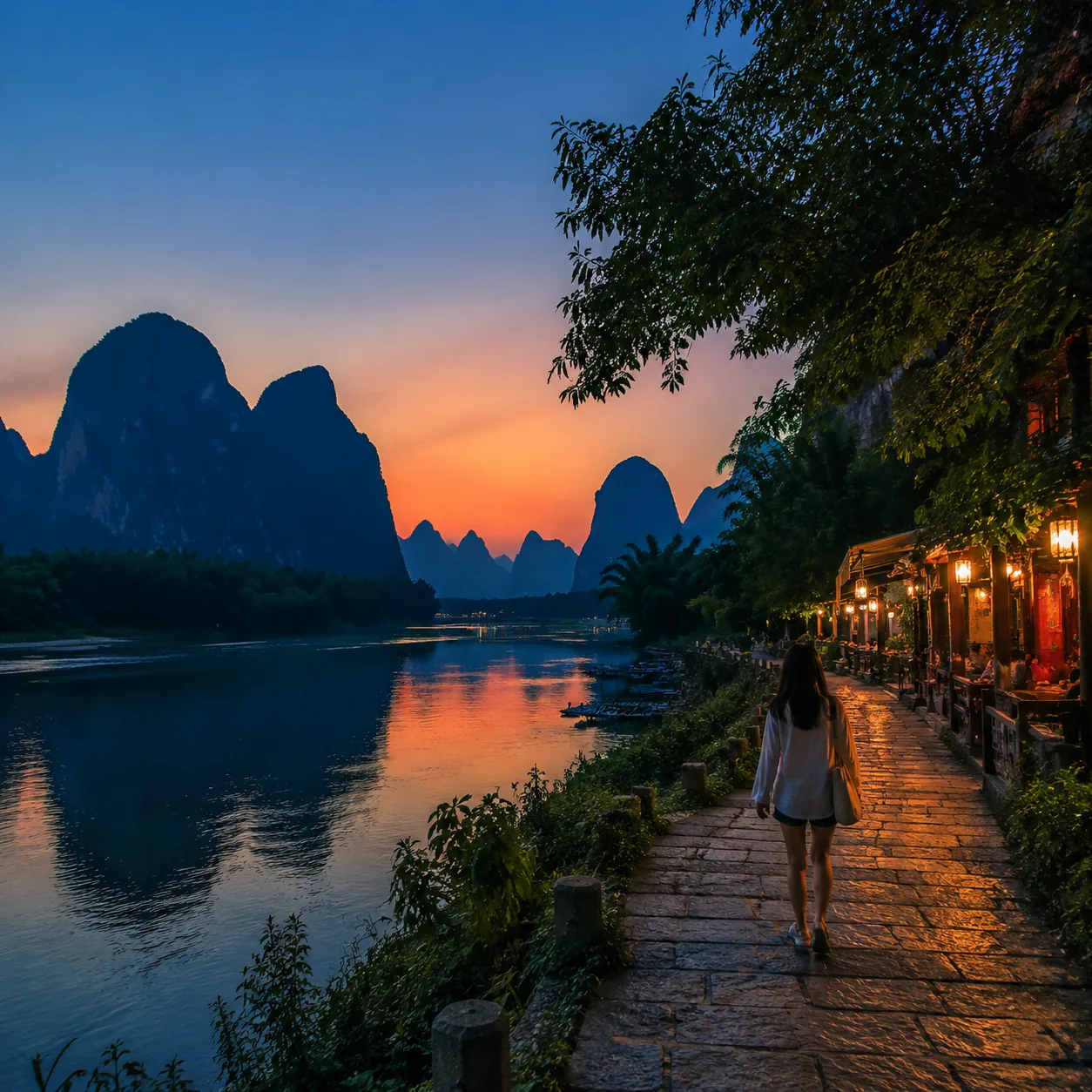
A route like Zhangjiajie often has to solve the problem of how spectacle connects to spectacle without overload. The Guilin–Yangshuo line solves a different problem: why a landscape that does not explode every minute can still make people increasingly reluctant to leave. The answer is that its beauty is not sharp but spread out. It looks good the first time, the third time, and even the fifth time one stops to look. That ability to keep working is precisely why many foreign creators keep returning to this kind of scenery.
For Travel Notes, this capacity to keep working is especially suitable for article form because it means readers can genuinely learn itinerary design rather than merely receive visual temptation. When should a bicycle segment be inserted? When should the boat ride become the main axis? When is it better to leave only one riverside walking stretch? Once such choices are written clearly, Guilin and Yangshuo stop being merely places that look beautiful in pictures and become a Chinese landscape route better able to hold people inside it.
Public Source Notes
Public source note:
- Rewritten from publicly visible foreign-creator angles on Guilin and Yangshuo, focusing on how a landscape route is sustained through slower segments.
- No wholesale reproduction is used; the emphasis is on route rhythm and pacing logic.