Как мой ребёнок впервые сам спросил дорогу в пекинском метро
That morning in Beijing, the wind felt brisk but not harsh. It woke us up more than it bothered us. My son walked out of the hotel with a small blue backpack, a teddy bear charm bouncing on the zipper. We were heading to the Forbidden City, and the route was not especially difficult. But the moment we stepped into the subway station, he grew quiet. The signs, arrows, and moving crowd seemed to press down on him all at once.
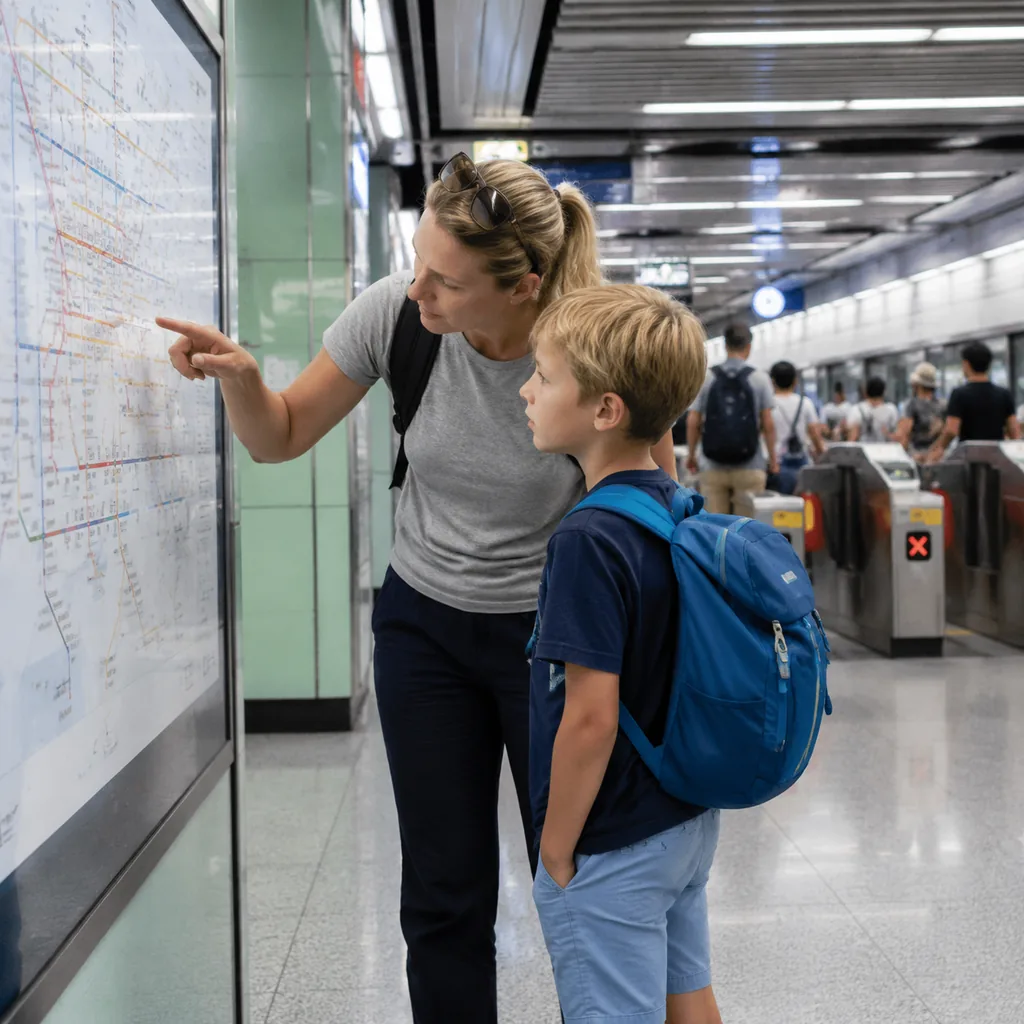
The station was full of people. Footsteps came in quick waves, and the announcements kept repeating the usual reminder to let passengers exit first. At home, my son is talkative. But once he saw the packed Chinese characters and transfer map, he stepped slightly behind me and whispered, “Mom, can you ask?” It was not embarrassing at all. It was honest. In a new environment, many children do not become curious first. They become small first.
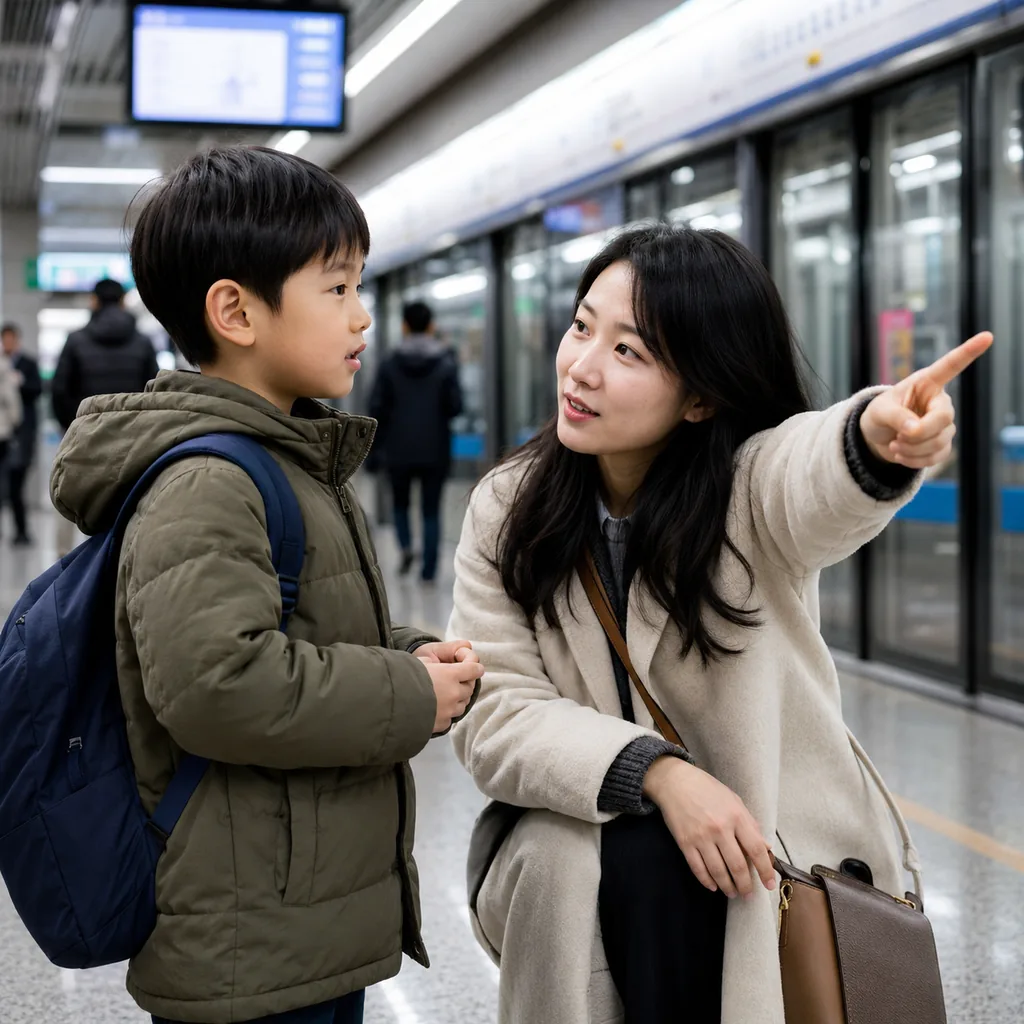
I did not take over immediately. I crouched down and told him, “Try first. Even if you only manage a few words, that is enough.” He pressed his lips together and did not answer right away. Nearby, a woman in a dark gray coat was looking at her phone. She seemed gentle, so I quietly suggested, “You can ask her: Auntie, excuse me, how do we get to the Forbidden City?” He practiced once under his breath. The words got stuck. On the second try, he finally said them aloud.
The woman looked up right away. There was not a trace of impatience in her face. She even put her phone away and gave careful directions. “Take this line first, transfer at Dongsi, and then walk a short distance after you come out. You asked very well.” My son’s shoulders relaxed at once. He repeated “transfer at Dongsi,” nodded seriously, and said thank you. Watching him, I suddenly felt that this mattered more than any palace we were about to see. He was not only learning a station name. He was learning the full shape of communication: if you speak, someone may respond; if you try, the world begins to open.
When we reached the Forbidden City, he did not run straight toward the grand halls for photos. Instead, he stood by the Meridian Gate and asked, “Did lots of people line up here in the past too?” I nodded, and he instinctively stepped aside to let others pass first. It was a tiny gesture, but it clearly came from what he had just learned underground: watch the path, watch the people, leave room for others. I kept thinking that China is such a rewarding place to travel with children not only because there are so many famous sights, but because so many public spaces quietly teach order, expression, and awareness.
At lunch near the Forbidden City, he reenacted the route with his chopsticks while eating noodles. “First say hello, then say excuse me, then remember the key station name,” he repeated with great seriousness. By the end, he laughed as if he had finished something important. A woman selling drinks nearby overheard him and casually said, “You explained it very clearly.” That single compliment carried him for the rest of the meal. Children are like that. One sincere word from a stranger can sometimes do more than ten rounds of parental praise.
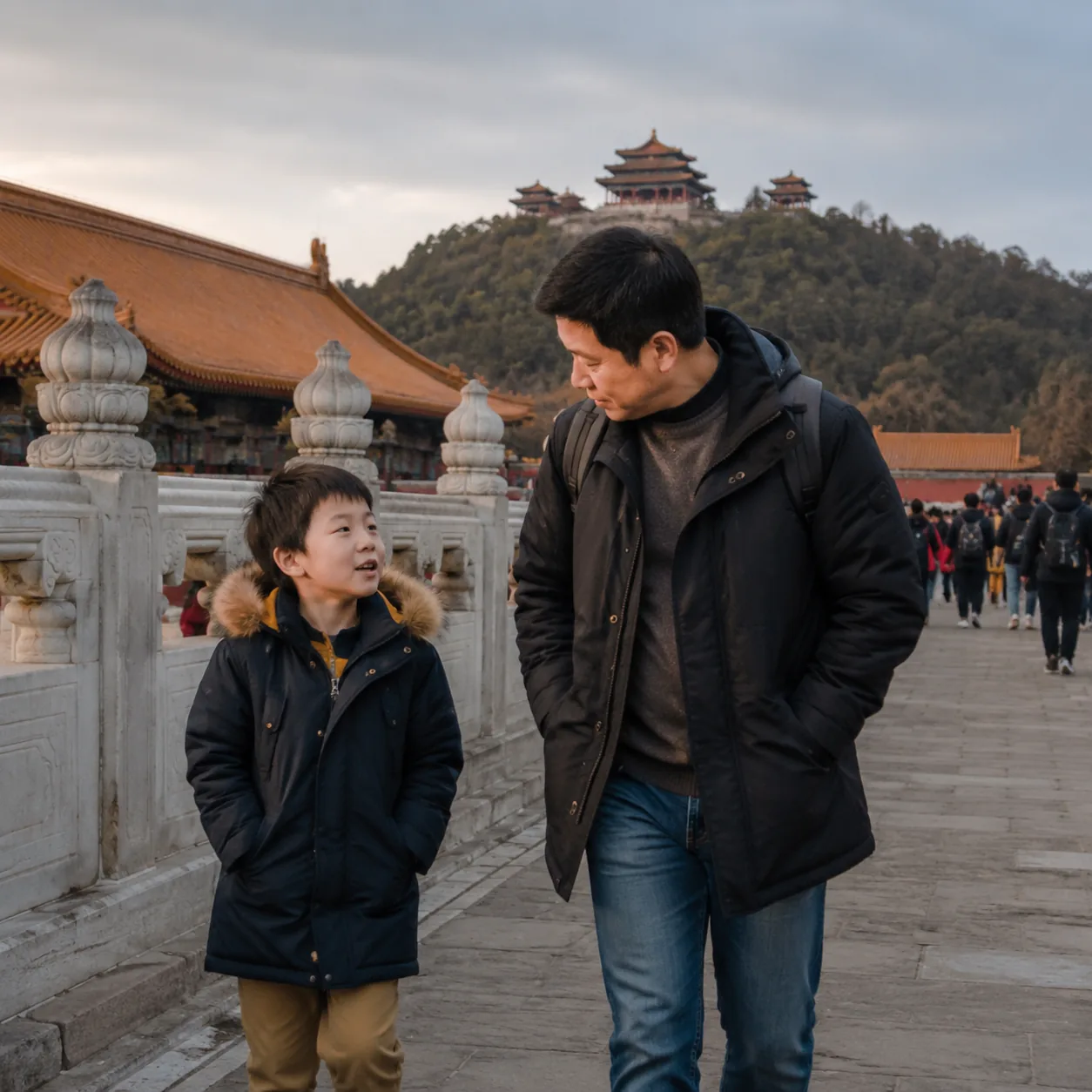
In the afternoon we walked up Jingshan. The wind skimmed across the treetops, and the sky had turned a muted gray-blue. My son put his hands into his pockets and suddenly said, “Next time I can ask for another route by myself.” I remembered that sentence for a long time. The real value of family travel is not only that children see a larger world. It is that they begin to take one step toward that world on their own. Parents often want to make every part of a trip smooth and safe, but sometimes leaving one small task for a child makes the whole trip more complete.
If you travel in Beijing with a child, I strongly suggest not handling every single step for them. Give them one small and specific task: ask for directions, read a station name, buy a bottle of water, or say thank you to a staff member. In China’s large cities, these practices are especially valuable because subways, attractions, bookstores, and restaurants all provide real but relatively safe places to communicate. A child is not taking an exam. A child is practicing how to enter society.
Here is one practical way to do it on a trip: teach your child three useful phrases before leaving the hotel—“Excuse me,” “Thank you,” and “We are going to…” Before entering a major attraction, let them complete one small communication task. Do not worry if they speak slowly. The moment they try, the trip has already started teaching them how to grow.