В китайской лапшичной я впервые понял: сначала смотри на приправы на столе, а уже потом добавляй острое
The first time I had lunch alone in a small Chinese noodle shop was on a humid noon so sticky that the windows had fogged over. A strip of plastic hung over the entrance, and each time someone pushed through it, the heat from outside collided briefly with the heavy steam of noodle broth inside. The shop was small, with wooden tables set close together. Chopstick holders, vinegar bottles, chili oil, and little dishes of pickles sat in the center of each table. A fan turned slowly overhead, moving around the aroma of red chili oil and Sichuan pepper. From the kitchen came the crisp sound of strainers hitting the edge of metal pots, while the owner called out table numbers in a loud voice. Fresh bowls of noodles arrived trailing white steam into the room. I used to assume that in Chinese restaurants, the spiciness of a dish depended mainly on what you said while ordering—mild, medium, or very spicy, all decided in that brief exchange.
That day I ordered what looked like a very ordinary bowl of beef noodles. When the server placed it in front of me, a thin layer of red oil was already floating on the broth. It smelled wonderful, but I noticed that someone at the next table had added a full spoonful of extra chili without hesitation, as if this was simply what one did. The image pulled me in immediately. I thought that if everyone was customizing the spice at the table, then perhaps that was the proper way to eat here. So I picked up the spoon and was just about to add chili to my own bowl. Before I could tip it in, the server who had brought the noodles saw me and quickly laughed and said, “Taste the broth first, then add more, or it’ll get too heavy.” The warning came at exactly the right moment. My spoon froze in midair, and I realized I had nearly transformed the whole bowl into something I could not undo.
Then I took a small sip of the broth first. The taste was not the immediate explosive heat I had expected. It began with the deep savor of beef bones and soy sauce, then a measured hint of spice spread gradually from the tip of my tongue outward, leaving a gentle warmth in my throat. In that moment I understood that the condiments on the table were not there to announce that the bowl was incomplete. They were there to give each diner room to adjust it personally. Some people truly like strong flavors and will add a lot. Some need only a little extra fragrance. Others may add vinegar first and decide about chili oil afterward. People who really know how to eat this way usually do not dump everything in at once. They first judge the base broth itself and only then decide what comes next.
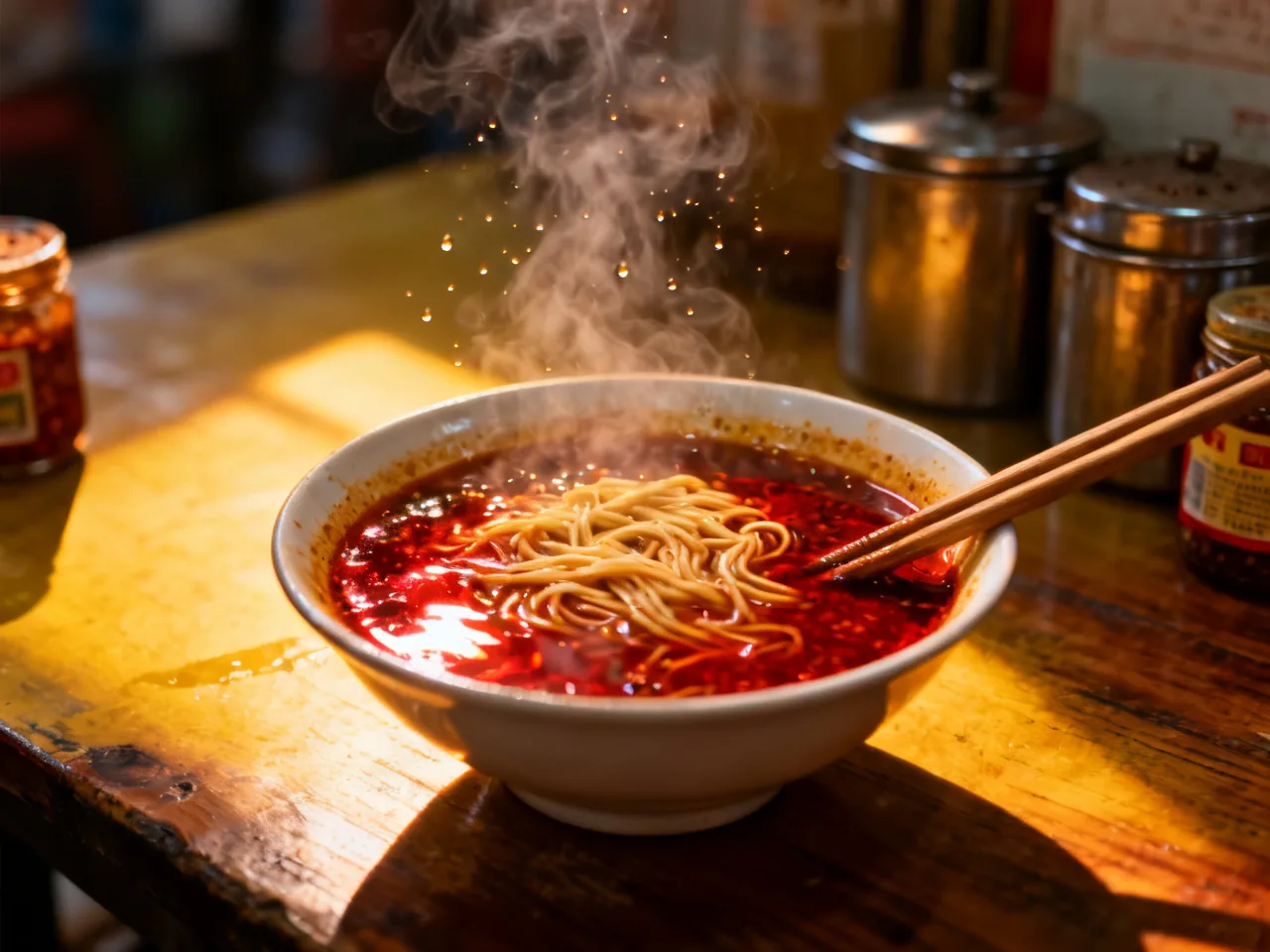
As I began to watch the people around me, I realized that these little bottles and jars on the table contained a whole system of subtle food habits. One office worker in a white shirt sat down, stirred the noodles lightly so the ingredients at the bottom mixed more evenly with the broth, and then added only a few drops of vinegar along the edge of the bowl. An older woman took some of the shop’s homemade chili paste, but only half a spoonful, even scraping the back of the spoon slightly so too many chili flakes would not fall in. A younger man near the door ate several bites first, decided the flavor was not intense enough, and only then dusted a ring of chili powder on top. Everyone was using the same condiments from the same table, yet each person produced a completely different version of the dish. The difference was not about showing off food knowledge. It came from a very natural sense of proportion: respect the original taste first, then adjust slowly according to yourself.
I used to think that the key to eating spicy food outside was simply to explain clearly how much heat I could handle. But in many noodle shops in China, the spice level is often divided into two parts: the kitchen sets the base, and the table determines the details. That logic is quite different from the ordering style I used to know. This is exactly why the chili oil, chili powder, garlic water, and aged vinegar at the table are not mere decoration. They are part of the meal itself. The fact that I nearly added too much at once revealed a very common outsider instinct: trying to imitate the most visible move before understanding the rules. But the truly useful method is not copying the fastest person at the next table. It is tasting first, pausing, and then deciding.
Another thing I came to love about this noodle-shop culture was the very concrete, low-pressure sense of participation it gives the diner. The kitchen cooks the noodles and completes the most important work, but that final layer of flavor ownership is still left to the person at the table. You can add nothing at all and accept the standard version of the bowl. Or you can experiment little by little and shape it into the version that suits you best. The process reminds me of many other parts of daily life in China that I slowly came to understand. Public systems often give you a workable base version first. If you want something closer to your own rhythm, you learn it by observing from the side and figuring it out through practice. The seasonings on the table are only a small example, but they express that logic very clearly.
Later, when I returned to similar noodle shops, I no longer felt the urge to do everything at once the moment I sat down. I would first look at what condiments were on the table and notice which ones seemed homemade and which were standard basics. Once the noodles arrived, I would eat a few bites first, remember the original flavor of the broth, and only then decide whether to add spice, how much, and which type. Sometimes I added just a little chili oil to bring out the aroma. Sometimes, on a cold day, I added a small amount of white pepper to make the whole bowl feel warmer. Sometimes I changed nothing at all because the original flavor was already complete. Little by little, I changed from the foreigner who nearly tipped a whole spoonful of chili into the bowl into someone who looks first, tastes first, and then acts. It is not a dramatic achievement, but it made me feel more genuinely inside the eating rhythm here.
Following the same way of reading a scene, [中国夜宵和街边饮食节奏] and 中国城市里的深夜便利店观察 also reinforce this habit from other angles.
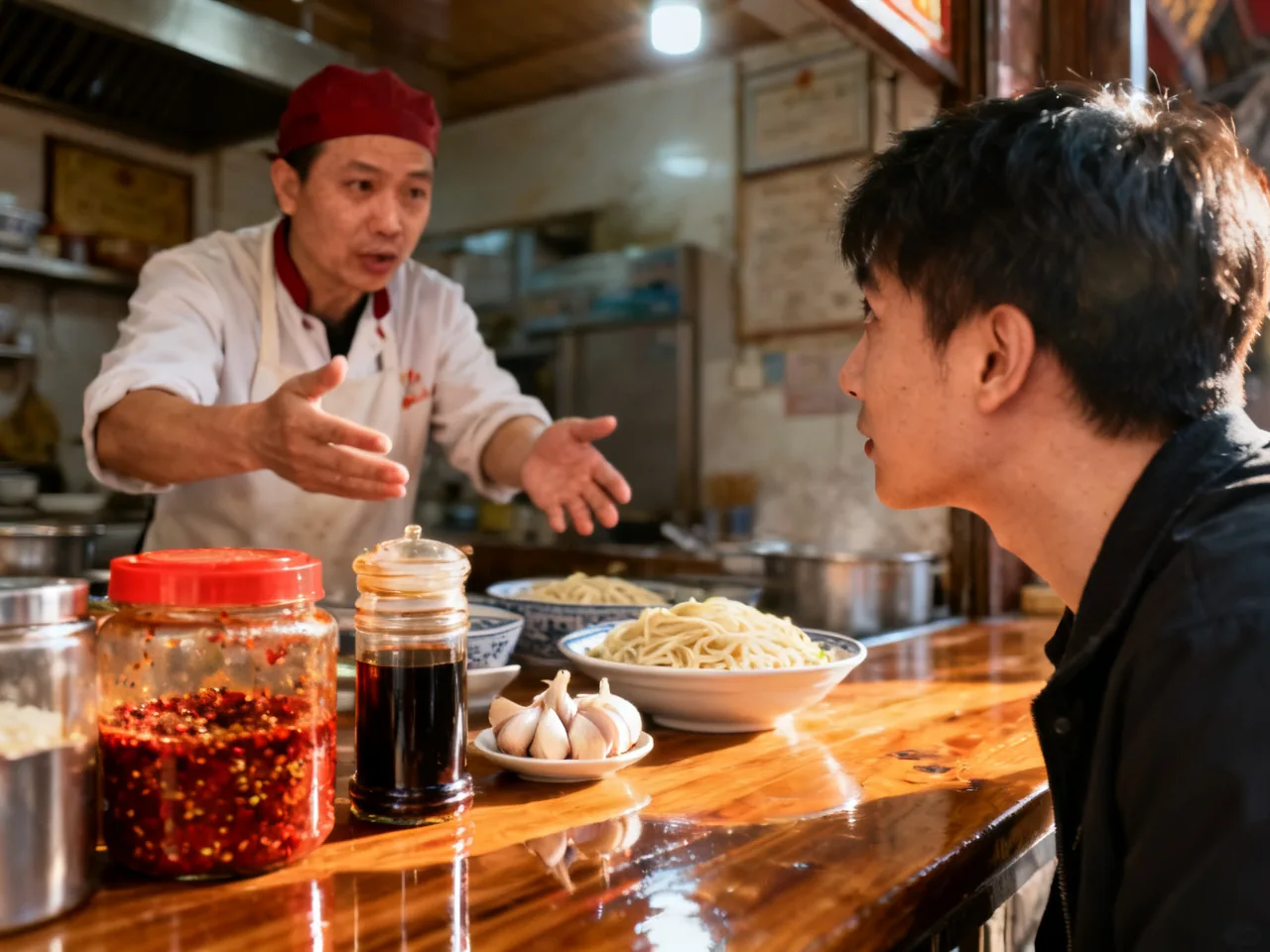
Now, if a friend newly arrived in China asks me what mistake is easiest to make in a noodle shop, I would say it is not failing to order properly. It is rushing to pour in all the chili before tasting the first sip of broth. First check what is already on the table, then think about what each seasoning is meant to add, and only after that adjust gradually if needed. That is far more reliable than any verbal declaration of wanting medium spice. Looking back, the server’s quick warning—“taste the broth first”—now feels almost like a small rule that applies to many other situations too. Do not rush to modify what is in front of you before understanding how it works in its original form. For me, what Chinese noodle shops taught me was never only how to eat a bowl of noodles more deliciously. They also taught me a very practical way to live: take one taste first, and then decide what comes next.