В Чэнду я научился разбивать ночной приезд на череду маленьких решений
I used to imagine arriving in a new city at night as something dramatic, as if darkness automatically enlarged strangeness, risk, and fatigue all at once. Before my first late arrival in Chengdu, I carried exactly that expectation: would the airport be chaotic, would the metro stop running, would taxi communication be difficult, would the hotel be hard to find? What changed me in the end was not some thrilling event. It was a simple discovery: once I broke a night arrival into small enough actions, many vague worries became concrete problems that could be judged and handled. The airport, baggage claim, checking transport, leaving the station, and finding the hotel were not mysterious tests. They were just a sequence of clear next steps.
That trip happened in early autumn. When I stepped off the plane, it was already close to 10:30 p.m. The air felt slightly damp, and people around the baggage carousel were quieter than they would be during the day. In the past, arriving at this hour often made me rush decisions because I was afraid of making mistakes. I would call a car the moment I reached arrivals, or hurry toward the first exit I saw. That night I told myself not to move too quickly. First, do three things: confirm the hotel address in Chinese, confirm my battery and data connection, and confirm whether the transport option I planned to use was still operating. The order was not exciting at all, but it lowered my pulse almost immediately. I also understood something important: a lot of travel safety does not come from reacting fast. It comes from refusing to force extra decisions when I am already tired.
I have increasingly come to believe that a foreigner arriving smoothly in China at night depends less on courage than on process. The logic is very close to keeping the first arrival rhythm smooth for older family members, and it also matches the idea in building integration through small daily actions in China. The more you try to become unusually clever under pressure, the more unstable your choices tend to be. By contrast, if you honestly rely on station signs, public transport information, and the screenshots you prepared in advance, many nighttime risks become much smaller.
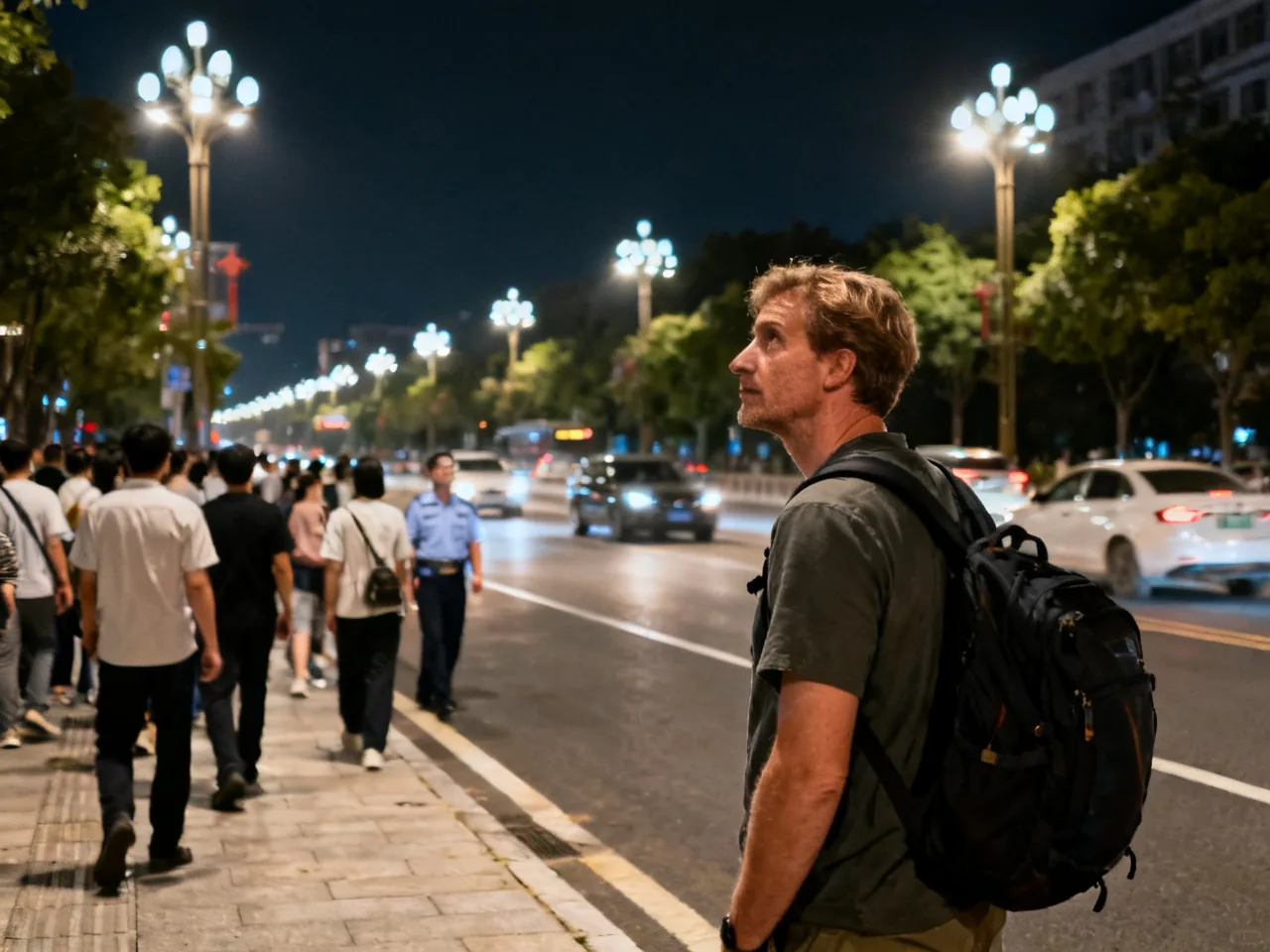
That night I did not call a car immediately after leaving the airport. I first checked whether the rail link into the city was still available. It was not because taxis are automatically unsafe. It was because I knew that right after a flight, my brain was not fully settled yet, and I was better off choosing the option with more public information and a more fixed path. Station names, directions, transfer arrows, and exit numbers all carry some of the decision-making load for you. Once I sat inside the carriage and saw my reflection in the window, I felt for the first time that a night arrival was not a battle against a city. It was an exercise in cooperating with an urban system. For someone traveling alone in China for the first time, that feeling matters a lot, because it slowly turns “what if I mess this up” into “what is the next step?”
Of course, relying on process does not mean blind optimism. At one transfer point, I almost followed the crowd in the wrong direction because everyone else was moving forward and I started doing the same automatically. Then I noticed the exit number was wrong, stopped, and checked the wall map again. I realized I had nearly gone the wrong way. I was grateful that I did not fake confidence for the sake of pride. In many large Chinese transport hubs, the useful information is actually written very clearly. The problem is that tired people trust crowd movement more than signs. So I made a rule for myself afterward: when judging a route at night, do not trust only the fact that everyone seems to be going one way. Trust the address, station name, and exit number in your own hand. That habit is far more useful than courage.
When I reached the area near my hotel, I still did not rush out through the nearest exit. I did not know the neighborhood, and although the lights were bright, the side streets branched in several directions. I stood near the metro exit for about a minute and checked which road had more people, which side still had open shops, and which direction the hotel entrance likely faced on the map. The older version of me would have called that a waste of time. Now I know it was really a purchase of clarity. Real safety often comes not from moving faster, but from giving myself a clearer judgment window. This is very close to the logic in making everyday safety judgments on Chinese streets: do not aim to seem all-capable; learn to identify which environments are already supporting you.
If you also arrive in Chinese cities at night, I now have a few very concrete suggestions. First, always save the hotel address in Chinese, ideally with a screenshot, because when the network becomes unstable at night, screenshots are more reliable than any last-minute search. Second, check whether public transport is still operating before deciding whether to take a taxi instead; do not let fatigue and anxiety answer for you. Third, after leaving the station, pause for a few seconds and read the lighting, foot traffic, whether shops are still open, and whether the exit numbers match. Fourth, if you notice yourself getting scattered, shrink the problem: right now I only need to find the correct exit, not solve the entire route at once. Fifth, once you reach the hotel, take note of any convenience stores or bright open shops nearby, because that will make the next morning much easier.
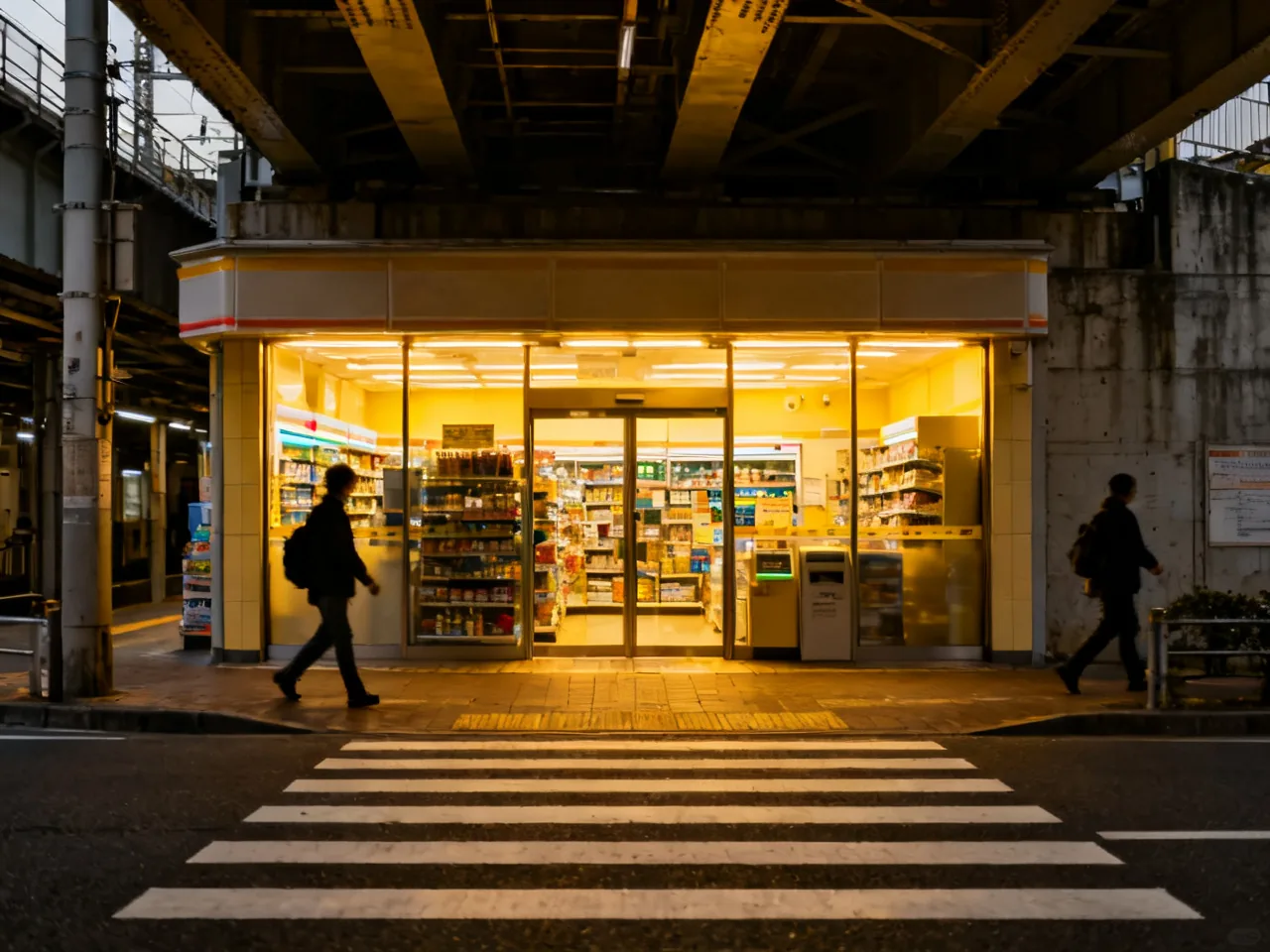
The next morning, when I looked down from my hotel window, the intersections that had made me pause and check so carefully the night before looked completely ordinary in daylight. Precisely because of that, I valued my nighttime caution even more. Caution does not mean imagining a city as frightening. It means admitting that at certain hours I have less information and less energy, and therefore choosing a steadier way to move. I think this is part of how foreigners slowly build trust in China: not by acting fearless, but by learning to adjust speed to context. After that Chengdu arrival, my trust in Chinese cities did not surge all at once. It grew notch by notch. Each time I confirmed a station sign, found the correct exit, or completed a smooth hotel check-in, I understood more clearly that what we call safety is often nothing more mysterious than breaking one large problem into a series of small, clear judgments.