Море облаков и Приветственная сосна Хуаншаня: красиво в любое время года
Huangshan needs no introduction. Xu Xiake said “After the Five Sacred Mountains, no need to see mountains; after Huangshan, no need to see the Five” — 400 years later, still true.
What many don’t realize is that Huangshan is a completely different mountain in every season.
Winter Huangshan is the real Huangshan. 90% fewer tourists, rime ice turns every pine into white coral, sea of clouds probability peaks (winter ~60%, summer only ~30%). West Sea Grand Canyon after snow looks like an ink painting — if you can only visit once, choose December to February. Downside: some trails close for ice; West Sea Grand Canyon is closed in winter.
Spring (March–May) is azalea season. Huangshan’s alpine azaleas start blooming late April, densest between Yuping Tower and Tianhai. Cloud sea probability is moderate, but mornings after rain almost guarantee one.
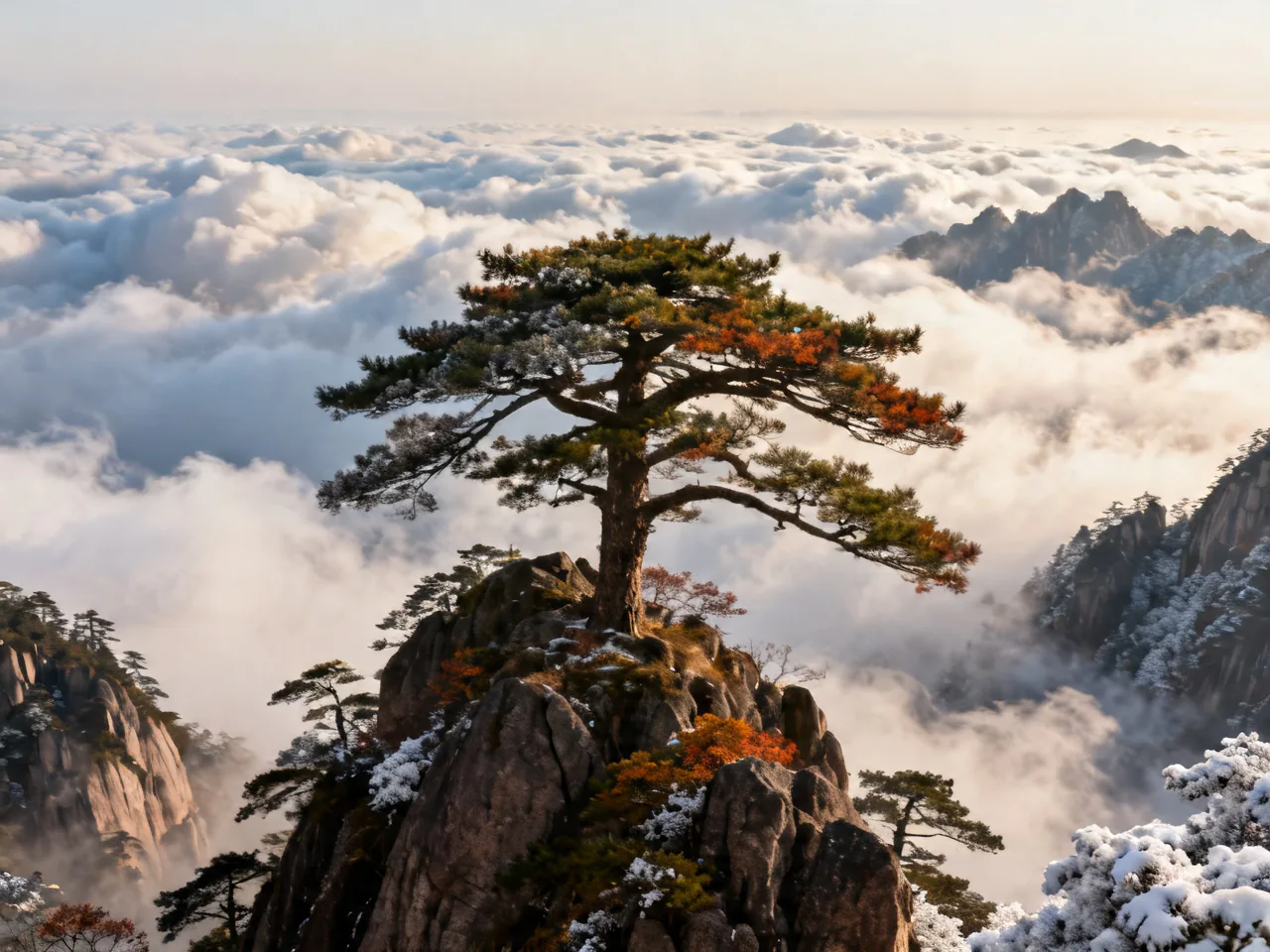
Summer has the most visitors, but is the most comfortable season for sunrise — waking at 4:30 AM won’t leave you shivering. Guangming Peak and Lion Peak are two classic sunrise spots. Summer afternoons often bring thunderstorms; post-rain cloud seas and rainbows are unexpected bonuses.
Autumn (October–November) has the richest colors. Huangshan’s fall foliage isn’t just red — yellow, orange, red, and green mix together against gray granite and dark green pines, like a spilled palette. North Sea scenic area and West Sea Grand Canyon have the best autumn colors.
What You Should Know About the Welcome Pine
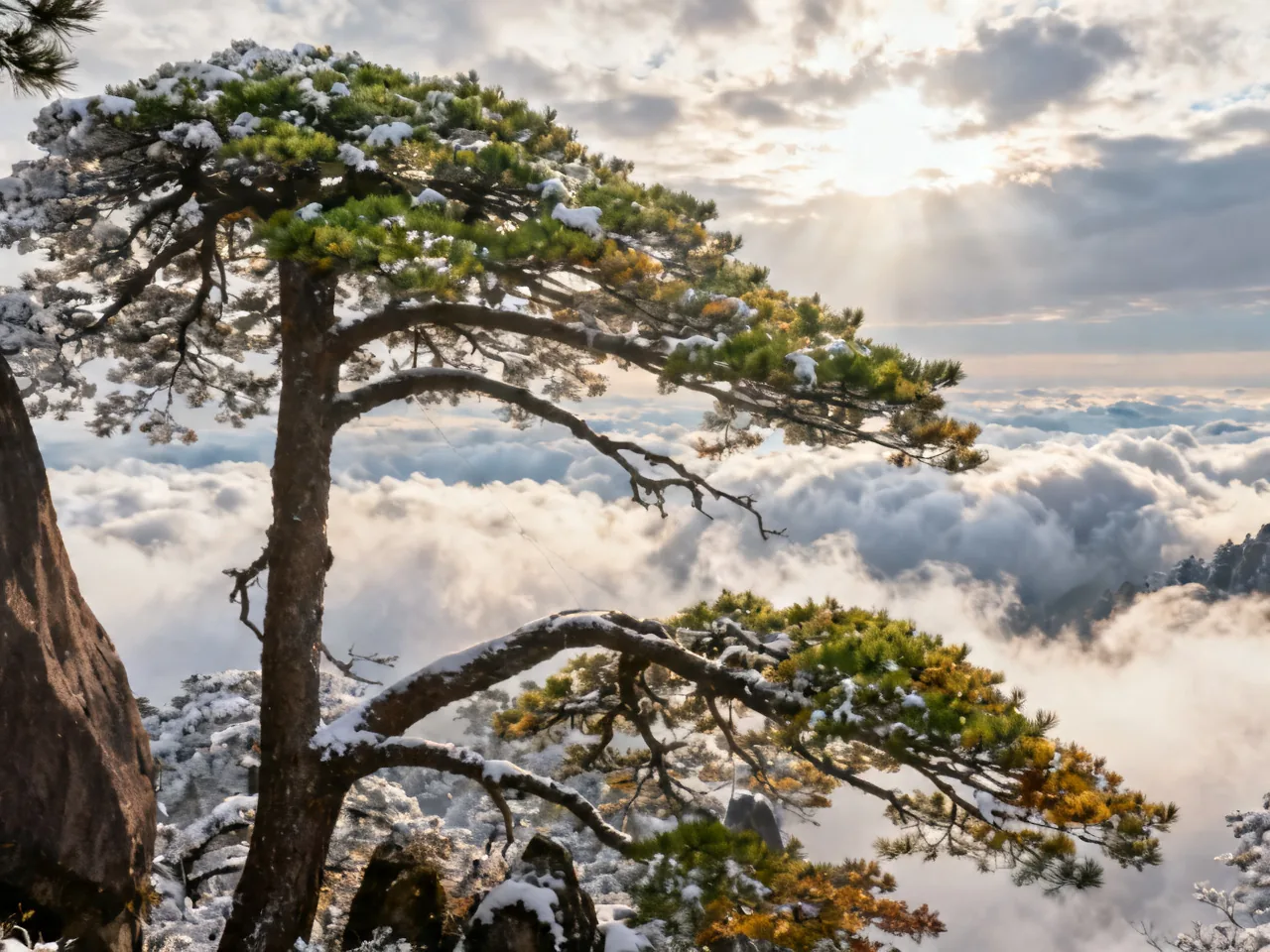
The Welcome Pine is China’s most famous tree — growing on a cliff beside Yuping Tower, one side’s branches extending like a welcoming gesture, over 800 years old. It has a dedicated full-time guardian on 24-hour watch (the only tree in China with a personal caretaker), with daily growth records.
Honestly, if you’re a foreign visitor, the Welcome Pine itself might not be as stunning as imagined — it’s a pine growing from rock, beautiful but not jaw-dropping. Its value is more cultural symbolism (featured in the Great Hall of the People’s iron painting, on state gift packaging). What will actually make you say “wow” is nearby Tiandu Peak and Lotus Peak — Tiandu’s “Crucian Carp Back” is a ridge only one meter wide with abysses on both sides, and your legs will shake crossing it.
Getting Up the Mountain
Ticket ¥190 (off-season ¥150), cable car ¥90 one-way. Two cable cars: Yungu (rear mountain, to North Sea) and Yuping (front mountain, to Welcome Pine).
Classic two-day route: Day 1 Yungu cable car up → North Sea → West Sea Grand Canyon → stay at Tianhai; Day 2 sunrise at Guangming Peak → Aoyu Peak → Welcome Pine → Yuping cable car down. Mountain accommodation is expensive (¥800–1,500/night for a standard room), but worth it — you don’t want to rush Huangshan in one day.
One Line
Huangshan is the kind of place you won’t regret visiting, and will always wonder about if you don’t.
Related Reads
- Spring Bloom Map: China’s Most Beautiful Flower Fields
- Summer Escapes: Plateaus & Islands
- Best Autumn Foliage Spots in China
- Complete Guide to Winter Ice & Snow Tourism
- 10-Day East China Five-City Loop