Тот пар над миской на улице — и есть настоящая температура китайских городов
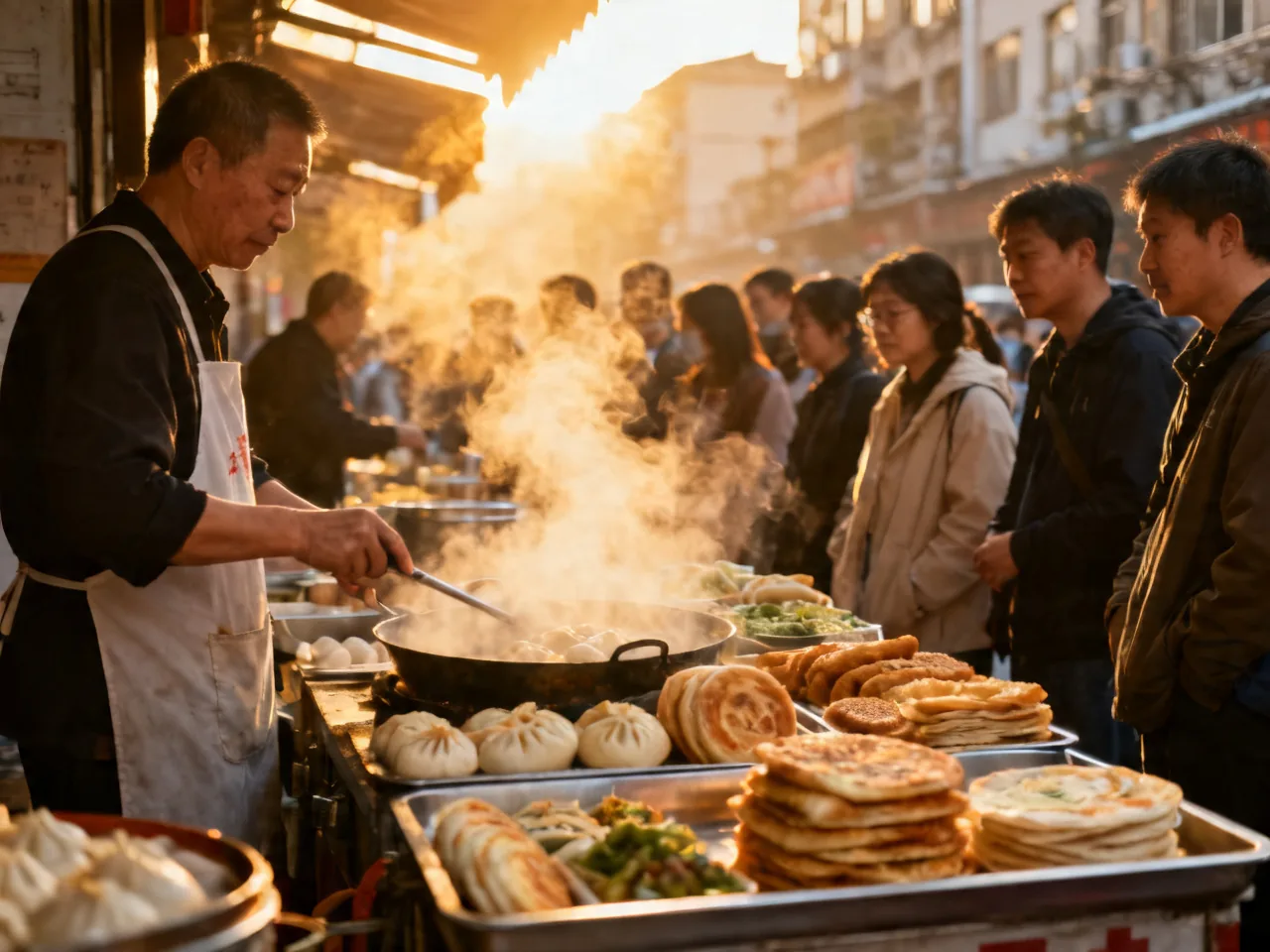
Have you ever considered that a city’s most honest face isn’t found in museums or five-star hotel restaurants, but at half past six in the morning, beside a steaming pot in some alley that hasn’t quite woken up yet?
China’s street food is one of the most democratic things about this country. No reservations, no dress code, no need to understand French annotations on a menu. You simply stand there, hand over a few coins, and receive something hot and alive with the smell of real cooking. From Harbin to Guangzhou, Xi’an to Shanghai, every city’s streets carry their own flavor code — crack it, and you’ve truly entered the city.
Xi’an: The Time Philosophy of a Bowl of Lamb Pao Mo
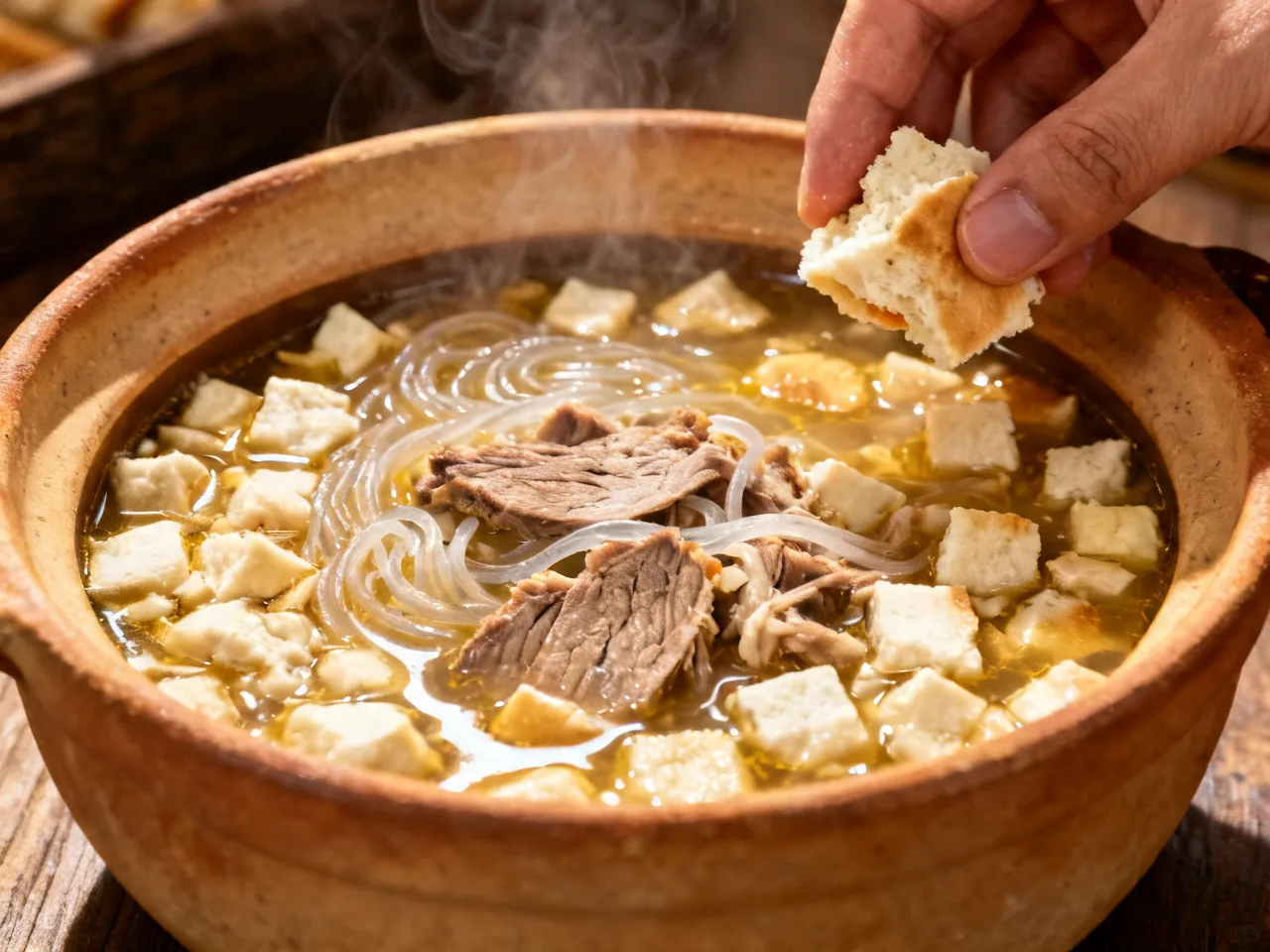
By seven in the morning, the lamb pao mo restaurants on Xi’an’s Muslim Quarter street are already full. There’s a ritual here that outsiders never quite understand: every diner has an empty bowl and two flatbreads in front of them, and they sit with heads bowed, tearing the bread by hand into soybean-sized pieces, dropping them in one by one. Some tear quickly, some slowly; an old man has been at it for twenty minutes and isn’t done, his expression perfectly serene.
The tearing process isn’t performance — it’s functional. Smaller pieces absorb more broth. But it also acts as a deceleration device, forcing you to do something that requires patience with your hands during a rushed morning. Once done, the bowl is taken away; the cook decides how much broth to add and how long to simmer based on the size and quantity of your pieces. What comes back is something you helped create.
Shanghai: The Golden Crust of Sheng Jian Bao
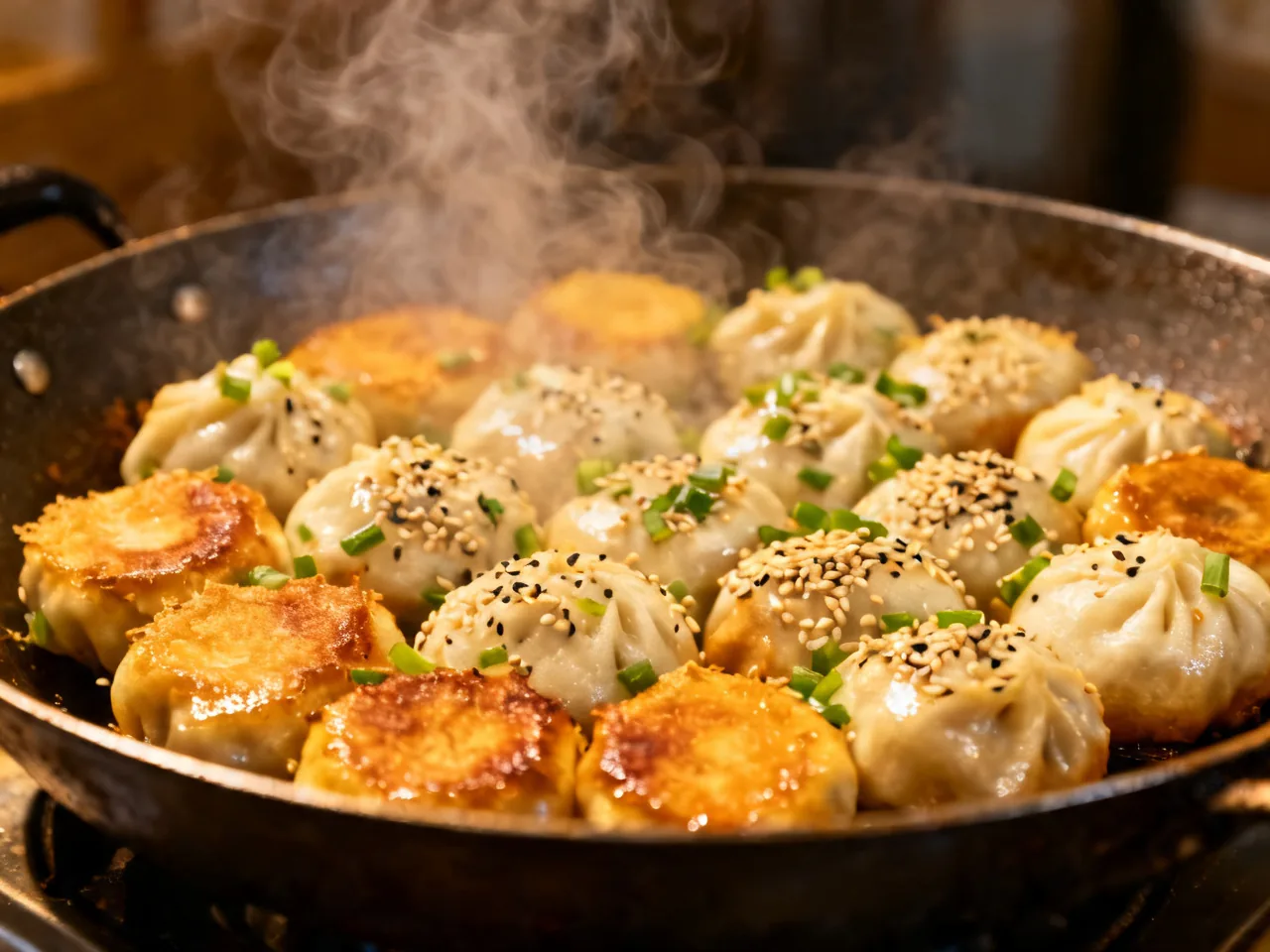
Shanghainese have a near-religious devotion to sheng jian bao. On weekend mornings at ten, the line outside Da Hu Chun or Xiao Yang Sheng Jian stretches twenty meters. The buns sizzle in the pan, forming that critical layer of crispy crust on the bottom, scattered with scallions and sesame seeds — when the lid lifts, steam billows out and the whole street catches the scent.
Eating sheng jian bao requires technique. The skin is thin and the soup abundant — bite through and the broth shoots out, burning your mouth is routine. The old Shanghai method: bite a small hole in the bottom first, suck out the soup, then eat the skin and filling. It looks elegant. It’s actually decades of getting burned.
Chengdu: The Late-Night Democracy of Chuan Chuan Xiang
Chengdu’s chuan chuan xiang stalls don’t hit their stride until after nine at night. A folding table, a few plastic stools, a pot of rolling red-oil broth, bamboo skewers threaded with everything — tripe, duck intestine, tofu skin, potato slices, lotus root — priced from half a yuan to two yuan each.
At eleven at night, I sat down at a stall beside two delivery riders who’d just finished their shifts, helmets still hanging on their chair backs, carefully fishing tripe out of the pot. Across from me sat a well-dressed young couple — the woman took a photo on her phone, then set it down and ate with full attention. This is the magic of chuan chuan xiang: it seats everyone equally around the same pot, and nobody cares who’s sitting next to them.
Beijing: The Morning Speed of Jian Bing Guo Zi
Beijing’s jian bing guo zi is food designed to be eaten in motion. The vendor’s hands move at extraordinary speed: batter spread, egg cracked and smeared, crispy wonton added, sauce applied, folded and bagged — the whole process under ninety seconds. Buyers rarely stop to wait; they stand at the cart, take the bag, turn and walk, eating as they go, disappearing into the morning rush.
That speed is itself part of Beijing’s morning. Nobody chats at the jian bing cart, nobody asks for “less spice” and waits for a redo. Jian bing guo zi is an urban contract: you trust the vendor’s craft, the vendor trusts you won’t be fussy, and both parties complete a perfect exchange in ninety seconds.
China’s street food has never been a tourist attraction — it’s the infrastructure of daily life. Some vendors have made the same snack for twenty years; some inherited the recipe from their parents; some wake at three in the morning to prep. They don’t need Michelin stars. They need that line to still be there tomorrow morning.
Next time you pass a steaming street stall, stop. What’s cooking in that pot isn’t just food.
Related Reads
- The 8 Great Cuisines of China
- Spellbound at First Bite: A Stranger’s Descent into Chengdu’s Heat
- The Peppercorn Dossier: Sichuan’s Flavor Map Through a Botanist’s Eyes
- More Than a Dish: Peking Duck as Beijing’s Letter to the World
- 10-Day East China Five-City Loop