Такие места, как Сучжоу, больше всего боятся того, что слова закончат его раньше, чем глаза успеют насмотреться
Many cities are harmed by being written too slowly. Suzhou is harmed by being written too quickly. The moment the writer becomes impatient, the hand grabs the most visibly Suzhou-like elements first: white walls, little bridges, narrow water, gardens, boat imagery, early morning, and after-rain softness. All of those things are real. Yet the faster they are stacked, the quicker the city loses its inner life. Its value does not come merely from possessing the right elements. It comes from the order in which they appear. When that order goes wrong, Suzhou turns into a postcard. When it goes right, it becomes a small urban system one can actually enter.
For first-time visitors to China, the largest misunderstanding about Suzhou is usually not that it lacks fame. It is that the city looks so readable that it must therefore be easy to walk. Once inside, however, what determines quality is not how many gardens one saw, but when one entered them; not how many canal lanes one photographed, but under what light one actually walked them. If Travel Notes catches only the surface impression that Suzhou is beautiful and classically Chinese, it wastes the most precious thing the city has to offer.
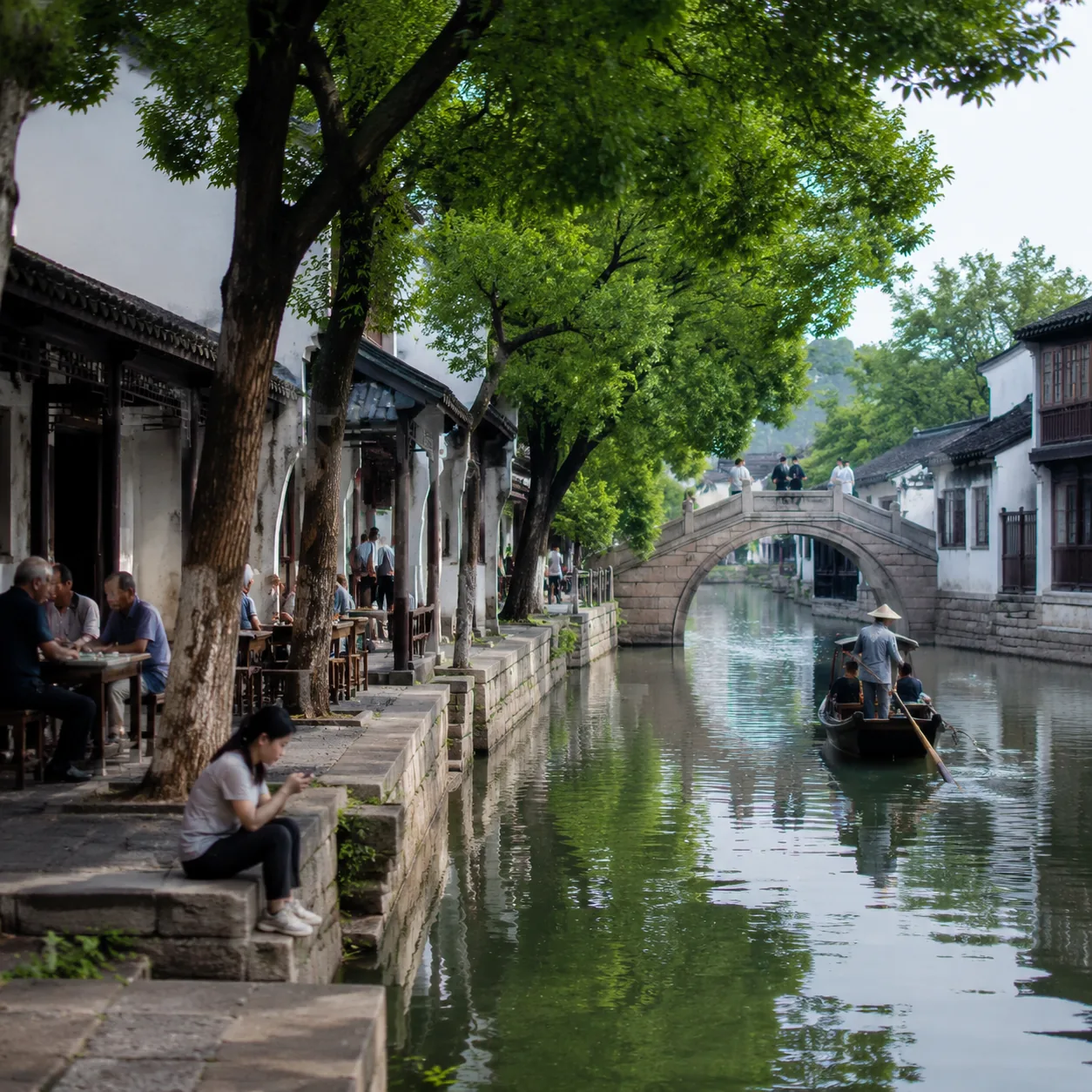
What Most Needs Explaining in Suzhou Is the Moment the Eye Begins to Slow Down
I have always felt that Suzhou is not the kind of city that overwhelms immediately. It first places itself lightly before the traveler and waits to see whether that traveler will stop. If one keeps moving with the rhythm of a larger city, Suzhou may seem almost thin. But once the eye slows down, the city suddenly becomes dense. The shadow beside a wall, the brightness at the end of a corridor, the fine lines on the surface of the water, and the small blank left behind a window frame all begin to carry more weight than expected. A good article about Suzhou should write this movement from lightness into density.
The Best Method of Entry Often Begins by Choosing to See Less at First
Suzhou fears one particular form of greed: trying to collect every element that looks most like Suzhou on the first day. Too many gardens, too many canal photographs, every bridge walked, and evening atmosphere added on top. It is not impossible to move that way, but what remains afterward is often only the surface. A better method begins by seeing less. First let one garden stabilize the eye, then let one stretch of canal slow the pace, and only after that allow further details to enter the route. For readers coming to China for the first time, this judgment of less first often makes Suzhou feel more real rather than less.
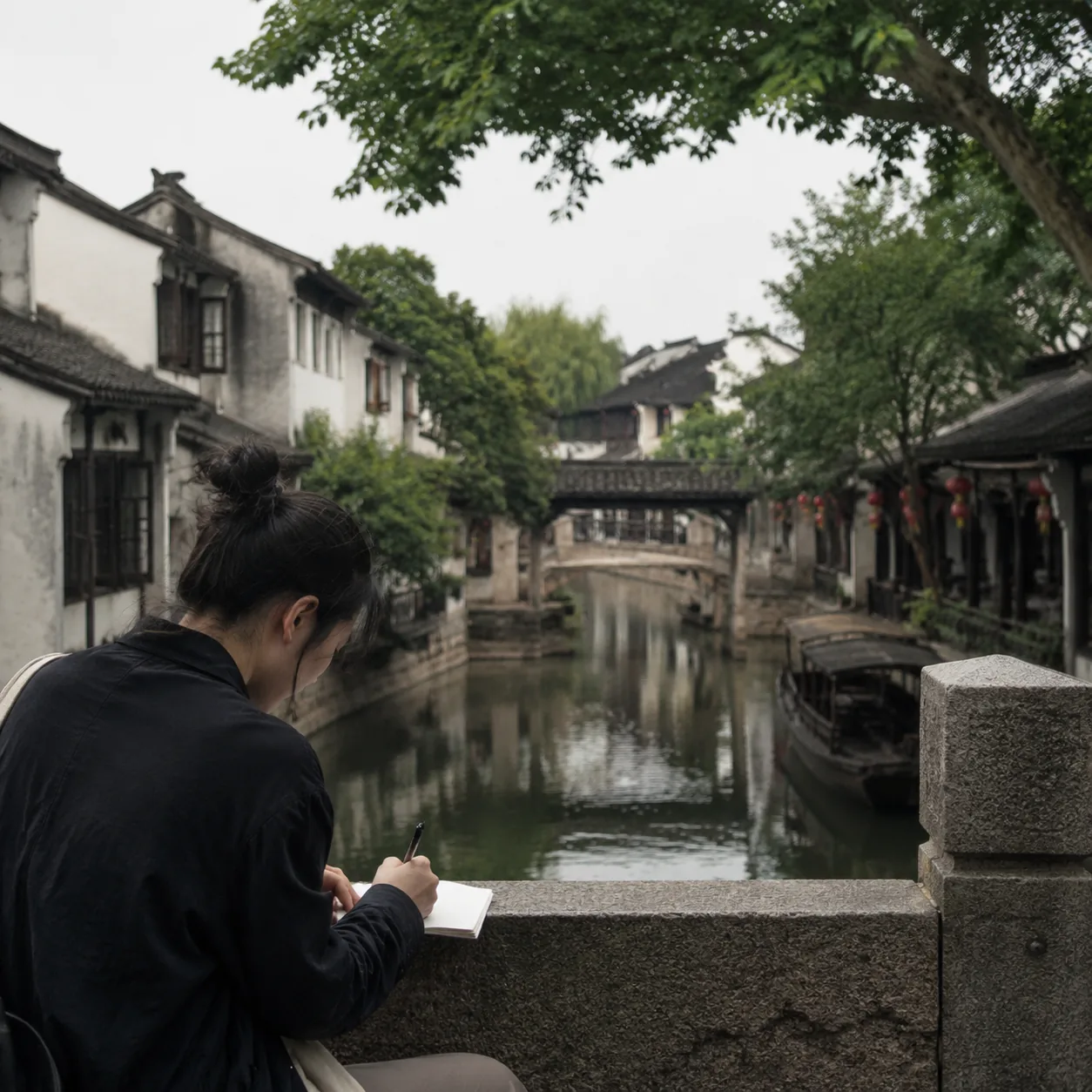
What Often Makes Suzhou Stay in Memory Is Not Its Typicality, but Its Aftertaste
Suzhou is certainly classic, but what often keeps it in memory is not the confirmation that it matches the expected image. It is the aftertaste: the wind beside one wall, the brightness at one turn in a garden, or the moment one’s steps naturally slowed on a canal-side lane. If foreign creators preserve that aftertaste in public material, Travel Notes should deepen it further, because it proves that Suzhou is not a city sustained only by labels. It is a city that continues to grow after departure.
The Most Important Thing in Suzhou in the Morning Is Not to Photograph First, but to Let Sound Enter First
Many people arrive in Suzhou and instinctively raise the camera first, searching immediately for the angle that looks most like a painting. But a truly good morning does not always begin with the image. It often begins with sound. Someone passes the water carrying something in hand, a door opens farther away, and beneath the bridge there is sometimes a small returning echo. Once one listens first and looks second, Suzhou becomes more dimensional. It proves that the city is not a frozen set piece, but a place unfolding through very light sounds.
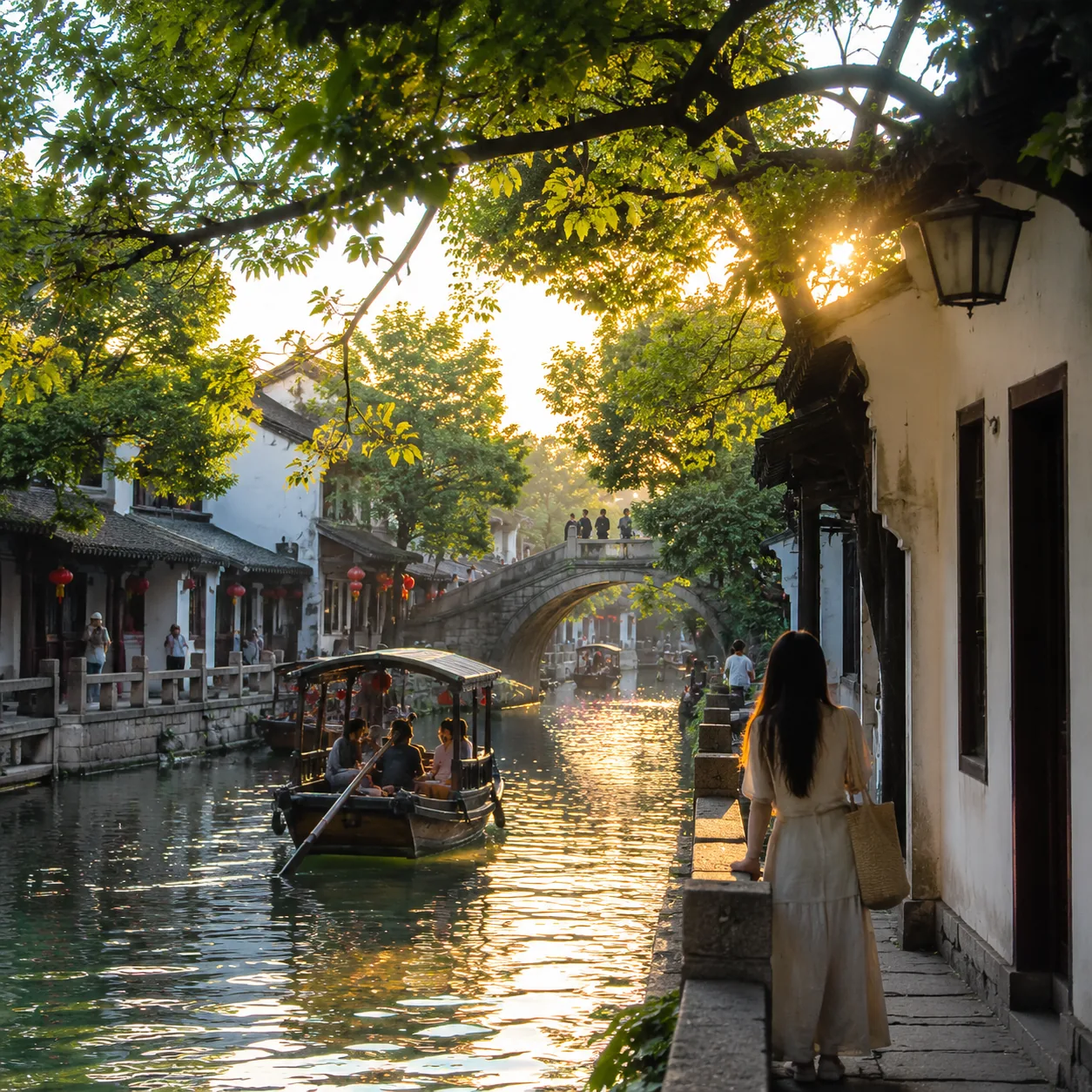
The Best Way to Use a Garden Is Not Always to See as Many as Possible, but to Leave with Some Blank Space Intact
If Suzhou’s gardens are packed too densely into one route, they begin to cancel one another out. They do not rely on one burst of spectacular force, but on turns, borrowed scenery, blankness, and closure. After leaving one garden, the traveler should ideally let some of that blankness remain before entering the next. Foreign creators may still make continuous garden shots feel beautiful, but if Travel Notes adds the judgment that blank space is also needed between gardens, readers receive something more useful than beauty. They receive a better way of moving.
Public Source Notes
Public source note:
- Rewritten from publicly visible foreign-creator angles on Suzhou gardens and canal-city routes, focusing on method of entry rather than image alone.
- No wholesale reproduction is used; the emphasis is on route sequencing and perceptual rhythm.