Между Жёлтой рекой, мостами и ночными рынками я сначала поместил Ланьчжоу в экран телефона
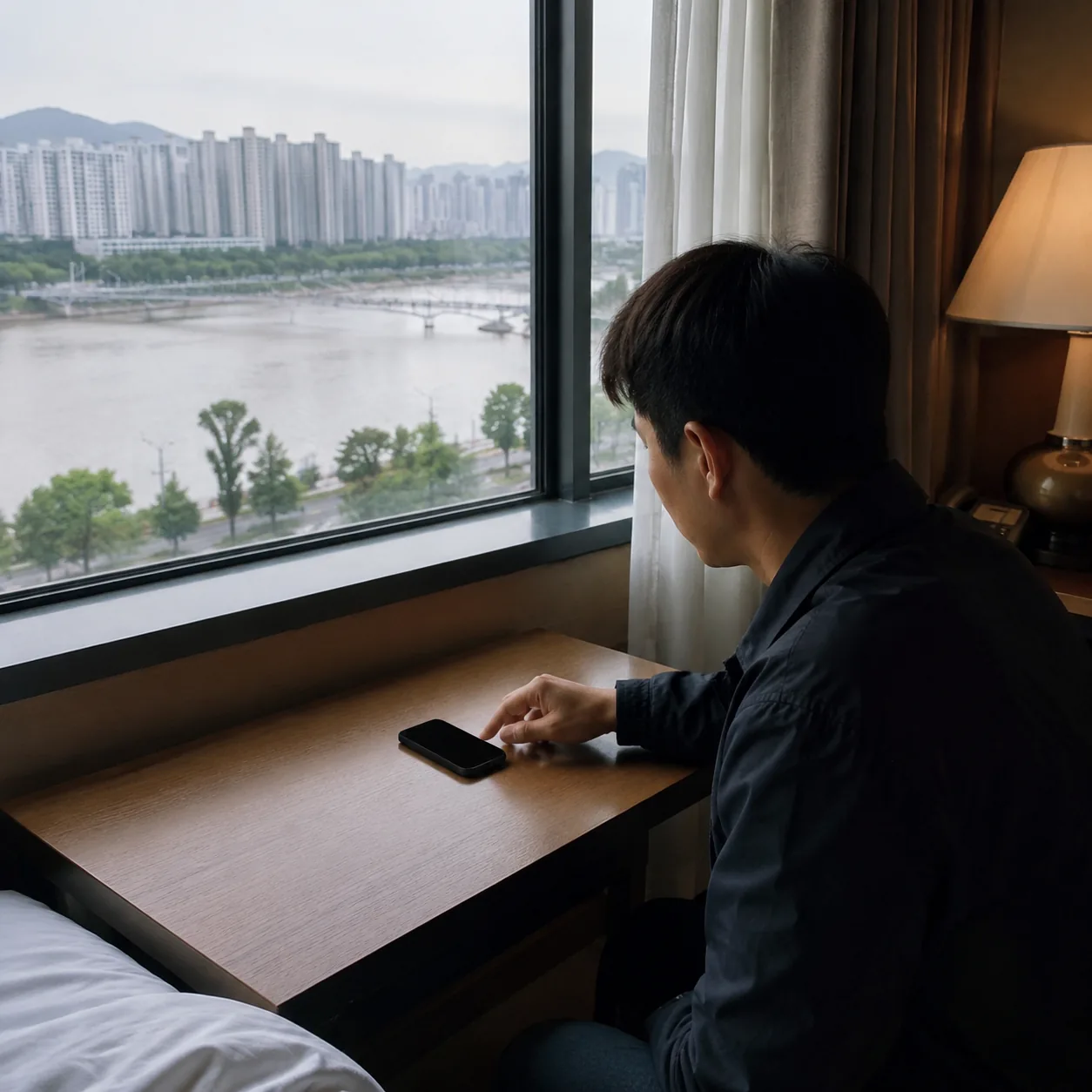
On my second morning in Lanzhou, I placed my phone on the table by the hotel window as if checking an important tool before going out. Outside, the Yellow River had not yet been fully lit by sunlight, the distant mountain line looked gray, and buses were already crossing near the bridge. Traveling in Lanzhou is not as simple as wandering within one commercial district. The river, bridges, mountains, old streets, night markets, and beef noodle shops stretch the city into a long line. If the phone is not prepared, a person can quickly feel uncertain inside that line. So I did not rush downstairs for breakfast. I first checked battery, maps, payment, translation, ride-hailing, and camera settings. Lanzhou’s first impression is spacious, but once one really walks, spaciousness also means distance, and the route needs to be arranged clearly.
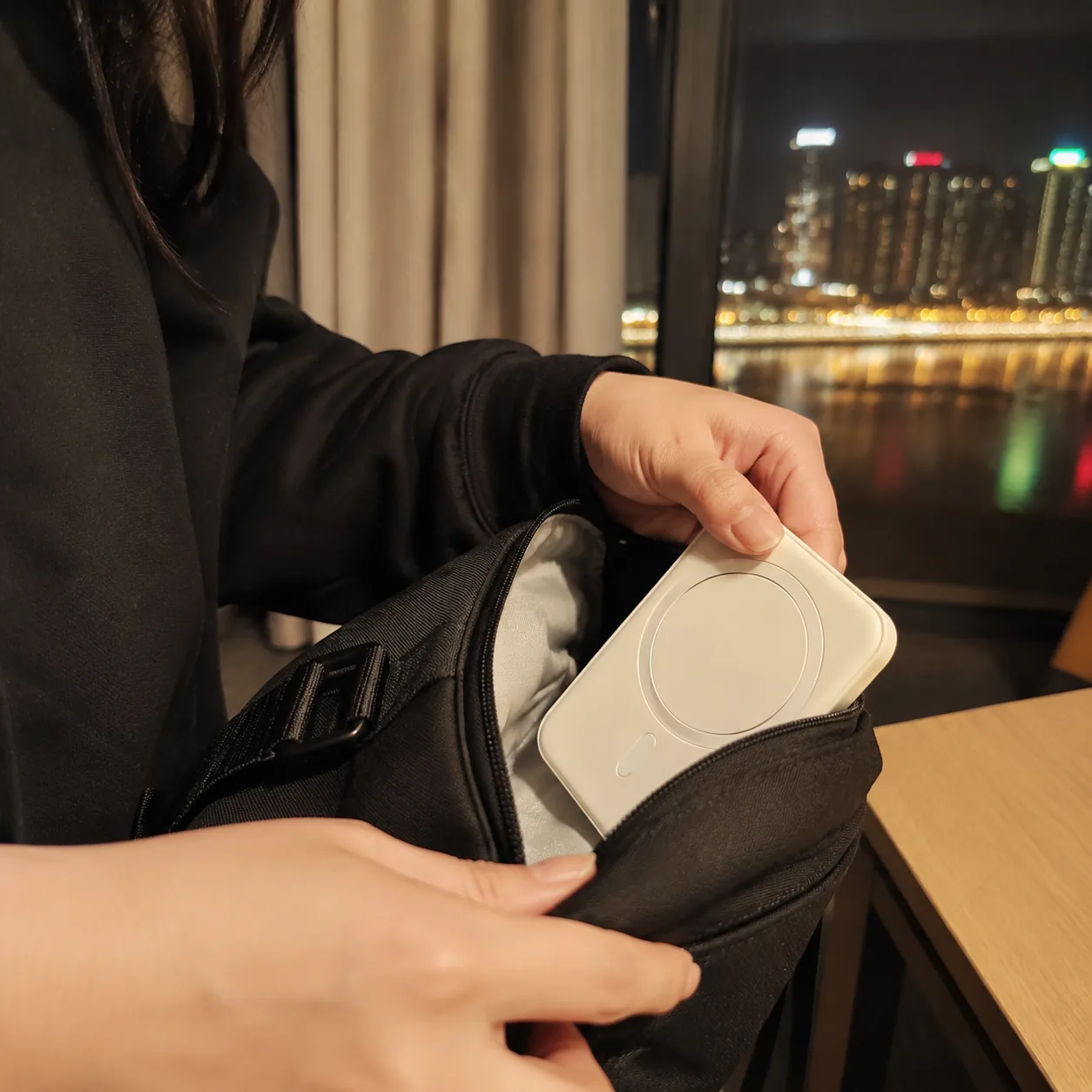
First I charged the phone to full, then placed the power bank in the easiest part of my bag to reach. Lanzhou’s weather was drier than I had imagined, and the difference between morning and evening was clear. During the day, if one walks along the Yellow River, the sunlight is bright, yet wind may suddenly pass between the water and bridge openings, making a person lower the head instinctively. In such an environment, the phone will not lose power as dramatically as in an extremely cold city, but long hours of navigation, photography, restaurant searching, and ride-hailing still drain it gradually. The most unsettling part of travel is not always the phone shutting off suddenly; it is watching the battery slide from forty percent to twenty while several destinations remain. Charging in advance means leaving room for oneself.
Next I opened the map and saved all the places I might pass that day: Zhongshan Bridge, the entrance to Baita Mountain, the Yellow River Mother Sculpture, Zhengning Road Night Market, my hotel, and several well-reviewed beef noodle restaurants. I soon realized that in Lanzhou one cannot judge the map by distance alone. Many places are separated by the river; they may look close in a straight line, but one must find the right bridge. Some points on the hill are not far from downtown, yet slopes, descents, and physical energy must be considered. Some night market entrances appear clear, but after dark, when people and cars gather, location pins become less precise. I opened each place and checked the route, paying special attention to bridges and bus stops. That way, even if I changed plans after leaving, I would know roughly which section of the city I was standing in.
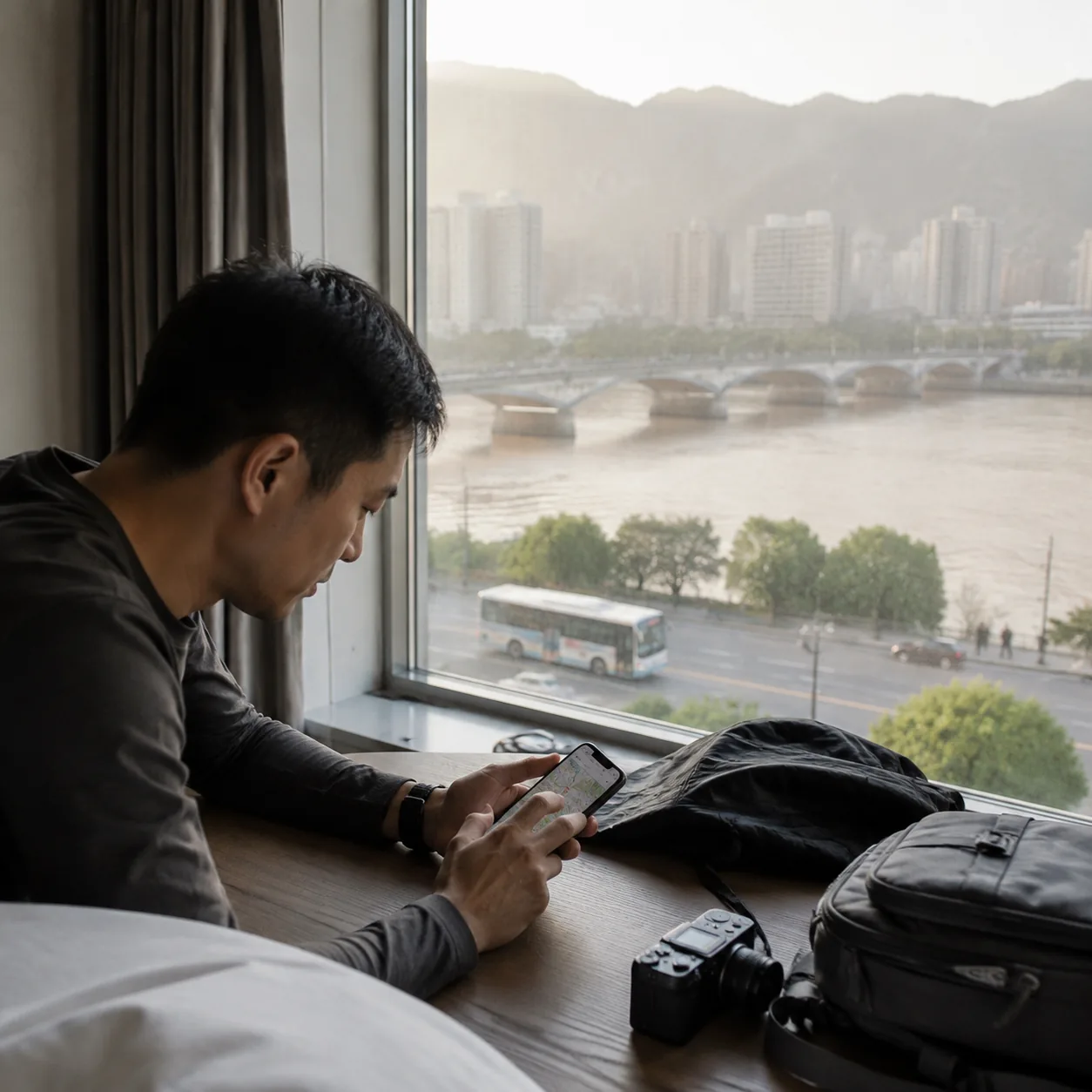
I also copied the hotel address into my notes app, writing it in both Chinese and English. Much of travel security does not come from complicated equipment, but from a line of address that can be shown to someone at any time. Lanzhou people speak with their own rhythm, and when street traffic, wind, and vendor calls mix together, a visitor may not immediately catch directions. If a ride-hailing location is inaccurate or if I need to ask the way, showing the address directly is more reliable than explaining on the spot. Under the address, I wrote several simple Chinese sentences: I want to go to Zhongshan Bridge; where is the nearest bus stop; please help me check this address. I might not use all of them, but having them ready made me much calmer.
Mobile payment also needed to be checked in advance. Lanzhou has many small shops, especially beef noodle restaurants, roadside fruit stands, and night market stalls. They look casual, but the payment rhythm is fast. When eating noodles in the morning, the people in line behind you will not stop the city’s pace while you slowly search for a bank card. Scan, pay, take the bowl, find a seat; there is almost no gap between actions. I checked whether my payment apps were logged in, whether my card worked, and whether the network was smooth. I also placed a little cash in my bag. Cash might not be necessary, but it is like a final step. Real preparation does not mean believing the phone will never have problems; it means admitting that it may have problems and leaving oneself a way not to panic.
After preparing the phone, I went downstairs to eat beef noodles. The restaurant was bright, with different bowl sizes written on the wall. Behind the window, the cook stretched and folded noodles with movements as quick as a practiced piece of music. I scanned the code with my phone first, confirmed payment, then put the phone away and carried the bowl with both hands to find a seat. The broth was clear, the chili oil quietly red, and garlic sprouts and cilantro floated on top. People nearby were almost all eating with focus; no one held a phone in front of the bowl for a long time. Lanzhou beef noodles have a quality of not waiting for anyone. Once served, they should be eaten while hot. Because the phone was prepared, I could look at it less and properly face this bowl of breakfast.
After finishing the noodles, I opened navigation and prepared to walk toward Zhongshan Bridge. Lanzhou streets in the morning had a clean busyness. Sunlight fell on building faces, buses opened doors at stops, and pedestrians emerged from underground passages. The route shown on the map was not complicated, but I still looked at the overall direction in advance instead of following the blue dot with my head down the whole time. Lanzhou is a city worth looking up in, because mountains suddenly appear behind buildings and river wind at certain intersections tells you water is nearby. If one stares only at the phone, one misses these clues the city offers. I held the phone to confirm twice, then put it back in my pocket and walked forward by remembering the bridge and crossings.
Near Zhongshan Bridge, the number of tourists clearly increased. Some stood at the bridgehead taking photos, while others extended phones beyond the railing, trying to place the Yellow River and the iron bridge in one frame. I took several photos too, but did not keep the camera open constantly. The Yellow River looked different from what I had imagined. It was not the overly bright water of retouched postcards, but carried the weight of silt, slow yet powerful. Wind on the bridge lifted the edges of clothing, and the phone screen reflected sunlight. I lowered the brightness a little and switched the camera back to normal mode. Photography matters during travel, of course, but in Lanzhou many things must be remembered by the body: the vibration of bridge plates underfoot, the dryness in the wind, and the silence created by the river’s breadth.
I had originally wanted to go directly from the bridge toward Baita Mountain, but the map showed that the slope and entrance required a slight detour. So I stood by the roadside, enlarged the navigation, and checked for several minutes which route was suitable for walking. Lanzhou’s mountains are not merely a distant background; they quickly enter the itinerary and change your breathing. Here the phone does more than point directions. It reminds you not to take short map distances too lightly. Before going uphill, I checked battery and weather, then placed water in the side pocket of my bag. On a mountain path, it is not good to pull out the phone frequently; being flustered can make one miss steps and vehicles. The best preparation is to read what needs to be known while still on flat ground.
When I reached a place where the river valley could be seen, I took out the phone again. The city opened below, and the Yellow River looked like a ribbon in no hurry to explain itself. Bridges stitched the two banks together one after another. The map on the screen suddenly seemed very small; the routes, stops, and entrances from earlier were compressed into thin lines. Yet I knew that without those careful preparations, I might not have stood there so easily. The function of a phone is sometimes like this: it arranges complicated reality into steps one can act on, then moves aside once one truly arrives. Looking at Lanzhou from the hill, I did not hurry to post a photo. I simply saved the location, like making a quiet mark for this section of road.
After noon, the sunlight grew stronger, and my phone began to warm. Long use of navigation and camera can turn it into a small hot stone. So I closed several background apps, cleared pages I did not need, and took screenshots of the afternoon route in advance. Lanzhou’s network is not poor, but during travel, screenshots offer a clumsy yet reliable sense of security. They will not spin because the signal is weak, nor suddenly change because an app refreshes. On the way to the Yellow River Mother Sculpture, I looked at the screenshots only twice and could roughly judge the direction. This saved battery and reduced the irritation of standing by the roadside waiting for pages to load.
Near the sculpture, I met a vendor selling apricot peel drink. The weather was dry, and after walking half the day, my throat had begun to tighten. I paid with my phone, and the vendor handed me a cold cup, asking whether I was from out of town. I said yes, and that I was walking along the river today. He pointed ahead and said the wind would be strong farther that way, and if I went to Zhengning Road at night, I should not wait too late to call a car because it would be hard when crowds gathered. I wrote his words into my notes app and adjusted the evening plan. Much preparation is not completed once before leaving; it is constantly supplemented on the road. The phone is like a glowing pocket notebook, preserving the casual experience that people in an unfamiliar city give you.
Before evening, I returned to the hotel to rest for a while and recharge both phone and power bank. This decision later proved useful. A night market requires the phone in many ways: checking routes, finding entrances, paying, taking photos, contacting companions, and calling a ride. After dark, the area around Zhengning Road becomes dense with people. Stall lights come on, and the smells of grilled meat, sweet fermented grain, milk-and-egg laozao, and gray beans overlap. The phone screen looks especially small in such light, yet it carries many tasks. I kept it in the inner pocket of my jacket and put it away after each use, avoiding holding it constantly in a crowded place. Preparing the phone also means protecting it and not creating trouble for oneself.
In the night market, payment speed tests phone preparation most clearly. In front of a stall there is often only a narrow space, with people waiting behind and others passing beside you carrying food they have just bought. When my turn comes, I need to scan the QR code quickly, confirm the amount, hear the payment success sound, then put the phone away and receive the food. If I have to search for the app on the spot, or if the network suddenly freezes, pressure rises immediately. I placed the payment page where it was easy to open and checked small-amount quick payment in advance. So when I bought a cup of milk-and-egg laozao, the whole process went smoothly. The hot cup reached my hand, the phone returned to my pocket, and only then did I have room to look up at steam dispersing in the lights.
Photography also requires disciplined preparation. Lanzhou’s night market is very photogenic: oil shining on iron plates, red chili powder on skewers, a ladle moving in a vendor’s hand, and the expressions of people waiting in line all have visual force. But when crowds are dense, holding up a phone for too long blocks the way and can make one ignore the ground. I decided to take only one or two photos at each stall, then move aside. In this way the photos felt more like memories than assignments. The meaning of phone preparation is not only ensuring that everything can be photographed, but also knowing when not to photograph. The liveliness of a night market is best felt with ears, nose, and footsteps together; the screen can keep only a small part of it.
When returning at night, the ride-hailing point I had saved in advance helped greatly. There were many people at the night market exit, and cars could not easily stop at the busiest intersection. I opened the map, saw a relatively wide roadside position I had saved earlier, walked along a quieter street, and called a car there. The driver soon called, and I sent him the Chinese address and location description I had prepared: I am at this intersection, beside a convenience store, wearing a dark jacket. A few minutes later, the car pulled over. When I got in, the phone still had more than thirty percent battery, and the power bank remained usable. At that moment I was satisfied with the day’s preparation, because it had not made me nervous; instead, it made the whole day more relaxed.
After returning to the hotel, I looked through the photos and routes again. In the phone album were the Yellow River’s water, the iron frame of Zhongshan Bridge, chili oil on beef noodles, steam rising from a night market cup, and several imperfect street scenes. Together they formed a Lanzhou map I had organized by hand. Yet what made me remember the city was not only the photos themselves, but the fact that every time I took out the phone, I knew why I was taking it out: to confirm direction, complete payment, save advice, contact a car, or briefly record an image. The phone did not steal the trip. Because it had been prepared properly, it stood quietly behind the journey.
The small matter of preparing my phone in Lanzhou helped me understand a plain order within modern travel. A phone is not an all-powerful guide, nor an eye that must always be held up; it is more like a folded umbrella, unobtrusive most of the time but ready to open when needed. Preparing battery is to avoid being chased by anxiety. Preparing maps is to make the city’s long distances manageable. Preparing payment is to enter local life smoothly. Preparing a few written sentences is to build a small bridge between language and environment. Lanzhou itself has real bridges crossing the Yellow River, and the preparations inside the phone are also invisible bridges, allowing a stranger to walk through a day steadily.
If I go to Lanzhou again, I will still spend ten minutes preparing my phone before leaving. Not because I fear the city, but because I respect its scale. The Yellow River will not shorten itself for tourists, the roads on both banks will not automatically move closer because of curiosity, and a hillside will not become easy simply because it looks near on a map. Preparing the phone means acknowledging that the city has its own shape and entering it in an appropriate way. Once truly walking among the riverbank, bridges, mountain paths, and night market, a person can have less panic and more room. Lanzhou’s wind is dry, its roads are long, and its evening lights are lively; a well-prepared phone lets these experiences connect smoothly into one day.