Самая ценная находка в ночном Сучжоу — это часто не ещё один мост, а умение вовремя остановиться в самом красивом месте
Many cities build their night routes by pushing toward a climax. Suzhou does not. The deeper the evening goes, the easier it becomes to fall into a quiet illusion: if the city is this calm, this soft, and this painterly, then surely one more bridge, one more lane, and one more waterside turn should still be added. Yet what night-time Suzhou most needs to teach is not whether one can continue, but whether enough has already been reached. When a small city’s night is written well, its attraction lies not only in extension, but in the realization that pulling back is itself part of the route.
If foreign creators handle night-time Suzhou well, the most valuable layer for Travel Notes to catch is not the shallow conclusion that the city looks beautiful at night. It is the logic of closure within the night route. When should the traveler return to a brighter line, when should one quiet meal close the route, and when is one stretch of reflected water already enough to carry away? For a first-time visitor to China, this judgment—knowing how to stop slightly earlier at the most beautiful point—is often more valuable than seeing two more lanes.
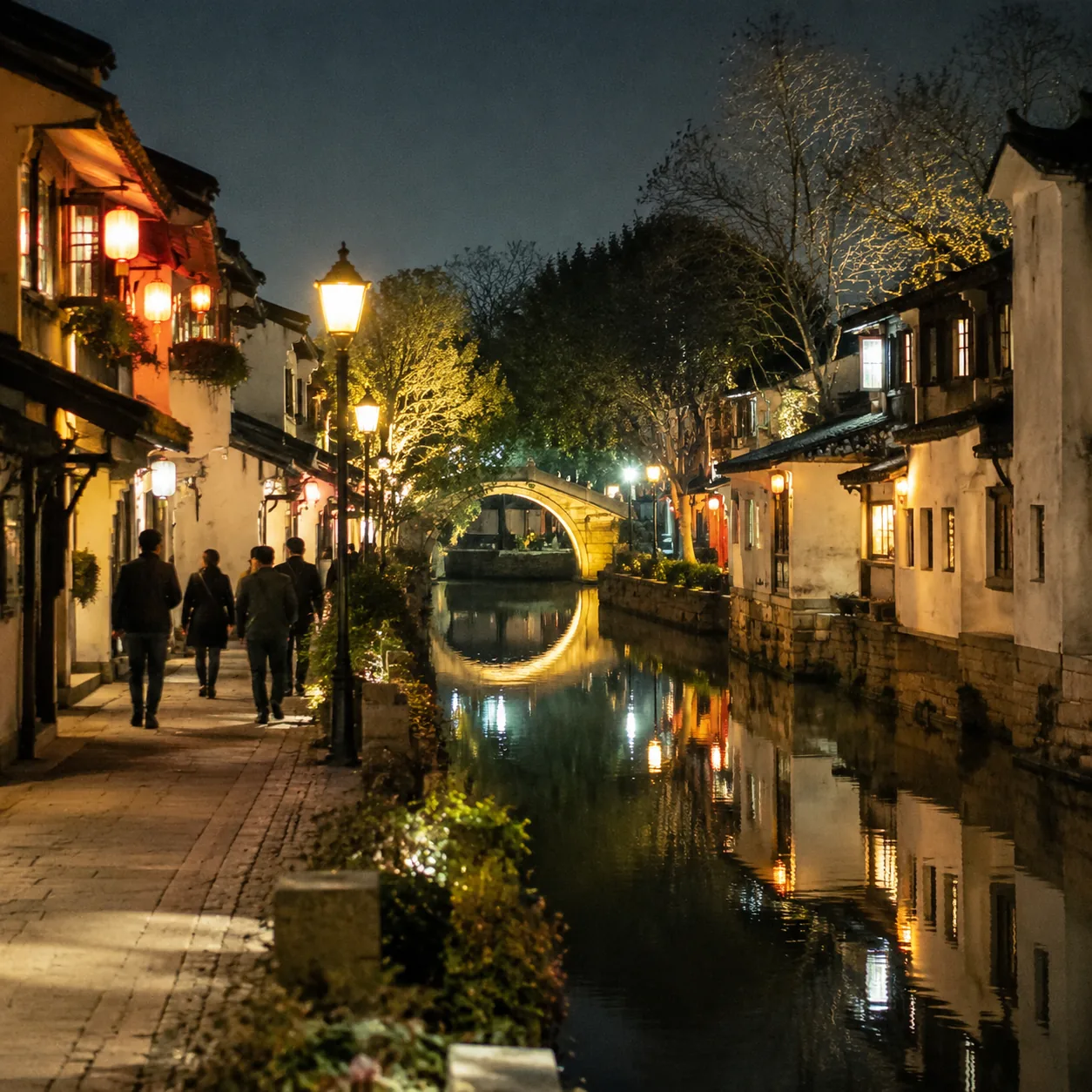
What Makes Suzhou Feel Refined at Night Is Not Brightness, but Restraint
Some cities depend on brightness to establish their night. Others depend on crowds. Suzhou depends more on restraint. The lights are not strong everywhere, the water never speaks at full volume all the time, and many of its most moving moments occur just before the city would have become one degree too much. Because it never keeps intensity fully raised, it remains more durable to look at. If foreign creators capture this restraint, the article should stop chasing the hottest night views and ask instead why a city can leave deeper aftertaste precisely by not overexpressing itself.
The Best Night Judgment Is Often the Sense That This Is Exactly the Right Moment to Turn Back
Many travelers treat one more stretch of walking as proof of commitment. In Suzhou at night, however, the most mature form of commitment is sometimes knowing exactly when to head back. Not out of fear, but because the city’s most valuable night beauty is often already sufficient. If the traveler stops at the best reflection, the right breeze, and the right degree of quiet, the route may feel more complete than if it kept chasing one more bridge. For a first-time visitor to China, this judgment of enough is often more valuable than another kilometer.
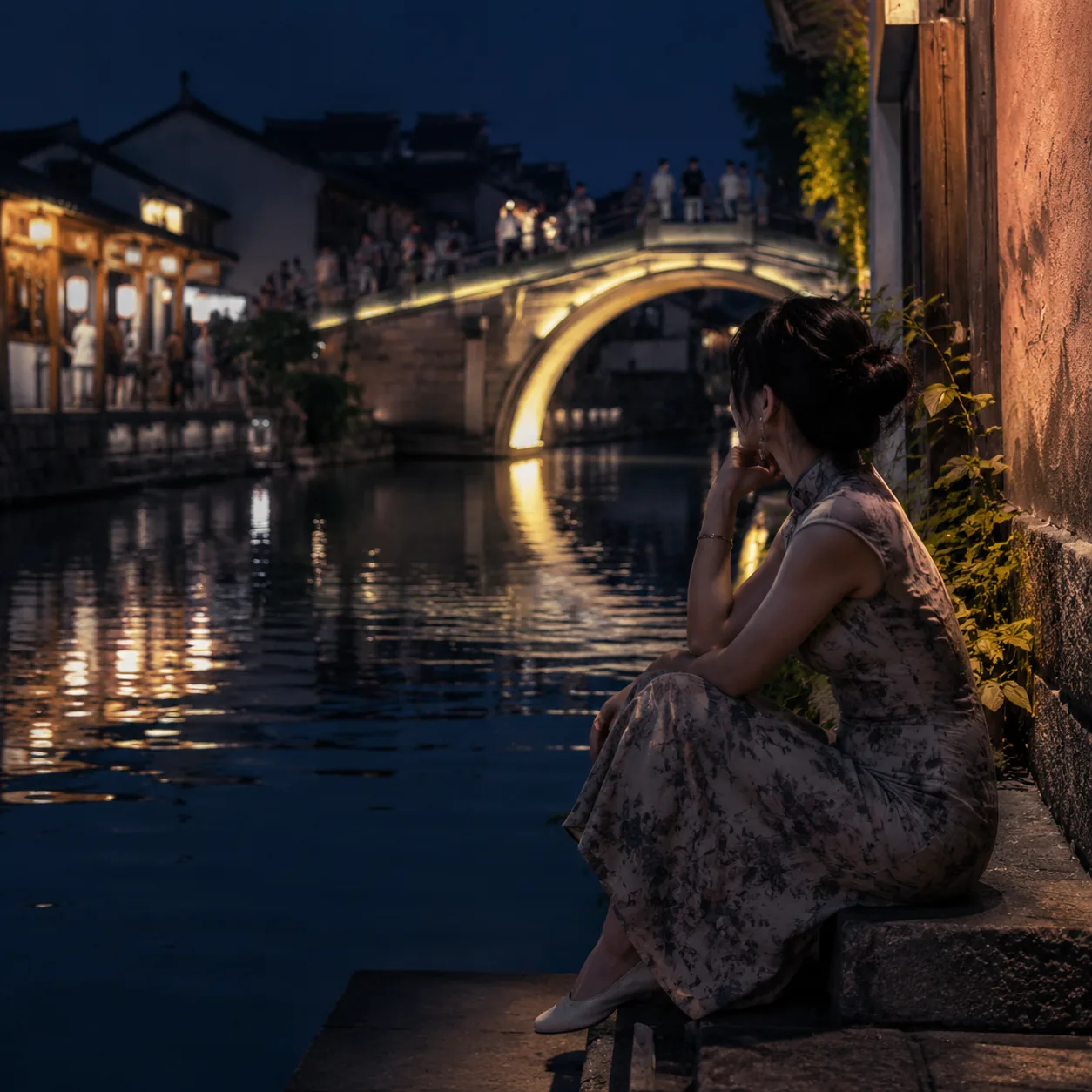
What Night Truly Gives the Traveler Is Not the Ability to See More, but to See More Precisely
Daytime Suzhou invites the traveler to see more. Night-time Suzhou is better at teaching the traveler to see more precisely. One strip of water beside a bridge, one layer of reflection on a wall, one sliver of light leaking out from a courtyard—none of these requires abundance. Once evening arrives, attention is pushed toward fewer and more exact things. If foreign creators preserve that precision in public material, Travel Notes should not reduce it to “the night view is beautiful.” It should explain why what is truly valuable at night is not quantity, but accuracy after restraint.
A Mature Night Route Also Knows How to Leave One Breath for the Next Day
Some night routes are memorable not because they stretch the day to its absolute limit, but because they end at exactly the right point. This is especially true in Suzhou. If one chases every bridge, lane, and canal edge in a single night, the eyes become blunt by the next morning. But if one is willing to stop while the city is still at its best, the route continues to work the next day. If foreign creators capture this sense of proportion, Travel Notes should make it explicit, because a truly good night route does not belong only to one evening. It is also responsible to the following day.
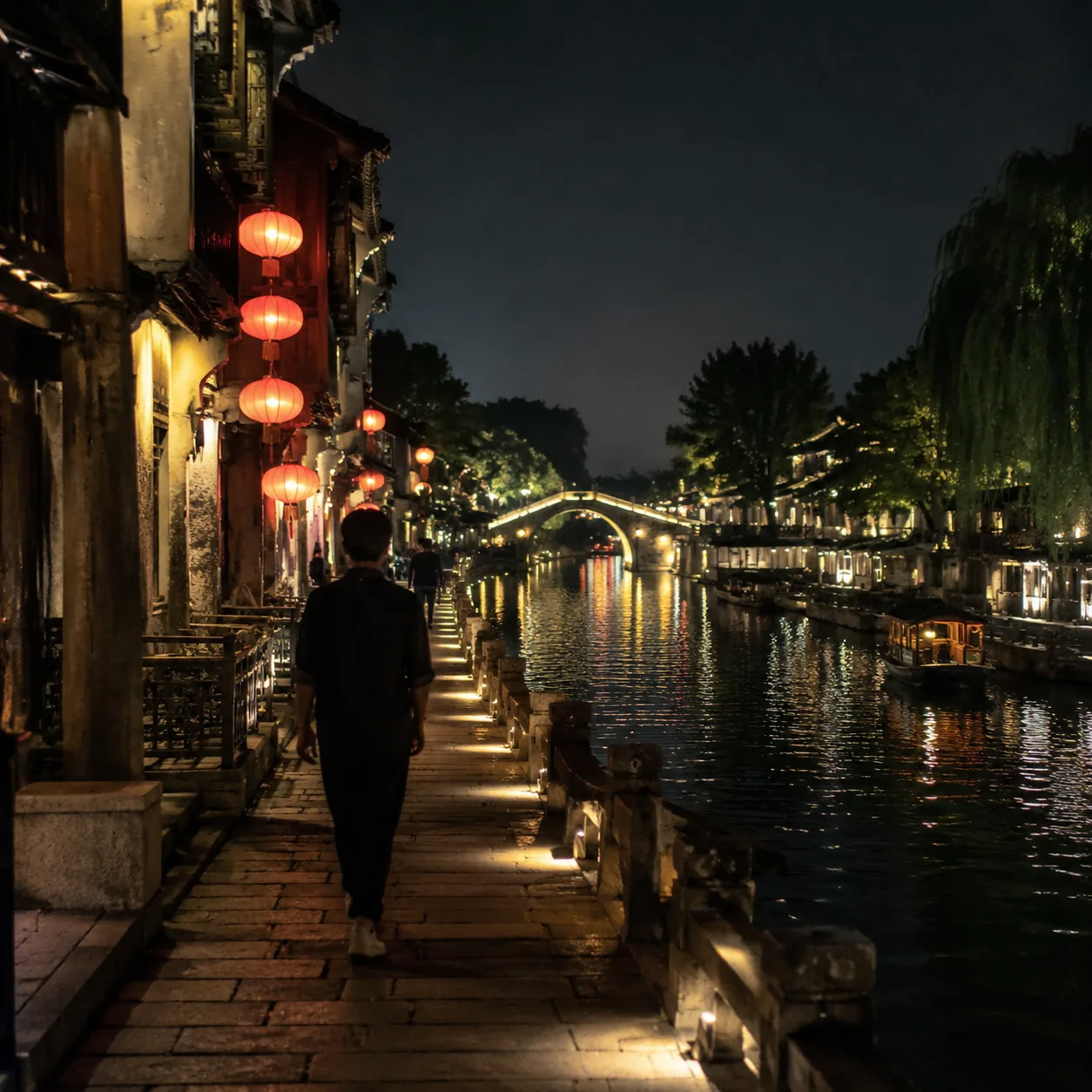
The Most Overlooked Part of Night Is Often the Stretch on the Way Back
Many people treat a night route as something that must keep pushing forward. In Suzhou, however, one of the most important segments often appears on the way back. The bridge, lamp, and canal surface seen on arrival begin to feel different once the mind has settled. The route is no longer asking whether there is something new ahead. It asks whether what has already been seen is becoming clearer. This matters deeply in Suzhou, because it proves the value of the night lies not in stimulation, but in aftertaste.
Good Night Judgment Means Not Only Stopping Well, but Returning Well
A route that knows when to stop but not how to close can still fall apart in the end. One of Suzhou’s best nighttime qualities is that it allows for a quiet return. There is no need to chase one more bridge or capture one more angle. One can simply follow the steadier line back. In that way, the night route is not exhausted, but gathered. For a first-time visitor to China, that sense of being properly gathered is often more valuable than seeing several additional sights.