Я думал, что в чайной культуре эпохи Сун главное — утварь, но позже понял, что труднее всего научиться той неспешности за столом
The rain began in the afternoon, not violently, but without stopping. By the time I stepped into the waterside tea house, a thin gleam of moisture had already gathered along the bamboo curtain at the entrance, and the wooden floor had darkened slightly from the feet passing over it. Inside, it was not truly silent. A spoon touched a cup, charcoal made occasional small sounds, and people spoke in low voices. Yet every sound seemed pressed down by the tabletop and the rain together. I had only meant to avoid the weather for a while and take a quick look at what a Song tea house might feel like. But soon after sitting down, I realized that what held my attention was not the celadon tea bowl, nor the neatly arranged whisk and small vessel on the table, but the half-beat of slowness everyone seemed to carry at the table edge.
When I used to think of Song tea culture, I first thought of objects, tea color, whisked tea, and cultivated elegance. But the longer I stayed in China, the more I understood that many things that appear to belong only to aesthetics finally return to bodily rhythm. How the bowl is held, when the hand pauses, when the water is poured, whether words come before or after a swallow of tea, and whether people at the table leave one another a small unbroken space—all these together create the real atmosphere of drinking tea in the Song world. Without that rhythm, even the finest objects remain merely attractive things.
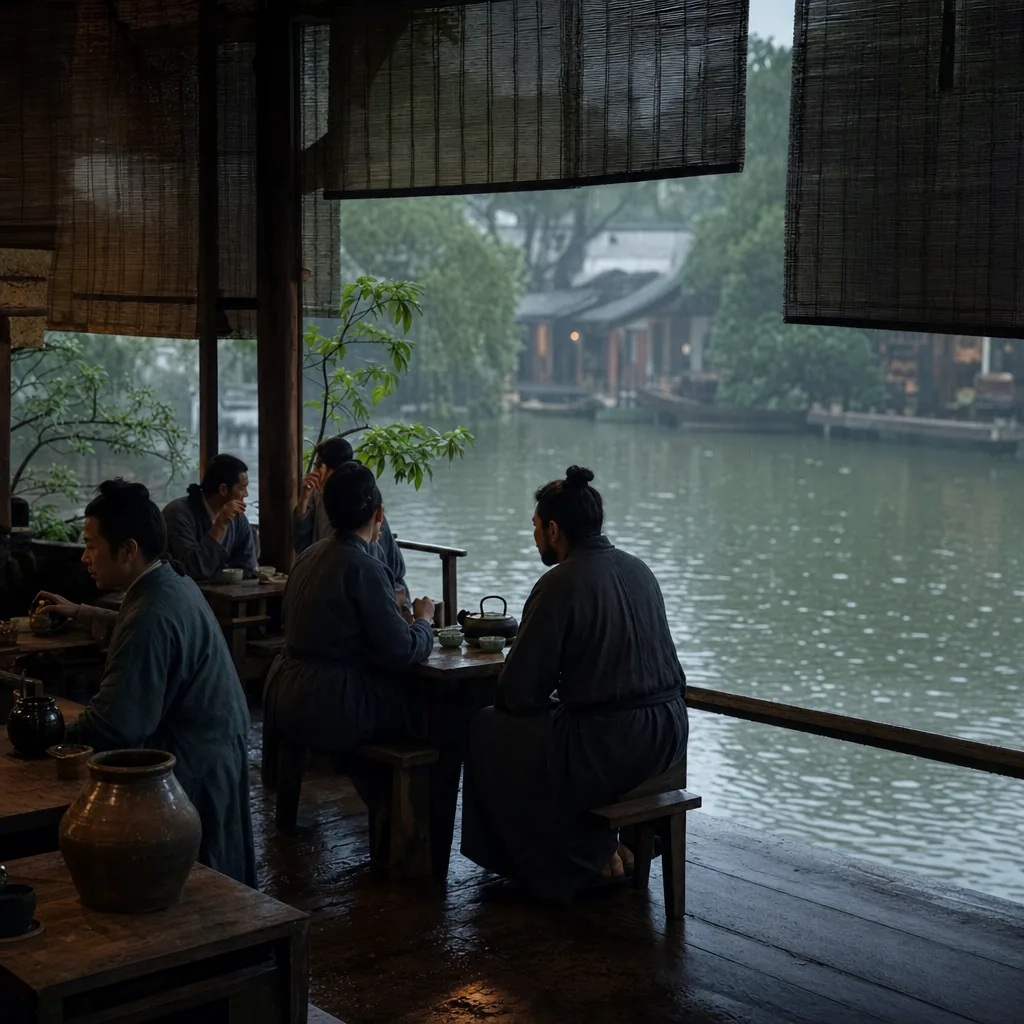
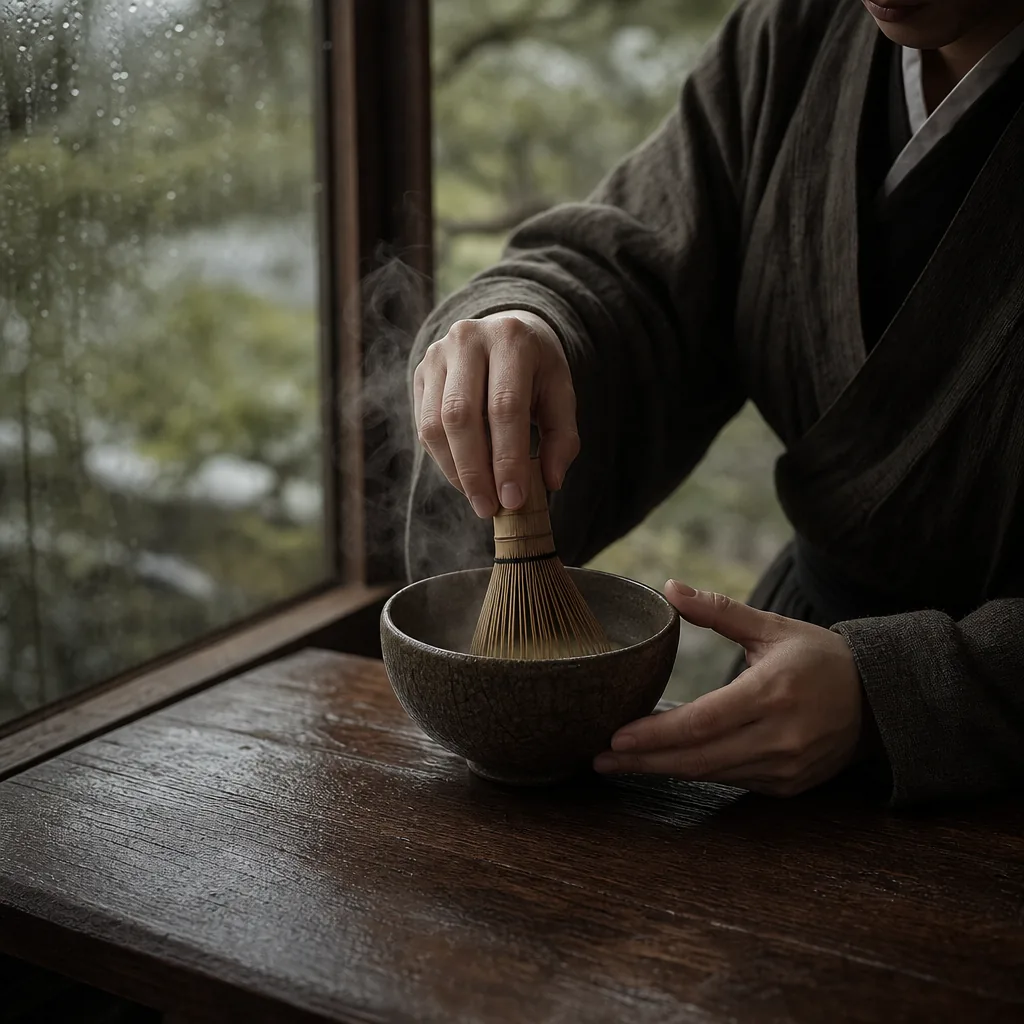
The attendant who seated me moved lightly. He shifted aside one damp corner of the hanging curtain, wiped the table edge quickly with a cloth, and said only one sentence: warm your hands first, then look at the tea. I laughed immediately, because the line felt close to many Chinese habits I have come to love: do not rush to understand something; first let the body enter its rhythm. And indeed, once I brought my hands near the warm tea bowl, listened to the rain hitting the water outside layer after layer, and looked up to see the person across from me drawing the whisk back slowly, I suddenly felt that the quietness associated with Song tea culture was not staged. It was raised step by step through movement.
The Hardest Thing to Learn Was Not Whisking Tea, but Not Hurrying
At first I thought the most worthwhile thing to observe would be the whisking technique itself. Later I realized that technique is actually the easier part to see. What is harder to learn is the attitude that refuses to rush toward finishing anything. When someone lifts a kettle, the water is not poured immediately. When someone has already touched the rim of a bowl, he may still wait for another bowl on the table to settle first. Even speech works this way. Sentences do not come out fighting one another. They fall one by one with small spaces left between them. In that moment I understood that the order at a Song tea table was not maintained by anyone speaking loudly. It depended on whether each person was willing to slow down a little more.
For an outsider like me, this felt new. In many places, tea or coffee has long become something done incidentally: pick it up, take two drinks, and keep moving. But the atmosphere around a Song table seemed to say something else. Tea is not a small gesture inserted into the cracks of life. It is itself a small piece of life deliberately set apart. If the mind has already run outside, even fine tea cannot hold you. But if you are willing to settle first at the table edge, then even an ordinary bowl carries an extra layer of quiet delay in its taste.
What Mattered Most Was Leaving a Small Margin for Others
Later I noticed that this slowness was not only for personal comfort. It was also a way of leaving room for others at the table. When someone pushed a bowl forward, it was pushed only a short distance, never taking over the center at once. When someone spoke halfway through a thought, he might pause to let the person opposite finish setting down a cup. Even when adding water, the wrist turned slightly aside so that steam would not rush directly toward another face. All these gestures were tiny, too small to be captured in a single photograph. Yet these were exactly the gestures that kept a whole table from becoming crowded, confused, or interruptive.
This reminded me how superficially I understood the word courtesy when I first arrived in China. I thought courtesy meant saying the right words, using proper forms of address, and remembering certain rules. But over time I discovered that much of the highest form of Chinese courtesy actually grows out of movement. Whether you yield or not, whether you wait or rush, and whether you push through another person’s rhythm or give it a little space—these matter more than a few polished phrases. That is also why the Song tea table feels so moving. It refines this kind of courtesy into extraordinary detail.
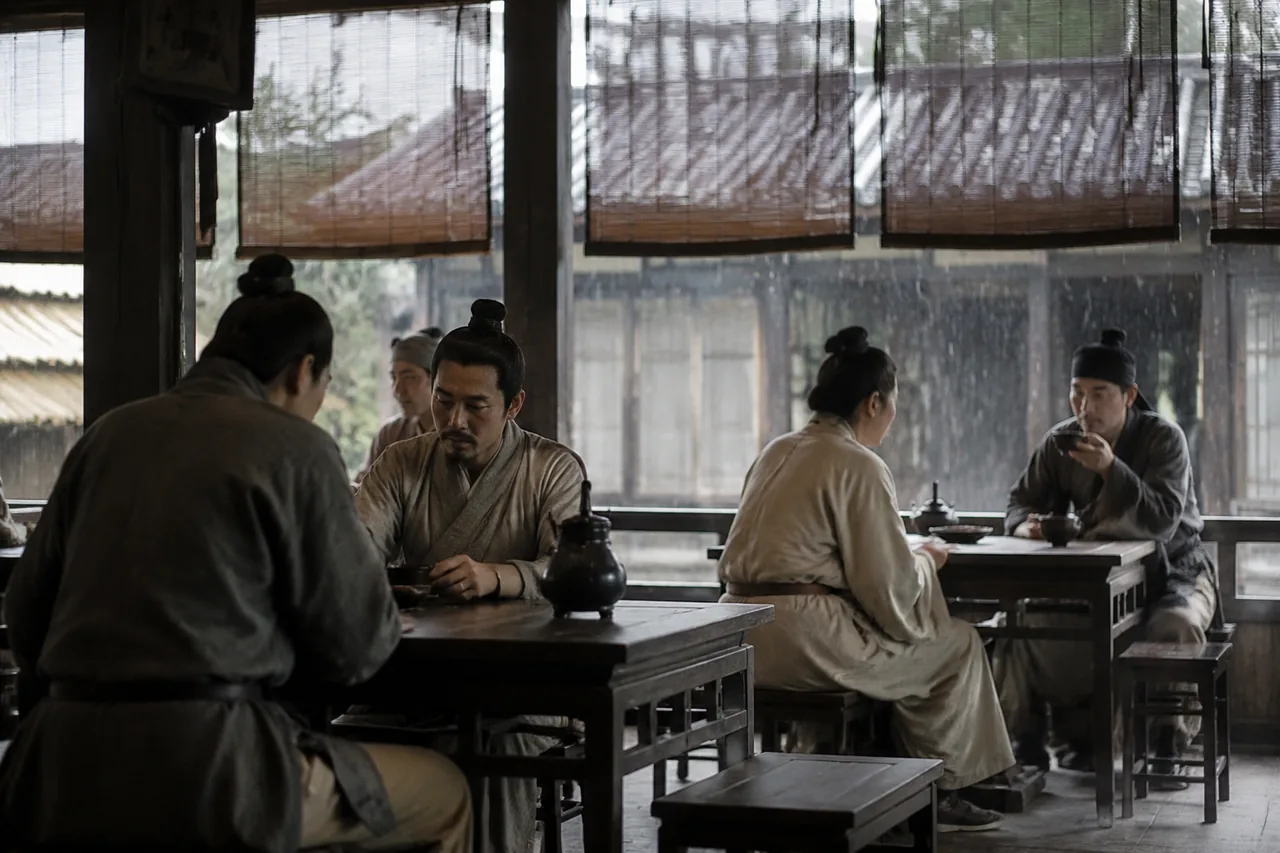
When the rain weakened a little, I prepared to leave. The attendant did not rush me, and he did not come to clear the table immediately. He only moved the bowl gently back to its place after I stood. The bamboo curtain by the window still held moisture, and the rain on the water outside made one small circle after another. As I reached the doorway, I suddenly understood why I would keep remembering this tea-house visit. It was not because I had memorized the names of objects, and not because I had tasted some extremely expensive tea that day. It was because for the first time I felt clearly that the hardest thing to learn from Song tea culture is not inside the bowl, but at the table edge. What it teaches is not how to appear refined, but how to steady your own movements first and then make room for others to be settled as well.