Вонючий тофу: уличная легенда — пахнет ужасно, а на вкус великолепен
My first encounter with stinky tofu in Changsha was forced on me by the smell.
Not drawn in by something appetizing — stopped in my tracks by a wave of something that couldn’t quite be classified as bad or good, and then, inexplicably, I joined the queue. The vendor was a woman in her forties, tofu cubes sizzling in the oil. She speared one with a bamboo skewer, spooned red chili sauce over it, and handed it to me. I bit in: crispy outside, soft inside, the heat of the chili mixing with the fermented funk of the tofu in a way I hadn’t expected at all.
I immediately bought another skewer.
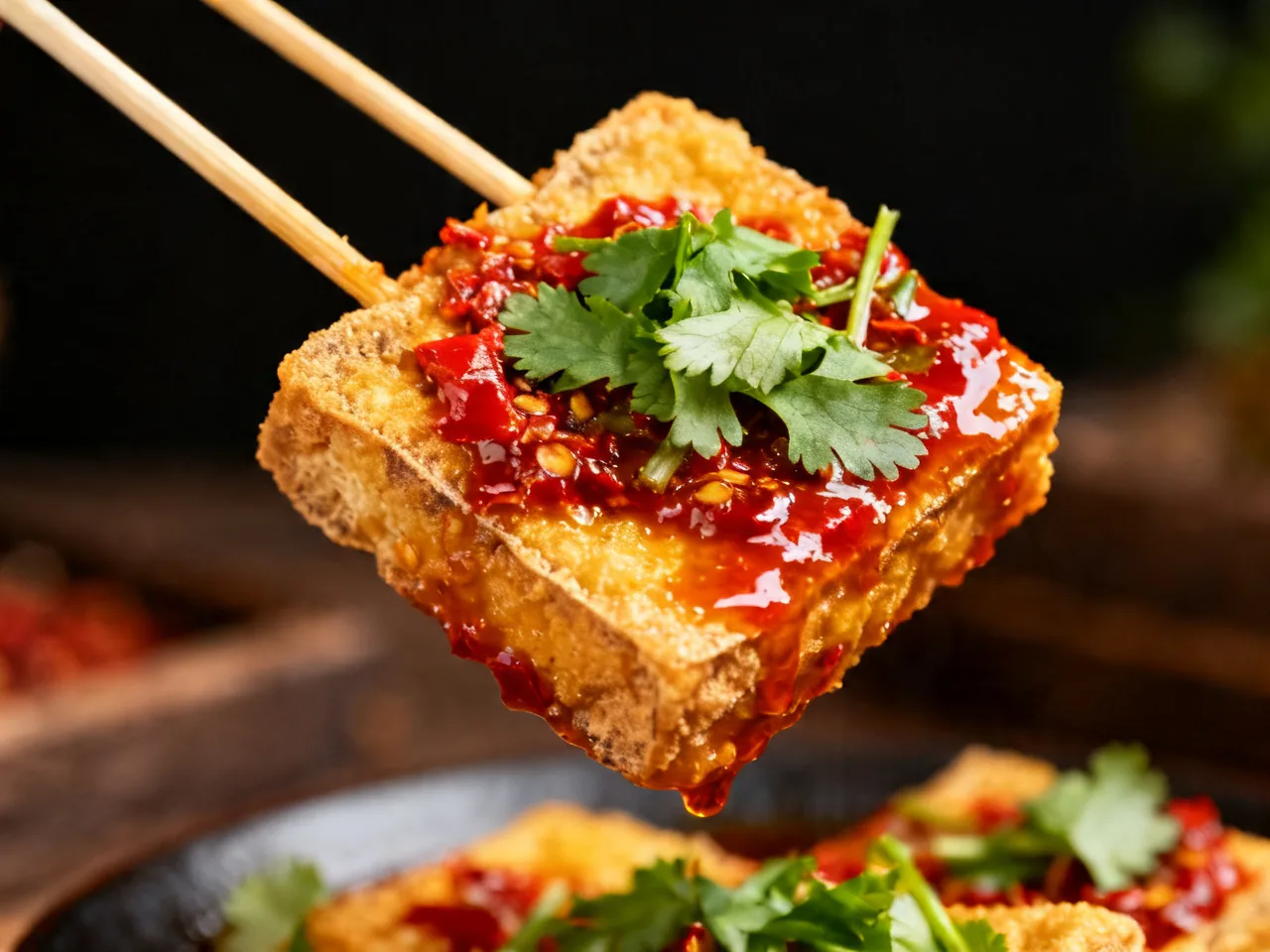
The “stink” in stinky tofu comes from sulfur compounds and indoles produced during fermentation.
Making stinky tofu starts with the brine — that’s the core. Traditional brine recipes vary by maker, but the basic ingredients include fermented black beans, amaranth stems, winter bamboo shoots, mushrooms, and salt; some add fermented tofu liquid or aged brine passed down for years. These ingredients ferment in clay jars for months or even years, developing complex microbial communities that include the bacteria responsible for the smell.
Tofu soaks in the brine for anywhere from a few hours to several days. The proteins partially break down, the interior softens, and the tofu absorbs the brine’s layered flavors. When fried, the high heat crisps the outside instantly while the interior moisture turns to steam — crispy shell, soft center.
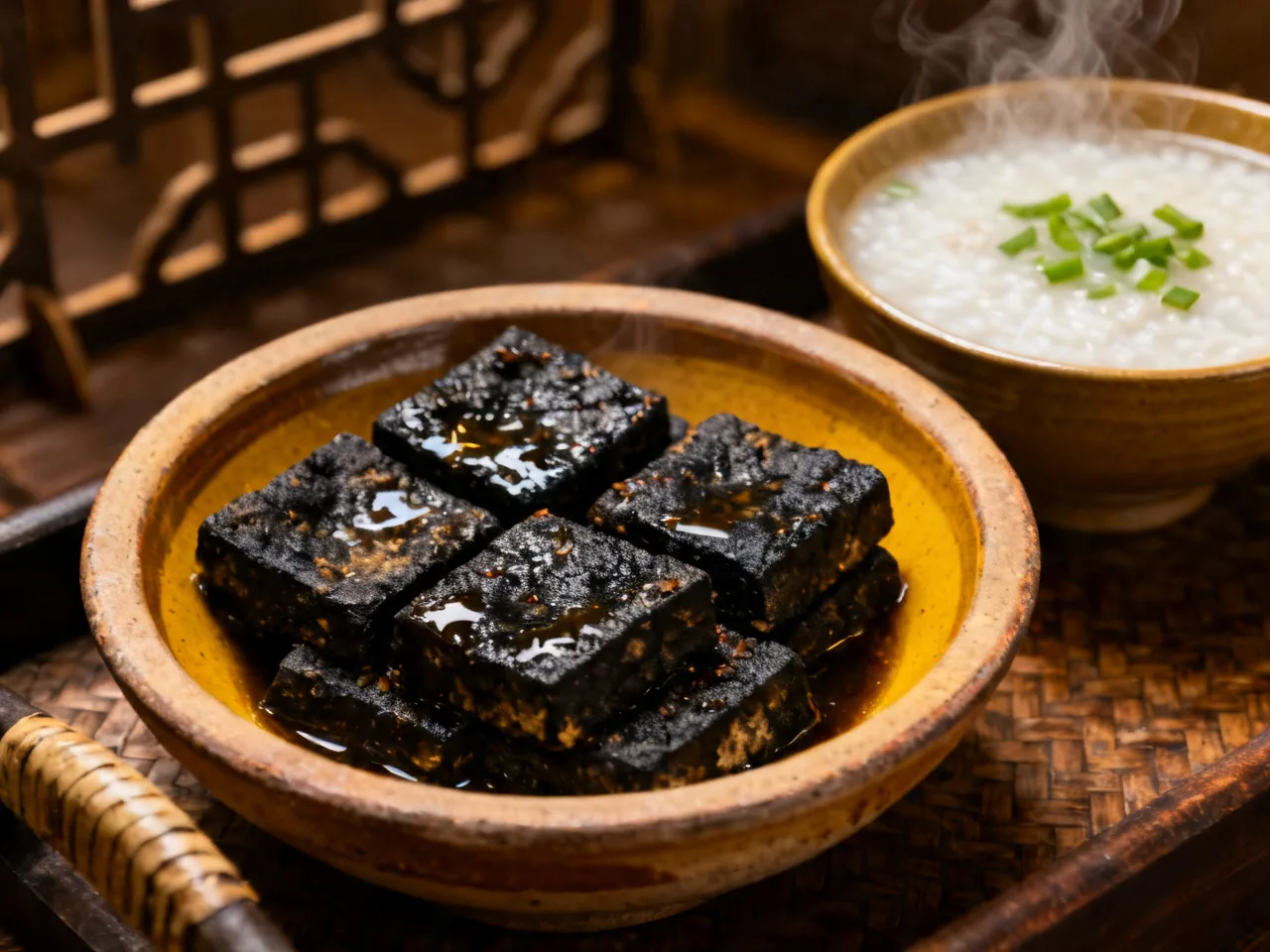
China’s two most famous styles of stinky tofu are completely different.
Changsha stinky tofu is deep-fried: golden and crispy outside, soft inside, must be eaten hot. The condiments are everything — red chili sauce, garlic paste, cilantro, sometimes soy sauce and black vinegar. The smell is relatively approachable, more fermented-savory than aggressively funky. Huogong Dian is Changsha’s most famous stinky tofu landmark; reportedly a young Mao Zedong was a regular.
Shaoxing stinky tofu is the other extreme. Not fried — it’s eaten after curing, dark black in color, soft and almost spreadable, with a much more intense smell. Shaoxing locals eat it as a side dish with plain congee or rice; a small piece goes a long way. First-timers from outside the region often struggle, but locals consider it an everyday comfort food.
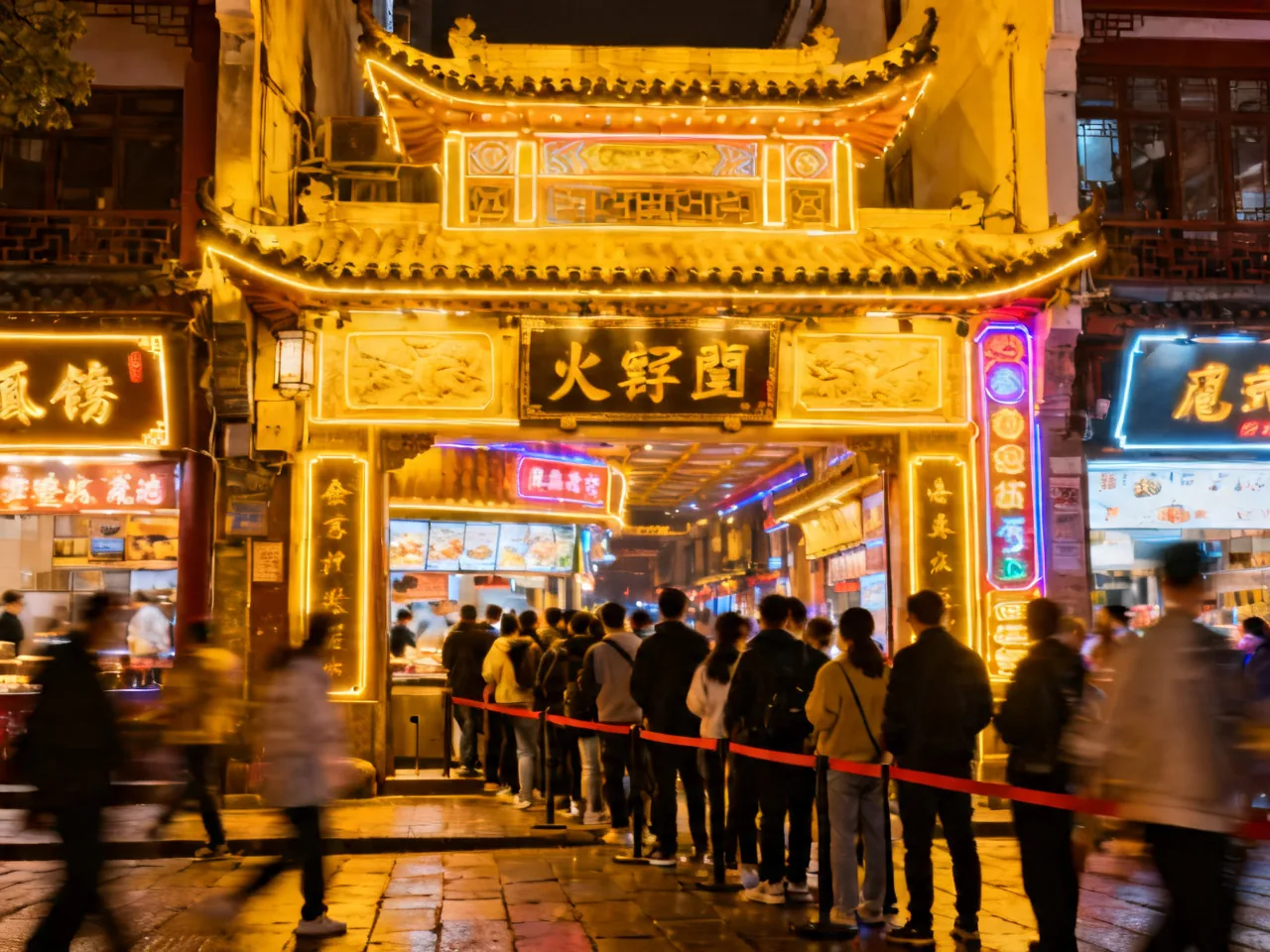
Changsha is the spiritual home of stinky tofu, but not every stall is worth the wait.
Huogong Dian on Pozijie is the most famous, but it’s tourist-heavy, pricier, and the tofu is decent rather than exceptional. Locals tend to point you toward the smaller stalls around Pozijie — the ones with no sign, just a wok of oil. The test is simple: are the people in line locals? Is the oil clean? Does the tofu come out evenly golden?
You can find Changsha-style stinky tofu chain stalls in Beijing, Shanghai, and Guangzhou, but the taste and atmosphere don’t travel well. Stinky tofu is best eaten at the source, standing on the street, straight from the wok.
Practical Notes
- Huogong Dian, Changsha: 127 Pozijie, open 9am-9pm, ¥30-50 per person
- Pozijie street stalls: open from around 3pm, busiest before 10pm, ¥5-15 per person
- Shaoxing stinky tofu: available near Cangqiao Straight Street and Lu Xun’s Former Residence
- Packaged versions available in supermarkets, but flavor is significantly reduced
- Note: fried stinky tofu is calorie-dense — roughly 150-200 kcal per skewer
Related Reads
- The 8 Great Cuisines of China
- Spellbound at First Bite: A Stranger’s Descent into Chengdu’s Heat
- Street Steam: The Real Pulse of Chinese Cities
- The Peppercorn Dossier: Sichuan’s Flavor Map Through a Botanist’s Eyes
- 10-Day East China Five-City Loop