Летние убежища от жары: плато и острова
China’s summer has two solutions: go high, or go coastal. One cools the body, the other cools the mind.
Highland Escapes
Elevation 3,200m, summer average 15–20°C — when inland cities hit 40°C, a jacket at Qinghai Lake is just right. July is prime time: golden rapeseed fields line both sides of the lake road, water blue as gemstone, snow mountains in the distance. The lake loop is ~360km — 2–3 days by bike, one day by car. Erlangjian Scenic Area (¥90) is the most convenient lakeside entry, but many free herder access points along the road let you reach the shore.
“Cool Guiyang” isn’t hype — summer average 23°C, the coolest among China’s provincial capitals. No need for special scenic spots; the city itself is comfortable. Jiaxiu Tower (free) for night views, Qingyan Ancient Town (¥10) for braised pig trotters, Huaxi Park (¥6) for riverside walks. Guiyang’s night markets (Erqi Road snack street) are the best way to beat the heat — silk dolls (siwawa), sour fish soup, griddle pot, eating in the evening breeze.
The Qing emperors’ summer palace — literally named “Mountain Resort for Escaping Heat.” Kangxi and Qianlong came here every summer to govern. Ticket ¥130 (including Outer Eight Temples combo). The grounds are twice the size of Beijing’s Summer Palace, with a lake district (mimicking Jiangnan water towns), a plains area (Mongolian grassland style), and a mountain area (primeval forest) — one day isn’t enough. The Outer Eight Temples’ “Little Potala Palace” (Putuo Zongcheng Temple) is a scaled replica of Lhasa’s Potala, worth dedicated time.
Island Escapes
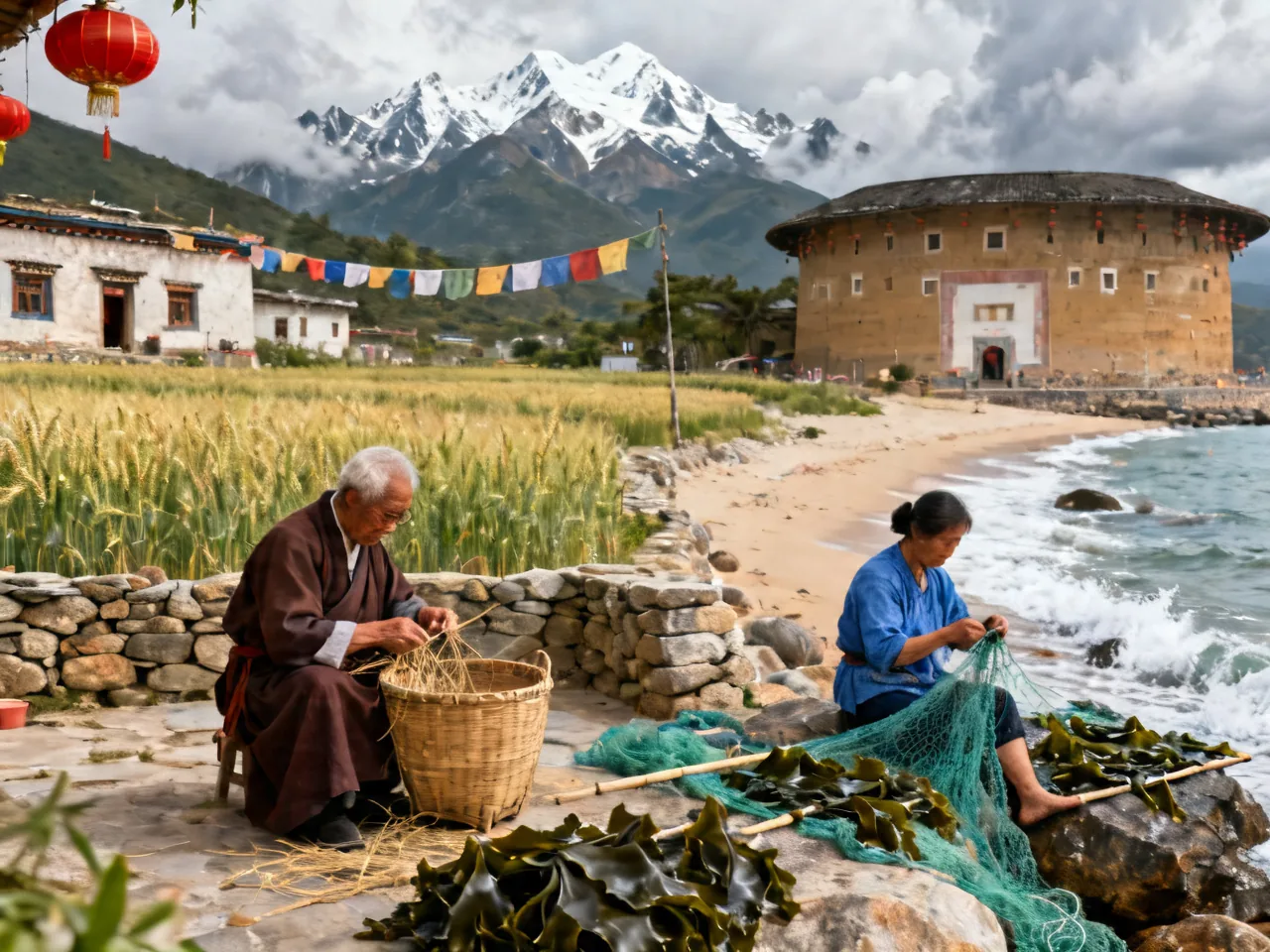
China’s youngest volcanic island, not large (~25 sq km) — half a day by e-bike covers the loop. Crocodile Hill Volcano Park (¥98 including boat) has complete volcanic geological remains — black volcanic rock sculpted by waves into various shapes. Nanwan Street is the island’s liveliest area, a seafood stall strip where mantis shrimp and grouper are must-orders. Several decent beaches (Shiluokou, Dishui Danping) with better water quality than Sanya and far fewer people.
The closest islands to Shanghai — ~4 hours by bus + ferry from Nanpu Bridge. Jihu Beach is Shengsi’s largest, fine sand, good for swimming. But Shengsi’s real highlight is Gouqi and Shengshan Islands — fishing villages built on cliffs, crystal-clear water, called the “Eastern Little Greece” (a bit exaggerated, but genuinely beautiful). July–August is best — go fishing, eat seafood, watch sunrise.
Sanya is too commercialized; Wanning is Hainan’s “next Sanya” but not yet fully developed. Riyue Bay is one of China’s best surf spots — 1–3m waves suitable for beginners and intermediates. Shimei Bay’s Vatica mangachapoi forest is China’s best-preserved coastal tropical forest, beaches nearly empty. Xinglong Tropical Botanical Garden (¥45) offers free tastings of tropical fruits and coffee.
Practical Tips
Highland notes: Qinghai Lake is at 3,200m — don’t exercise vigorously on day one, drink plenty of water. Guiyang and Chengde have no altitude issues.
Island notes: Weizhou and Shengsi ferries are weather-dependent; typhoon season (July–September) may cancel sailings — check schedules before departure. Sunscreen is essential.
Bottom Line
The smartest way to spend a Chinese summer: wear a jacket on a 3,000m plateau by day, feel the ocean breeze on an island beach by night.
Related Reads
- Spring Bloom Map: China’s Most Beautiful Flower Fields
- Huangshan Sea of Clouds & Welcome Pine: Beautiful in All Seasons
- Best Autumn Foliage Spots in China
- Complete Guide to Winter Ice & Snow Tourism
- 10-Day East China Five-City Loop