Только приехав в Чжэнчжоу, понимаешь: даже ужин, чьё происхождение не нужно объяснять, способен расслабить человека
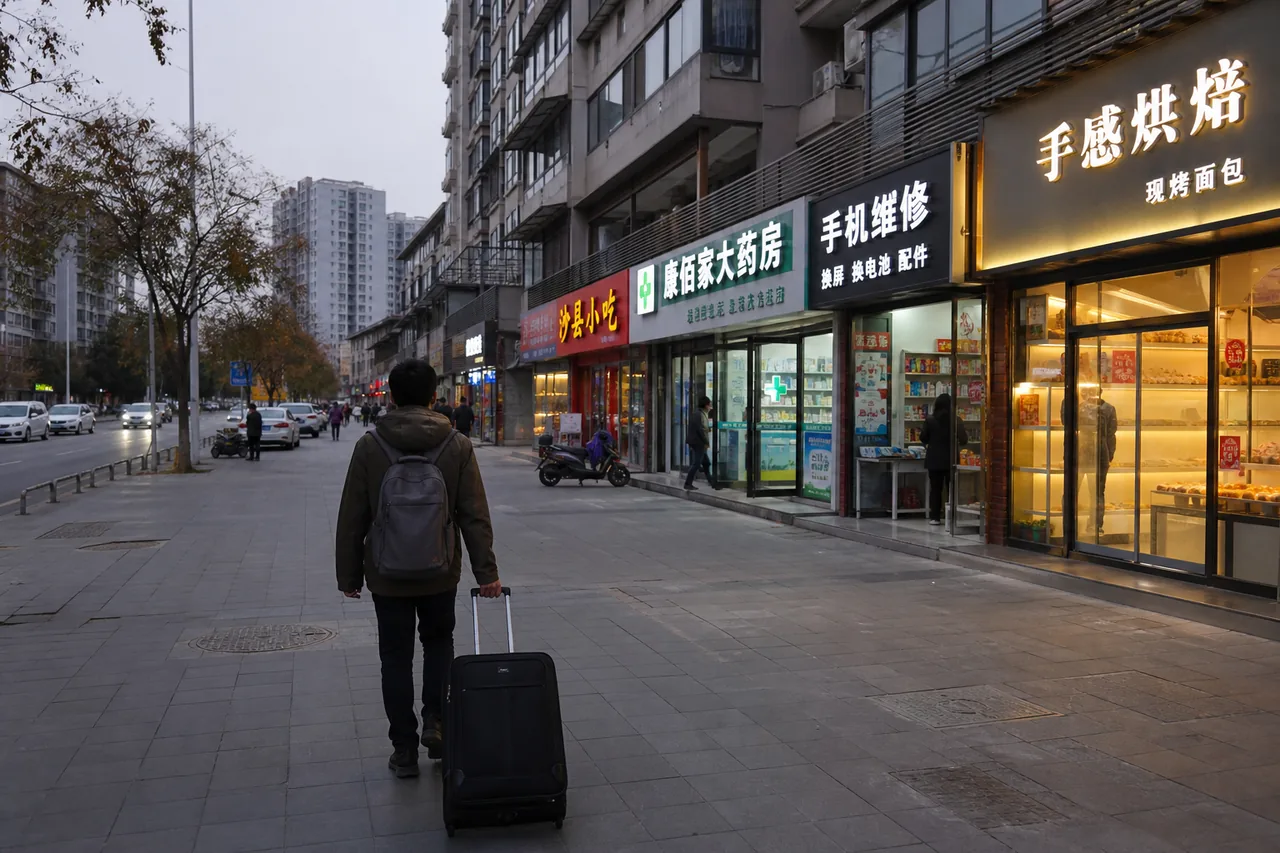
When I arrived in Zhengzhou in the evening, the sky had already shifted from pale brightness into a grayish blue. The wind outside the station was not strong, but it carried the dry clarity often found in northern cities. It touched my face without humidity, only making me feel that the day had finally landed somewhere I could stop. I had not planned anything special for dinner, nor had I saved a famous restaurant that required a queue. I simply put down my luggage and walked slowly along the streets near my lodging. Zhengzhou’s night did not light up all at once; it came on like ordinary bulbs switched by ordinary hands, with convenience stores, pharmacies, small restaurants, repair shops, and bakeries sending steady light through their glass doors.
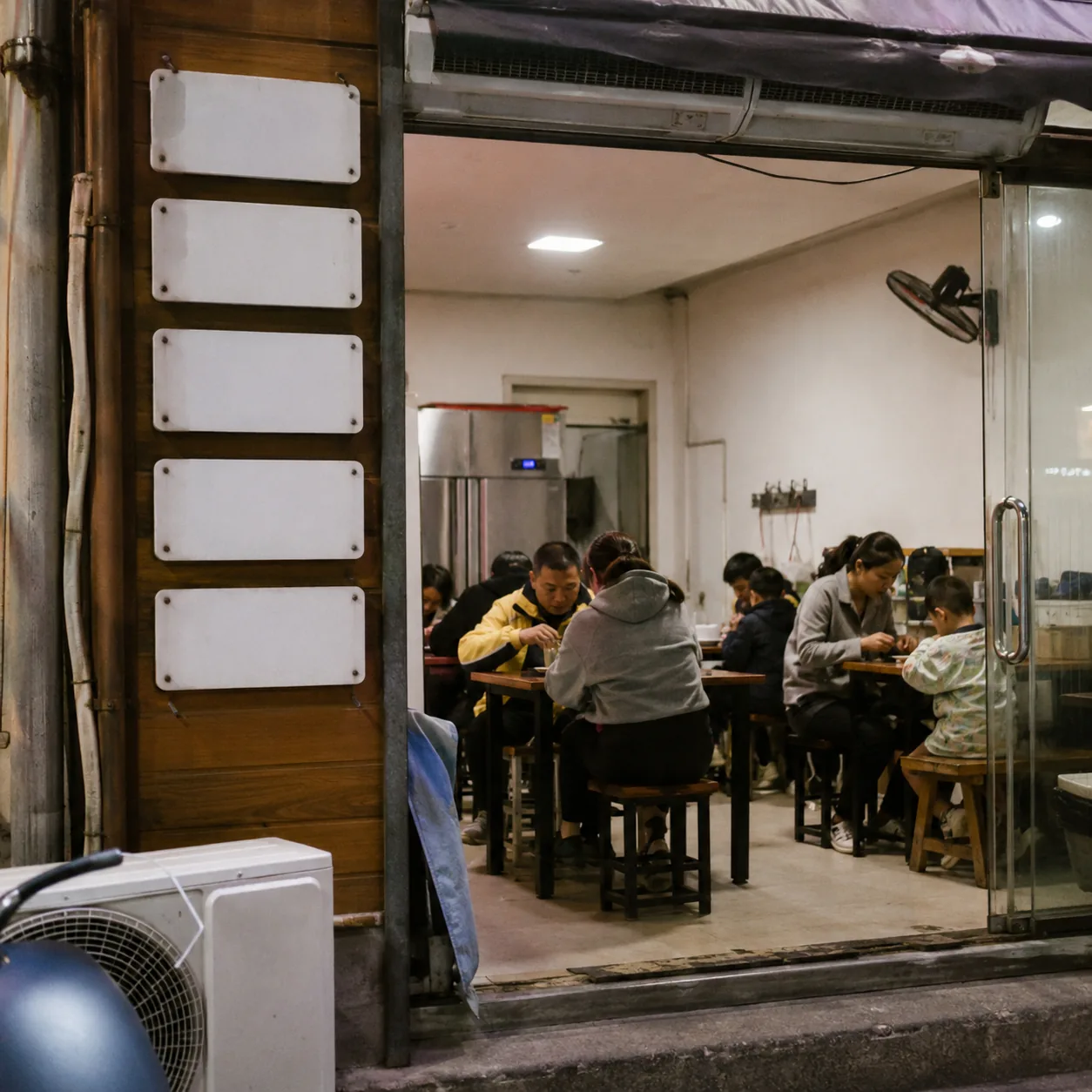
I wanted an ordinary dinner, so ordinary that it needed no origin story and no photograph to prove I had been there. A small shop by the road had several menu boards hanging at the entrance, with large clear characters: stewed noodles, fried noodles, rice plates, cold dishes, mutton soup, and prices written plainly. Inside, several tables were occupied: workers in uniforms, students with backpacks, a couple with a child. Everyone was eating their own meal and saying their own words, and no one seemed eager to turn the moment into a story. I stood at the doorway for a while and felt that this was exactly the place I needed tonight.
The woman at the counter looked up and asked what I wanted to eat. Her tone was practiced but not cold. I ordered a bowl of stewed noodles and a small plate of cucumber salad. She passed the order into the kitchen, then pointed to the empty tables and told me to sit anywhere. I chose a seat against the wall. A faded beverage poster hung nearby, along with a notice that said: pay first, waste less. The tabletop had been wiped clean, but tiny scratches from long use were still visible. Those scratches comforted me because they showed that this place was not a set arranged for visitors; it was somewhere people truly came to eat every day.
While waiting for the noodles, I heard the spatula striking the wok in the kitchen, sharp and brief. People came in from time to time; some took food away, while others sat down and called out, “the usual.” That phrase carried a quiet strength. It meant a person had a fixed taste in the city, a fixed route, and even an identity remembered by the shop. I was only passing through and had no “usual,” but sitting among them made me feel as if I had borrowed a little of the locals’ stability for a short while.
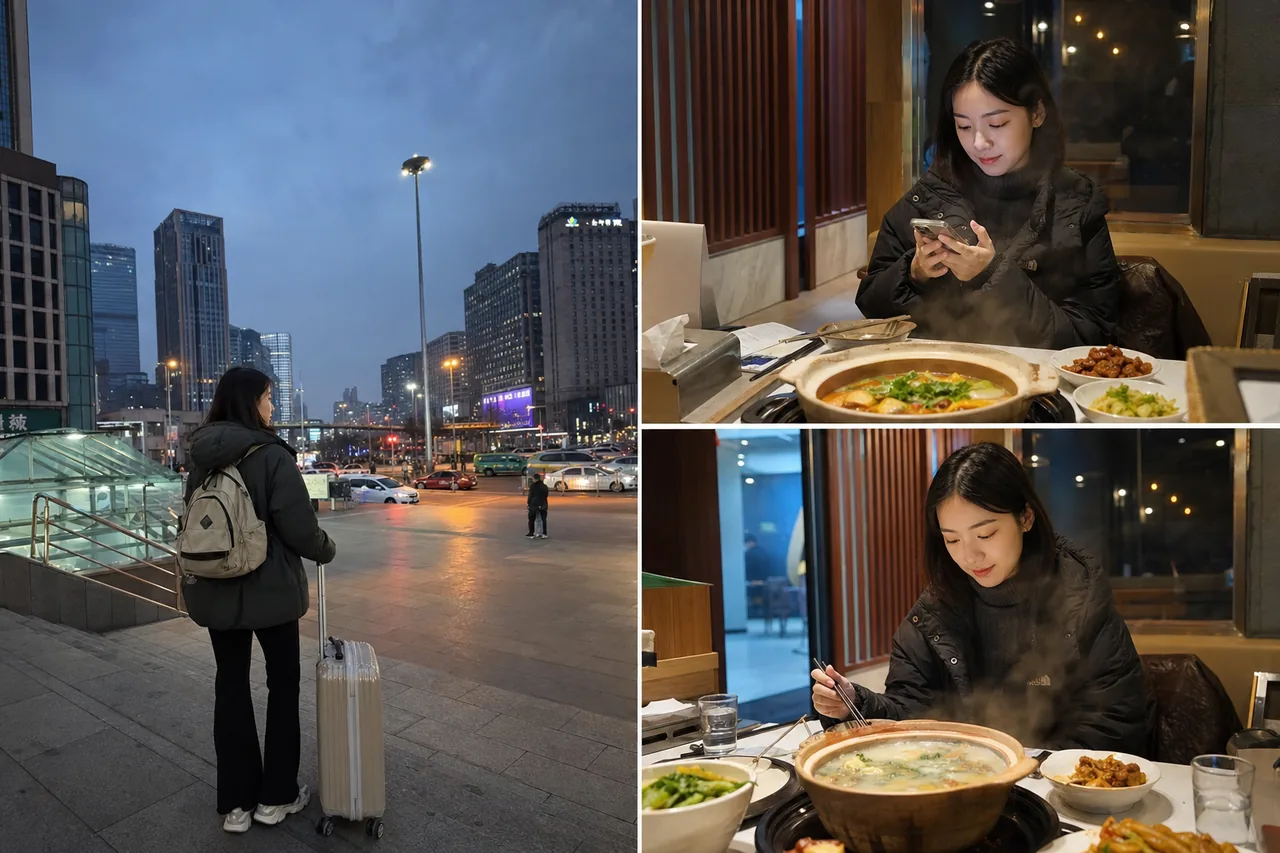
When the stewed noodles arrived, the bowl was large, and the steam turned my glasses white. A few slices of mutton and greens floated on the soup, while the broad noodles curled through it as if lifted from a long road. The first sip tasted of salt, meat, and wheat. It was not stunning, but it was deeply solid. The cucumber salad was roughly cut, with a clear garlic smell, and its sourness gently pulled my mouth back after the hot soup. I ate while watching the window. Under the streetlight, electric scooters slipped past the door, a delivery rider stopped to check his phone, and a child smiled through the glass at someone inside.
This dinner reminded me of many similar evenings in many cities. During travel, people are often pulled along by sights, guides, tickets, and routes, as if only by completing certain items can one truly arrive. But dinner is different. It drags a person out of planning and returns them to the body. Hunger matters, soup must be drunk while hot, noodles should not soak too long, and in the instant chopsticks lift a bite, all grand narratives step back. Zhengzhou, in that moment, was no longer a transport hub on a map, nor a city reduced to a few impressions. It was simply the hot bowl before me and the street outside the window.
The workers at the next table talked about a construction site. Their topic moved from rising material prices to a child’s exam, then to the possibility of rain tomorrow. No one spoke in a complete or polished way; one sentence was often interrupted by another, but they understood one another. The television in the shop was on at a low volume, with news and advertisements alternating like an unimportant river in the background. After a busy round, the woman at the counter sat down to drink water. Seeing that the soup in my bowl had gone down, she asked whether it was salty enough. I said it was just right. She nodded and went to pack food for someone else.
Halfway through the meal, I suddenly felt that the hardest thing to write about in travel is precisely this kind of ordinariness. Famous sites have history, old streets have anecdotes, museums have labels, landscapes have adjectives, but a normal dinner only has steam, prices, chopsticks, tables, chairs, customers, and light. It does not rush to display meaning, nor does it demand admiration. Yet after leaving a city, the views photographed again and again often fade first, while what remains may be the taste of an unnamed little restaurant, or the sound of one’s shoes stepping on sidewalk bricks on the way back after dinner.
I finished the noodles but did not drink all the soup because the bowl was truly large. When I went to pay, the woman reminded me that I had already paid earlier, and only then did I remember scanning the code when I entered. She smiled and said, “You’re from out of town, right? Walk slowly.” I asked whether there was a place nearby to buy fruit. She pointed toward the intersection and said that after one traffic light, on the right, there was a supermarket with people selling oranges at the entrance. The directions were ordinary, yet warmer than any navigation app. They came not from a map algorithm, but from a person’s familiarity with her own neighborhood.
When I stepped out of the shop, night had fully settled. The air carried a mixture of noodle soup, grilled skewers, car exhaust, and fruit stalls. Zhengzhou’s roads were wide and traffic kept moving, but in the small area in front of the restaurant, time seemed slowed by food. I did not return immediately. Instead, I followed the direction the woman had given me and walked to the intersection. There were indeed oranges at the supermarket entrance. The vendor had piled them into a small hill, and the light made their peels shine. I bought a few, put them in a plastic bag, and carried them in my hand, feeling the kind of satisfaction that only appears after dinner.
On the way back, I passed several shops still lit. Someone was having their hair dried in a salon, someone studied numbers at the entrance of a lottery shop, young people leaned against electric scooters and chatted, and an old person led a dog slowly across the road. I suddenly understood that an ordinary dinner is not empty of content; its content is simply so close to daily life that it is easy to overlook. It does not have the height of a monument, but it has the thickness of living. It does not tell you how the city should be understood; it only makes you, after being fed, willing to look once more at the people and lights along the street.
Back in the room, I placed the oranges on the desk, washed my hands, and opened the window for air. There were still sounds of cars downstairs, and a horn occasionally came from far away, but the curtains and walls softened everything. My phone held many photos from the day. I flipped through a few, then put it down. What truly made me remember this Zhengzhou evening was that bowl of noodles, the woman asking whether it was salty enough, the phrase “the usual” called out by others, and the weight of the bag of oranges after dinner. These details had no grand opening, yet they gently placed a city inside my body.
Later, I thought that if someone asked me what special dinner Zhengzhou offered, I might not be able to give a famous name. I would only say that at an ordinary intersection, there was an ordinary small restaurant where the stewed noodles were hot, the cucumber was crisp, the light was steady, and people ate with calm certainty. For travel, that is already enough. Not every stop needs surprise. Sometimes the best hospitality a city can offer is to let a stranger sit down at night, finish a meal like a local, and then walk slowly back.