В прошлый июль я наладил своё летнее путешествие только после крюка из Гуйяна в Куньмин
The last time I tried a summer route in China in July, I figured out the rhythm on a platform in Guiyang. It was just after noon. The wind was weak, the ground had turned almost white under the sun, and every small vibration from my suitcase wheels traveled back into my wrist. I stood beside the waiting area watching a family of three share popsicles while a few students pinned their backpacks against their knees and scrolled on their phones. That was the moment I understood the real danger of July. It is not popularity itself. It is knowing everyone is moving and still trying to force your way through with an off-season mindset.
What I want people to take from this is not a one-line answer like “where is coolest in July,” but a method of moving. Do not chase the loudest line. Build a route that can breathe by combining the edge of the plateau, water-heavy mountain scenery, cooler evenings in the city, and an air-conditioned pause at noon. Last time I finally adjusted my route into Guiyang–Anshun–Kunming–Dali. I stopped trying to cover the maximum number of places and instead tried to make each segment connect physically to the next one. The result was far smoother than my original, greedier plan.
First Leg: Guiyang Was Not the Destination, but the Opening Move for Temperature Control
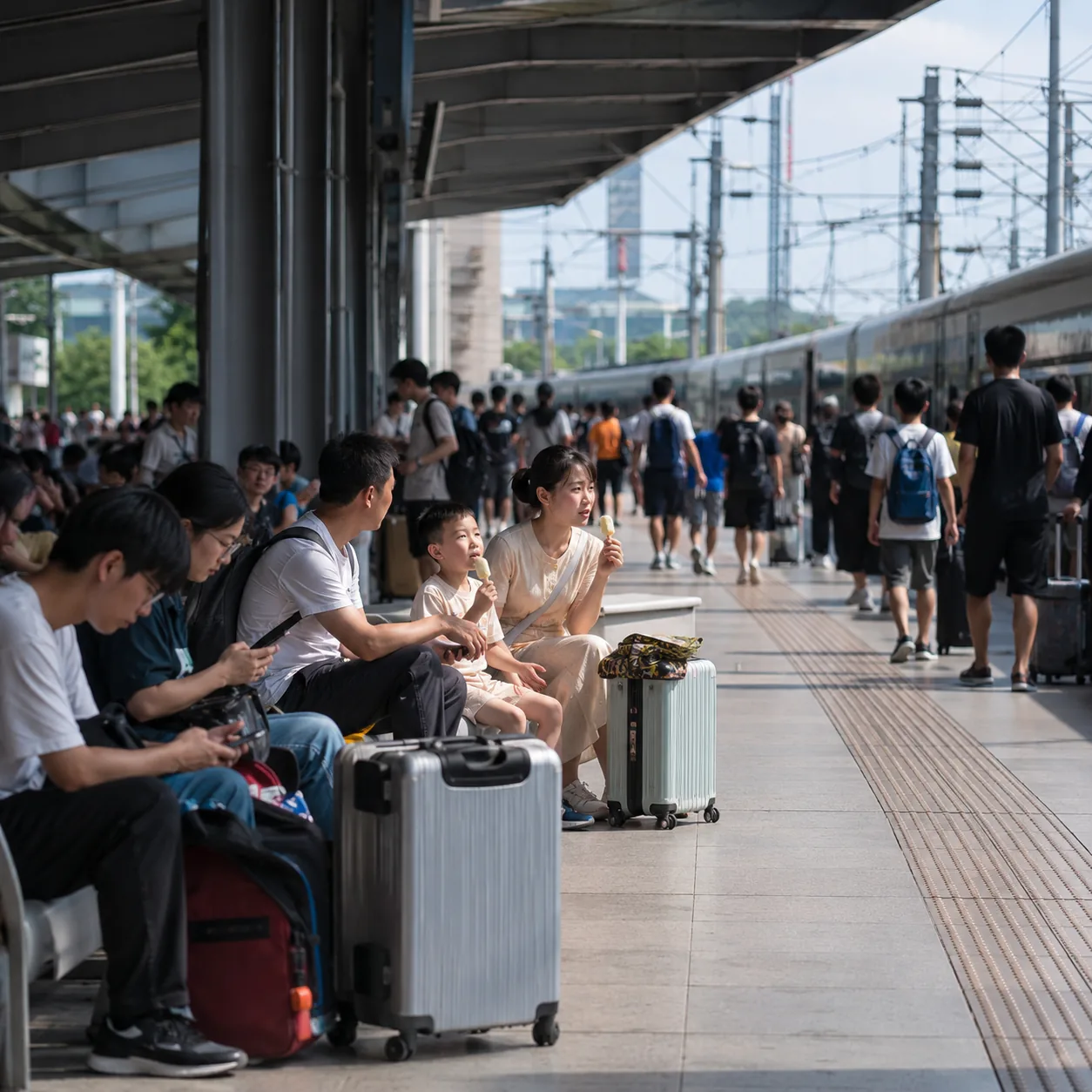
Many people treat Guiyang as nothing more than a transfer point before Huangguoshu, but for me it became the place where I deliberately slowed my breathing first. July in Guiyang is not completely cool, but the heat often does not slam into your face the way it does in flatter cities. After dusk, the air picks up a damp edge. Fried rice shops and noodle places keep their doors open, and the light lands on patches of rain-darkened pavement with a thin reflection. If you rush, you miss it. If you move a little slower, you realize the city is very good at taking the panic out of a first summer night.
That night I did only three things. I confirmed my departure time to Anshun for the next day, found a well-ventilated place for a hot bowl of rice noodles, and went back to the hotel to check the next train segment and weather again. It sounds like almost nothing, but because I did not force extra content into the evening, my whole body felt steady the next day. In a July route, the first evening is not about “getting value.” It is about flattening your nerves for the days that follow. Many people charge too hard at the start and by day three have nothing left but irritability.
Second Leg: Anshun and Huangguoshu Should Not Be Treated as a Waterfall Checklist
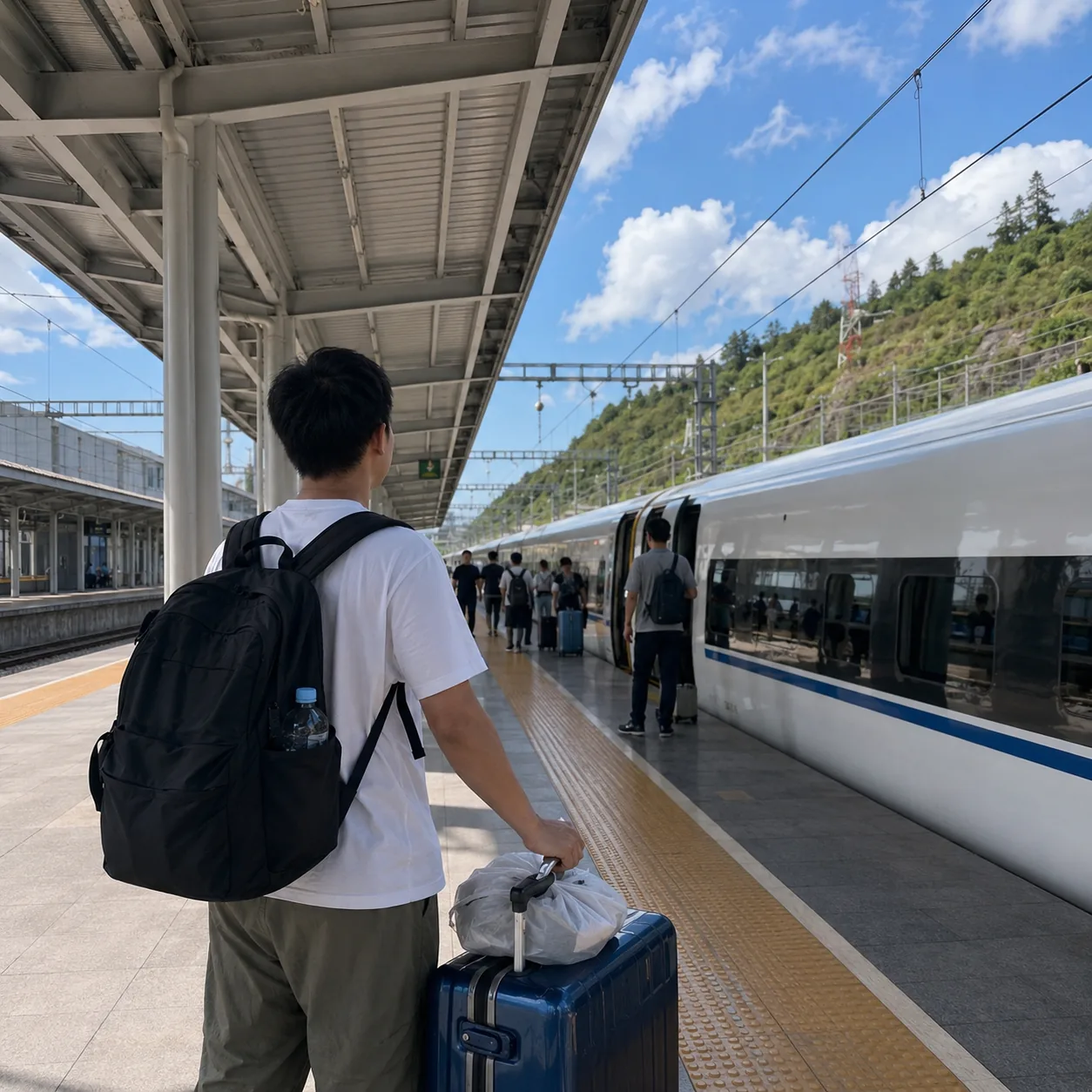
When I went to Anshun last time, what stayed with me was not simply “I reached a famous waterfall,” but how the sound of water gradually thickened along the way. July brings enough rain that the power of Huangguoshu does not depend on finally reaching one standard photo angle. It begins earlier, when the cuffs of your trousers already feel the wetness in the air and the railings feel cool under your hand. Some sections become sticky with moisture and crowd pressure. If your shoes are too slick, your whole body walks in a guarded way, and no amount of photos feels satisfying after that.
So I now give people two specific pieces of advice for big waterfalls in July. First, enter early and put the most physically demanding stretches first instead of saving them for the densest crowd period. Second, do not turn “covering the whole line” into an endurance test. The real point of July water scenery is letting your body keep receiving wetness, noise, coolness, and density without shutting down. The moment you become too rushed, a waterfall that should have raised goosebumps turns into noise in your skull.
Third Leg: Kunming Is Not for Marching Through, but for Recovering Well
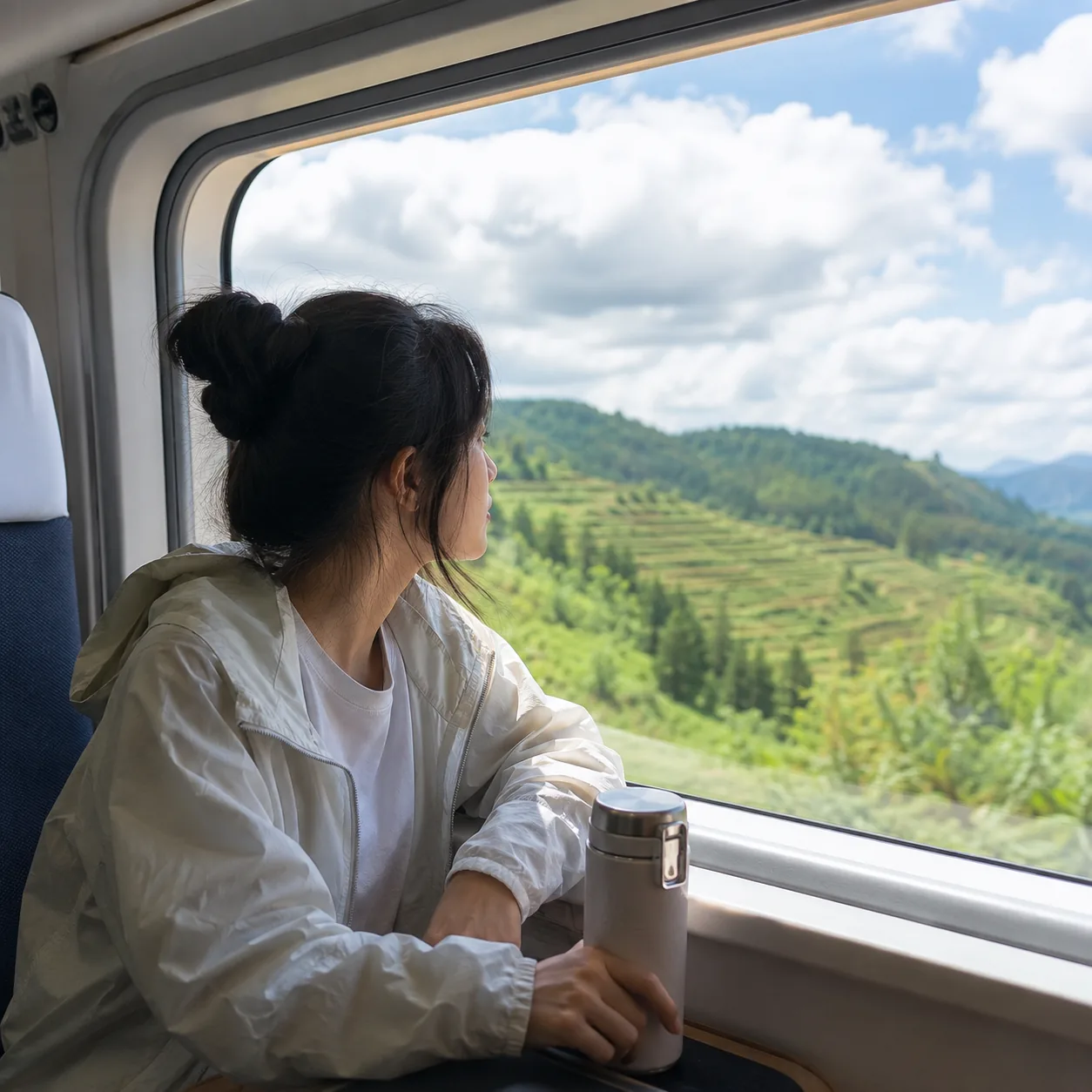
When I shifted from Anshun to Kunming, the strongest feeling was relief from fighting the air. Kunming may not dazzle every minute, but in a July itinerary it acts like a padded layer underneath you. Sit in a greener district in the afternoon and the wind brushes past the back of your shoulders slowly enough that sun-heated skin finally stops burning. In another season you might complain that a city feels too even or too mild. In the middle of a July route, that mildness is valuable. It lets you eat properly again, sleep well, and wake up with enough patience to keep going.
That night in Kunming, I stopped chasing the idea of “finishing several landmarks at once.” I reduced the route to almost nothing: one shaded stretch of road, one mushroom hotpot, and one slow walk back at night. When the soup arrived, a thin layer of steam blurred the glass beside the table. People nearby spoke softly, and the spoons hitting the side of the pot made a dull, heavy sound. I do not often place a meal in the middle of the main guide logic, but in July I will. When a person on a high-summer route eats well and walks well, the attitude of the entire next day improves.
Fourth Leg: Dali Is Where the Route Learns to Exhale
If the earlier stops have already been relatively full, then a place like Dali works better in July as a closing gesture than as a final sprint. By the time I arrived there last time, I was less interested in “completing” anything and more willing to hand time over to the wind. In the evening by Erhai, the hem of your shirt lifts slightly in the breeze, and the mountain line in the distance grows sharp and then disappears beneath cloud again. People nearby lower their voices almost automatically, as if no one wants to interrupt the softening of the route.
When people string together several places in July, the biggest mistake at the end is still trying to prove they are not tired. The smart ending is to leave yourself a place that pulls the body back inward. That is what a place like Dali does so well. It does not force performance from you. You can ride a short distance, sit for a while, and stand again only to watch how the light falls. In a Chinese summer, any place that persuades you not to rush is already valuable. It replaces the feeling of “I finally finished” with something much better: I would come back and do this again.
Who This July Route Fits—and Who It Does Not
The Guiyang–Anshun–Kunming–Dali line fits people who know they want to travel during the school-holiday season but do not want every day to become a punishment in heat. It is not the “coldest route in China,” and it is not a bundle of every famous sight either. It is closer to a compromise that respects the body: the force of water, the rise and fall of mountains, the looseness of urban nights, and pauses in the middle where recovery is possible. If what you want is five a.m. starts and ten landmarks a day, it will find you too impatient. But if you are willing to let the route breathe, it will show you the softer side of a Chinese summer.
When I finally got this route right last time, I realized that what saved me was not one miraculous stop. It was the moment I stopped fighting July itself. I stopped trying to prove efficiency during the hottest part of the day, and I stopped treating famous places like fruit that had to be squeezed dry in one attempt. Once travel no longer requires performance, many sounds return: platform announcements, mountain water, hotpot bubbling, bicycle bells at night. When those sounds come back, the route comes alive again, and the traveler is no longer reduced to simple fatigue.
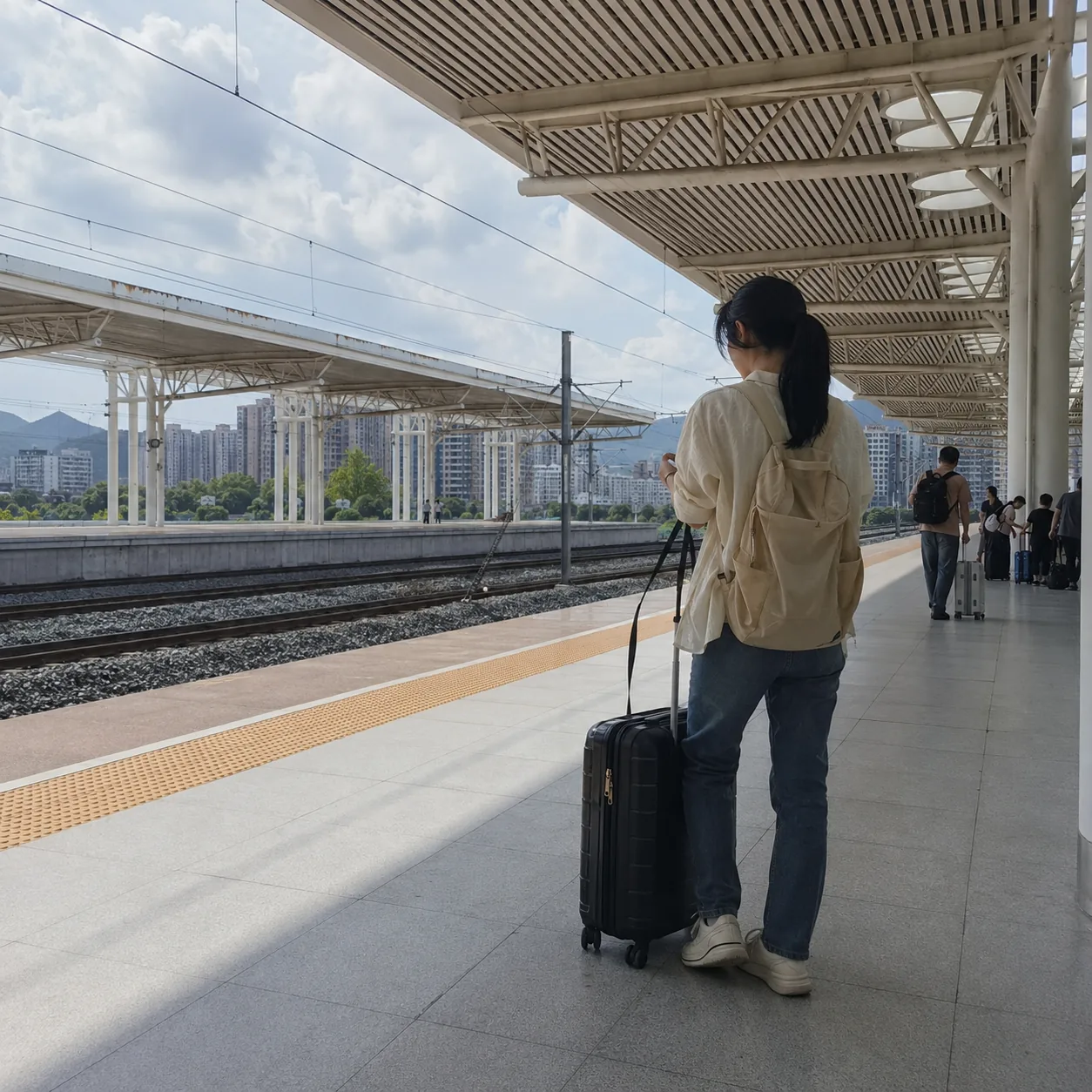
If I had to compress my shortest lesson from a July multi-stop route in China, it would be this: do not look for the most intense line. Look for the line that still makes you willing to go out on day four. Guiyang settles the first breath, Anshun gives you the full weight of summer water scenery, Kunming catches the middle of the route, and Dali lowers the final stretch slowly back down. When you finish in that order, what stays with you is not just where you went. It is the feeling that you finally learned how summer in China should be traveled.