Опыт заказа завтрака на рынке и уличных закусок
The first time I paid close attention to breakfast beside a Chinese wet market, I was not hunting for a famous shop. I wanted to see how local mornings worked. Stalls crowded the entrance: steam rose from buns, soy milk was sealed while payments were collected, and jianbing batter was already spreading on hot pans. In that setting, ordering is not just saying, “I want this.” It means reading the line, hearing the questions, confirming the price, choosing flavors, finding tableware, and not blocking the next customer.
My first lesson is to stand aside and observe. Many stalls look unorganized, but there may be two lines: one for ordering and paying, another for waiting and pickup. Do not move straight to the steam baskets, and do not stand in front of the payment code while studying the menu. I watch who receives food, who pays, and who already has a receipt or number. Half a minute of observation can prevent an awkward cut-in.
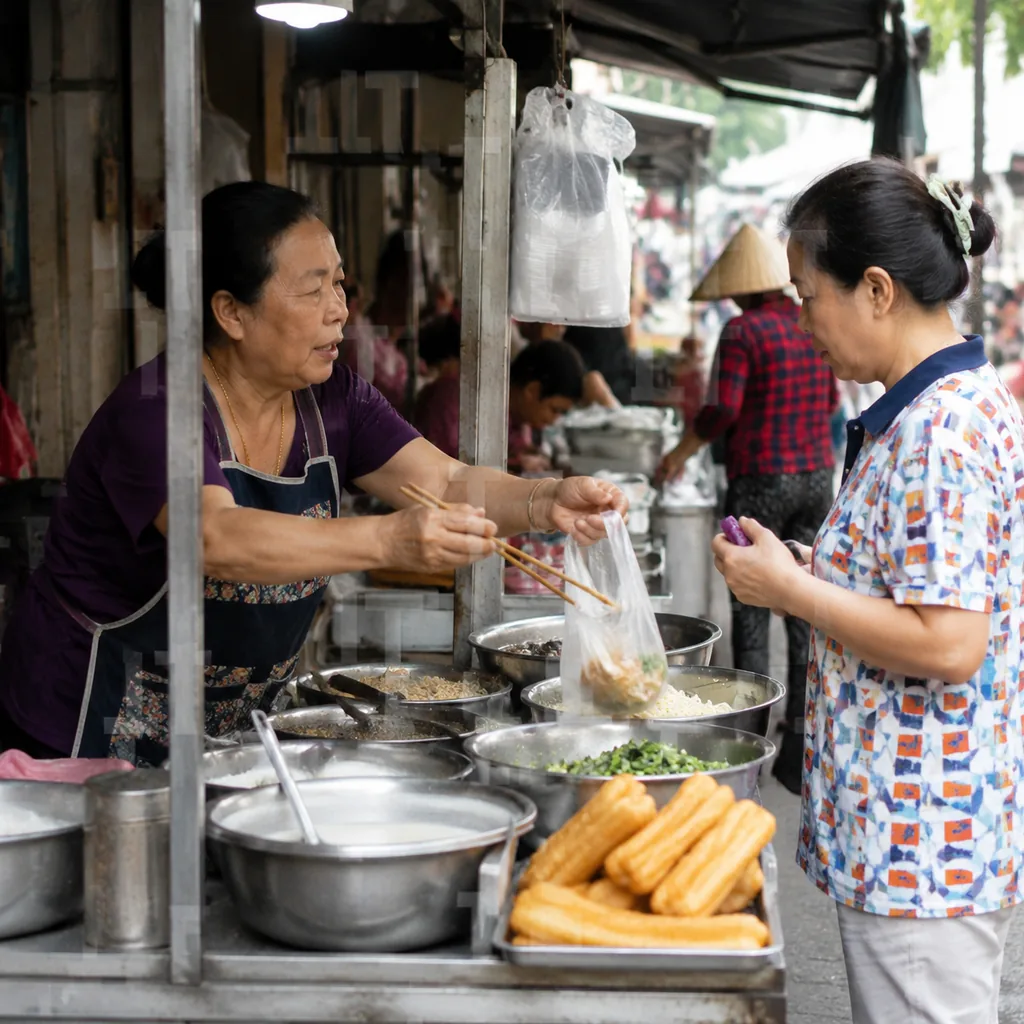
For steamed foods such as buns, shumai, and mantou, shorter sentences work better. During the rush, vendors do not have time for long questions. I usually say, “Two pork buns, one soy milk, takeaway.” If I cannot read the filling, I point to the sign and ask what it is. After hearing vegetable-pork, red bean, or mushroom greens, I give the quantity. To confirm the price, I ask, “How much altogether?” Paying after hearing the total makes the exchange clearer.
Ordering jianbing feels like a fast checklist. The vendor may ask whether you want crispy cracker, sausage, chili, scallions, and cilantro. At first I answered every question late. Later I prepared the whole response: “Crispy cracker yes, no sausage, lightly spicy, scallions yes, no cilantro.” If you cannot say a full sentence, a few words still help: not spicy, less spicy, lightly spicy, no cilantro, add egg, takeaway.
For soup breakfasts such as wontons, rice noodles, or small noodles, read the menu structure first. Usually you choose the dish, then the size, then spice level and extras. A clear order is: “Beef rice noodles, small bowl, less spicy, add a fried egg.” Eggs, meat, or tofu skin often cost extra, so I ask, “How much with the egg?” That confirms both the price and the order.
Do not be heroic about taste. In some places, “lightly spicy” is already strong for outsiders, and normal sweetness can be quite sweet. At a new stall, I order conservatively: less chili, unsweetened, less salt, or less soup. Do not confuse “no chili” with “less chili”; the first means none, the second means a little. Vendors hear taste requests all day. Saying it clearly is better than regretting the meal later.
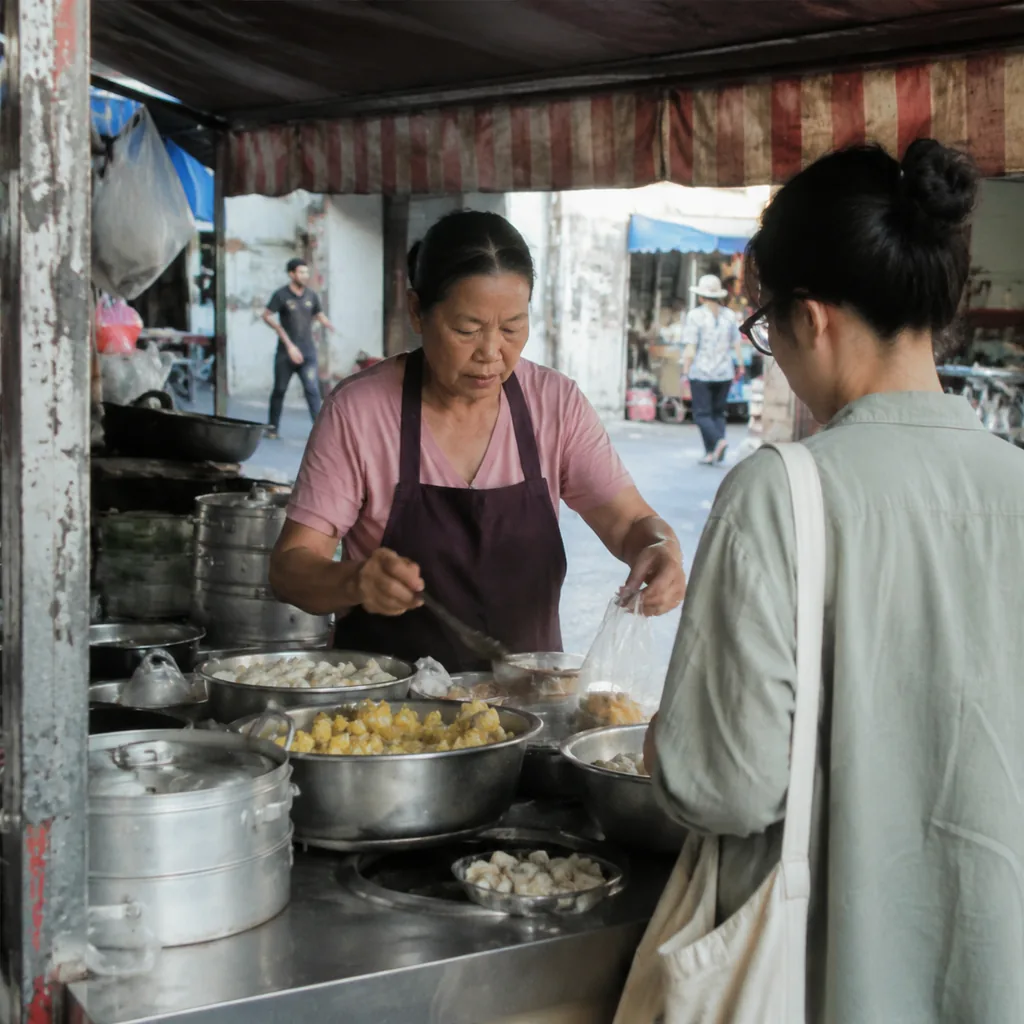
Weighed snacks require price questions before purchase. Roasted sweet potatoes, fried chestnuts, braised snacks, and skewers may be priced by weight, stick, or portion. I ask, “How much per jin?” or “About how much is this piece?” If I only want to taste it, I say “ten yuan’s worth” or “enough for one person.” “Just a little” is too vague; the vendor’s little may be far larger than your appetite.
At fried skewer stalls, first check whether customers are supposed to use the tongs. Some stalls let you choose; others have the vendor pick the food. Do not touch ingredients with your hands. After handing over the skewers, the vendor may ask about sauce and chili. I often say, “A little sweet sauce, less chili, cumin yes.” If unsure, point to another order and ask for the same, but less spicy.
Tableware has its own rules. Small shops may not place chopsticks or tissues on every table. Chopsticks may be in a sterilizing cabinet, spoons near the pickup area, and tissues sold separately. After receiving noodles, I look for chopsticks, spoons, vinegar, and chili oil. Once you open disposable chopsticks, use them; do not open one pair and take another. Do not return a used spoon to a public container. Many shops expect customers to return bowls after eating.
Courtesy in line is not only saying thank you; it is keeping the flow moving. Stand sideways with a large bag, step aside to photograph the menu, and move away after scanning before checking payment success. If you do not understand a question, do not stay silent too long. Say, “Please say it again,” or repeat the keyword: “Do you mean add meat?” Short sentences work best in the morning rush because everyone needs a clear answer.
Once I bought flatbread and the vendor asked whether I wanted meat in the savory one. I only caught the word “meat,” thought the meat version was sold out, and shook my head. I received a vegetarian savory bread. It tasted fine, but it was not what I intended. Since then, when I miss a question, I repeat it: “Add meat?” “Is this sweet?” “Altogether eighteen?” Repeating is not bothering people; it stops mistakes before cooking and payment.
If you are ordering with companions, agree on tastes while waiting. Do not reach the front and then turn around to ask everyone what they want. Check who avoids chili, who wants hot soy milk, and who wants an egg, then say everything at once: “Two bowls of noodles, one not spicy and one lightly spicy; three soy milks, two unsweetened and one sweet.” It is easier for the vendor and kinder to the line.
Whether breakfast beside a wet market tastes amazing depends partly on luck, but ordering it smoothly depends more on observation and confirmation. My checklist is simple: read the line, decide dine-in or takeaway, state the flavor, ask prices before weighed purchases, confirm the total with extras, find tableware yourself, step aside after payment, and repeat keywords when confused. These habits may not guarantee the most spectacular meal, but they often bring a clear, suitable, comfortable morning.