Когда я впервые привёз родителей в Китай, я сначала позаботился о том, чтобы день прошёл гладко, а не о самых популярных достопримечательностях
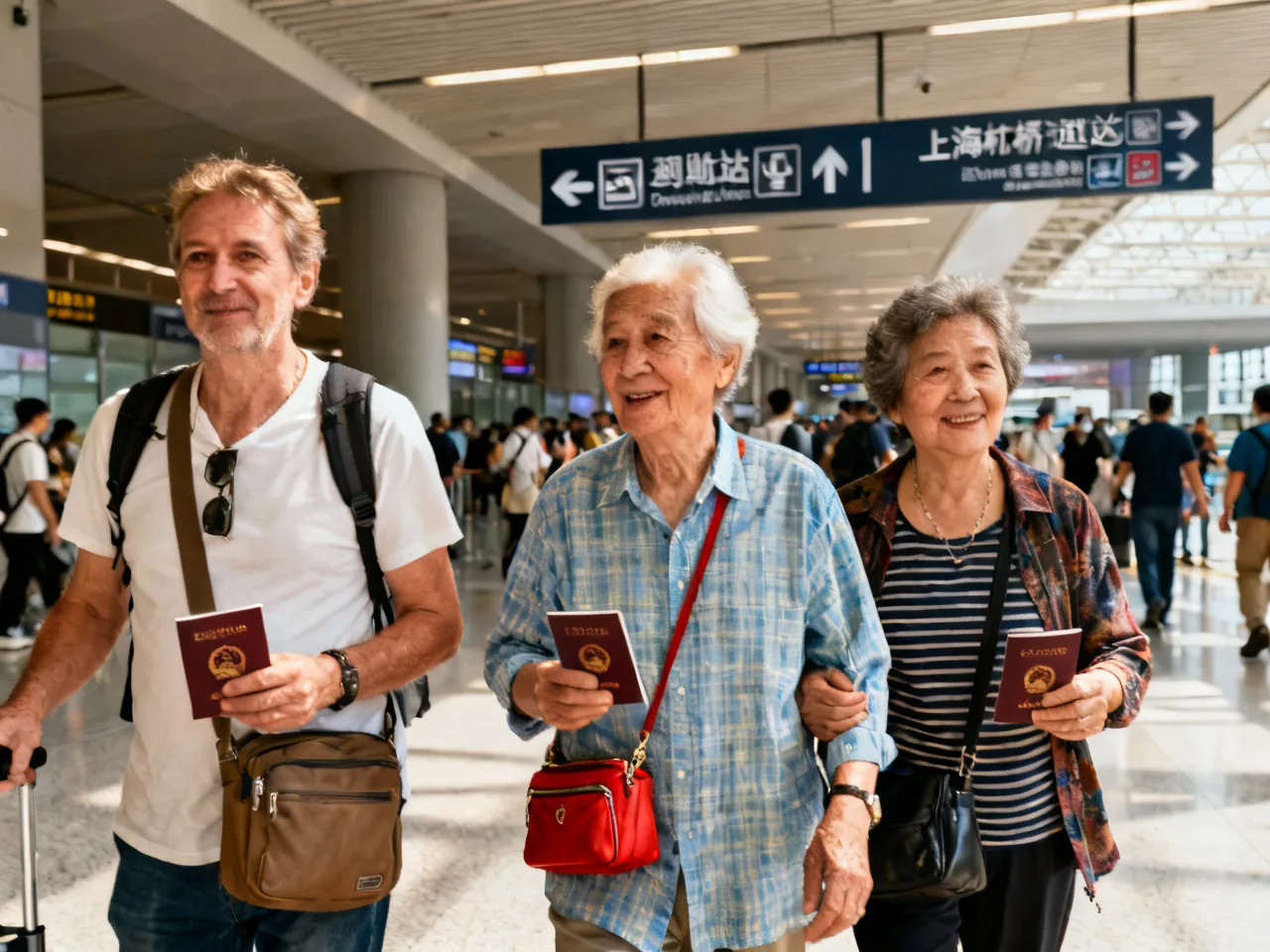
Outside Shanghai Hongqiao Station that day, the wind was mild, but the sky held that gray-white tone that comes after recent rain. It was 2:10 p.m. My mother gripped her passport in one hand and carried a small shoulder bag filled with medicine boxes and charging cables. My father stood beneath the taxi sign, squinting at the rows of vehicles and the scrolling Chinese LED boards. The moment we stepped out of the arrivals level, neither of them said they were tired, but I could see it clearly: what they needed most was not “the most famous place in Shanghai.” They needed certainty—where the next stop was, how soon they could sit down, where the restroom was, where to buy water, what would happen if the phone connection failed, and whether dinner would feel familiar enough. In that moment, I made a decision. We would not rush toward the biggest sights first. I would make the day run smoothly before anything else.
For Older First-Time Visitors, the Hard Part Is Often Not Strangeness but Continuous Uncertainty
Young people often treat uncertainty as part of the thrill when entering a new country. For older parents, though, uncertainty repeated in quick succession turns into fatigue very quickly. Hongqiao Station showed me exactly that. The station was modern and the signage was clear, but the information load was enormous for them: different exits, ride-hailing pickup points, taxi queues, bilingual signs, rolling luggage sounds, announcements, automatic doors, escalators. None of these things was difficult alone, but when all of them arrived within ten minutes, the rhythm disappeared. So I gave myself a first rule: in the first two hours after arrival, I would not optimize for maximum efficiency. I would optimize for minimum decisions.
How did I do it? I did not take them directly to the busiest, most transfer-heavy destination. Instead, I took them first to a hotel with simple transport access, a smooth check-in process, and a convenience store and café nearby. The route was not necessarily the cheapest, but it was the steadiest: follow the clear taxi signs, queue, get in, show the driver the Chinese hotel address, and arrive at the door twenty-something minutes later. My father’s first sentence in the taxi was, “So this is all it is.” My mother put her passport back into her bag, and her shoulders visibly loosened. I knew then that step one had worked—not because they had seen anything famous, but because the process had caught them.
The Hotel Is Not Just a Facility, It Is a Recovery Station
When planning trips, many people treat hotels simply as places to sleep. But when I brought my parents to China for the first time, I found the hotel functioned more like a recovery station. At three in the afternoon, we arrived at a hotel near Jing’an. The receptionist spoke quickly but steadily. I organized the reservation, passports, and check-in information myself so my parents would not have to face too many simultaneous formalities. When the room cards were handed over, my mother’s first question was where the restroom was, and my father’s first question was whether the electric kettle worked for boiling water. Those two questions confirmed something important to me: after landing, older visitors need their bodily order restored before their sightseeing mood can begin.
So I canceled my original idea of “drop bags and rush to the Bund” and replaced it with an extremely plain arrival sequence: go to the room, boil water, wash faces, sit for ten minutes, connect to hotel Wi‑Fi, learn how the air conditioner and lights work, place the next day’s medicine somewhere easy to reach, then go downstairs together to buy water and yogurt. It sounded utterly unromantic, but this step nearly determined whether they would later describe China as “too complicated” or “actually manageable if taken slowly.” Much travel anxiety does not come from difficulty itself. It comes from being forced to process fresh information before the body has settled down.
The First “Shanghai Route” I Gave Them Was Really a Route of Certainty
Only around 4:30 p.m. did we really head out. But what I arranged for them was not a list of attractions. It was a certainty route: five minutes on foot from the hotel to a convenience store, three more minutes to a corner café, and beside the café a small plaza with seats and a shaded sidewalk. The entire route took less than twenty minutes. It required almost no crossing through complicated traffic and almost no map-checking. My mother could sit down whenever she wanted. My father could observe how people queued, crossed streets, and entered shops. I could accompany them while quietly judging when they were beginning to relax for real.
We went first to the convenience store. My father paused for a few seconds at the entrance, looking at the self-service hot shelf and the refrigerated section, and asked, “Is buying things here usually this quick?” I said yes. My mother picked up a bottle of room-temperature water and then hesitated in front of the yogurt flavors. At the register, the clerk moved with practiced speed, and I paid with my phone while my parents watched the whole process. I did not rush into a lesson on digital payment, and I did not demand that they learn scanning immediately. I just let them see that even ordinary shopping in an unfamiliar country could be this short, this clear, and this effortless. Payment methods matter, of course, and later I sent my father this practical guide to preparing payment tools in China so he could read it slowly back at the hotel.
After the store, we sat in the nearby café for twenty minutes. My father does not drink coffee, so he ordered hot tea. My mother asked for warm milk. I had an iced latte. Outside the window, people crossed with children, young adults in sportswear jogged past, and a couple with a stroller stopped to adjust a small blanket. My father watched the street for a long time and said something I kept remembering later: “This doesn’t feel like the kind of destination where you have to keep chasing sights. It feels more like a city where people actually live.” That sentence made me realize that for older first-time visitors to China, building a sense of ordinary life often matters more than building a sense of spectacle.
Dinner Often Decides Whether They Feel the Day Truly Worked
At six in the evening, I did not take them to the hottest restaurant with the longest queue. I chose a place within walking distance, with bright lighting, a clear menu, and options that could be mild while still served hot. When parents are visiting China for the first time, dinner should not be chosen only by local fame. You also need to consider ease of chewing, tolerance for oil and salt, the noise level after sitting down, and whether getting back to the hotel afterward will create another wave of effort. That night we ordered stir-fried greens, tomato beef, steamed egg, and a bowl of soup noodles. Halfway through the meal, my father truly relaxed and began asking what the neighboring table had ordered. My mother noticed that the server kept refilling hot water and whispered to me, “This is when I stop feeling afraid.”
What she meant by “afraid” was not fear of a specific person. It was fear of not keeping up—fear of not understanding, of asking the wrong thing, of taking the wrong turn, of not liking the food, of not having rested enough before the next push. Older travelers rarely say this anxiety out loud, but it often appears when they ask fewer questions and begin saying “anything is fine” too quickly. My experience is that the earlier you dismantle those small worries, the more they truly enjoy the days that follow. So after dinner, I did not schedule a night-view checkpoint. We simply walked slowly back to the hotel along a wider sidewalk with softer lights, letting them absorb the city without any task attached to it.
The Best First Day for Parents Is Measured Not by What They Saw, but by the Energy and Curiosity They Still Have Left
We were back at the hotel before 8:30 p.m. My father sat on the edge of the bed scrolling through the photos he had taken and, to my surprise, asked whether we could try the metro the next day. My mother, while reorganizing her medicine box, said that if there was a place nearby selling hot soy milk in the morning, she wanted to try it. Those two questions pleased me more than any count of how many attractions we had visited. They meant my parents were no longer passively enduring China. They were beginning to form their own curiosity about it. That is the moment when a trip truly begins.
Later I summarized that day with a simple route logic: stabilize after arrival, recover after check-in, familiarize before exploring, eat for comfort before fame, and close the evening before exhaustion. It does not look “viral” at all, yet it worked far better than my older habit of stuffing a schedule with famous stops. Especially when bringing older relatives to China for the first time, what you should give them is not proof of how full your itinerary is, but proof that life here can be taken one clear step at a time. If you are thinking about how to make that first landing smoother, I also recommend this related arrival-rhythm article and another reference on arranging everyday details smoothly. They feel very close to what I experienced with my parents.
If I had to add one even more specific suggestion, it would be this: on the first day, schedule fewer surprises and make repeatable anchors much clearer. Let your parents know that turning left from the hotel gets them water, turning right gets them breakfast; that there are people in the lobby they can ask; that the kettle in the room is easy to use; and that one nearby street stays brighter at night. Once older visitors grasp two or three repeatable coordinates, the whole city changes from “huge and unfamiliar” into “new, but manageable.” It is a subtle shift, yet it often determines whether they will want to go out again the next day.
Looking back now, I am most grateful not that I chose the perfect restaurant or hotel, but that I let go of the obsession that a first visit must include the most iconic sights immediately. Much of the stress in traveling with parents comes from the guide wanting to prove how well everything has been arranged, only to compress the rhythm too tightly. Yet what older parents usually remember first is not how many locations you squeezed in. It is whether you let them sit before they were exhausted, drink before they were thirsty, and understand the next step before hesitation had time to grow. The feeling of being well cared for often enters memory earlier than the scenery itself.
That evening, before going to bed, my mother carefully placed the next day’s jacket, tissues, and medicine box on the corner of the table, as if creating a small reassurance ritual for herself. My father slipped the hotel card into his wallet and said that if we somehow got separated, at least he would know how to come back. Watching those gestures, I suddenly felt that the most important achievement of the first day was not that the route had been completed. It was that they had started building their own order inside the trip. Once that happens, whether you go to the Bund, ride the metro, or enter a busier district later, the heart stays much steadier.
For me, this became the gentlest lesson of bringing older parents to China: let people settle first, then let the scenery arrive. Once that order is correct, much of the confusion you feared in advance never actually appears.
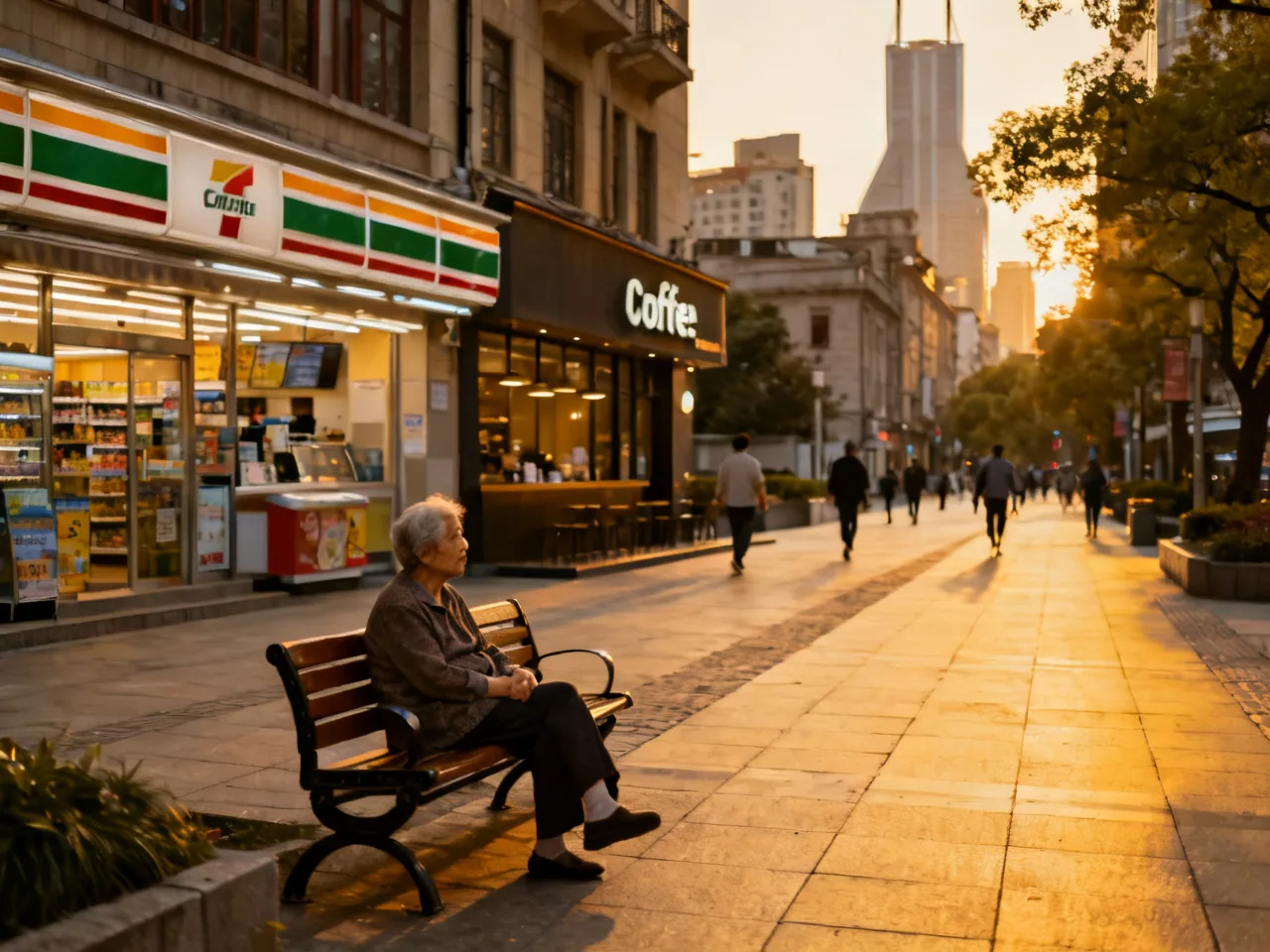
The next morning, Shanghai brightened a little. When we came downstairs, my mother no longer held her passport with that tight grip she had the previous afternoon, and my father reached the doorway before I did to figure out where breakfast might be. The sidewalk outside the hotel looked freshly washed by morning moisture, and the plane-tree leaves still held a trace of the night’s dampness. We went for hot soy milk, soup dumplings, and eggs. My father began studying the metro map, and my mother started comparing yogurt flavors. Standing across from them, I suddenly felt that giving up major sights on the first day had not cost us anything at all. What really matters is not how much your parents “saw” on their first day in China. It is whether, at the end of that first day, they still want to keep moving forward. That desire is far more like the true beginning of a journey than any checklist photo could ever be.