В дождливый день в Ханчжоу ребёнок впервые сам подошёл к незнакомому малышу поиграть вместе
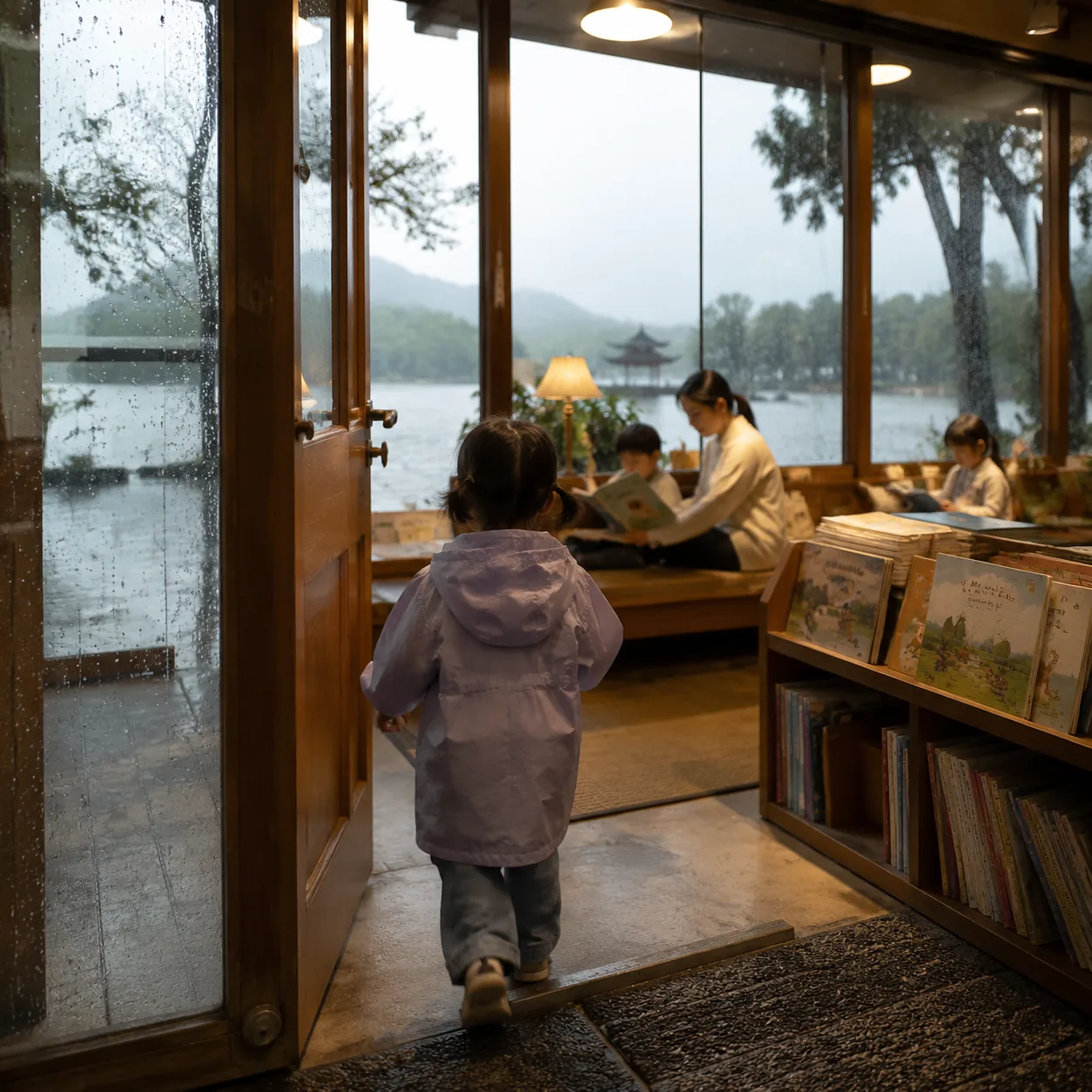
The rain in Hangzhou was light but persistent, turning the stone paths by West Lake glossy and dark. Our boat ride and long walk had to be pushed back, so we ducked into a lakeside café with a small reading corner. It was called a café, but it felt more like a quiet neighborhood space. There were rows of picture books by the window, warm light on the wooden tables, and rain trails stretching down the glass. My son entered looking disappointed and kept asking, “Does this mean we can’t really play today?”
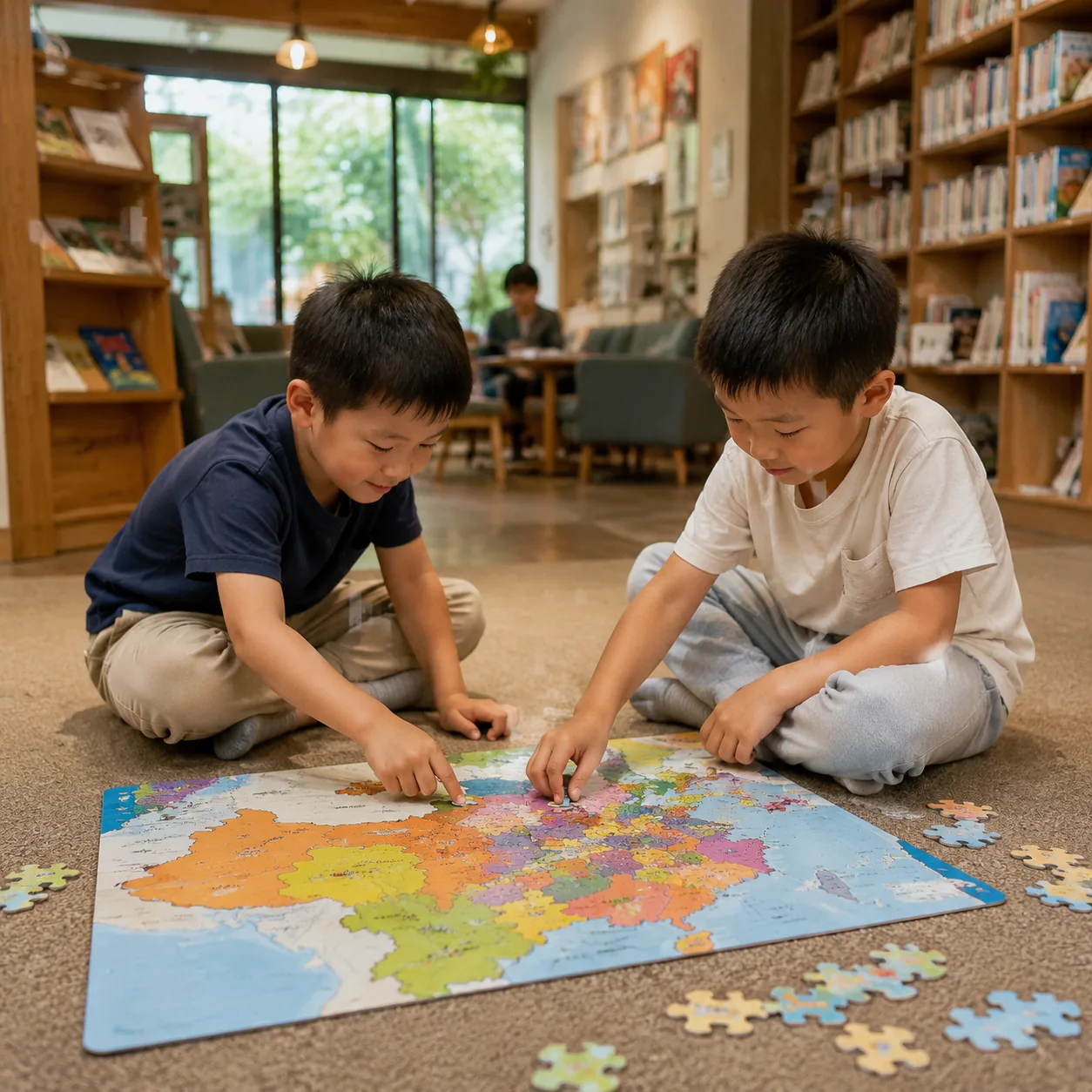
Before long, he noticed another boy of about the same age in the corner, lying on the carpet and working on a puzzle map of China. Brightly colored pieces were scattered around him, and he was quietly reading place names to himself. I expected my son to sit down with a book on his own. Instead, after standing there for a moment, he walked over and asked, “Can I play too?” The question surprised me almost more than it surprised him. In unfamiliar places, he is not usually the first child to speak.
The other boy looked up, shifted a little to make room, and said, “Sure. Can you find Zhejiang?” That sentence worked like a gentle door handle. It pulled the two children together immediately. My son crouched down and began cautiously, but soon they were fully absorbed. One searched for provinces, one compared shapes, one turned the pieces the right way, and the other checked the edges. In less than ten minutes they were already discussing where they had traveled, whether they liked mountains or the sea more, and whether high-speed trains felt fast.
I sat nearby, watching the rain outside and the two children inside. We often imagine that children gain the most only when we take them to many places. But sometimes a stretch of rain disrupts the plan and pushes something more important to the surface: whether a child is willing to move toward another person in a new environment and begin a new conversation. Many Chinese cities now have these gentle, child-friendly slow spaces—reading corners, tiny exhibition areas, community bookstores, and shared activity tables. They are not loud, but they are ideal for practicing sharing, cooperation, and speech.
Later the other boy’s mother came over and started chatting with me. She said that whenever it rains, she likes bringing her son there because children are more likely to talk to others in a place like this than if they are left staring at screens. I agreed immediately. Many parents feel a schedule is ruined when the weather changes, but this is exactly the strength of Chinese public spaces like this one. They are not backup attractions. They are real places where children can participate in life. What a child learns there is not textbook knowledge, but how to enter a relationship.
At the end, my son was the one who placed the Zhejiang piece into the map, and the other boy immediately said, “That’s Hangzhou.” My son stared at it for a few seconds, as if he was realizing for the first time that Hangzhou was not merely the name of a tourist destination. It was a place connected to people, rooms, and encounters. Before leaving, the other boy took a picture book about West Lake legends from the shelf and said, “This one is good. You can read it.” My son accepted it and said thank you with real seriousness. Even after the boy walked away, my son stood at the door watching for a moment.
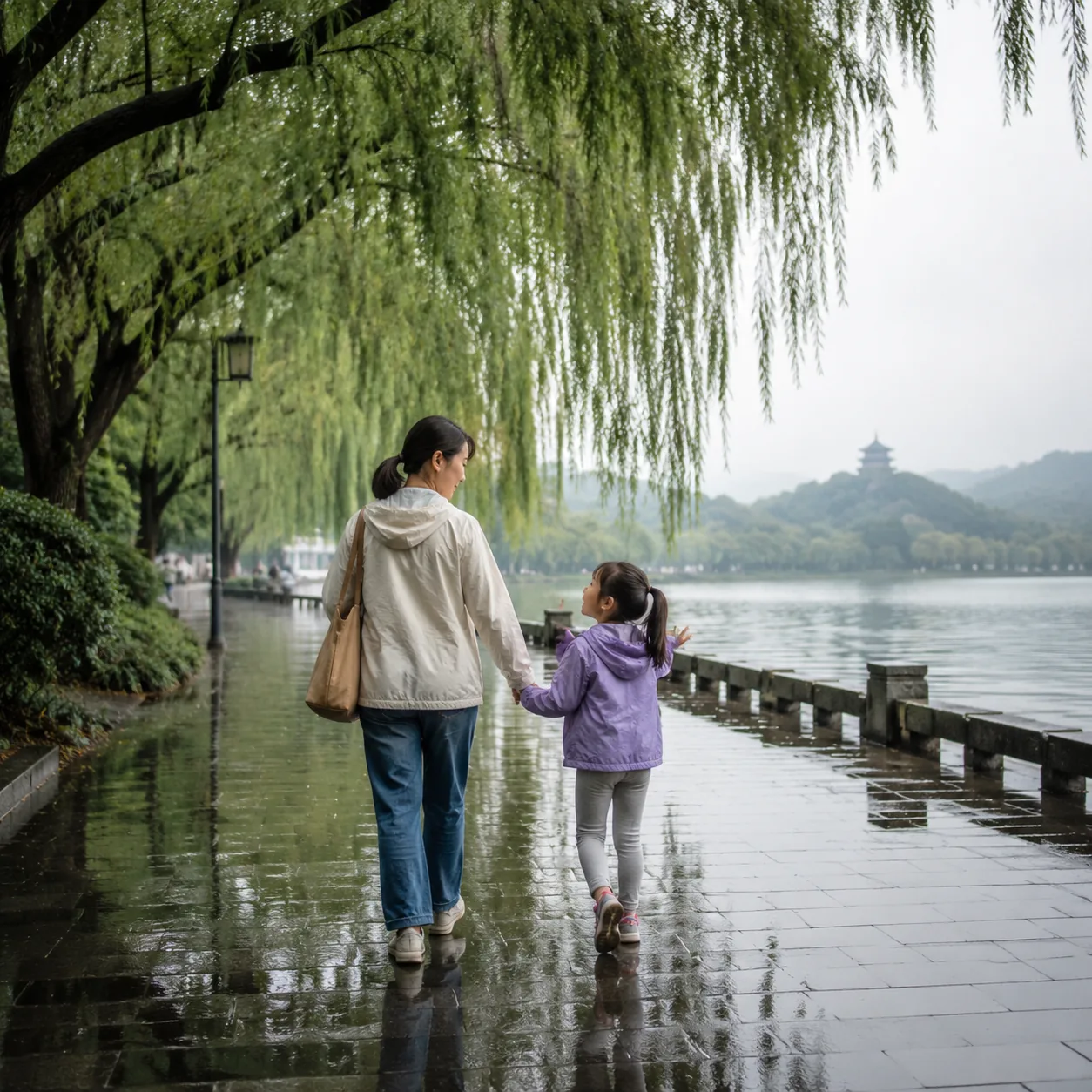
Later the rain softened and we finally stepped back outside. The willow trees along West Lake looked freshly washed, and the air smelled of damp leaves and grass. As we walked, my son kept repeating things the other child had said, and then he asked, “Mom, next time can I ask first if someone wants to play together?” That sentence softened me instantly. The most moving moments in family travel are often not the moments in front of a famous view, but the moment a child learns one action they can carry into the future.
If you travel in Hangzhou with a child, do not arrange only attractions. Leave a little blank space that can be interrupted by weather. In these unplanned stretches, children often learn something more important: how to approach another person, how to do something together, and how to become not only a visitor in a new city but a participant. China’s learning atmosphere does not always show itself in classrooms and formal programs. Very often it is hidden inside a carpet, a puzzle map, and one sentence: “Can I join too?”
Here is one practical strategy for this kind of trip: when rain interrupts your plan, do not assume the day is ruined. Find a child-friendly slow space first. If your child feels shy, teach one simple sentence in advance: “Can I join too?” Once that sentence is spoken successfully for the first time, a child’s whole feeling about unfamiliar environments often begins to change.