ハルビンの冬、最初の一口の熱いスープが凍りかけた旅の計画を救ってくれた
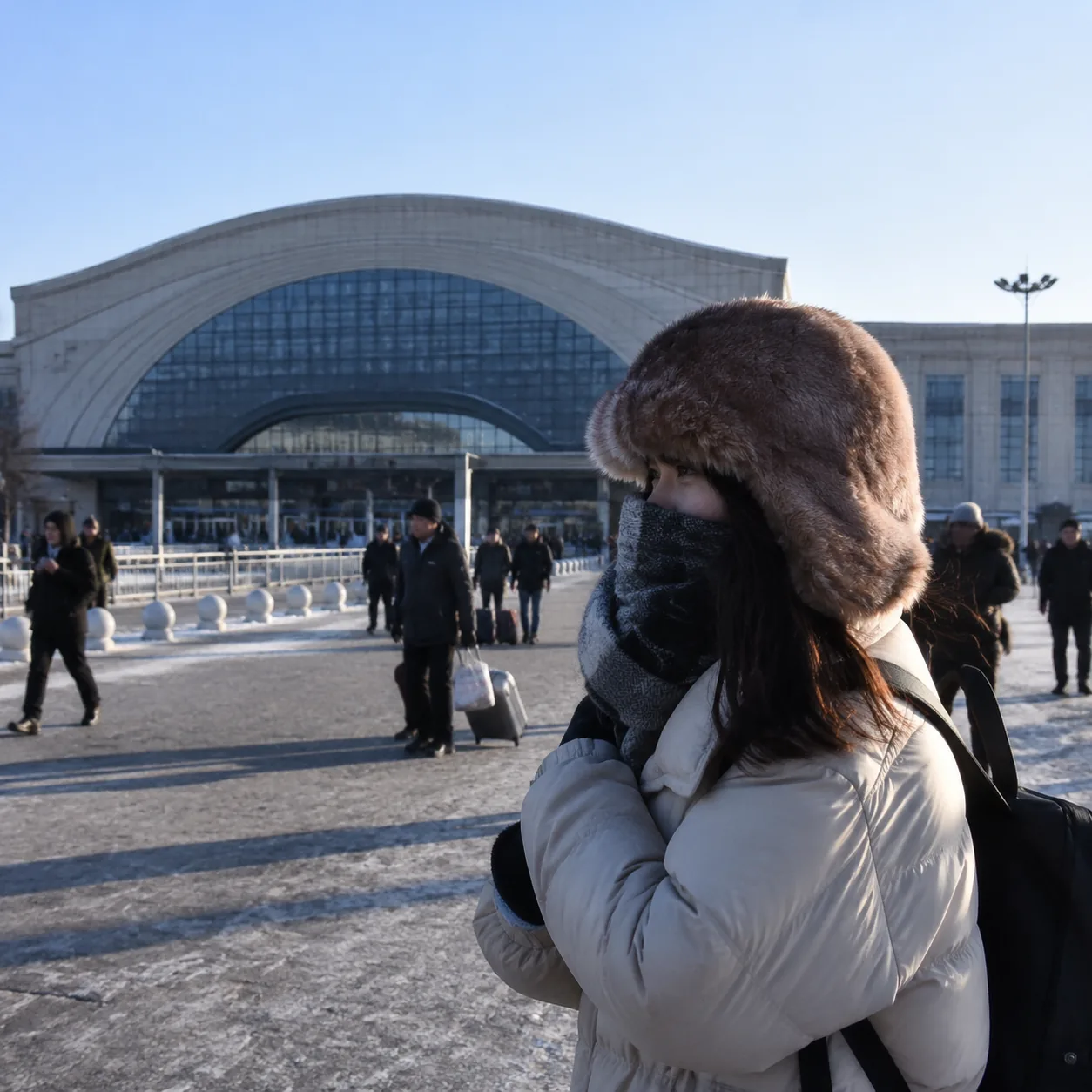
On my first day in Harbin, I arranged my itinerary with too much confidence. Central Street in the morning, the Songhua River in the afternoon, the Ice and Snow World at dusk, and a northeastern restaurant for sweet-and-sour pork at night. Before leaving, I had checked the temperature and prepared a thick down jacket, hat, gloves, and heat packs. I thought I had respected northern winter enough. But when I stepped outside from the station, the wind scraped across my face like a thin blade, and I understood that minus twenty-something degrees was not a number. It was a reality that immediately rewrote the body’s reactions.
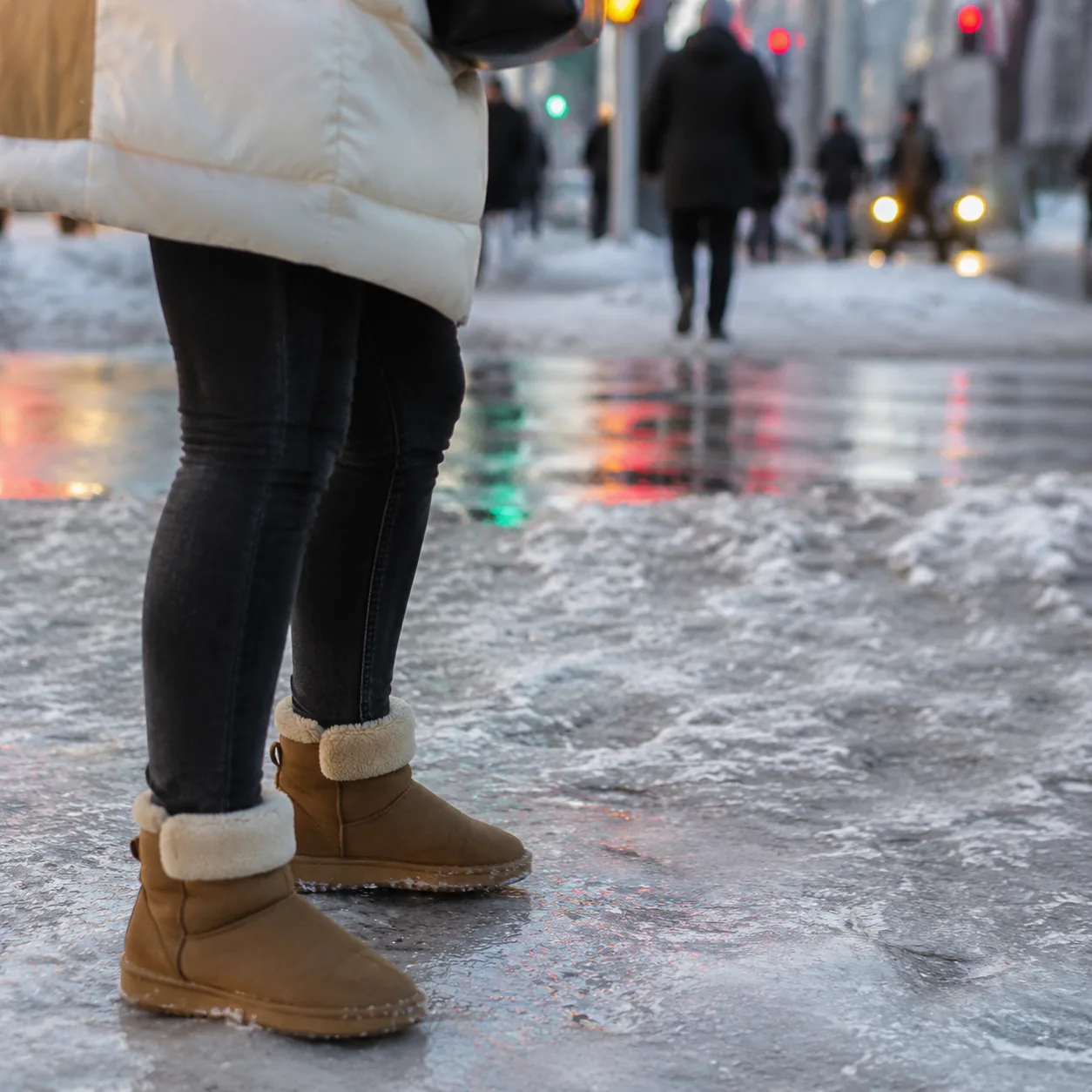
My feet were the first to lose patience. The boots looked thick, but on the icy pavement they felt like a protection that was not sincere enough. Every few minutes I wanted to duck into a shop. My phone was hard to use with gloves on, but once I removed them, my fingertips quickly went numb. Distances that looked short on the map stretched long in the wind. Standing at an intersection waiting for the light, I was still stubbornly thinking about following the plan, while my body had already voted in a more direct way: find somewhere warm first, and stop pretending.
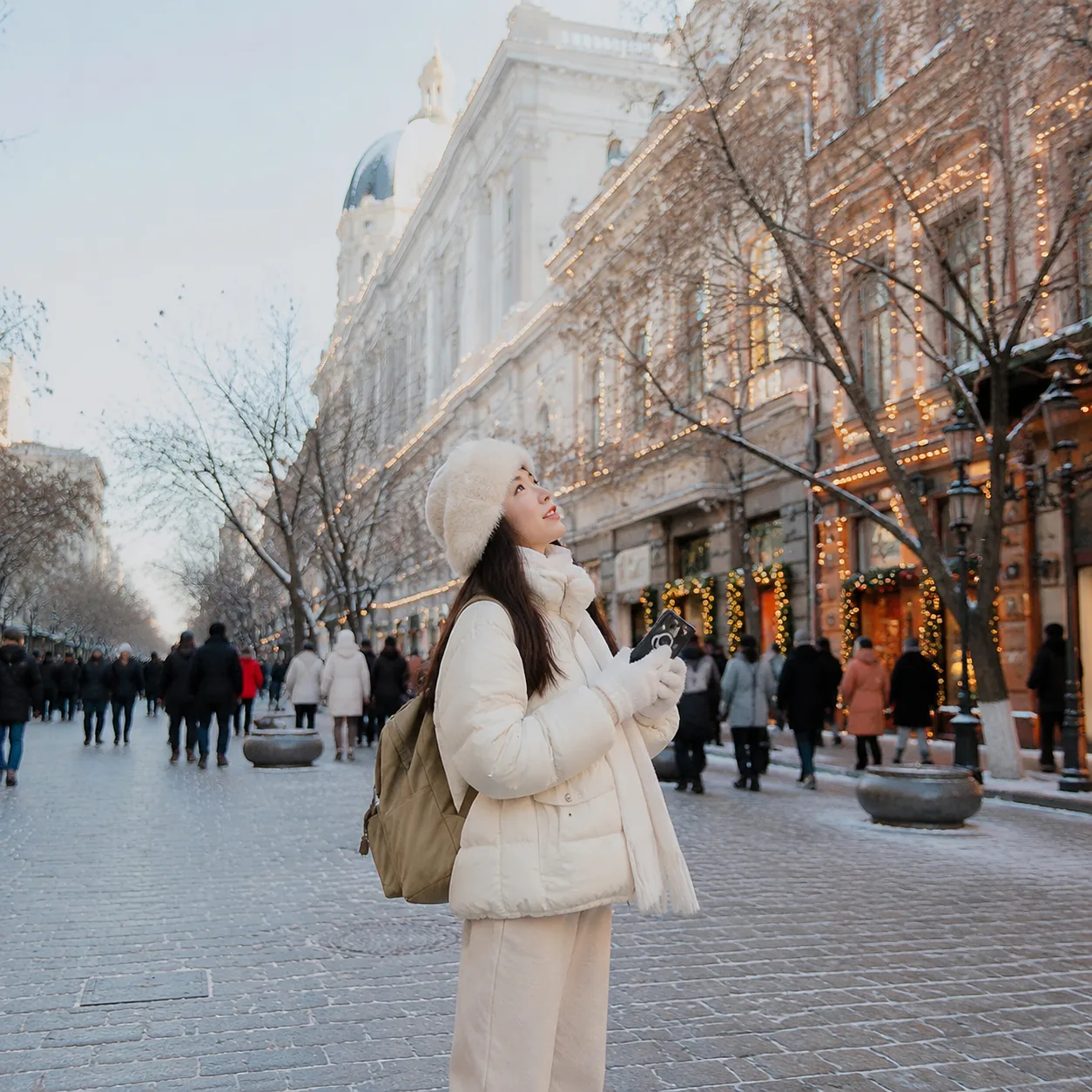
Central Street was certainly beautiful. Snow rested on eaves and window frames, people lined up outside bakeries, and the sign for Modern ice pops looked famous in the cold air. I wanted to walk and take photos like everyone else, even buy an ice pop to prove I had been there. But my face was stiff from the cold, I could hardly smile, and even pressing the camera shutter became perfunctory. The most awkward travel moment is when the scenery is clearly in front of you, but you no longer have the strength to receive it. The beautiful street was not the problem. The low temperature had disrupted the way I could take it in.
I had planned to walk all the way to the river, but halfway there a gust of wind persuaded me otherwise. It poured in from the street corner and found every gap in my scarf. Hunching my shoulders, I turned into a side road and saw a small restaurant with an ordinary storefront. The glass door was covered with white condensation, and a handwritten menu listed clay-pot dishes, wontons, sauerkraut soup, and several home-style plates. I had no energy to study ratings or compare which place was more authentic. The words “hot soup” pulled me in. The moment I pushed open the door, my glasses fogged up, as if my whole body had finally been rescued from outside.
The restaurant was small and very warm, with several thick coats hanging along the wall. The owner told me to sit anywhere, so I chose an inner table and placed my gloves near the radiator. As sensation returned to my fingers, there was a fine ache, like blood remembering its route. The menu was plain. I ordered a bowl of sauerkraut and pork soup with rice. The owner asked whether I wanted extra glass noodles, and I nodded. She passed the order into the kitchen, and the sounds of a wok spatula and voices came from behind the curtain. Suddenly I no longer felt like someone being chased by wind.
When the soup arrived, steam blocked my vision first. The fragrance of sauerkraut was direct, carrying fermented brightness and the depth of pork broth. Thin slices of pork lay on top, glass noodles were buried below, and pieces of frozen tofu had absorbed the soup. I drank the first spoonful slowly. My tongue felt heat first, then the sourness opened my frozen appetite, and finally the warmth of the broth spread little by little toward my chest. It was not an exaggerated delicacy, nor was there complex plating, but it appeared at the correct moment and felt almost like timely assistance.
After eating a few mouthfuls of rice, I realized I had been holding myself tense. Travel often carries an invisible pressure: since I came all this way, I should do more. Since I came all this way, I should see more places; since I came all this way, I should not retreat because of cold; since I came all this way, I should check off every saved item. But that bowl of soup let me set the phrase aside for a while. A person visits an unfamiliar city not only to complete a list, but also to learn how to care for the body. Once the body is ignored, every sight becomes a task, and even surprise freezes hard.
At the next table sat two local uncles with a basin of stew and a plate of cold salad. Seeing that I still had my scarf wrapped tight, they laughed and said I did not need so much armor indoors. I laughed too and slowly loosened it. They asked whether this was my first winter visit to Harbin. I said yes, and that I had clearly underestimated the wind. They did not tease me. They only said outsiders were often like this: do not pack the day too full; when it gets cold, go inside and drink something hot; after recovering, continue. It sounded like ordinary advice, but at that moment it worked better than any travel guide.
During the second half of the meal, my plan began to change shape. The original route had been like stiff paper, cracked by the cold; now it became cloth that could be spread out again. I decided not to hurry to the river. I would walk slowly nearby, spend part of the afternoon indoors, and decide at dusk whether I had enough energy for the Ice and Snow World. This adjustment was not failure. It restored my curiosity about the city. The hot soup did not save one specific attraction; it saved my ability to keep traveling.
After finishing, I did not leave immediately. I held a cup of hot water and sat for a while. Someone had drawn several lines with a finger through the condensation on the glass window, and pedestrians outside moved against a white background. Inside, someone ordered sweet-and-sour pork, and its sharp fragrance drifted from the kitchen. Someone called for another bowl of rice. The owner sorted change by denomination at the cashier counter. In that moment, Harbin was no longer only ice lanterns, European-style buildings, and snow on the Songhua River. It was also the radiator, soup bowl, laughter, and patience of this small restaurant that let a stranger sit down and recover.
In the afternoon I followed the new rhythm. I first spent an hour in a nearby bookstore, letting my hands and feet warm completely, then slowly moved toward the river. Because I was no longer rushing, I noticed more things: white steam rising when a bus door opened, a roadside stall selling frozen pears, frost quickly gathering on pedestrians’ eyelashes, and shop clerks repeatedly wiping water marks from door handles. The cold still existed, but it no longer felt like an enemy. It felt like a part of the city that had to be understood. As long as I found intervals for dealing with it, winter became less frightening.
By the time I reached the Songhua River, the sky had begun to turn blue. Thick ice covered the river, and people in the distance walked across it as if moving on a huge sheet of white paper. The wind was still hard. I did not stay long, taking only a few photos before tucking my phone back into an inner pocket. Strangely, I did not blame myself for the short visit. After the soup, I had learned to leave room for the cold and an exit for myself. Seeing briefly can still be real seeing. Avoiding collapse from freezing is what allows the vast river to stay in memory.
At dusk I still went to the Ice and Snow World, only later than planned, and without demanding that I cover every corner. When the lights came on, ice walls glowed blue, purple, and gold, as if cold had been carved into another language. After each area, I entered a rest zone to drink hot water and sit for a few minutes before going out again. This rhythm made the night sustainable. Winter travel, I realized, is not a contest against low temperature to see who is tougher. It is learning how to distribute warmth and keep excitement within what the body can bear.
Back at my lodging that night, I thought again of the sauerkraut and pork soup from noon. It had not appeared on my saved list before departure, nor was it a signature dish anyone had strongly recommended. But without it, I might have become irritable from the cold in the morning and then misunderstood the entire city as unapproachable. Emergency food during travel often has this ability: it does not aim to become the most spectacular memory, but it pulls a person back from the edge so later memories can continue to happen. It is a small hinge that gives a bad day a chance to turn.
The next day I adjusted every arrangement. Each day kept only one must-see place, while the rest depended on weather and energy. Every two or three hours included an indoor pause. Besides heat packs, my bag now carried a thermos. Lunch was no longer something I casually postponed, because in Harbin’s winter, hot food was not an accessory to the itinerary. It was part of the itinerary itself. This plan looked less impressive than the original one, but it was truly executable. It let me move more steadily and gave me enough strength to like the city instead of shivering through check-ins.
Later in Harbin I drank soup several more times: lamb soup, wonton soup, and hot broth ladled from an iron-pot stew. Each was not only flavor, but also a period of recovering body heat. Steam whitened my glasses, the spoon touched the bowl rim, my fingers warmed against the bowl wall, and the snow outside contrasted with the lights indoors. These moments taught me that a winter city welcomes people not only with scenery, but also with indoor warmth, the salt of food, and a stranger’s reminder, helping them enter it slowly.
If anything was fortunate about that first day, it was not how many attractions I completed on time, but that I admitted I was cold soon enough. Admitting the cold made me push open that glass door; pushing open the door let me meet that bowl of soup; drinking it gave me strength to set out again. Many travel plans fail not because a city is not good enough, but because the plan leaves no room for the real body. Harbin taught me in a very direct way that winter romance cannot rely on imagination alone. It needs hot soup, thick socks, indoor pauses, and the honesty to adjust.
When I think back on that Harbin trip now, I remember the glow of ice sculptures and the blue dusk over the Songhua River, but the first image that returns is still the white condensation on the glass door of that small restaurant. Outside was biting cold; inside were hot soup and human voices. That first spoonful did not change the weather, but it changed the way I faced the weather. It rescued a frozen plan and turned it back into a journey that could continue. It also taught me that the most reliable wisdom in winter travel is sometimes hidden in an ordinary soup bowl.