漢代の祭りはただ賑やかなだけだと思っていたが、後になって本当に忘れがたいのは台所のあの蒸気だと気づいた
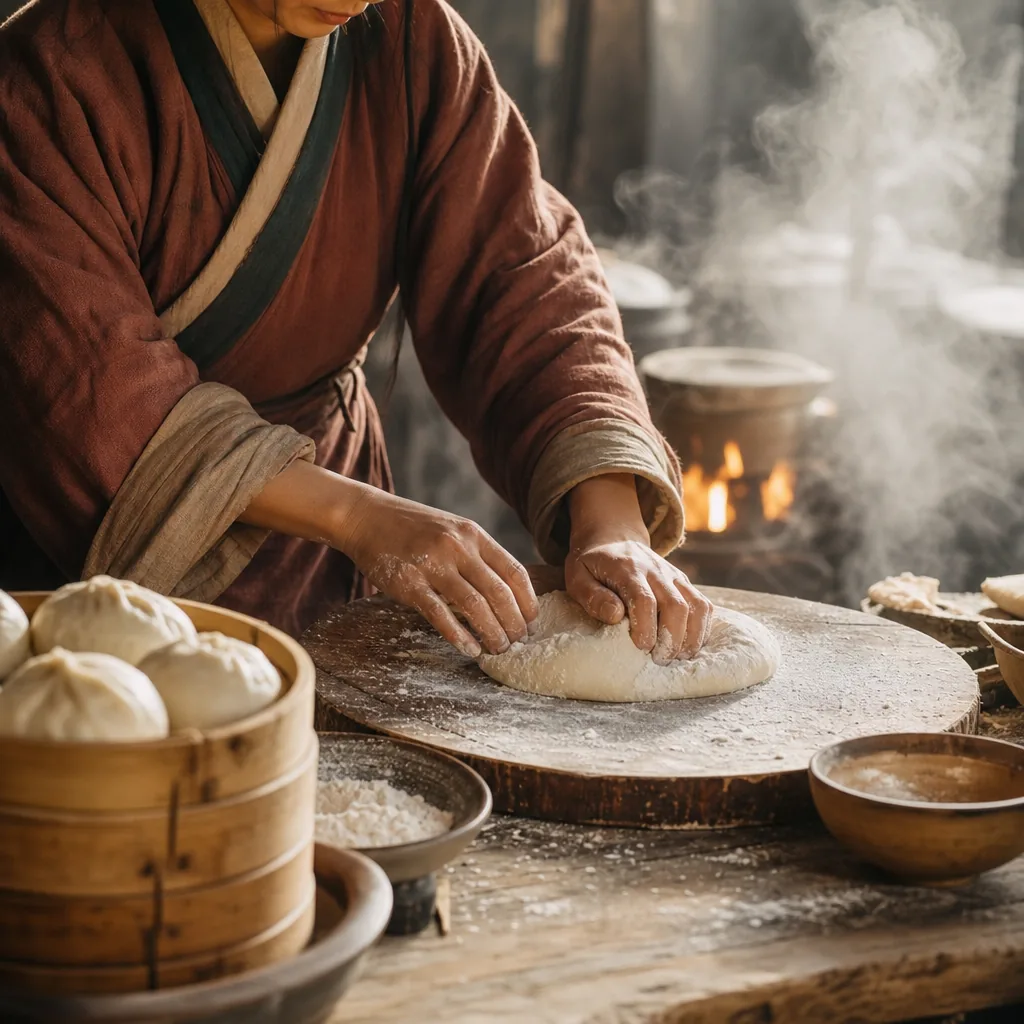
It was not yet fully light, but the ground in the courtyard already held a damp shine from the feet that had been moving back and forth over it. That morning, it was the sound from the kitchen that woke me first—not a rooster, and not voices outside the gate, but the heavy breath-like sound made when a wooden lid was lifted. White steam rushed out of the pot at once and pushed the low morning light apart inside the room. Someone was pressing dough at the worktable, someone was feeding firewood into the stove, and a child stood by the doorway with his neck tucked inward. His eyes were still half asleep, yet he kept peering in, as though he were afraid of missing the first important fragrance of the day.
I used to imagine ancient Chinese festivals only on a large scale: ritual, processions, lantern light, music, crowded excitement. But after spending more time in China, I slowly realized that what truly determines the atmosphere of a festival is often not the grandeur outside, but the first few actions that begin moving inside a household. This is especially true of Han-period festival life, with its deep attention to family order and seasonal timing. When the food begins, when the water starts to boil, who washes vegetables first, who tends the fire, who goes to call the elders, and when a child is finally allowed to sneak a piece of freshly steamed cake—all these details, taken together, carry more warmth than any excitement seen later beyond the courtyard.
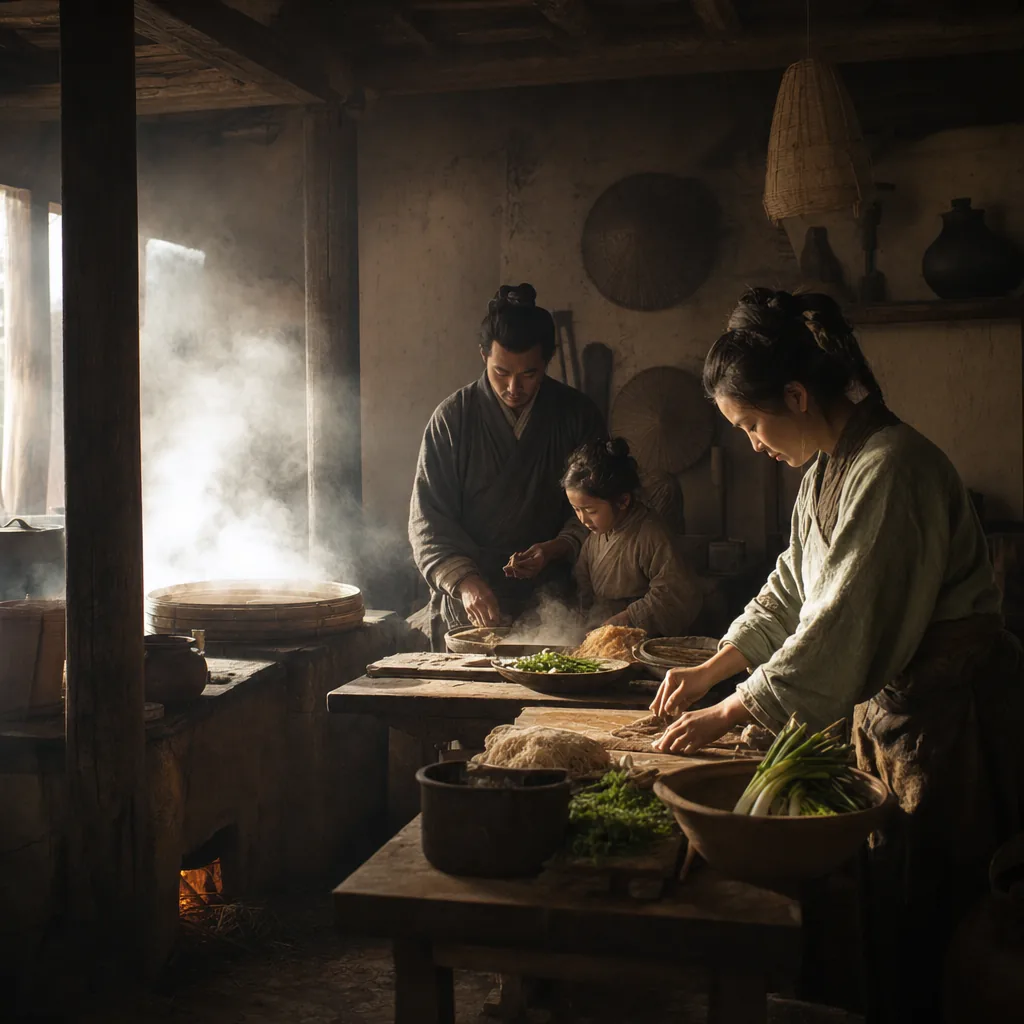
The woman who showed me the household preparations had a habit of folding her sleeves upward twice. Her hands moved quickly, but her speech never hurried. While slicing ingredients she told me that on festival days, the first place to grow warm is never the courtyard. It is always the kitchen. I laughed when I heard that, because the line felt so close to something I have repeatedly learned about life in China: many important things first take shape where they are not immediately visible. If you stay outside, you may only feel that the day is slightly louder than usual. But once you step into the cooking room, watch steam pushing upward under the roof beam, and smell the mixture of grain flour and damp firewood, you understand that the festival has arrived half a day early.
The Real Festival Begins at the Fire
I used to think festive atmosphere was built mainly through decoration. Later I realized that it was not. At least in a household celebration like this, the order at the fire mattered more than decoration by the entrance. Someone had to keep watch at the stove. Steam baskets could not be opened too quickly. Dough on the board had to be divided according to the size and generation order of the family. Even seasoning could not be handled carelessly. These all look like small matters, yet they connect the rhythm of an entire household. Without them, even the busiest celebration later on would easily come apart.
Later the woman lifted the wooden lid to show me the cakes inside. There was no pride in her expression, no sense of putting on a display for an outsider. She looked more like someone checking whether the heat had finally reached the right point. Steam struck the loose hair on her forehead and turned at once into tiny beads of water. With a short turn of the wrist she lowered the lid again and said it still needed a little more time. Standing beside her, I suddenly understood why Han-period festival life cannot be reduced to a single sentence like it was lively. What moves people is not the outer fullness, but the patience preserved in each step. The fire cannot be pushed too hard. The dishes cannot come out in confusion. If the elders are not yet seated, the children cannot begin. A festival is not meant to break order. It is a day when order itself becomes brighter.
Children, Elders, and an Order No One Needs to Shout
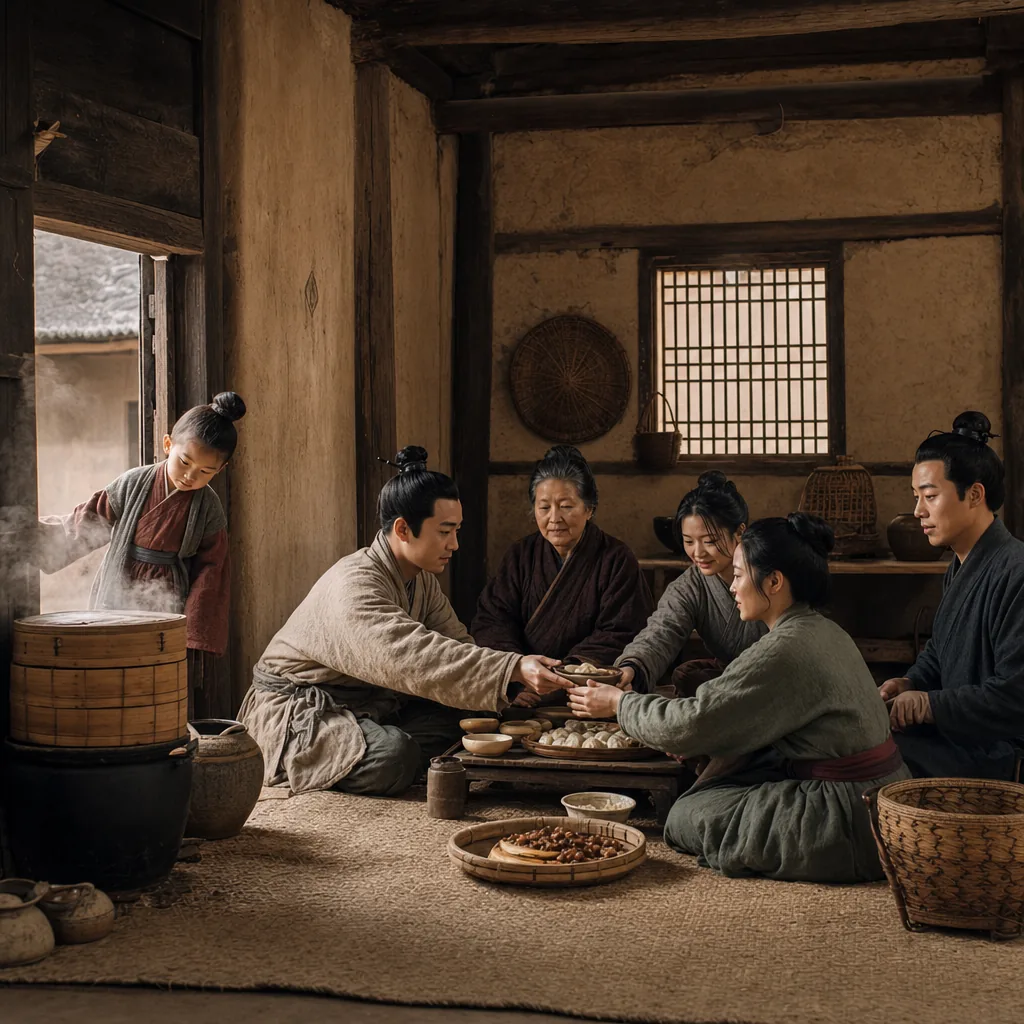
What stayed with me most was not the food itself, but how people moved around it. The youngest child kept trying to edge forward, wanting to see what was really inside the steamer. Yet every time he took a small step, he first turned his head toward where his grandmother was sitting. The grandmother never said much. She simply sat slightly deeper inside the room, her hands resting before her knees, lifting her eyes once in a while, and somehow everyone in the room knew whether the moment called for more speed or more patience. The image moved me deeply. Many cultures speak of respecting elders, but what I felt here was not rigid command. It was a tacit order that had already been trained into everyday reflex.
If you looked at the scene only as a modern tourist, you might think it was just an ordinary morning of preparing festival food. But for me, this is exactly where the character of an ancient Chinese household becomes most visible. Who begins working first, who sits later, who carries hot dishes from the cooking room into the main space, who keeps an eye on the child always tempted to reach into the steam—these arrangements all say one quiet thing: a festival does not only make people happy. It reminds each person of his or her place within the family.
I also found myself thinking about festivals in my own country. We too prepare food early, and we too have certain dishes that make the day feel suddenly different. But ancient Chinese household festivals strike me more intensely because they bind together the kitchen, the elders, the children, and time itself. The festival is not an isolated square on a calendar. It is more like a thread stretching from rice soaked the night before, to the morning fire being lit, to the grandmother’s glance across the room, all the way to the first bowl of rising steam at the midday table.
What Stayed in My Mind Was the White Steam Beneath the Beam
By the time the courtyard truly grew lively and the sounds outside filled more and more of the air, the kitchen was no longer as busy as it had been earlier. The hardest preparation was already done. What remained was to carry that labor slowly onto the table. Then I turned back and saw a small cloud of white steam still hanging beneath the beam, as though the earliest secret of the day had not fully departed yet. In that instant I felt that what made Han festival life unforgettable was not how rich the later meal became, but how, before eating even began, a family had already steamed warmth, order, and expectation into being together.