中国の高速鉄道、切符はどう買う?外国人向け完全ガイド
I’ve taken China’s high-speed rail at least fifty times — Beijing to Shanghai, Chengdu to Chongqing, Guangzhou to Shenzhen — each time less hassle than flying. But the first time I tried buying a ticket, I spent two solid hours wrestling with the 12306 website.
Three Ways to Buy Tickets
Method 1: The 12306 App (Recommended)
- Google Play)
The 12306 app is the official ticketing platform. After 2024, passport registration has improved:
- Google Play)
- Choose “passport registration,” enter your passport number and name (must exactly match your passport, including capitalization and spaces)
- Once registered, search routes, select seats, and purchase
- Supports Alipay / WeChat Pay / foreign credit cards
Pitfall: Name entry must exactly match your passport. If your passport name has hyphens or spaces, even one character difference can cause identity verification failure at the station gate.
Method 2: Trip.com
If 12306 feels too frustrating, Trip.com is an international-friendly alternative:
- English interface, direct passport registration
- Service fee ~¥20–30 per ticket
- Pros: English customer service, easier cancellation/changes than 12306
- Cons: Slightly more expensive, some niche routes not listed
Method 3: Station Counter
Bring your passport to the ticket counter at any train station — the queue might be long (especially during holidays), but the clerk handles everything.
How to Board
After purchasing, the boarding process:
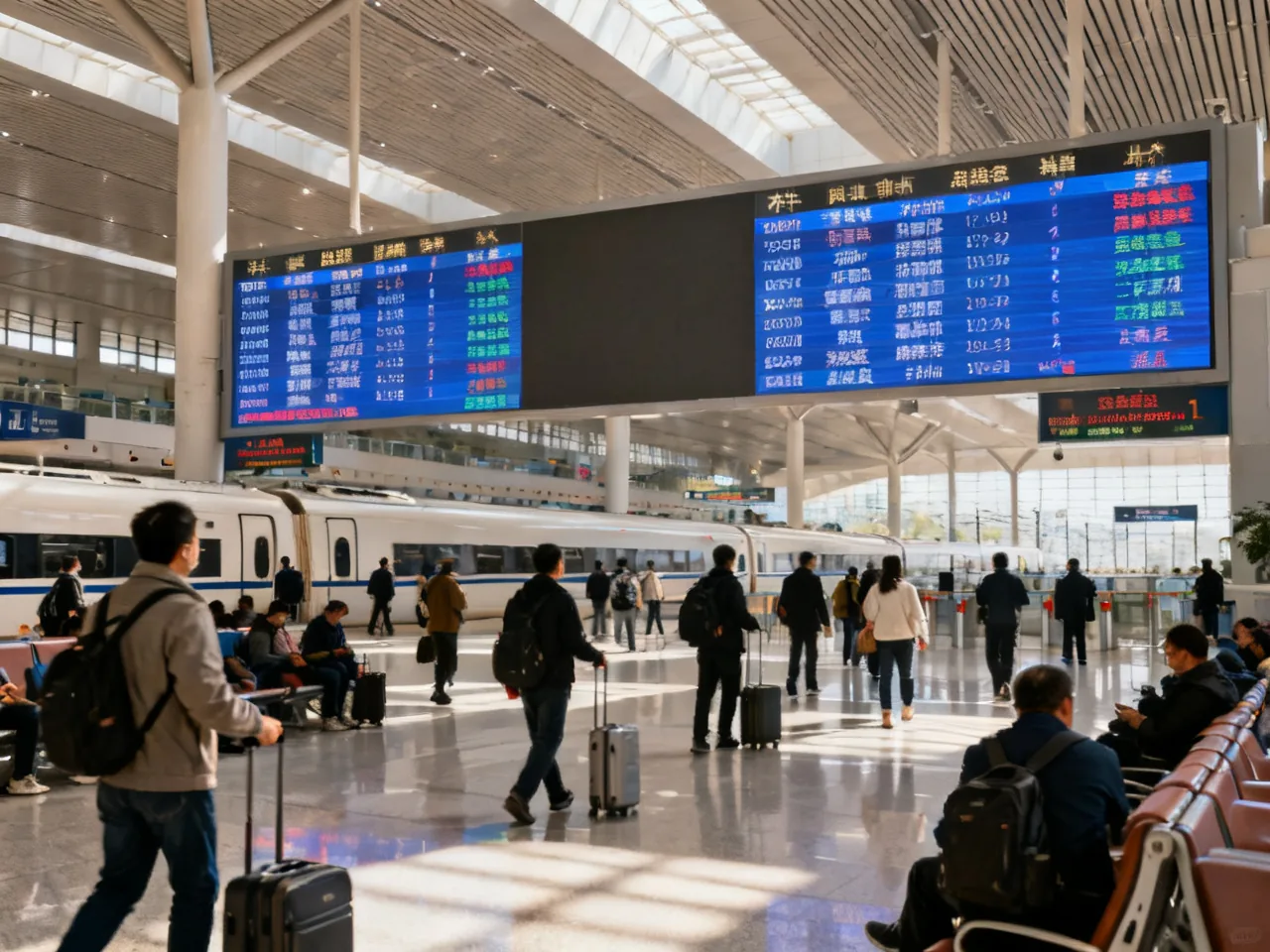
- Arrive at the station: 40 minutes early recommended (30 at origin stations, 40–50 at intermediate stops)
- Security check: All luggage through X-ray, liquid restrictions similar to airports
- ID check at gates: Passport holders use manual channels (Chinese ID holders use facial recognition auto-gates). This is the slowest part for foreigners — manual channels sometimes have only 1–2 windows open, 10–20 minute waits are normal
- Find your waiting room and gate: Large screens show train numbers and corresponding boarding gates. Boarding starts 15 minutes before departure
- Board and find your seat: Ticket shows car number and seat number
Seat Selection Tips
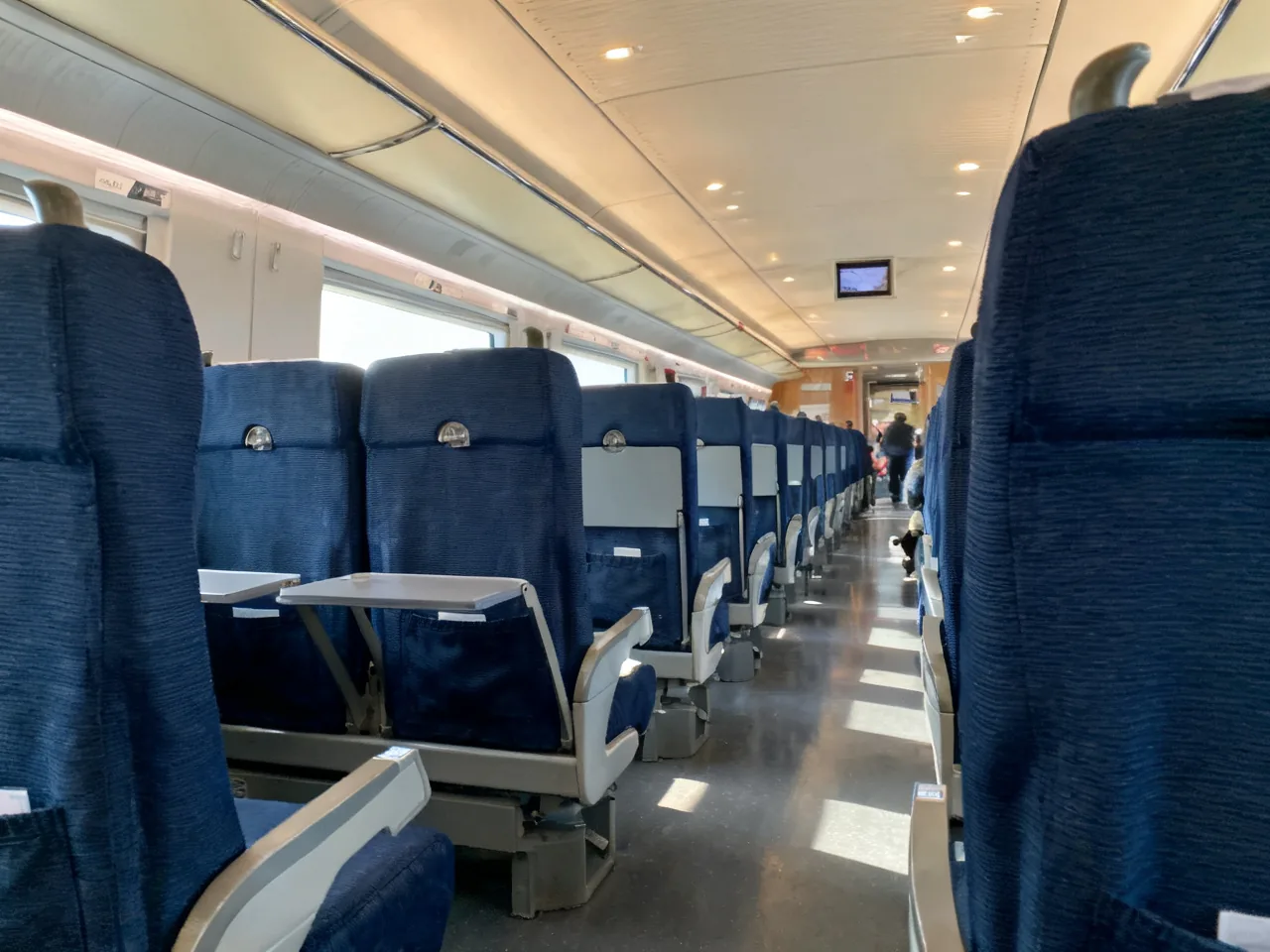
Second class (most common) seats are labeled A/B/C/D/F — no E. A and F are window seats, C and D are aisle.
- Short trips (under 2 hours): Choose A or F for the view
- Long trips (over 4 hours): Choose C or D for easy bathroom and dining car access
- Business travel: First class is much wider, ~1.6× second class price, worth the upgrade
Practical Notes
Price reference: Beijing–Shanghai second class ~¥553/4.5 hours; Chengdu–Chongqing ~¥154/1.5 hours Food: Dining car and trolley service (boxed meals ¥40–60, overpriced) — bring your own WiFi: Most trains don’t have free WiFi; download entertainment in advance Refunds: Free if cancelled 8+ days before departure; 5–20% fee within 8 days
For scenic route recommendations, see Top 5 Most Scenic Rail Routes. For getting around after arrival, Ride-Hailing in China covers Didi usage. For payment setup, Mobile Payments in China handles both tickets and daily spending.
外链: China Admissions — High-Speed Rail Guide