南京で最も心を動かされるのは、語られる歴史ではなく、人々が今日もそれを当たり前に使っている姿だ。
It was not yet nine when I came out of the metro station, and the pavement still held a little dampness from the previous night. A foreign traveler dragging a small suitcase stood by the roadside studying a phone map, paused twice, and finally turned the screen toward a security guard for directions. The guard checked the address, glanced at the passport and accommodation screenshot in the traveler’s hand, and then pointed forward and to the right, speaking slowly but with certainty. Standing nearby, I suddenly realized that what makes Nanjing so worth revisiting in retrospect lies not in what one “saw,” but in how these scattered little moments lead a person inward.
In many cities, a travel retrospective ends up becoming a site retrospective: did you see enough, did the photos work, was the line worth it, was the route too tight? Nanjing can certainly be written that way, but that only touches the surface. What makes it more interesting is the process of arrival—not an instructional manual in the narrow sense, not a line-by-line explanation of policy, but the way a person moves from unfamiliarity to orientation, from checking an address to confirming accommodation, from entering a district to gradually understanding how the city is organized.
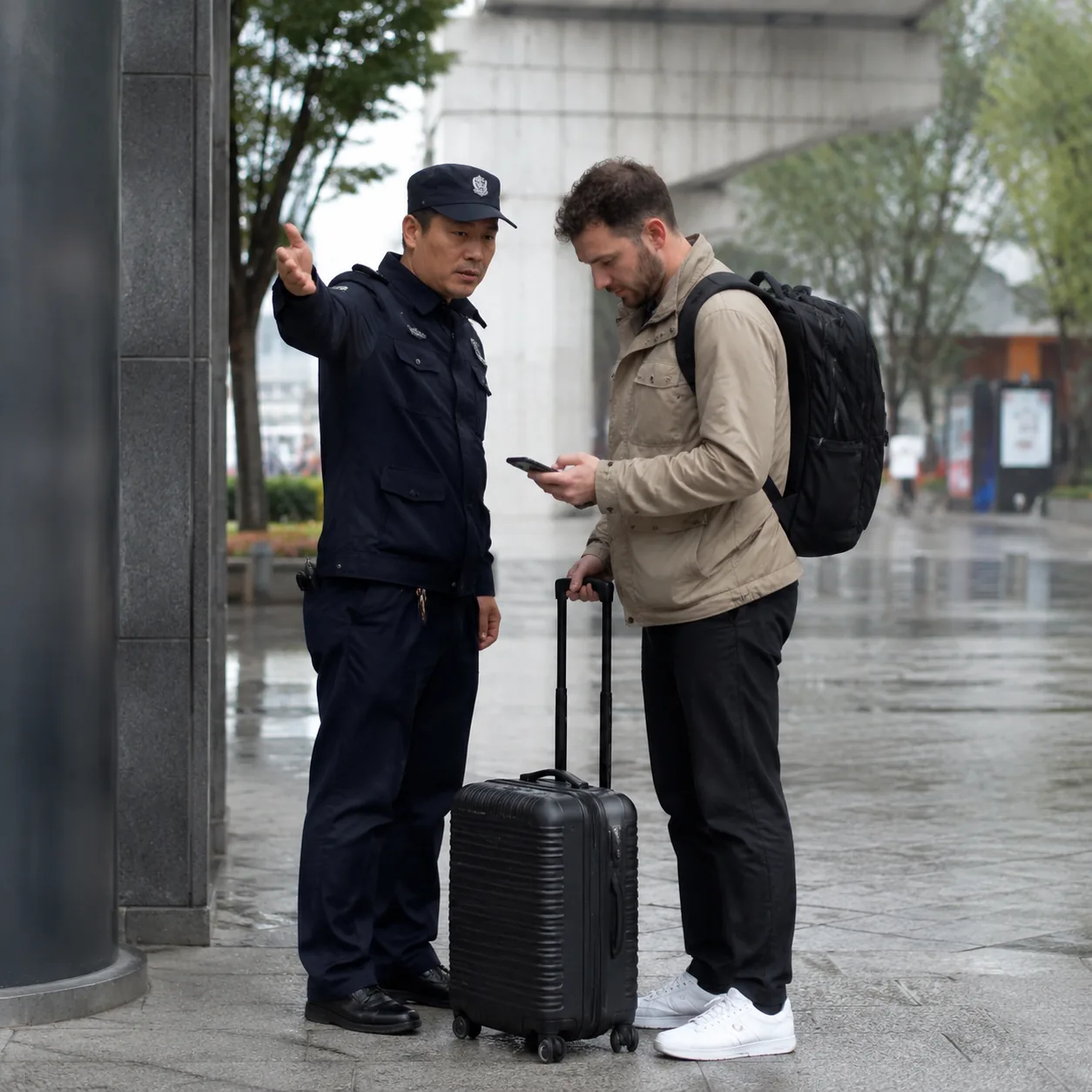
That is exactly why accommodation registration and arrival procedure should not be isolated into a cold little section in Nanjing. For someone visiting China for the first time, these things are already woven into the city experience. You do not complete an administrative sequence and then begin to travel; the travel begins inside that sequence. How house numbers are arranged, how a front desk asks to see identification, why an address screenshot helps more than a verbal description, why guards or shop staff often correct your direction almost casually—none of this is marginal. It is where the city first becomes legible.
Looking back, I think Nanjing suits the retrospective form not only because it has multiple historical layers, but because it turns entry itself into a kind of progressive reading. In the morning, you may first be occupied with finding the hotel, confirming the location, dropping luggage, and incidentally learning how one street joins another. Only then do you move toward wider spaces and see how wall, lakeside, tree shadow, and modern-era district rest against one another. By evening, what remains is not one particular photograph but the way the entire sequence of arrival begins to explain itself.
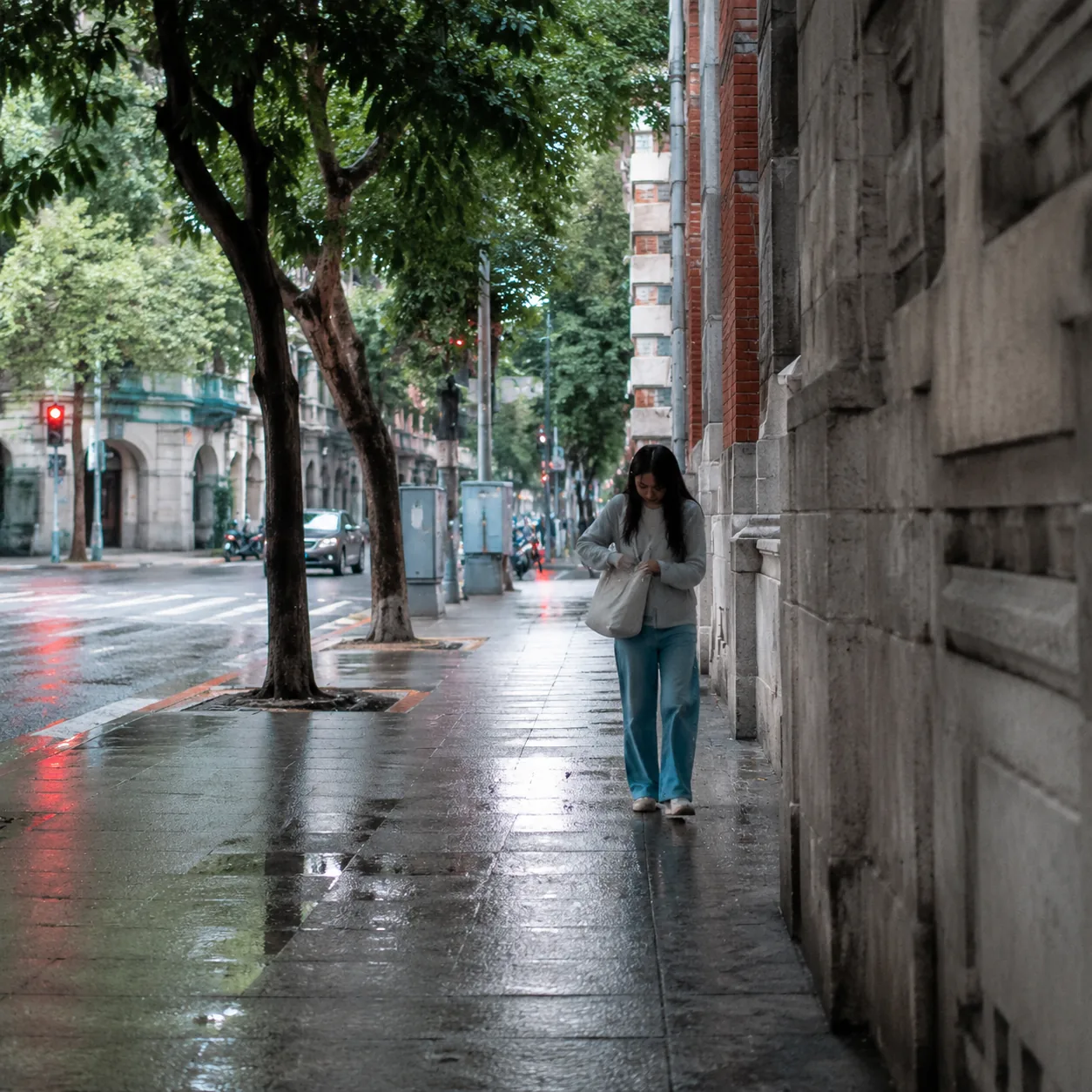
Nanjing also has an advantage that guides rarely explain properly: its changes of scale are kind to a first arrival. In many large Chinese cities, what unsettles people most at the beginning is rhythm itself—where to stand after exiting the metro, whether the taxi zone and ride-hailing point are separate, whether hotel check-in requires more material than expected, whether the address in Chinese matches the English interface at all. Nanjing is not inherently simpler, but at crucial moments it often gives a traveler a little room to breathe. The slopes are not too severe, districts are not completely chaotic, and the historical and everyday zones are linked by transitions rather than cut with a knife.
This sense of transition explains why Nanjing deserves the retrospective angle rather than the check-in angle alone. A check-in only records where you went. A retrospective forces you to explain why one section felt smooth and another confused; why a Republican-era district worked better after dropping luggage rather than by charging straight toward it from the station; why an earlier lunch made later decisions around the wall or the district steadier than walking through them on an empty stomach.
When it comes to accommodation registration and check-in, what matters most is not memorizing one policy sentence, but preparing well. For a foreign traveler, the safest strategy is never “I will explain it on site,” but keeping the address, reservation information, ID page, companion details, and necessary screenshots ready on the phone. Nanjing reinforced that lesson for me more strongly than before: the more a city offers to examine, walk, and think through in layers, the earlier you settle those basic steps, the less attention you waste in confusion at the threshold.
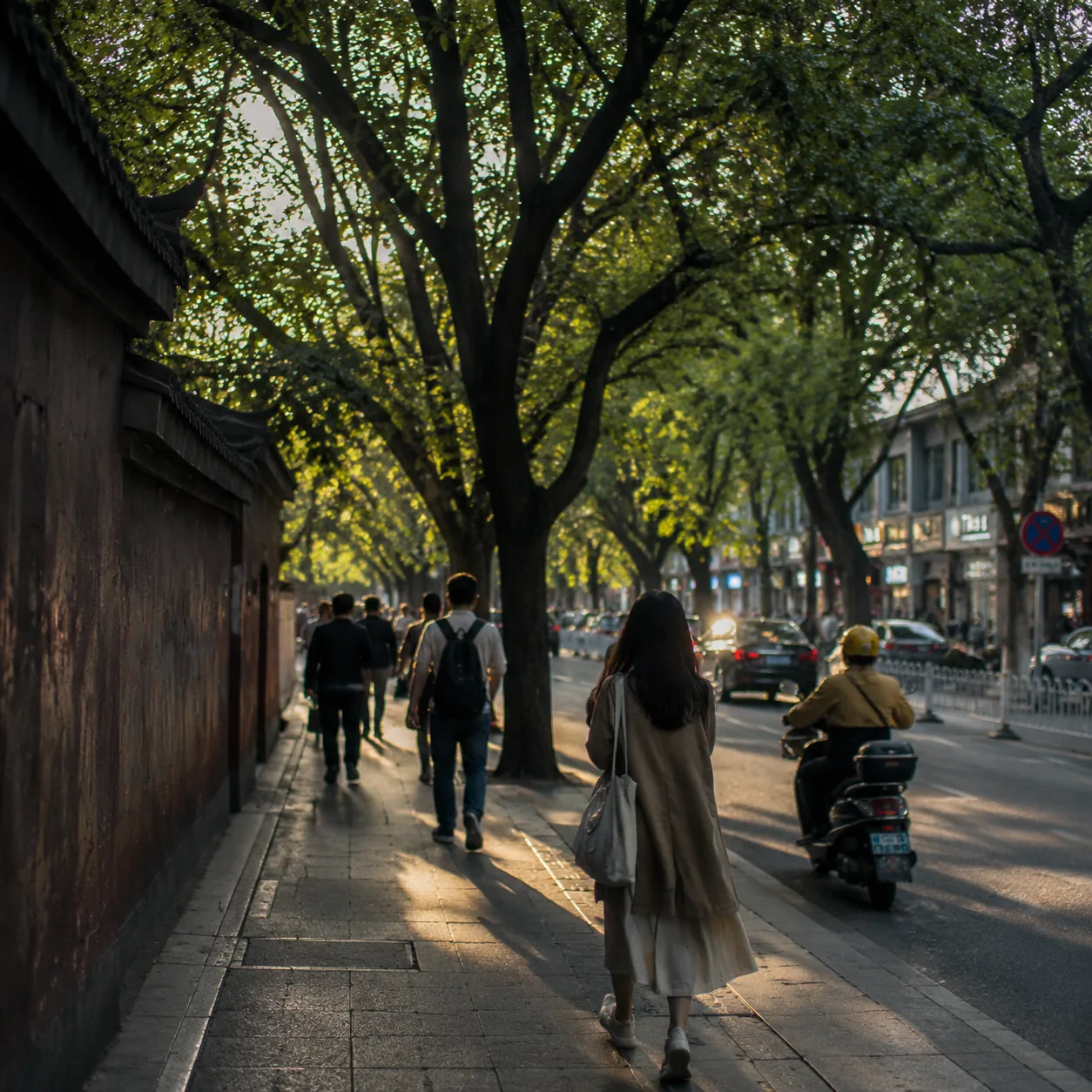
Interestingly, this preparation does not make travel mechanical. It makes it freer. When you no longer need to keep asking whether you are in the wrong place, the wrong hotel, or missing some crucial step, the way you look at Nanjing begins to loosen. You notice the height of the steps before a doorway, the reason tree shadows cut the pavement in half at a certain hour, the way steam from a breakfast shop briefly darkens the color of the old brick. Many of the details that genuinely belong to Nanjing only appear in that unpanicked state.
By afternoon, once the wall, modern district, and ordinary residential streets are placed inside the same day, one begins to see that Nanjing’s strength is not simply that it contains a lot. Its strength lies in the way those contents illuminate one another. Morning orientation and check-in teach a first reading of order. Midday pause gathers attention back into the body. When wider urban layers open later, those earlier practical experiences suddenly become meaningful. Not every historical city can do this—make procedure itself part of understanding.
When I passed the same metro exit again in the evening, the light had softened. The security guard was still there, though his posture had loosened a little. The suitcase-dragging travelers by the road were no longer the same people, yet the same tiny actions kept repeating: address screenshots, hotel names, directions at the corner, gestures toward the right path. In that moment I finally felt that what Nanjing rewards most in retrospect is not how much history I had seen in one day, but how that history is still being used by entrances, intersections, front desks, slopes, and streams of people. That is why it is not a city that ends when the sightseeing ends. It is a city whose details begin to sharpen only after you turn back to think about them.