一頭の陶馬が、子どもに西安で本気で歴史を問い始めさせた
That afternoon in Xi’an felt heavy with heat. The sun hung high, and the pavement reflected a pale glare. We had planned to go to the city wall first, but after two short stretches of walking, my son said his legs were tired and tiny beads of sweat were already forming on his forehead. I changed the plan on the spot and took him into a museum to rest in the air conditioning. Many parents worry that children will lose interest quickly inside a museum, but what happened that day surprised me completely.
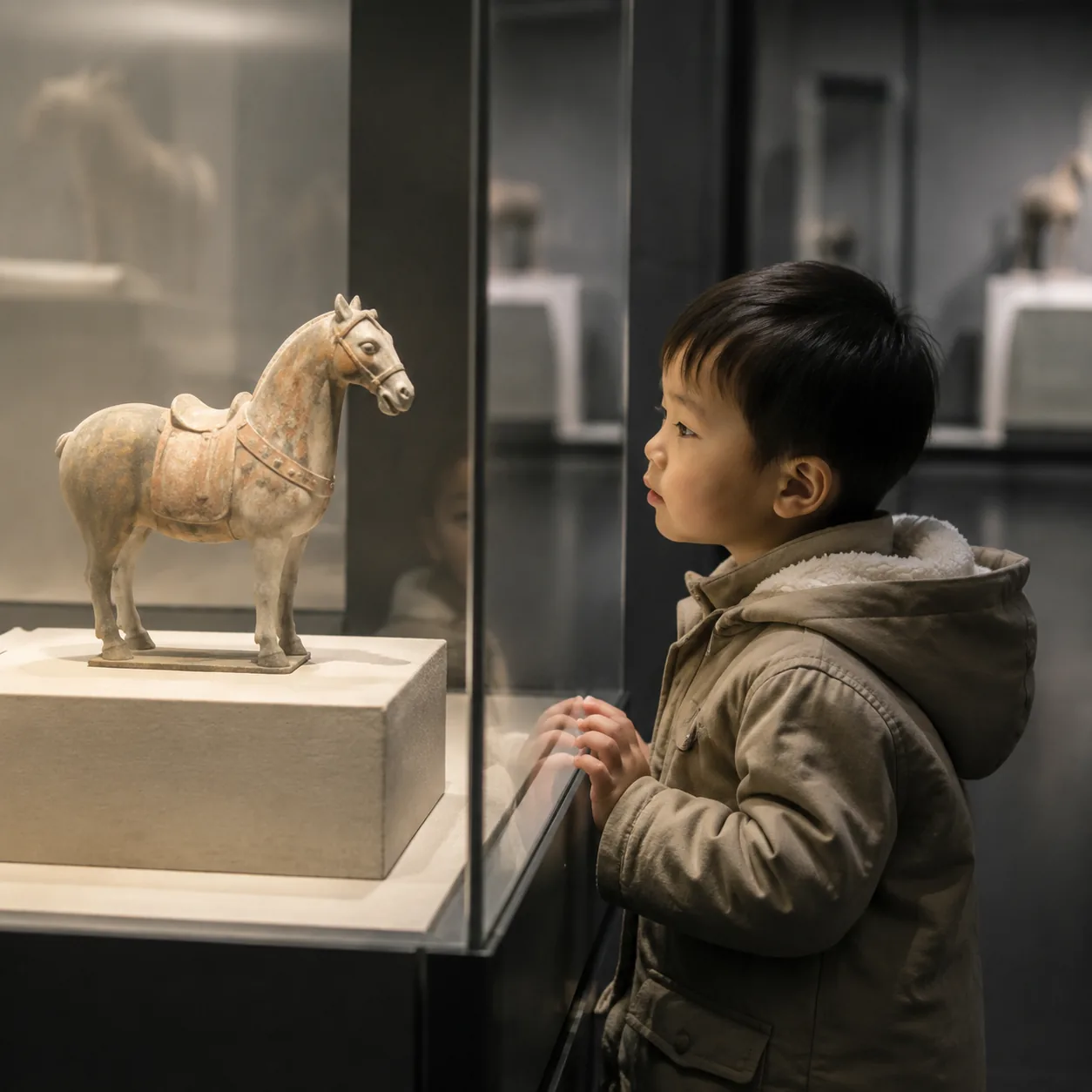
Inside, it was quiet except for the light sound of shoes on the floor and the occasional murmur of a guide. My son did seem tired at first. He held the corner of the ticket and looked around without much focus. Then he stopped in front of one display case. Inside stood a small clay horse. Its color had faded with time, but the mane had been shaped with care, as if it still carried some forward movement. He leaned toward the glass and asked, “Did someone ride this a long time ago?”
A young museum guide happened to be walking by. Hearing his question, she stopped and answered, “Yes, people used horses in the past. This one may have been related to travel, the army, or social status.” My son’s eyes lit up immediately. “Then why is it here? Why isn’t it a real horse?” he asked. Instead of overwhelming him with technical language, she answered patiently. “Because this is something left from ancient times. It helps us understand how people lived, how they traveled, and what they considered important.”
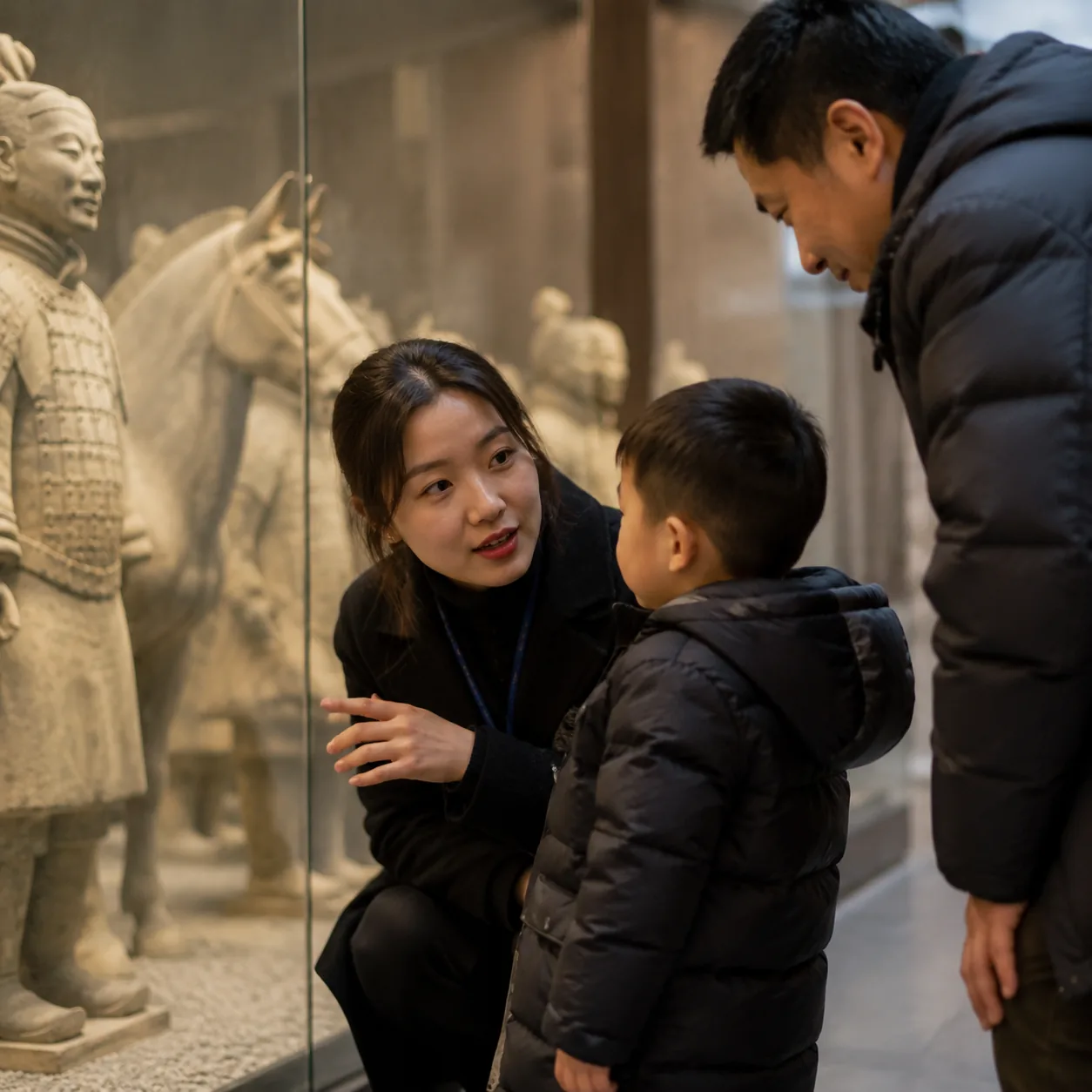
That was how a child on the verge of drifting off suddenly got pulled into history. He stopped asking whether something looked pretty and started asking how people had used it and why they had made it that way. In front of a bronze mirror he asked, “How did they look at themselves before phones?” In front of decorated roof tiles he asked, “Why did they work so carefully even on the roof?” When he saw a map, he started looking for Chang’an by himself. Standing behind him and hearing question after question, I realized once again that China is a rich place to bring children precisely because knowledge does not always arrive as a lecture. Sometimes it grows in front of a real object.
When we walked out of the museum, the heat was still there, but my son seemed newly charged. He talked the whole way. He said that if we went to the city wall at night, he could imagine how people had entered the city long ago. He said that if he ever saw the Terracotta Army, he would look first at the expressions on the horses and faces. Then he said that history was not just a list of years in a textbook. It was “real people living.” I loved that sentence. Many children are not uninterested in history. They simply have not found a concrete doorway into it yet. That doorway might be a clay horse, a bronze mirror, a brick, or even a museum guide willing to stop for three extra minutes.
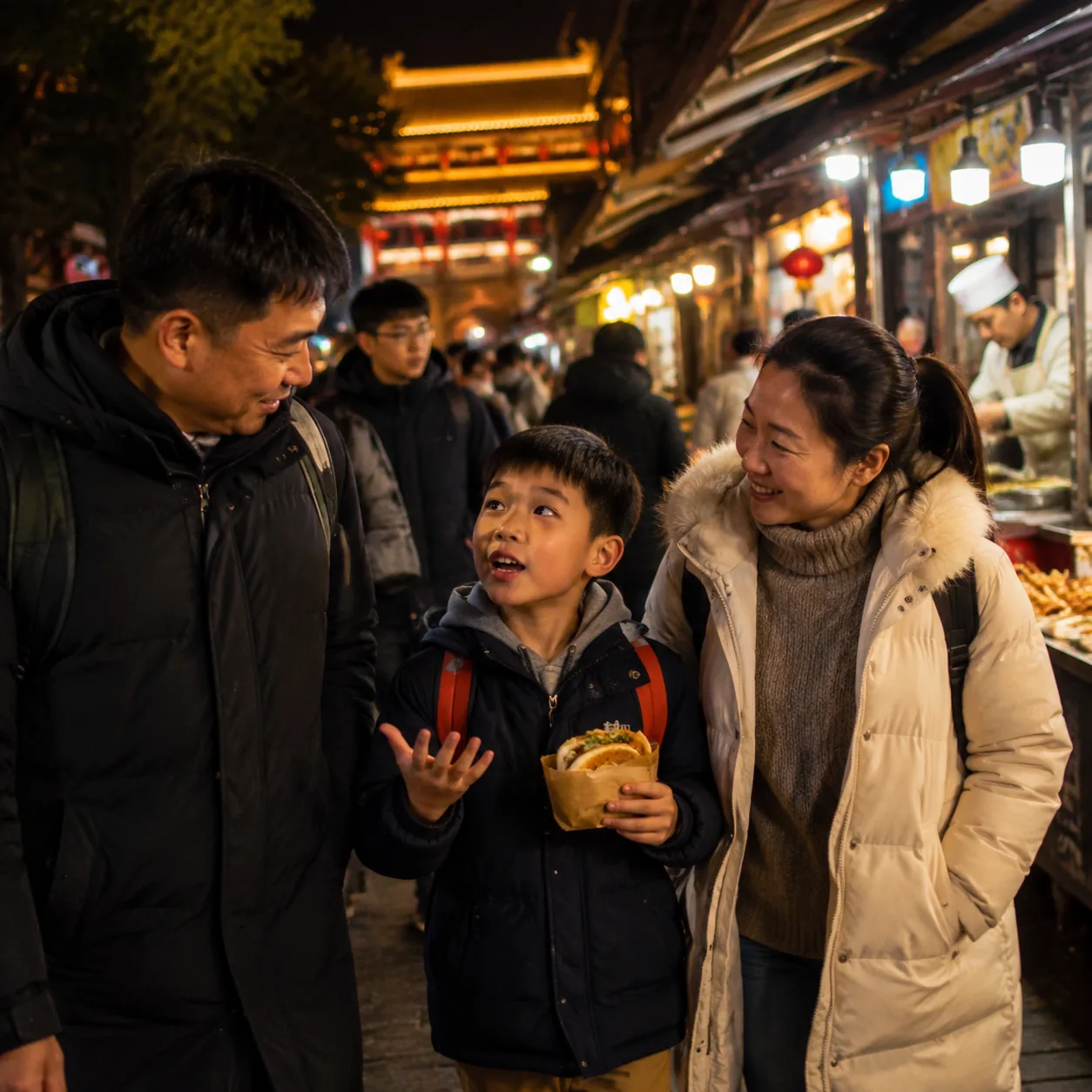
That night we went to the Muslim Quarter for dinner. The lights were on, and the air smelled of cumin and grilled meat. Holding a roujiamo in his hand, my son told a shopkeeper, “I saw an ancient horse today.” The man laughed and answered, “Then you learned something today.” My son nodded hard, as if he wanted to make sure everyone knew he really had. China works beautifully for family travel not only because there are many attractions close together, but because children can easily connect what they see with the questions forming in their minds. Once those questions connect, interest becomes alive.
If you want your child to feel China’s learning atmosphere in a real way, museums are absolutely worth visiting. But once you are there, there is no need to deliver a grand lecture or demand that your child study every object carefully. A better way is to let them find the one thing they most want to ask about and then follow that interest forward. For a child, being allowed to ask is already a powerful learning experience. In a city like Xi’an, where layers of history are so thick, almost every display case contains another invitation to keep asking.
Here is one practical way to use a museum on a family trip: before entering, give your child one simple mission—find the object you most want to ask about today. Afterward, over a meal, invite them to tell you what they discovered. The moment a child starts retelling, comparing, and asking the next question, the trip stops being mere sightseeing. It becomes training for a stronger curiosity.